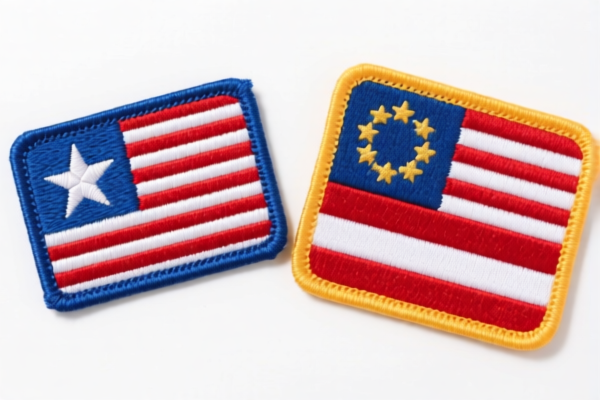
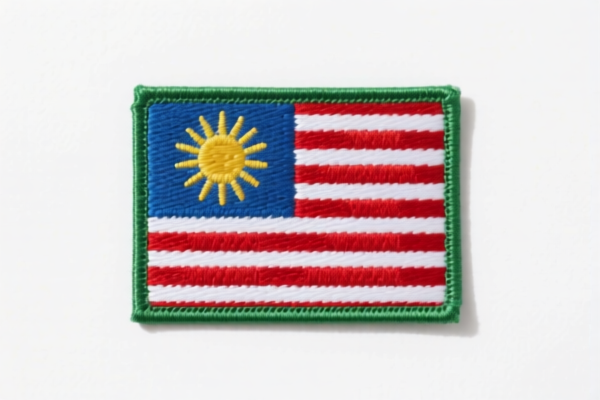
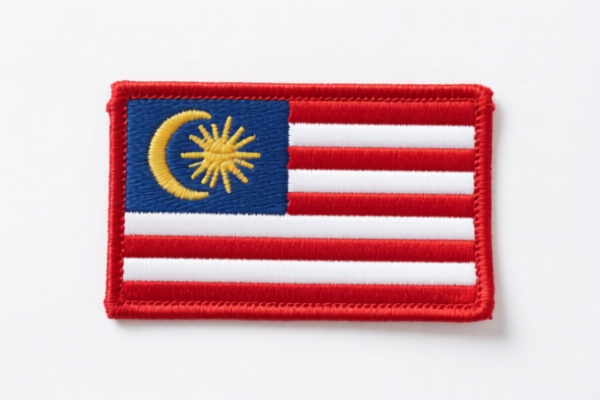
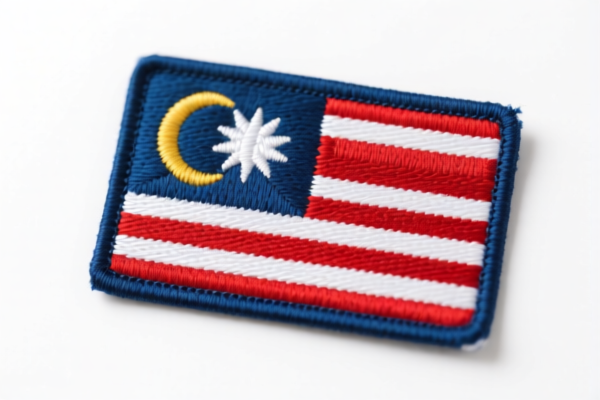
ladybug fabric patch
CN → US| HS Code | Tariff Rate | Origin | Destination | Doc |
|---|---|---|---|---|
| 3926903500 | 24.0% | CN | US | Official Doc |
| 3926903300 | 16.5% | CN | US | Official Doc |
Product Images
AI Analysis
🐞 Ladybug Fabric Patch
🌐 HS Code Reference & Customs Clearance Guide | 2026 Latest Tariff Analysis | Professional Level Strategy
📌 One, Product Definition and Classification: Do you really know "Fabric Patches"?
Ladybug Fabric Patches are small decorative items made of textile materials (such as cotton, polyester, or non-woven fabric), often featuring embroidery, printing, or appliqué techniques. They are used for personalization, brand identification, or aesthetic enhancement of clothing, bags, hats, and other textile products.
In international trade, they are generally classified under Chapter 39 (Plastics and articles thereof) or Chapter 61/62 (Articles of apparel and clothing accessories) depending on the material and specific nature. However, based on the provided data, we focus on plastic-based or plastic-like decorative elements like beads, spangles, and similar articles.
⚠️ Key Distinction:
- If the patch is made primarily of textile/fabric and is embroidered or printed → It may fall under Chapter 61 or 63.
- If the patch contains plastic elements (e.g., plastic beads, spangles, or is made of plastic material) → It falls under Chapter 39.
- The provided data specifies plastic articles, so we will focus on the plastic-based classification.
📦 Two, HS Code Classification Details (2026 Latest Tariff Authority Comparison)
Based on the provided , the relevant HS Codes for "Ladybug Fabric Patch" (assuming it contains plastic elements like beads, bugles, spangles, or is made of plastic) are:
| HS Code | Product Description | Applicable Scenario | Tax Rate (US, China Origin) |
|---|---|---|---|
3926.90.35.00 |
Other articles of plastics: Beads, bugles and spangles, not strung (except temporarily) and not set; articles thereof, not elsewhere specified or included: Other | Plastic decorative elements, loose beads, spangles, unstrung plastic ornaments | 14.0% |
3926.90.33.00 |
Other articles of plastics: Beads, bugles and spangles, not strung (except temporarily) and not set; articles thereof, not elsewhere specified or included: Handbags | Plastic decorative elements specifically associated with or sold with handbags | 6.5% |
🔍 Key Reminder:
- If the "Ladybug Fabric Patch" is a plastic-based decorative element (e.g., plastic beads, spangles, or plastic patches), it falls under 3926.90.
- If it is a textile patch with plastic embellishments (e.g., plastic beads sewn onto fabric), it may still be classified under 3926.90 if the plastic element is the primary decorative feature.
- If it is a pure textile patch (embroidered or printed fabric), it should be classified under Chapter 61 or 63, which is not covered in the provided data.
💰 Three, 2026 Latest Tariff Rate Details (Including Additional Taxes)
✅ Applicable Country: United States (US)
✅ Country of Origin: China (CN)
✅ Effective Date: 2025年11月10日起 (From November 10, 2025)
🎯 1. 3926.90.35.00 —— Other Plastic Articles (Not Elsewhere Specified)
| Item | Content |
|---|---|
| Base Tariff | 6.5% |
| Additional Tariff | 7.5% (Section 301 Tariff) |
| Total Tax Rate | 14.0% |
| Tax Calculation | CIF Value × 14.0% |
| De Minimis Exemption Eligible | ❌ No (Section 301 tariffs apply) |
| Legal Basis Path | USITC:3926.90.35.00 → SECTION301:3926.90.35.00 |
📌 Explanation:
- "Base Tariff 6.5%" is the standard MFN rate for plastic articles.
- "Additional Tariff 7.5%" is imposed under Section 301 of the Trade Act for products from China.
- Total 14.0% is relatively moderate compared to other categories.
🎯 2. 3926.90.33.00 —— Plastic Articles for Handbags
| Item | Content |
|---|---|
| Base Tariff | 6.5% |
| Additional Tariff | 0.0% (Exempt from Section 301 for this specific subheading) |
| Total Tax Rate | 6.5% |
| Tax Calculation | CIF Value × 6.5% |
| De Minimis Exemption Eligible | ✅ Yes (if under $800 per shipment, but verify current policy) |
| Legal Basis Path | USITC:3926.90.33.00 → SECTION301:EXEMPT |
📌 Note:
- This HS Code has a lower total tariff (6.5%) because it is exempt from Section 301 additional tariffs.
- However, it must be clearly identified as being for handbags. If the "Ladybug Patch" is used for general clothing or other items, this classification may be incorrect.
🛠️ Four, Customs Clearance Practical Advice (Avoiding Pitfalls)
✅ 1. Document Checklist (All Required)
| Document | Required | Description |
|---|---|---|
| ✅ Product Specification Sheet | ✔️ | Material composition (plastic vs. fabric), dimensions, weight |
| ✅ Product Photos | ✔️ | Clear images showing the patch, including any plastic elements |
| ✅ Commercial Invoice | ✔️ | Clearly state "Plastic Decorative Patch" or "Fabric Patch with Plastic Elements" |
| ✅ Packing List | ✔️ | Indicate quantity, weight, and packaging details |
| ✅ Certificate of Origin (CO) | ✔️ | To determine eligibility for any preferential rates |
| ✅ Declaration of Material | ✔️ | Specify if the patch is primarily plastic or fabric |
✅ 2. Declaration Tips (Key Mnemonic)
🔥 "Material First, Function Second, Name Precise, Tariff Minimized!"
| Scenario | Correct Declaration | Incorrect Practice |
|---|---|---|
| Plastic-based patch (beads/spangles) | 3926.90.35.00 |
Misdeclared as textile → Higher tax |
| Patch for handbags | 3926.90.33.00 |
Misdeclared as general plastic → 14% instead of 6.5% |
| Pure fabric patch (no plastic) | Not in provided data (Likely Chapter 61/63) | Misdeclared as plastic → Classification error |
✅ 3. Special Circumstances
| Scenario | Handling Advice |
|---|---|
| Mixed Material Patch (Fabric + Plastic Beads) | Declare based on primary material or essential character. If plastic is dominant, use 3926.90.35.00. |
| Custom Design | Provide design drawings and samples to avoid misclassification. |
| Small Quantities (De Minimis) | If under $800 per shipment, check if Section 301 applies. Some exemptions may apply. |
🌍 Five, Global Market Comparison (2026 Latest)
| Country/Region | Recommended HS Code | Tariff | Certification | Remarks |
|---|---|---|---|---|
| 🇺🇸 USA | 3926.90.35.00 |
14.0% (CN Origin) | None | Section 301 applies |
| 🇺🇸 USA | 3926.90.33.00 |
6.5% (CN Origin) | None | Exempt from Section 301 if for handbags |
| 🇨🇳 China | 3926.90.35.00 |
6.5% | None | No additional tariffs |
| 🇪🇺 EU | 3926.90.35.00 |
4.5% | CE (if applicable) | No Section 301 |
| 🇬🇧 UK | 3926.90.35.00 |
4.5% | UKCA | Post-Brexit rules apply |
📌 Conclusion:
- USA is the only market with significant additional tariffs (Section 301) for plastic articles from China.
- EU and UK have lower base tariffs and no Section 301 equivalent.
- China has low tariffs for imported plastic articles.
📌 Six, Common Errors & Pitfalls (Lessons Learned)
❌ Error 1: Misclassifying a fabric patch as a plastic article
👉 Consequence: Incorrect tariff assessment, potential penalties.
❌ Error 2: Not specifying material composition
👉 Consequence: Customs may reclassify, leading to delays or higher taxes.
❌ Error 3: Using vague descriptions like "Decorative Item"
👉 Consequence: Customs may assign a higher tariff code arbitrarily.
❌ Error 4: Assuming all plastic articles have the same tariff
👉 Consequence: Missing out on lower rates for specific uses (e.g., handbags).
✅ Correct Approach:
"Ladybug Decorative Patch, Plastic Material, Unstrung Beads/Spangles, for Apparel Use, Model XYZ"
🎯 Seven, Conclusion: Professional Declaration, Save Time and Money
🎯 Remember the Mnemonic:
🔹 "Material First, Name Precise, Tariff Minimized!"
🔹 "HS Code Decides the Tax, 7.5% Difference, Declaration Saves Thousands!"
📌 Tips:
- If your patch is primarily fabric, it should be classified under Chapter 61 or 63, which is not covered in the provided data.
- For plastic-based patches, use 3926.90.35.00 (14.0%) or 3926.90.33.00 (6.5%) if for handbags.
- Apply for Advance Ruling to avoid classification disputes.
📣 Immediate Action:
📞 Contact a professional customs broker + Provide product details + Apply for HS Code Advance Ruling
🚀 Ensure smooth clearance, minimize costs, and maximize profits!
✨ Professional Customs Clearance Starts with Accurate Classification!
💼 Every cent of your cost deserves precise calculation!
Customer Reviews
About HS Code Classification
The Harmonized System (HS) is an internationally standardized nomenclature developed by the World Customs Organization (WCO) to classify traded products. Over 200 countries use the HS system as the basis for customs tariffs, trade statistics, and import/export regulations.
Each HS code follows a hierarchical structure:
- Chapter (2 digits) — Broad category of goods (e.g., Chapter 84: Machinery and Mechanical Appliances)
- Heading (4 digits) — More specific grouping within the chapter
- Subheading (6 digits) — Internationally standardized breakdown, used by all WCO member countries
- National subdivisions (8-10 digits) — Country-specific extensions for further classification, such as US HTSUS 10-digit codes
Correct HS code classification is essential for smooth customs clearance, accurate duty payment, and compliance with trade regulations. Misclassification can lead to customs delays, overpayment of duties, or penalties.
When importing from CN to US, the applicable tariff rates may include:
- Most-Favored-Nation (MFN) rate — The standard duty rate applied to WTO members
- General rate — Applied to countries without trade agreements
- Trade remedy duties — Additional tariffs such as Section 301 (anti-dumping), Section 232 (national security), or countervailing duties
The information provided on this page is for reference purposes only. For official classification, please consult with your local customs authority or a licensed customs broker.