laptop
CN → US| HS Code | Tariff Rate | Origin | Destination | Doc |
|---|---|---|---|---|
| 8471300100 | 10.0% | CN | US | Official Doc |
| 8471809000 | 35.0% | CN | US | Official Doc |
| 8507600020 | 0.0% | CN | US | Official Doc |
| 8507500000 | 38.4% | CN | US | Official Doc |
| 8542310070 | 60.0% | CN | US | Official Doc |
| 8542310045 | 60.0% | CN | US | Official Doc |
Product Images
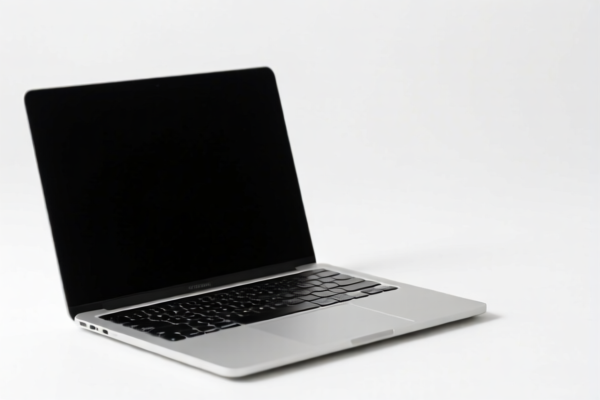
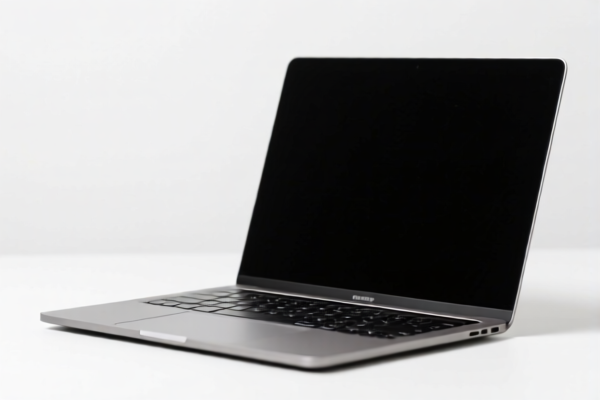
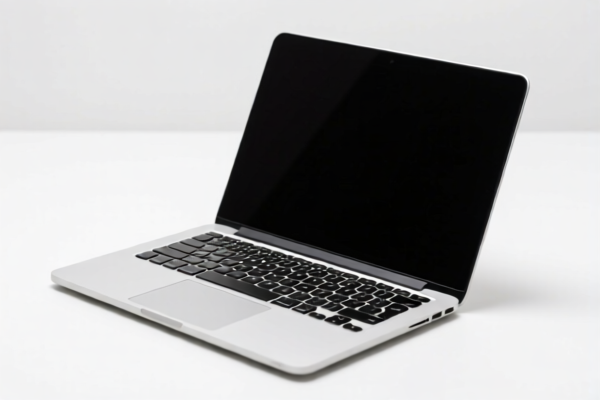

AI Analysis
💻 Laptops (Portable Automatic Data Processing Machines)
🌐 HS Code Reference & Customs Clearance Guide | 2026 Latest Tariff Analysis | Professional通关 Strategy
📌 I. Product Definition & Classification: Do You Really Understand "Laptops"?
A laptop is a compact, portable computer designed for mobile computing. It integrates the central processing unit (CPU), memory, storage, keyboard, and display into a single unit. In international trade, laptops are primarily classified under "Automatic Data Processing Machines" (ADP), specifically "Portable ADP machines weighing not more than 10 kg."
⚠️ Critical Distinction:
- Laptop: Integrated CPU, keyboard, display, and battery in one unit → HS Code 8471.30.01.00.
- Desktop Components (e.g., standalone CPUs, motherboards, SSDs): If sold separately, they fall under 8542.31.00.70 (SoCs) or 8542.31.00.45 (CPUs).
- Battery-Only or Battery Packs: If sold as a separate component → 8507.60.00.20 (Li-ion) or 8507.50.00.00 (Ni-MH).
📦 II. HS Code Classification Details (2026 Latest Tariff Authority)
| HS Code | Product Description | Applicable Scenario | Integrated CPU? |
|---|---|---|---|
| 8471.30.01.00 | Portable ADP machines ≤10 kg, with CPU, keyboard, and display | Standard Laptops, Ultrabooks, Gaming Laptops, 2-in-1s | ✅ Yes |
| 8542.31.00.70 | SoCs (System on Chip) – Processors + controllers + memory | Components sold separately for assembly | ✅ (as part of SoC) |
| 8542.31.00.45 | Central Processing Units (CPUs) sold separately | Desktop upgrades, server parts, standalone CPUs | ✅ (standalone) |
| 8507.60.00.20 | Lithium-ion batteries (separate) | Laptop batteries sold as replacements | ❌ (component only) |
| 8507.50.00.00 | Nickel-metal hydride batteries (separate) | Older laptop battery types (less common) | ❌ (component only) |
| 8471.80.90.00 | Other ADP machine parts (e.g., external docks, standalone drives) | Non-integrated accessories for laptops | ❌ |
🔍 Key Warning:
- Laptops must be declared as 8471.30.01.00 if they are fully integrated units.
- Do NOT split a laptop into "CPU + Display + Keyboard" for customs clearance – this will trigger higher tariffs (25%–50%) for individual components.
- Batteries inside a laptop are not classified separately; they are part of the whole unit.
💰 III. 2026 Latest Tariff Rate Breakdown (Including Additional Taxes & Policy Surcharges)
✅ Applicable Country: United States (US)
✅ Origin: China (CN)
✅ Effective Date: November 10, 2025 (and subsequent imports)
🎯 1. 8471.30.01.00 — Portable Laptops (Fully Integrated)
| Item | Content |
|---|---|
| Base Tariff | 0% (ad valorem) |
| Section 301 Additional Duty | +0.0% (No surcharge for laptops under this code) |
| Total Tariff | 0.0% |
| Tax Calculation | CIF Value × 0% |
| De Minimis Exemption | ✅ Yes (If < $800, may qualify for $800 de minimis entry under 321(b)(1)) |
| Legal Basis | USITC:8471.30.01.00 |
📌 Explanation:
- Laptops (8471.30.01.00) are exempt from the 25% Section 301 surcharge that applies to other electronics.
- Total duty is 0% for Chinese-origin laptops, making this a low-risk HS Code for importers.
- De Minimis Rule: Shipments under $800 may avoid customs duties entirely.
🎯 2. 8542.31.00.70 — SoCs (Processors) & 8542.31.00.45 — CPUs (Standalone)
| Item | Content |
|---|---|
| Base Tariff | 0% |
| Section 301 Additional Duty | +50% |
| Total Tariff | 50.0% |
| Tax Calculation | CIF Value × 50% |
| De Minimis Exemption | ❌ No (Components do not qualify for de minimis) |
| Legal Basis | 301:8542.31.00.70, 301:8542.31.00.45 |
📌 Explanation:
- If you import standalone CPUs or SoCs (not integrated into a laptop), you face a 50% tariff.
- Critical Risk: Misdeclaring a laptop as "CPU parts" to avoid classification will result in severe penalties.
🎯 3. 8471.80.90.00 — Other ADP Parts (e.g., External Docks, Standalone Drives)
| Item | Content |
|---|---|
| Base Tariff | 0% |
| Section 301 Additional Duty | +25% |
| Total Tariff | 25.0% |
| Tax Calculation | CIF Value × 25% |
| De Minimis Exemption | ❌ No |
| Legal Basis | 301:8471.80.90.00 |
📌 Explanation:
- Accessories like external docks, standalone SSDs, or non-integrated keyboards fall here.
- 25% tariff applies if not part of a full laptop system.
🛠️ IV. Customs Clearance Practical Tips (Avoid Pitfalls)
✅ 1. Documentation Checklist (All Required)
| Document | Required? | Notes |
|---|---|---|
| ✅ Product Specification Sheet | ✔️ | Include weight, dimensions, CPU model, RAM, storage, OS, ports |
| ✅ Commercial Invoice | ✔️ | Must state "Laptop, Portable ADP Machine, HS 8471.30.01.00" |
| ✅ Packing List | ✔️ | List all accessories (charger, cables, manuals) – do NOT separate |
| ✅ FCC/CE Certification | ✔️ | Required for US/EU markets |
| ✅ Battery Safety Report | ✔️ | Li-ion battery compliance (UN38.3, MSDS) |
| ✅ Origin Certificate | ✔️ | If non-China, may qualify for lower tariffs |
✅ 2. Declaration Tips (Key Mnemonic)
🔥 "One Unit, One Code, No Splitting, Zero Tax!"
| Scenario | Correct Declaration | Wrong Declaration |
|---|---|---|
| Full Laptop (with battery, CPU, screen) | 8471.30.01.00 |
8542.31.00.70 → 50% tax |
| Laptop + External Dock | Split: 8471.30.01.00 + 8471.80.90.00 |
Combine → Misclassification |
| Spare Laptop Battery | 8507.60.00.20 |
Declare as part of laptop → 0% but wrong |
| Standalone CPU | 8542.31.00.45 |
Try to hide inside laptop box → Fraud |
✅ 3. Special Cases
| Case | Handling Advice |
|---|---|
| OEM Laptops | Provide client agreement + design specs to avoid "generic" classification |
| 2-in-1 Convertibles | Still 8471.30.01.00 if keyboard is integrated |
| Gaming Laptops with GPUs | GPU is part of CPU/SoC → Still 8471.30.01.00 |
| Laptops with 5G Modem | No change in HS Code; modem is internal |
🌍 V. Global Market Comparison (2026)
| Country | Recommended HS Code | Tariff | Certifications | Notes |
|---|---|---|---|---|
| 🇺🇸 USA | 8471.30.01.00 |
0% | FCC, UL | Best for laptops; 50% for components |
| 🇨🇳 China | 8471.30.01.00 |
5% | CCC, RoHS | No Section 301 |
| 🇪🇺 EU | 8471.30.01.00 |
0% | CE, RoHS | No additional surcharge |
| 🇦🇺 Australia | 8471.30.01.00 |
5% | RCM | Standard tariff |
| 🇯🇵 Japan | 8471.30.01.00 |
0% | PSE, JIS | No extra fees |
📌 Conclusion:
- USA offers 0% duty for laptops but 50% for components – never split a laptop.
- China, EU, Japan have lower or zero tariffs, but certifications vary.
📌 VI. Common Mistakes & How to Avoid Them
❌ Mistake 1: Declaring a laptop as "CPU + Screen + Keyboard"
👉 Result: 50% tax on CPU + 25% on parts → Total 75%+
❌ Mistake 2: Omitting battery type in documentation
👉 Result: Customs delays, potential confiscation of Li-ion batteries
❌ Mistake 3: Using "Electronic Device" as generic description
👉 Result: Incorrect classification, fines, and shipment hold
✅ Correct Practice:
"Portable Laptop, 1.5 kg, Intel i7, 16GB RAM, 512GB SSD, Windows 11, with Li-ion Battery, Model XYZ, FCC/CE Certified"
🎯 VII. Final Recommendations: Smart Classification, Cost Savings
🎯 Remember the Rule:
🔹 "Laptop = 8471.30.01.00 → 0% Tax"
🔹 "Separate Parts = 8542/8471.80 → 25%–50% Tax"
🔹 "Never Split a Laptop!"
📌 Pro Tip:
If importing laptops from Vietnam, Mexico, or Thailand, you may qualify for Section 301 exemptions (0% duty).
Always apply for an Advance Ruling (Customs Ruling) before shipping to avoid surprises.
📣 Take Action Now:
📞 Contact a licensed customs broker + provide specs + request HS Code pre-clearance
🚀 Clear your laptops through US customs with 0% duty, avoid fines, and maximize profit!
✨ Precision Classification Starts Here!
💼 Every dollar counts – calculate tariffs accurately!
Customer Reviews
About HS Code Classification
The Harmonized System (HS) is an internationally standardized nomenclature developed by the World Customs Organization (WCO) to classify traded products. Over 200 countries use the HS system as the basis for customs tariffs, trade statistics, and import/export regulations.
Each HS code follows a hierarchical structure:
- Chapter (2 digits) — Broad category of goods (e.g., Chapter 84: Machinery and Mechanical Appliances)
- Heading (4 digits) — More specific grouping within the chapter
- Subheading (6 digits) — Internationally standardized breakdown, used by all WCO member countries
- National subdivisions (8-10 digits) — Country-specific extensions for further classification, such as US HTSUS 10-digit codes
Correct HS code classification is essential for smooth customs clearance, accurate duty payment, and compliance with trade regulations. Misclassification can lead to customs delays, overpayment of duties, or penalties.
When importing from CN to US, the applicable tariff rates may include:
- Most-Favored-Nation (MFN) rate — The standard duty rate applied to WTO members
- General rate — Applied to countries without trade agreements
- Trade remedy duties — Additional tariffs such as Section 301 (anti-dumping), Section 232 (national security), or countervailing duties
The information provided on this page is for reference purposes only. For official classification, please consult with your local customs authority or a licensed customs broker.