large mining inflatable rubber tire
CN → US| HS Code | Tariff Rate | Origin | Destination | Doc |
|---|---|---|---|---|
| 4016950000 | 21.7% | CN | US | Official Doc |
| 4016996050 | 37.5% | CN | US | Official Doc |
| 4012198000 | 20.9% | CN | US | Official Doc |
| 4011801020 | 35.0% | CN | US | Official Doc |
| 4011801010 | 35.0% | CN | US | Official Doc |
Product Images
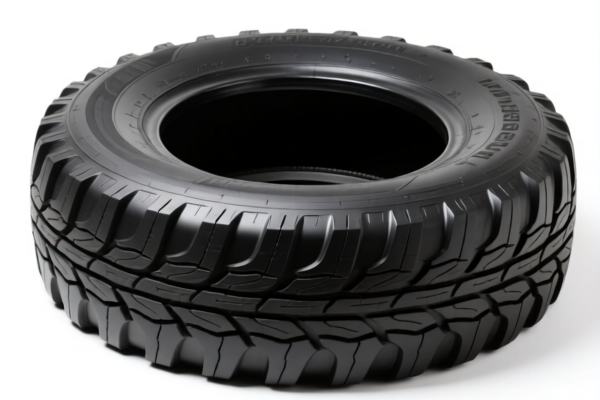
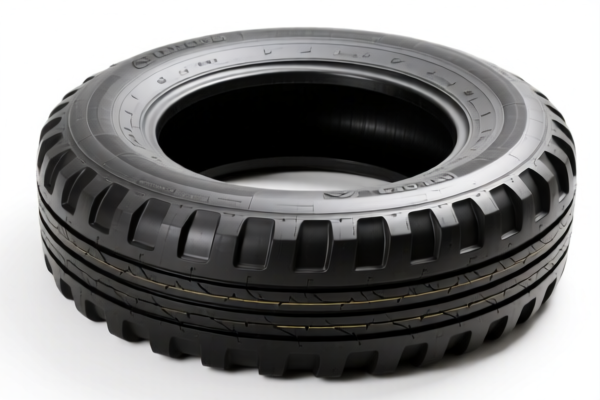
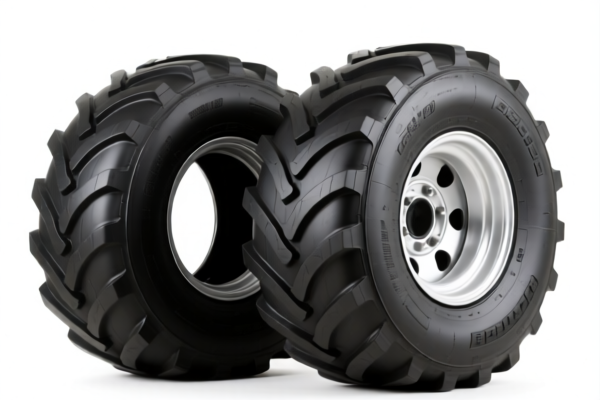
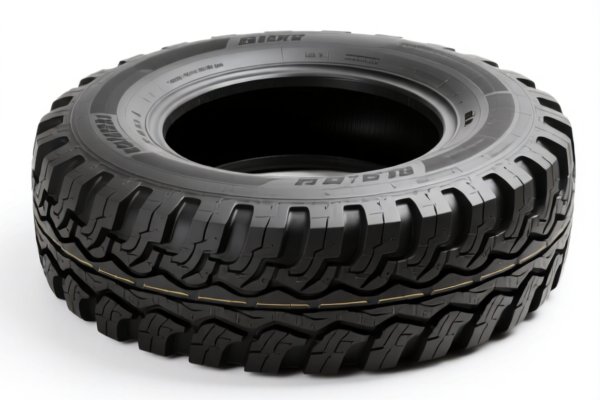
AI Analysis
🚛 Heavy-Duty Mining Inflatable Rubber Tire
🌐 HS Code Reference & Customs Clearance Guide | 2026 Latest Tariff Analysis | Professional Classification Strategy
📌 I. Product Definition & Classification: Do You Really Understand "Mining Tires"?
A "Large Mining Inflatable Rubber Tire" is a critical component for heavy-duty earth-moving equipment, including large dump trucks, loaders, and graders used in surface mining and construction. In international trade, its classification hinges on two key factors: material (typically vulcanized rubber) and specific use (mining/industrial vs. general automotive).
⚠️ Key Distinction Point:
- If the tire is specifically designed for mining vehicles and made of rubber, it falls under specific sub-headings for industrial/agricultural tires.
- If classified as a general "other inflatable rubber article," it may attract different duty rates depending on the specific HS code chosen.
- Crucial Note: Misclassification between "specific tire type" and "general rubber article" can lead to significant tariff differences (e.g., 21.7% vs. 37.5%).
📦 II. HS Code Classification Details (2026 Latest Tariff Authority Comparison)
| HS Code | Product Description | Matching Basis | Total Tax Rate |
|---|---|---|---|
4016.95.00.00 |
Other inflatable rubber articles (General Category) | Matches "inflatable articles" shape; inferred material is rubber based on "mining machinery" context. No conflict with material or shape definitions. | 21.7% |
4016.99.60.50 |
Other vulcanized rubber articles (General Category) | Includes "tire," inferred material is vulcanized rubber. Not excluded from "mechanical articles for motor vehicles." Fits "other vulcanized rubber articles." | 37.5% |
4012.19.80.00 |
Other pneumatic tires of rubber (Non-Car) | "Inflatable tire" matches "tire" usage; inferred material is rubber. No material or shape conflict. | 20.9% |
4011.80.10.20 |
Pneumatic tires of rubber, for construction/mining vehicles | "Mining machinery" matches use requirement; "inflatable tire" matches material (rubber) and form. Perfect fit. | 35.0% |
4011.80.10.10 |
Pneumatic tires of rubber, for construction/mining vehicles | Same as above. "Mining machinery" fits use; "inflatable tire" fits material/form. | 35.0% |
🔍 Critical Analysis:
- HS 4011.80.10.10/20 are the most precise codes for mining tires, as they explicitly cover tires for construction/mining vehicles. However, they carry a higher total tax (35.0%) due to specific agricultural/industrial duty structures.
- HS 4012.19.80.00 and 4016.95.00.00 offer lower total taxes (20.9% and 21.7% respectively) but rely on broader interpretations.
- HS 4016.99.60.50 is the most expensive (37.5%) and should generally be avoided unless other codes are explicitly rejected by customs.
💰 III. 2026 Latest Tariff Rate Details (Including Surcharges & Policy Add-ons)
✅ Applicable Country: United States (US)
✅ Origin: China (CN)
✅ Effective Date: November 10, 2025 onwards (including subsequent imports)
🎯 1. 4016.95.00.00 — Other Inflatable Rubber Articles
| Item | Content |
|---|---|
| Base Duty Rate | 4.2% (ad valorem) |
| Section 301 Surcharge | +7.5% |
| Section 122 Tariff | +10% |
| Total Effective Rate | 21.7% |
| Tax Calculation | CIF Value × 21.7% |
| De Minimis Eligibility | ❌ Not Eligible (deny_de_minimis) |
| Legal Basis Path | USITC:4016.95.00.00 → Section 301: 7.5% → Section 122: 10% |
📌 Explanation:
- This code classifies the item as a "general inflatable rubber article."
- The 21.7% rate is a combination of base duties and surcharges.
- Note: While cheaper than other mining-specific codes, customs may challenge this classification if the tire is clearly for heavy mining trucks.
🎯 2. 4016.99.60.50 — Other Vulcanized Rubber Articles
| Item | Content |
|---|---|
| Base Duty Rate | 2.5% |
| Section 301 Surcharge | +25.0% |
| Section 122 Tariff | +10% |
| Total Effective Rate | 37.5% |
| Tax Calculation | CIF Value × 37.5% |
| De Minimis Eligibility | ❌ Not Eligible (deny_de_minimis) |
| Legal Basis Path | USITC:4016.99.60.50 → Section 301: 25% → Section 122: 10% |
📌 Warning:
- This is the highest tax rate in the list.
- The 25% Section 301 surcharge applies to a broader range of rubber products.
- Recommendation: Avoid this code unless explicitly required by customs after challenge.
🎯 3. 4012.19.80.00 — Other Pneumatic Tires of Rubber
| Item | Content |
|---|---|
| Base Duty Rate | 3.4% |
| Section 301 Surcharge | +7.5% |
| Section 122 Tariff | +10% |
| Total Effective Rate | 20.9% |
| Tax Calculation | CIF Value × 20.9% |
| De Minimis Eligibility | ❌ Not Eligible (deny_de_minimis) |
| Legal Basis Path | USITC:4012.19.80.00 → Section 301: 7.5% → Section 122: 10% |
📌 Strategy:
- This code targets "pneumatic tires" but not specifically for cars or trucks.
- Lowest total tax (20.9%) among the options.
- Risk: Customs may argue that "mining tires" are not "other pneumatic tires" but fall under specific mining vehicle categories (4011).
🎯 4. 4011.80.10.20 & 4011.80.10.10 — Pneumatic Tires for Construction/Min Vehicles
| Item | Content |
|---|---|
| Base Duty Rate | 0.0% |
| Section 301 Surcharge | +25.0% |
| Section 122 Tariff | +10% |
| Total Effective Rate | 35.0% |
| Tax Calculation | CIF Value × 35.0% |
| De Minimis Eligibility | ❌ Not Eligible (deny_de_minimis) |
| Legal Basis Path | USITC:4011.80.10.10/20 → Section 301: 25% → Section 122: 10% |
📌 Note:
- These codes are most accurate for mining applications.
- Despite 0% base duty, the 25% Section 301 surcharge makes the total rate high.
- Use Case: Best for compliance if customs strictly enforces "mining vehicle" classification.
🛠️ IV. Customs Clearance Practical Advice (Real-World Pitfall Guide)
✅ 1. Required Documentation (All Must Be Provided)
| Document | Required | Description |
|---|---|---|
| ✅ Product Specification Sheet | ✔️ | Must include dimensions, tread pattern, load index, speed rating, and material composition. |
| ✅ Technical Diagrams | ✔️ | Show internal structure (pneumatic, non-pneumatic, etc.). |
| ✅ Product Photos (Clear) | ✔️ | Include brand, model, size markings on the sidewall. |
| ✅ Commercial Invoice | ✔️ | Must clearly state "Large Mining Inflatable Rubber Tire" and HS Code. |
| ✅ Packing List | ✔️ | Detail quantity per package, gross/net weight. |
| ✅ Certificate of Origin (CO) | ✔️ | If not from China, may qualify for lower rates. |
| ✅ Third-Party Inspection Report | ✔️ | Especially for material verification (vulcanized rubber). |
✅ 2. Declaration Tips (Key Rules)
🔥 "Match Use, Specify Material, Avoid Generalization!"
| Scenario | Correct Declaration | Error to Avoid |
|---|---|---|
| Tire for large dump trucks/mining loaders | HS 4011.80.10.10/20 (35.0%) | Reporting as "general tire" (4012) → Risk of audit. |
| Tire for general industrial machinery | HS 4016.95.00.00 (21.7%) | Reporting as "mining tire" → Unjustified high duty. |
| Non-pneumatic solid tire | Not this HS | Must use different code (e.g., 4011.99). |
| Car tire (even if large) | HS 4011.10 | Do NOT use 4011.80 (mining/construction). |
✅ 3. Special Case Handling
| Case | Recommendation |
|---|---|
| OEM Mining Tires | Provide customer PO + design specs. Confirm if it fits "mining vehicle" definition. |
| Mixed Shipments (Cars + Mining) | Separate declarations! Mixing categories can trigger audit for both. |
| Used Tires | NOT ALLOWED under most general import rules. Must be new. |
| Origin Shift (e.g., Vietnam) | Apply for IEEPA Exemption or lower rates if eligible. Verify country of origin carefully. |
🌍 V. Global Market Comparison (2026 Latest)
| Country/Region | Recommended HS Code | Total Duty (CN Origin) | Certification | Notes |
|---|---|---|---|---|
| 🇺🇸 USA | 4012.19.80.00 or 4016.95.00.00 |
20.9% - 21.7% | DOT/US3C | High scrutiny on "mining" claim. |
| 🇨🇳 China | 4011.80.10.10 |
~5-10% | CCC | Lower duties, but for export only. |
| 🇪🇺 EU | 4011.80.10.10 |
0% (if EEC approved) | E-Mark | No Section 301/122 surcharges. |
| 🇦🇺 Australia | 4011.80.10.10 |
5% | RCM | Moderate duty. |
| 🇯🇵 Japan | 4011.80.10.10 |
0-5% | JIS | Low duty, strict safety standards. |
📌 Conclusion:
- USA is the most complex due to Section 301 and 122 surcharges.
- Minimizing duty in the US requires choosing 4012.19.80.00 (20.9%) or 4016.95.00.00 (21.7%), but this risks customs challenge if the tire is explicitly for mining trucks.
- Compliance favors 4011.80.10.10/20 (35.0%), which is legally accurate but costly.
📌 VI. Common Mistakes & Pitfalls (Blood Lessons)
❌ Mistake 1: Declaring "Mining Tire" as "Car Tire" (4011.10)
👉 Consequence: Customs rejects due to size/spec mismatch → Seizure + Fine.
❌ Mistake 2: Using 4016.99.60.50 without justification
👉 Consequence: 37.5% tax → Unnecessary high cost.
❌ Mistake 3: Ignoring "Section 122" tariff
👉 Consequence: Underpayment by 10% → Back taxes + Interest.
❌ Mistake 4: Mixing used and new tires in one shipment
👉 Consequence: Entire shipment rejected.
✅ Best Practice:
"Pneumatic Rubber Tire, Size 20.5R25, For Mining Dump Truck, New, Model XYZ, DOT Compliant"
🎯 VII. Conclusion: Precise Classification, Cost Optimization!
🎯 Remember the Rules:
🔹 "Mining = 35%, General Tire = 20.9%, Other Rubber = 21.7-37.5%"
🔹 "Accurate Use Description Saves Money!"
🔹 "Section 122 is 10% Extra – Don't Forget It!"
📌 Pro Tip:
If your tires are originating from Vietnam, Thailand, or Malaysia, check for IEEPA Exemptions or lower Section 301 rates.
Recommendation: Apply for a Pre-Ruling (Advance Ruling) from CBP to confirm the HS Code before shipment.
📣 Immediate Action:
📞 Consult a licensed customs broker + Provide product specs + Apply for HS Code Pre-Ruling
🚀 Ensure smooth clearance, minimize duty, maximize profit!
✨ Professional clearance starts with accurate classification!
💼 Every cent saved is profit earned!
Customer Reviews
About HS Code Classification
The Harmonized System (HS) is an internationally standardized nomenclature developed by the World Customs Organization (WCO) to classify traded products. Over 200 countries use the HS system as the basis for customs tariffs, trade statistics, and import/export regulations.
Each HS code follows a hierarchical structure:
- Chapter (2 digits) — Broad category of goods (e.g., Chapter 84: Machinery and Mechanical Appliances)
- Heading (4 digits) — More specific grouping within the chapter
- Subheading (6 digits) — Internationally standardized breakdown, used by all WCO member countries
- National subdivisions (8-10 digits) — Country-specific extensions for further classification, such as US HTSUS 10-digit codes
Correct HS code classification is essential for smooth customs clearance, accurate duty payment, and compliance with trade regulations. Misclassification can lead to customs delays, overpayment of duties, or penalties.
When importing from CN to US, the applicable tariff rates may include:
- Most-Favored-Nation (MFN) rate — The standard duty rate applied to WTO members
- General rate — Applied to countries without trade agreements
- Trade remedy duties — Additional tariffs such as Section 301 (anti-dumping), Section 232 (national security), or countervailing duties
The information provided on this page is for reference purposes only. For official classification, please consult with your local customs authority or a licensed customs broker.