lawn mower refurbished rubber tire
CN → US| HS Code | Tariff Rate | Origin | Destination | Doc |
|---|---|---|---|---|
| 8433905010 | 35.0% | CN | US | Official Doc |
| 8433901010 | 35.0% | CN | US | Official Doc |
| 4016996050 | 37.5% | CN | US | Official Doc |
| 4016996010 | 37.5% | CN | US | Official Doc |
| 8433905010 | 35.0% | CN | US | Official Doc |
Product Images
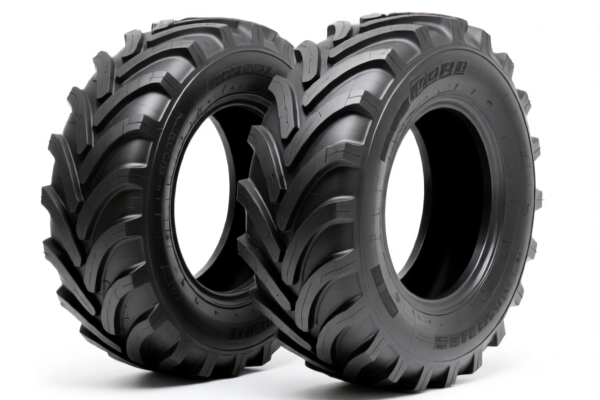
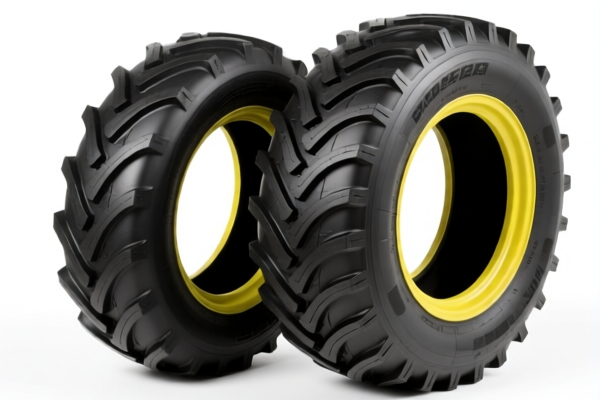
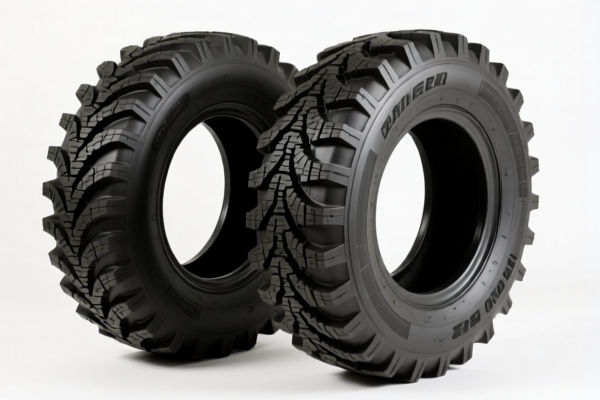
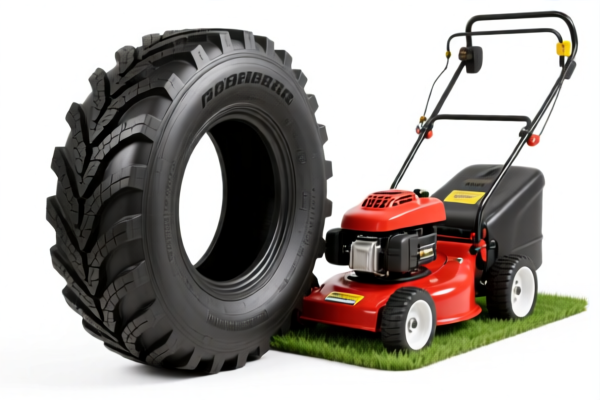
AI Analysis
🚜 Lawn Mower Refurbished Rubber Tire
🌐 HS Code Reference & Customs Clearance Guide | 2026 Latest Tariff Analysis | Professional Clearance Strategy
📌 I. Product Definition & Classification: What Exactly is a "Refurbished Rubber Tire"?
A lawn mower tire is not merely a "rubber product" but a specific part of an agricultural/mechanical machine. In international trade, the classification hinges on two critical factors:
1. Function/Use: Is it specifically designed for a lawn mower (agricultural/maintenance machinery)?
2. State: Is it a "new" tire or a "refurbished/retreaded" one?
⚠️ Key Distinction:
- Refurbished/Retreaded Tires: If the tire has been remolded or retreaded, it is often classified differently than new tires. However, in many tariff schedules, "parts of machines" take precedence over generic "rubber parts" if they are identifiable as specific machine components.
- Specific Part vs. General Part: If the tire is uniquely shaped for a lawn mower (e.g., a "road wheel" or "guide wheel" for a mower deck), it may fall under Parts of Mowers (Chapter 84) rather than Rubber Articles (Chapter 40).
📦 II. HS Code Classification Details (2026 Latest Tariff Authority Mapping)
Based on the provided data, here are the five potential HS Codes and their rationales:
| HS Code | Product Description | Application Scenario | Tax Rate | Legal/Tariff Rationale |
|---|---|---|---|---|
8433.90.50.10 |
Rubber Lawn Mower Wheel – Specifically classified as a road wheel/guide wheel for lawn mowers | Parts of lawn mowers; identifiable by specific mounting holes or shape for mower decks | 35.0% | Part of Machine Priority: Classified under Chapter 84 (Machinery) because it is a specific part of a lawn mower. Tax Detail: Base 0% + Section 301 (25%) + Section 301 (10%) = 35%. |
8433.90.50.10 |
Rubber Lawn Mower Wheel – Classified as a mower-specific road wheel | Same as above; emphasizes the "specific use" for lawn mowers | 35.0% | Same as above: Strong argument for Chapter 84 due to specific function. |
8433.90.10.10 |
Rubber Lawn Mower Wheel – Matches the use and form of the lawn mower | Parts of lawn mowers; general category for mower parts | 35.0% | Part of Machine Priority: Similar to above, falls under "Parts of lawn mowers" in 8433. Tax Detail: Base 0% + Section 301 (25%) + Section 301 (10%) = 35%. |
4016.99.60.50 |
Rubber Product – Formed as a wheel, classified as other vulcanized rubber articles | General rubber wheel not specifically identified as a mower part, or non-structural rubber wheel | 37.5% | General Rubber Article: Falls under Chapter 40 (Rubber Articles). Tax Detail: Base 2.5% + Section 301 (25%) + Section 301 (10%) = 37.5%. |
4016.99.60.10 |
Vulcanized Rubber Part – Formed as a wheel, used in mechanical context | Rubber components for machinery that are not specific enough for Chapter 84 | 37.5% | General Rubber Part: Chapter 40 applies when the item is a generic rubber part, not a dedicated machine part. Tax Detail: Base 2.5% + Section 301 (25%) + Section 301 (10%) = 37.5%. |
🔍 Critical Analysis:
- Why 8433 over 4016? According to General Rule of Interpretation (GRI) 1 and 6, if an article is specifically designed as a part of a machine (lawn mower), it should be classified under the machine's part heading (8433.90) rather than the general material heading (4016).
- Refurbished Status: If the tire is "refurbished," some countries may treat it as a used good or require additional documentation. However, the provided data does not differentiate between new and refurbished for these HS codes, implying the form/function determines the code, not the condition.
- Tax Difference: Chapter 84 codes have 0% base duty, while Chapter 40 codes have 2.5% base duty. This leads to a 2.5% higher total tax for rubber-product classifications.
💰 III. 2026 Latest Tariff Rate Breakdown (Including Surtaxes & Policy Add-ons)
✅ Applicable Country: United States (US)
✅ Country of Origin: China (CN)
✅ Effective Date: From November 10, 2025 (and subsequent imports)
🎯 1. 8433.90.50.10 & 8433.90.10.10 – Parts of Lawn Mowers
| Item | Content |
|---|---|
| Base Duty Rate | 0% (ad valorem) |
| USITC Surtax (Section 301) | +25% (From USITC Footnote 9903.88.01 or similar) |
| IEEPA Surtax (Section 301/122) | +10% (Targeted at Chinese products, from 2025-11-10) |
| Total Duty Rate | 35.0% |
| Tax Calculation | CIF Value × 35% |
| De Minimis Exemption | ❌ Not Eligible (deny_de_minimis) |
| Legal Basis Path | IEEPA:9903.01.25 → IEEPA:9903.01.24 → USITC:8433.90.50.10 / 8433.90.10.10 → FOOTNOTE:9903.88.01 |
📌 Explanation:
- "USITC Surtax 25%": Comes from the US Trade Act Section 301, targeting Chinese imports.
- "IEEPA 10%": Additional surtax under the International Emergency Economic Powers Act.
- Total 35%: This is the lower tax rate compared to the rubber-article classification.
🎯 2. 4016.99.60.50 & 4016.99.60.10 – Other Vulcanized Rubber Articles
| Item | Content |
|---|---|
| Base Duty Rate | 2.5% (ad valorem) |
| USITC Surtax (Section 301) | +25% |
| IEEPA Surtax (Section 301/122) | +10% |
| Total Duty Rate | 37.5% |
| Tax Calculation | CIF Value × 37.5% |
| De Minimis Exemption | ❌ Not Eligible (deny_de_minimis) |
| Legal Basis Path | IEEPA:9901.25 → IEEPA:9903.01.24 → USITC:4016.99.60.50 / 4016.99.60.10 → FOOTNOTE:9903.88.01 |
📌 Explanation:
- Higher Base Rate: The 2.5% base duty on rubber articles makes the total tax 2.5 percentage points higher than the machine parts classification.
- Risk of Misclassification: If customs determines the tire is a generic rubber part, you will pay more. However, if it is clearly a mower part, you should argue for the 8433 code to save costs.
🛠️ IV. Customs Clearance Practical Advice (Combat-Ready Pitfall Avoidance Guide)
✅ 1. Documentation Checklist (Non-negotiable)
| Document | Required? | Notes |
|---|---|---|
| ✅ Product Specification Sheet | ✔️ | Must include dimensions, load capacity, and specific application (e.g., "for Lawn Mower Model XYZ"). |
| ✅ Product Photos (with Mounting Holes/Shape) | ✔️ | Clear images showing the tire's unique shape that matches a lawn mower wheel. |
| ✅ Commercial Invoice | ✔️ | Description must be precise: "Rubber Road Wheel for Lawn Mower, Part No. ABC" (avoid generic "Rubber Tire"). |
| ✅ Proof of Origin (CO) | ✔️ | Mandatory for proving Chinese origin to apply surtaxes correctly. |
| ✅ Packing List | ✔️ | Ensure no separation of "tires" and "mower decks" if they are shipped together for assembly. |
| ✅ Third-Party Inspection Report | ✔️ | If "refurbished," provide evidence of quality/re-treading process to prove it meets safety standards. |
✅ 2. Declaration Tips (Key Mnemonic)
🔥 "Specific Part Wins, Generic Rubber Loses; Name it Right, Save 2.5%!"
| Situation | Correct Declaration | Wrong Action |
|---|---|---|
| Tire is uniquely shaped for a lawn mower | 8433.90.50.10 or 8433.90.10.10 |
Misdeclare as 4016.99.60.50 → Pay 37.5% instead of 35% |
| Tire is a generic round rubber wheel | 4016.99.60.50 |
Misdeclare as 8433 → Risk of penalty for false classification |
| Refurbished Tire | 8433.90.50.10 (if specific) |
Declare as "Used Tire" without part details → Customs delay/rejection |
| Tire + Rim Assembly | 8433.90.50.10 (as a set) |
Separate declaration of rim and tire → Complexity and potential higher total tax |
✅ 3. Special Case Handling
| Scenario | Handling Advice |
|---|---|
| "Refurbished" Status | Provide a certificate of re-treading/refurbishment. If the tire is significantly different from a new one, customs may question its HS code. Stick to 8433 if it remains a mower part. |
| OEM Custom Tires | Include the customer’s part number and design drawings. This proves the "specific part" argument for Chapter 84. |
| Tires with Metal Rims | If the rim is not essential for function, the tire may still be 8433. If the assembly is critical, declare as a set. |
| Multiple Tires in One Shipment | Ensure all tires are identical. Mixed shipments may cause customs to flag for random inspection. |
🌍 V. Global Market Clearance Comparison (2026 Latest)
| Country/Region | Recommended HS Code | Duty Rate | Certification Requirement | Notes |
|---|---|---|---|---|
| 🇺🇸 USA | 8433.90.50.10 |
35% (China) | None specific, but accurate description is key | High tariff due to Section 301. |
| 🇨🇳 China | 8433.90.50.10 |
5% | CCC (if applicable) | No surtaxes. |
| 🇪🇺 EU | 8433.90.10 |
0% (if MFN) | CE + RoHS | No Section 301 surtaxes. |
| 🇬🇧 UK | 8433.90.10 |
0% | UKCA | Post-Brexit rules apply. |
| 🇦🇺 Australia | 8433.90.10 |
5% | RCM | No surtaxes. |
📌 Conclusion:
- USA is the only major market with high additional surtaxes (35% total).
- Chapter 84 (8433) is the optimal HS Code for lawn mower tires, offering a 2.5% lower total tax than Chapter 40 (4016).
- Prove Specificity: To qualify for8433, you must demonstrate the tire is a specific part of a lawn mower, not a generic rubber wheel.
📌 VI. Common Mistakes & Pitfall Avoidance (Blood-Lesson Guide)
❌ Mistake 1: Declaring "Rubber Tire" generically
👉 Consequence: Customs may assign 4016.99.60.50 → Pay 37.5% instead of 35%.
❌ Mistake 2: Splitting "Tire" and "Mower Deck" in same shipment without link
👉 Consequence: Customs may view tire as a generic part → Higher tax + inspection delay.
❌ Mistake 3: Ignoring "Refurbished" status
👉 Consequence: If not declared, it may be seen as "used goods" which have different regulations. Always clarify if it is "new" or "refurbished/re-treaded."
❌ Mistake 4: Using "Tire" instead of "Wheel" or "Road Wheel"
👉 Consequence: "Tire" implies rubber only; "Wheel" or "Road Wheel" implies a complete part for machinery, supporting 8433 classification.
✅ Correct Practice:
"Rubber Road Wheel for Lawn Mower, Part No. XYZ, Refurbished, Fits Model ABC, 12x4.00-6"
🎯 VII. Conclusion: Professional Classification Saves Money!
🎯 Remember the Mnemonic:
🔹 "Specific Part = 8433 = 35% Tax"
🔹 "Generic Rubber = 4016 = 37.5% Tax"
🔹 "Save 2.5% by Proving It’s a Mower Part!"
📌 Pro Tip:
- If your lawn mower tires are sourced from Vietnam, Mexico, or Thailand, you may qualify for IEEPA exemptions or lower tariffs.
- Apply for Advance Ruling if unsure about the "refurbished" status or specific shape classification.
📣 Immediate Action:
📞 Contact a professional customs broker + Provide product photos + Apply for HS Code Advance Ruling
🚀 Ensure smooth clearance, avoid penalties, and maximize profits!
✨ Professional clearance starts with precise classification!
💼 Every cent of cost deserves accurate calculation!
Customer Reviews
About HS Code Classification
The Harmonized System (HS) is an internationally standardized nomenclature developed by the World Customs Organization (WCO) to classify traded products. Over 200 countries use the HS system as the basis for customs tariffs, trade statistics, and import/export regulations.
Each HS code follows a hierarchical structure:
- Chapter (2 digits) — Broad category of goods (e.g., Chapter 84: Machinery and Mechanical Appliances)
- Heading (4 digits) — More specific grouping within the chapter
- Subheading (6 digits) — Internationally standardized breakdown, used by all WCO member countries
- National subdivisions (8-10 digits) — Country-specific extensions for further classification, such as US HTSUS 10-digit codes
Correct HS code classification is essential for smooth customs clearance, accurate duty payment, and compliance with trade regulations. Misclassification can lead to customs delays, overpayment of duties, or penalties.
When importing from CN to US, the applicable tariff rates may include:
- Most-Favored-Nation (MFN) rate — The standard duty rate applied to WTO members
- General rate — Applied to countries without trade agreements
- Trade remedy duties — Additional tariffs such as Section 301 (anti-dumping), Section 232 (national security), or countervailing duties
The information provided on this page is for reference purposes only. For official classification, please consult with your local customs authority or a licensed customs broker.