lazy sofa cover
CN → US| HS Code | Tariff Rate | Origin | Destination | Doc |
|---|---|---|---|---|
| 3926909989 | 22.8% | CN | US | Official Doc |
| 6304920000 | 23.8% | CN | US | Official Doc |
| 9401991020 | 17.5% | CN | US | Official Doc |
| 9401999021 | 35.0% | CN | US | Official Doc |
| 6304930000 | 35.0% | CN | US | Official Doc |
Product Images
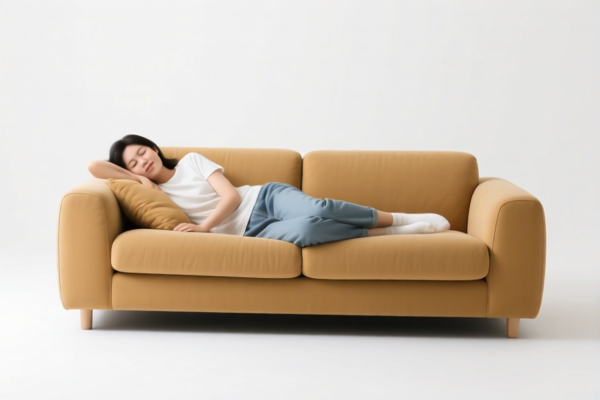
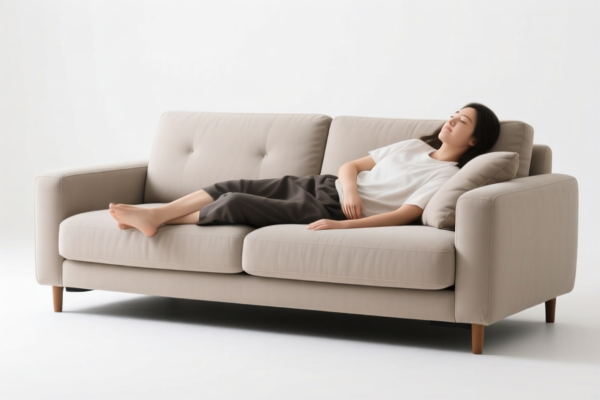
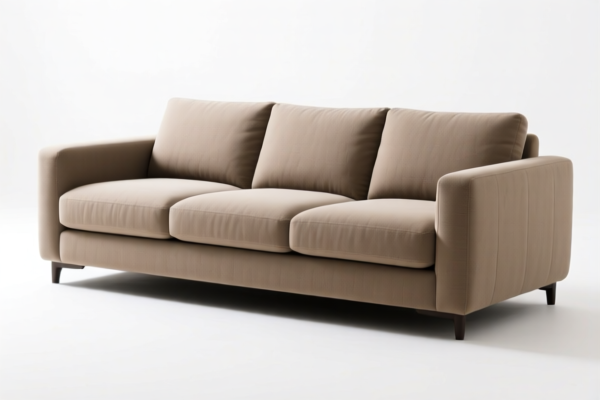
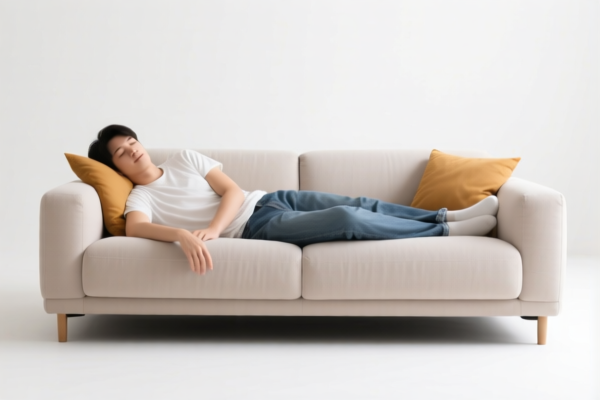
AI Analysis
🛋️ Lazy Sofa Cover (Fabric/Plastic Accessories)
🌐 HS Code Reference & Customs Clearance Guide | 2026 Latest Tariff Analysis | Professional通关 Strategy
📌 I. Product Definition & Classification: What exactly is a "Lazy Sofa Cover"?
A "Lazy Sofa Cover" (often referred to as slipcovers, sofa throws, or protective cushions) is an accessory designed to protect or decorate seating furniture. In international trade, the classification strictly depends on the material composition, as "Lazy" usually implies ease of use (often stretchable fabric or lightweight plastic-like synthetics) but does not change the fundamental nature of the goods.
The goods fall into two main categories:
1. Textile-based Covers: Made of cotton, polyester, or blended fabrics (Non-knitted/weaved).
2. Plastic/Synthetic-based Covers: Made of PVC, TPU, or other synthetic materials (Plastic articles).
3. Furniture Parts: Viewed as accessories/parts for seats (HS 9401).
⚠️ Key Distinction Point:
- If the item is fabric/cotton/polyester → It belongs to Chapter 63 (Other Made-up Textile Articles) or Chapter 62/60 (Knitted/Woven).
- If the item is plastic/synthetic sheeting → It belongs to Chapter 39 (Plastics and Articles Thereof).
- If it is viewed strictly as a spare part for a chair/sofa → It may fall under Chapter 94 (Furniture).
📦 II. HS Code Classification Matrix (Based on Provided Data)
| HS Code | Product Description | Material Logic | Tax Impact |
|---|---|---|---|
3926.90.99.89 |
Other Plastic Articles | Identified as plastic/synthetic fiber products (3901-3914 range), not specifically excluded. "Sofa cover" is treated as a plastic accessory. | ⚠️ High (22.8%) |
6304.92.00.00 |
Other Furnishing Articles (Cotton) | "Fabric" material reasonably inferred as cotton or cotton-blend. Logic matches "Non-knitted/woven cotton articles." | ⚠️ High (23.8%) |
6304.93.00.00 |
Other Furnishing Articles (Synthetic Fibers) | "Fabric" inferred as non-knitted/woven synthetic fibers (polyester, etc.) under the "Other" residual category. | ⚠️ High (35.0%) |
9401.99.10.20 |
Parts of Seats (Textile Materials) | "Fabric" fits textile material requirement; "Cut-to-shape" textile articles fit the morphology of seat parts. | ✅ Lowest Base (17.5%) |
9401.99.90.21 |
Other Parts of Seats | "Fabric" corresponds to textile; "Sofa cover" as an accessory fits "Parts/Other" logic with no material conflict. | ⚠️ Highest (35.0%) |
🔍 Critical Note:
- Material Declaration is King: You must specify if the cover is Cotton, Polyester, Plastic, or Mixed.
- Function vs. Material: While functionally a "part" of a sofa, US Customs often prefers Chapter 63 (Textile articles) over Chapter 94 (Furniture parts) for slipcovers unless they are rigid or specialized structural components. However, the data provided includes valid arguments for 9401 (Seat Parts), which offers lower Base Duty (0%) but is subject to Section 301/122 tariffs.
💰 III. 2026 Tariff Rate Breakdown (Including Surtaxes)
✅ Applicable Country: United States (US)
✅ Origin: China (CN)
✅ Effective Time: Post-November 2025 (Current Trade Environment)
🎯 1. 3926.90.99.89 – Other Plastic Articles
| Item | Details |
|---|---|
| Base Duty | 5.3% |
| Section 301 Surtax | +7.5% |
| Section 122 Surtax | +10.0% |
| Total Tax Rate | 22.8% |
| Tax Calculation | CIF Value × 22.8% |
| De Minimis Exemption | ❌ Not Eligible (High value/category) |
📌 Explanation:
- Classified as a plastic good.
- Base duty applies, plus the standard Section 301 (7.5%) and Section 122 (10%) tariffs on Chinese goods.
🎯 2. 6304.92.00.00 – Other Furnishing Articles (Cotton)
| Item | Details |
|---|---|
| Base Duty | 6.3% |
| Section 301 Surtax | +7.5% |
| Section 122 Surtax | +10.0% |
| Total Tax Rate | 23.8% |
| Tax Calculation | CIF Value × 23.8% |
| De Minimis Exemption | ❌ Not Eligible |
📌 Explanation:
- If declared as Cotton, the base duty is higher (6.3% vs 0% for seat parts), but still subject to all surtaxes.
🎯 3. 9401.99.10.20 – Parts of Seats (Textile) [POTENTIALLY OPTIMAL]
| Item | Details |
|---|---|
| Base Duty | 0.0% |
| Section 301 Surtax | +7.5% |
| Section 122 Surtax | +10.0% |
| Total Tax Rate | 17.5% |
| Tax Calculation | CIF Value × 17.5% |
| De Minimis Exemption | ❌ Not Eligible |
📌 Explanation:
- Base Duty is 0% because it is classified as a "Part of a Seat."
- However, Section 301 (7.5%) and Section 122 (10%) still apply.
- Total 17.5% is the LOWEST among the provided options.
- Risk: Customs may challenge this if the cover is seen as a "furnishing article" (Ch 63) rather than a "part." Requires strong justification (e.g., "Cut-to-shape textile part for upholstery").
🎯 4. 6304.93.00.00 – Other Furnishing Articles (Synthetic)
| Item | Details |
|---|---|
| Base Duty | 0.0% |
| Section 301 Surtax | +25.0% |
| Section 122 Surtax | +10.0% |
| Total Tax Rate | 35.0% |
| Tax Calculation | CIF Value × 35.0% |
| De Minimis Exemption | ❌ Not Eligible |
📌 Explanation:
- WARNING: This classification incurs a 25% Section 301 Surtax (higher than the 7.5% on9401.99.10.20).
- Even though base duty is 0%, the total 35% makes it more expensive than the plastic or seat-part options.
🎯 5. 9401.99.90.21 – Other Parts of Seats
| Item | Details |
|---|---|
| Base Duty | 0.0% |
| Section 301 Surtax | +25.0% |
| Section 122 Surtax | +10.0% |
| Total Tax Rate | 35.0% |
| Tax Calculation | CIF Value × 35.0% |
| De Minimis Exemption | ❌ Not Eligible |
📌 Explanation:
- Similar to above, but falls under a different residual subheading for seat parts.
- High Surcharge (25%) drives the total to 35%. Avoid if possible.
🛠️ IV. Customs Clearance Practical Advice
✅ 1. Material Declaration Strategy
| Material | Recommended HS Code | Why? |
|---|---|---|
| Plastic/TPU | 3926.90.99.89 |
Direct match for plastic articles. Clear logic, moderate tax (22.8%). |
| Cotton/Blended Fabric | 9401.99.10.20 |
Best Option. Low base duty (0%) + lower surtax (7.5%). Justify as "Upholstery Part." |
| Polyester/Synthetic Fabric | 9401.99.10.20 |
Same as above. Ensure it is described as a "seat part" not just "furnishing." |
📌 Pro Tip:
If you are using Polyester (common for lazy covers), do NOT use6304.93.00.00(35% tax). Use9401.99.10.20(17.5% tax) by emphasizing its function as a seat component.
✅ 2. Documentation Checklist
| Document | Requirement |
|---|---|
| Product Description | "Sofa Cover, Cotton/Polyester Blend, Non-Knitted, Cut-to-Shape for Seat Upholstery" |
| Composition Label | Must explicitly state % Cotton vs. % Polyester vs. % Plastic. |
| Photos | Show the cover on a sofa to prove it is a "seat part" or "upholstery item." |
| Bill of Lading | Ensure HS Code matches the invoice description. |
✅ 3. Common Pitfalls
❌ Error 1: Declaring as "Textile Furnishing" (6304) when it can be "Seat Part" (9401).
👉 Consequence: You pay 25% Section 301 instead of 7.5%. Save 17.5% tax!
❌ Error 2: Misidentifying Material.
👉 Consequence: If you claim Cotton but it is Polyester, Customs may reclassify to 6304.93 (35% tax).
❌ Error 3: Using "Sofa Cover" without specifying "Part of Seat."
👉 Consequence: Ambiguity leads to higher base duties or audits.
✅ Correct Approach:
"Sofa Slipcover, Made of 80% Polyester / 20% Cotton, Non-Knitted, Cut to Shape for Chair Upholstery, HS 9401.99.10.20"
🌍 V. Global Market Comparison
| Market | Recommended HS Code | Total Tax (China Origin) | Notes |
|---|---|---|---|
| 🇺🇸 USA | 9401.99.10.20 |
17.5% | Lowest rate due to 0% base duty + 7.5% Section 301. |
| 🇺🇸 USA (Plastic) | 3926.90.99.89 |
22.8% | Higher base duty (5.3%). |
| 🇨🇳 China | 6304.93.00.00 |
~5-10% | No Section 301/122 surcharges. |
| 🇪🇺 EU | 6304.93.00.00 |
~4-12% | Depends on exact fiber content. |
📌 Conclusion:
For the US Market,9401.99.10.20is the most cost-effective classification for fabric sofa covers, provided you can justify it as a part of a seat (upholstery).
📌 VI. Actionable Summary
- Identify Material: Is it Plastic, Cotton, or Synthetic?
- Choose HS Code:
- Plastic →
3926.90.99.89(22.8%) - Fabric →
9401.99.10.20(17.5%) [RECOMMENDED] - Avoid
6304.93.00.00and9401.99.90.21due to 35% tax. - Justify as "Seat Part": Use descriptions like "Upholstery Cover," "Seat Slipcover," "Part of Chair."
- Prepare Docs: Clear composition label and photos showing use on a sofa.
🎯 Final Tip:
"Classify as Part, Not Accessory. Pay 17.5%, Not 35%. Save Money, Clear Smooth!"
✨ Professional Clearance Starts with Precise Classification!
💼 Every Percent Saved is Profit Gained!
Customer Reviews
About HS Code Classification
The Harmonized System (HS) is an internationally standardized nomenclature developed by the World Customs Organization (WCO) to classify traded products. Over 200 countries use the HS system as the basis for customs tariffs, trade statistics, and import/export regulations.
Each HS code follows a hierarchical structure:
- Chapter (2 digits) — Broad category of goods (e.g., Chapter 84: Machinery and Mechanical Appliances)
- Heading (4 digits) — More specific grouping within the chapter
- Subheading (6 digits) — Internationally standardized breakdown, used by all WCO member countries
- National subdivisions (8-10 digits) — Country-specific extensions for further classification, such as US HTSUS 10-digit codes
Correct HS code classification is essential for smooth customs clearance, accurate duty payment, and compliance with trade regulations. Misclassification can lead to customs delays, overpayment of duties, or penalties.
When importing from CN to US, the applicable tariff rates may include:
- Most-Favored-Nation (MFN) rate — The standard duty rate applied to WTO members
- General rate — Applied to countries without trade agreements
- Trade remedy duties — Additional tariffs such as Section 301 (anti-dumping), Section 232 (national security), or countervailing duties
The information provided on this page is for reference purposes only. For official classification, please consult with your local customs authority or a licensed customs broker.