ldpe processing edge scrap
CN → US| HS Code | Tariff Rate | Origin | Destination | Doc |
|---|---|---|---|---|
| 3915100000 | 35.0% | CN | US | Official Doc |
| 3915900010 | 35.0% | CN | US | Official Doc |
| 3901105010 | 41.5% | CN | US | Official Doc |
| 3901105020 | 41.5% | CN | US | Official Doc |
| 3901105030 | 41.5% | CN | US | Official Doc |
Product Images
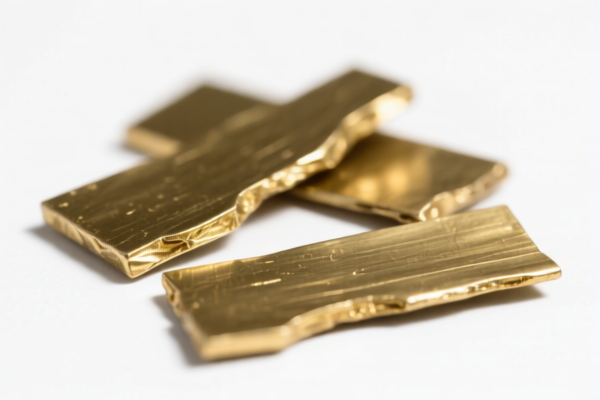
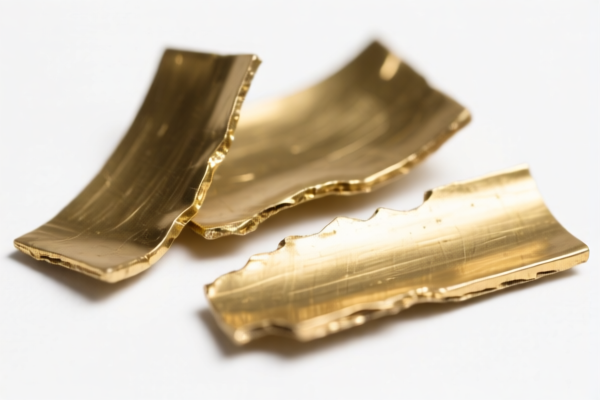
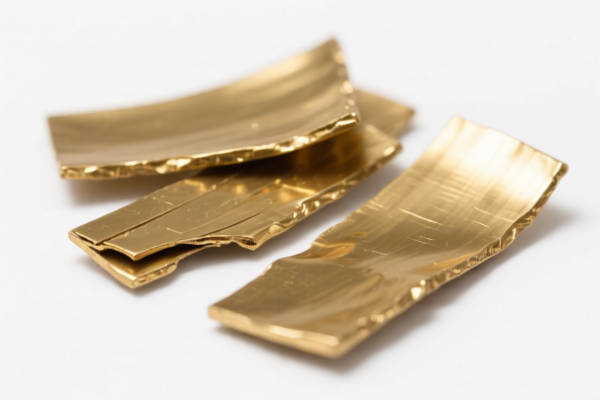
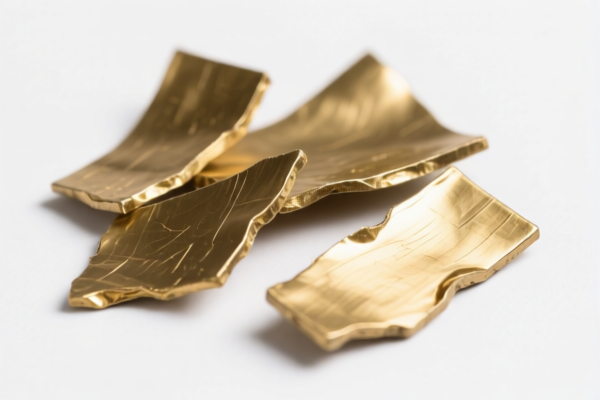
AI Analysis
🧱 LDPE Processing Edge Scrap (Low-Density Polyethylene Scrap)
🌐 HS Code Reference & Customs Clearance Guide | 2026 Latest Tariff Analysis | Professional-Level Clearance Strategy
📌 I. Product Definition & Classification: Do You Really Understand "LDPE Processing Edge Scrap"?
LDPE Processing Edge Scrap refers to the waste, shavings, and trimmings generated during the manufacturing process of Low-Density Polyethylene (LDPE) products. In international trade, its classification depends strictly on its material (LDPE) and state (scrap/waste vs. resin).
Low-Density Polyethylene Resin (Virgin Material): The raw polymer, typically in granules or powder form, with a specific gravity less than 0.94. LDPE Processing Edge Scrap (Recycled/Waste): The by-product or waste resulting from processing the above resin, characterized as waste, shavings, or off-cuts.
⚠️ Key Distinction Point:
- If the material is raw, unprocessed resin (primary form) → Classified as Resin. - If the material is waste, trimmings, or scrap from production → Classified as Plastic Waste/Scrap.
📦 II. HS Code Classification Details (2026 Latest Tariff Authority对照)
| HS Code | Product Description | Application Scenario | State/Morphology |
|---|---|---|---|
3915.10.00.00 |
Waste, shavings, and scrap of polyethylene | LDPE production trimmings, off-cuts, processing waste | ✅ Waste/Scrap |
3915.90.00.10 |
Waste, shavings, and scrap of other plastics | LDPE scrap fitting other plastic waste logic (no conflict in material/state) | ✅ Waste/Scrap |
3901.10.50.10 |
Polyethylene of a specific gravity < 0.94 | Virgin LDPE resin, primary form (granules/powder) | ✅ Primary Form |
3901.10.50.20 |
Polyethylene (LDPE) | Virgin LDPE resin, explicitly matching material/state attributes | ✅ Primary Form |
🔍 Key Reminder:
- All "Processing Edge Scrap" must be classified under Chapter 3915 (Waste/Scrap), NOT Chapter 3901 (Resin). - Misclassifying scrap as resin can lead to severe penalties due to tax evasion accusations.
💰 III. 2026 Latest Tariff Rate Details (Including Surcharges & Policy Add-ons)
✅ Applicable Country: United States (US)
✅ Origin: China (CN)
✅ Effective Date: From November 10, 2025 (including subsequent imports)
🎯 1. 3915.10.00.00 —— Waste, Shavings, and Scrap of Polyethylene (LDPE)
| Item | Content |
|---|---|
| Base Tariff | 0.0% |
| Section 301 Surcharge | +25.0% |
| Section 122 Tariff | +10.0% |
| Total Tax Rate | 35.0% |
| Tax Calculation | CIF Value × 35% |
| De Minimis Eligibility | ❌ Not Eligible |
| Legal Basis Path | Section 301 → Section 122 → USITC:3915.10.00.00 |
📌 Explanation:
- "Base Tariff 0%": Standard duty for plastic waste under HTSUS. - "Section 301 Surcharge 25%": Additional tariff on Chinese goods under the Trade Act of 1974. - "Section 122 Tariff 10%": Additional duty under Section 122 of the Trade Act of 1974 (for national security/international balance of payments). - Total 35%: This is the total effective tax rate for LDPE processing edge scrap from China.
🎯 2. 3915.90.00.10 —— Waste, Shavings, and Scrap of Other Plastics (LDPE Fallback)
| Item | Content |
|---|---|
| Base Tariff | 0.0% |
| Section 301 Surcharge | +25.0% |
| Section 122 Tariff | +10.0% |
| Total Tax Rate | 35.0% |
| Tax Calculation | CIF Value × 35% |
| De Minimis Eligibility | ❌ Not Eligible |
| Legal Basis Path | Section 301 → Section 122 → USITC:3915.90.00.10 |
📌 Note:
- If3915.10.00.00is deemed inapplicable for some specific LDPE scrap variants, this code serves as the alternative. - The tax rate remains identical (35%). - Classification logic confirms that LDPE scrap fits the "other plastic waste" category when not explicitly listed under 3915.10.
🎯 3. 3901.10.50.10 —— Polyethylene of a Specific Gravity < 0.94 (Virgin Resin)
| Item | Content |
|---|---|
| Base Tariff | 6.5% |
| Section 301 Surcharge | +25.0% |
| Section 122 Tariff | +10.0% |
| Total Tax Rate | 41.5% |
| Tax Calculation | CIF Value × 41.5% |
| De Minimis Eligibility | ❌ Not Eligible |
| Legal Basis Path | Section 301 → Section 122 → USITC:3901.10.50.10 |
📌 Explanation:
- Only applicable to VIRGIN LDPE RESIN, not scrap. - Base Rate 6.5%: Higher than waste (0%). - Total 41.5%: Higher than scrap (35%). - ⚠️ Critical Warning: Do NOT misclassify scrap as resin to avoid higher base rates, but also do NOT classify resin as scrap to avoid fraud charges.
🎯 4. 3901.10.50.20 —— Polyethylene (LDPE) (Virgin Resin)
| Item | Content |
|---|---|
| Base Tariff | 6.5% |
| Section 301 Surcharge | +25.0% |
| Section 122 Tariff | +10.0% |
| Total Tax Rate | 41.5% |
| Tax Calculation | CIF Value × 41.5% |
| De Minimis Eligibility | ❌ Not Eligible |
| Legal Basis Path | Section 301 → Section 122 → USITC:3901.10.50.20 |
📌 Note:
- Explicitly covers LDPE resin with defined material/state attributes. - Tax Rate: 41.5%. - Clearly distinguishes from scrap by including "material and state attributes" of virgin resin.
🛠️ IV. Customs Clearance Practical Advice (Real-World Pitfall Guide)
✅ 1. Document Checklist (Mandatory)
| Document | Required | Description |
|---|---|---|
| ✅ Product Specification Sheet | ✔️ | Must clearly state "Processing Edge Scrap" or "Off-cuts" |
| ✅ Material Composition Report | ✔️ | Confirm LDPE content, no contamination with other plastics |
| ✅ Photos of Goods | ✔️ | Show state (flakes, shavings, blocks) to prove it's scrap, not resin |
| ✅ Commercial Invoice | ✔️ | Use exact description: "LDPE Processing Edge Scrap" |
| ✅ Packing List | ✔️ | List net weight, gross weight, and packaging type |
✅ 2. Declaration Tips (Key Mantra)
🔥 “Scrap is Waste, Resin is Raw; Misclassification Leads to Fine!”
| Scenario | Correct Declaration | Wrong Practice |
|---|---|---|
| LDPE Production Trimmings | 3915.10.00.00 |
Misdeclare as Resin (3901...) → 41.5% Tax + Fraud Risk |
| Mixed Plastic Waste (LDPE dominant) | 3915.90.00.10 |
Misdeclare as Pure LDPE Scrap → Inaccurate Reporting |
| Virgin LDPE Granules | 3901.10.50.10 |
Misdeclare as Scrap → Tax Evasion Charge |
✅ 3. Special Situation Handling
| Scenario | Handling Advice |
|---|---|
| Contaminated Scrap | If mixed with non-LDPE, may require different HS Code; ensure purity report |
| OEM Custom Scrap | Provide purchase order + manufacturing process description |
| Import from Non-CN Origin | Section 301 and 122 may not apply; verify origin certificate |
| Small Quantity Samples | Still subject to full tariff if declared as commercial goods |
🌍 V. Global Major Market Clearance Comparison (2026 Latest)
| Country/Region | Recommended HS Code | Tariff | Certification | Remarks |
|---|---|---|---|---|
| 🇺🇸 USA | 3915.10.00.00 |
35% (CN Origin) | No special | High tax due to Section 301 & 122 |
| 🇨🇳 China | 3915.10.00.00 |
Varies | No special | Import restrictions on plastic waste may apply |
| 🇪🇺 EU | 3915.10.00 |
0-6% | REACH | No Section 301/122 equivalent |
| 🇦🇺 Australia | 3915.10.00 |
5% | No special | Standard tariff applies |
📌 Conclusion:
- USA has the highest total tax rate (35%) for LDPE Scrap from China. - EU and other markets do not apply Section 301/122, making them more cost-effective for scrap imports.
📌 VI. Common Errors & Pitfall Guide (Lessons Learned)
❌ Error 1: Declaring LDPE Scrap as "LDPE Resin"
👉 Consequence: Incorrect tax calculation (41.5% vs 35%), but more importantly, fraud risk if actually scrap.
❌ Error 2: Failing to specify "Scrap" in declaration
👉 Consequence: Customs may treat as resin (41.5%) or request additional documentation, causing delays.
❌ Error 3: Ignoring Section 122 Tariff
👉 Consequence: Underpayment by 10%, leading to penalties and back taxes.
❌ Error 4: Misidentifying Material State
👉 Consequence: If "scrap" is actually "regranulated" (reprocessed into resin), it may be classified as resin, leading to tax discrepancies.
✅ Correct Practice:
"LDPE Processing Edge Scrap, Waste Form, Low-Density Polyethylene, Origin China, Section 301 & 122 Applicable"
🎯 VII. Conclusion: Professional Declaration, Save Time and Money
🎯 Remember the Mantra:
🔹 "Scrap vs. Resin: State Matters; Tax Differs by 6.5%; Declare Accurately!"
🔹 "HS Code Decides Fate; 35% for Scrap, 41.5% for Resin; One Mistake Costs Thousands!"
📌 Pro Tip:
If your LDPE scrap is originally from Vietnam, Mexico, Thailand, or Malaysia, Section 301 and 122 may not apply, significantly reducing tax burden.
Consider Advance Ruling (Pre-classification) to avoid clearance risks.
📣 Take Action Now:
📞 Contact Professional Customs Broker + Provide Product Photos + Apply for HS Code Advance Ruling
🚀 Let your LDPE Scrap clear customs smoothly, efficiently, and cost-effectively!
✨ Professional Clearance Starts with Accurate Classification!
💼 Every Cent of Your Cost Deserves Precise Calculation!
Customer Reviews
About HS Code Classification
The Harmonized System (HS) is an internationally standardized nomenclature developed by the World Customs Organization (WCO) to classify traded products. Over 200 countries use the HS system as the basis for customs tariffs, trade statistics, and import/export regulations.
Each HS code follows a hierarchical structure:
- Chapter (2 digits) — Broad category of goods (e.g., Chapter 84: Machinery and Mechanical Appliances)
- Heading (4 digits) — More specific grouping within the chapter
- Subheading (6 digits) — Internationally standardized breakdown, used by all WCO member countries
- National subdivisions (8-10 digits) — Country-specific extensions for further classification, such as US HTSUS 10-digit codes
Correct HS code classification is essential for smooth customs clearance, accurate duty payment, and compliance with trade regulations. Misclassification can lead to customs delays, overpayment of duties, or penalties.
When importing from CN to US, the applicable tariff rates may include:
- Most-Favored-Nation (MFN) rate — The standard duty rate applied to WTO members
- General rate — Applied to countries without trade agreements
- Trade remedy duties — Additional tariffs such as Section 301 (anti-dumping), Section 232 (national security), or countervailing duties
The information provided on this page is for reference purposes only. For official classification, please consult with your local customs authority or a licensed customs broker.