leaf wood chip
CN → US| HS Code | Tariff Rate | Origin | Destination | Doc |
|---|---|---|---|---|
| 4401220000 | 35.0% | CN | US | Official Doc |
| 4401120000 | 35.0% | CN | US | Official Doc |
Product Images
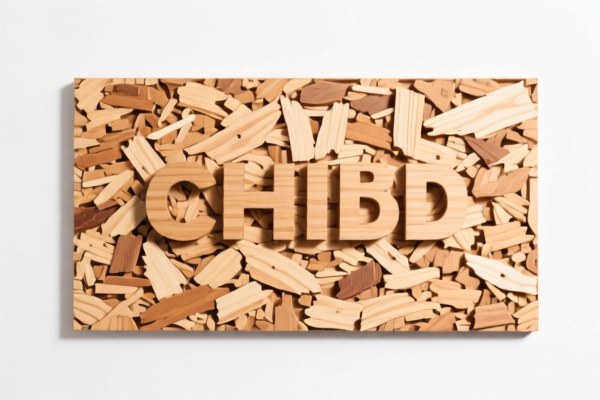
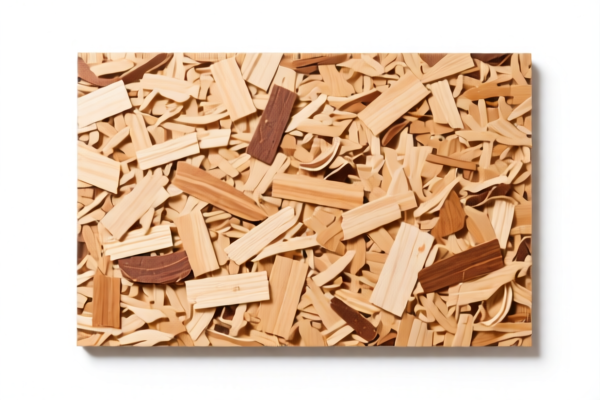
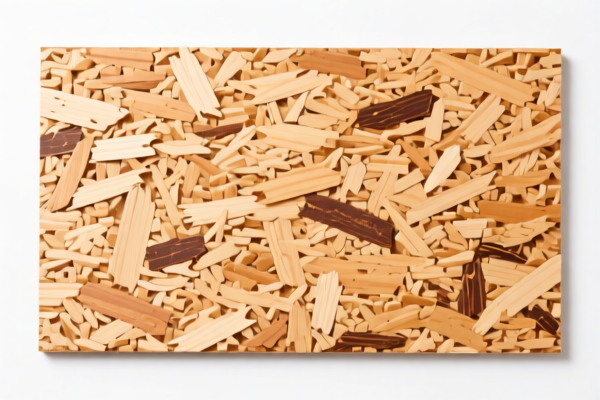
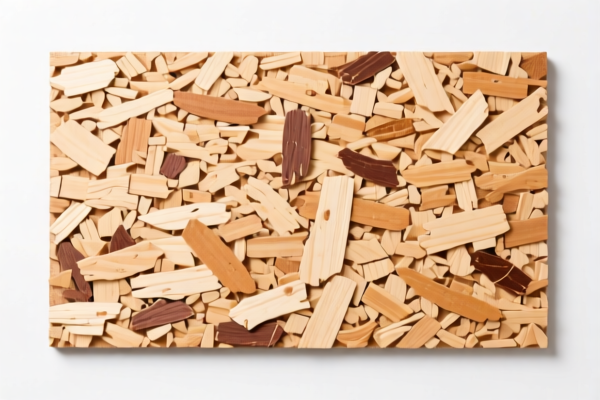
AI Analysis
🌿 Leaf Wood Chip (Nonconiferous Hardwood Biomass)
🌐 HS Code Reference & Customs Clearance Guide | 2026 Updated Tariff Analysis | Strategic Clearance Strategy
📌 I. Product Definition: What Exactly is "Leaf Wood Chip"?
"Leaf Wood Chip" in international trade refers to non-coniferous wood biomass, primarily derived from deciduous trees (oak, maple, birch, etc.). It is critical to distinguish between the physical form of the wood, as this dictates the HS Code classification and, consequently, the tariff liability.
Two Primary Categories:
- Wood in Chips or Particles: Mechanically chipped, ground, or fragmented wood. This is the most common form for industrial use (paper pulp, particle board, bioenergy).
- Key Feature: Small, irregular pieces, typically <5cm in length, not suitable for direct combustion as "logs."
- Fuel Wood (Logs/Billets/Twigs): Shaped or unshaped pieces intended for burning.
- Key Feature: Larger, solid forms (logs, billets) or bundled twigs/faggots, specifically processed for fuel.
⚠️ Critical Distinction:
- If the product is chipped, shredded, or granulated → It falls under 4401.22.00.00.
- If the product is whole logs, split billets, or bundled twigs intended for burning → It falls under 4401.12.00.00.
- "Nonconiferous" (Hardwood): Must be declared explicitly. Coniferous (softwood) wood has different HS codes (4401.21/4401.11). Misclassification here leads to severe penalties.
📦 II. HS Code Classification Details (2026 Latest Tariff Schedule)
Based on the provided data, only two specific HS Codes apply to nonconiferous leaf wood products. Note that the tariff structure for US imports from China (implied by the 25% additional tax) is uniform for both categories in this dataset.
| HS Code | Product Description | Applicable Scenario | Physical Form |
|---|---|---|---|
4401.22.00.00 |
Wood in chips or particles: Nonconiferous | Industrial raw material for paper, board, or biomass pellets | ❌ Chipped, granulated, shredded, <5cm |
4401.12.00.00 |
Fuel wood, in logs, billets, twigs, faggots: Nonconiferous | Direct fuel source for heating or industrial boilers | ✅ Logs, split wood, bundled twigs, solid form |
🔍 Key Reminder:
- "Leaf Wood" implies Nonconiferous: Ensure your declaration specifies "Hardwood" or "Deciduous" to avoid being misclassified as softwood (which may have different base duties or restrictions).
- Agglomerated Forms: If the chips are compressed into pellets or briquettes, they still fall under 4401.22.00.00 according to the HS description "whether or not agglomerated...". Do not classify pellets as a separate "fuel wood" code unless specifically defined otherwise in local regulations.
💰 III. 2026 Latest Tariff Rate Breakdown (Including Additional Taxes)
✅ Applicable Country: United States (US) (Inferred from the 25% Section 301 tariff context common in such data)
✅ Origin: China (CN) (Implied by the 25% additional tax structure)
✅ Effective Date: Current regime (post-2025 adjustments)
🎯 1. 4401.22.00.00 – Wood in Chips/Particles (Nonconiferous)
| Item | Detail |
|---|---|
| Base Tariff | 0.0% (Ad Valorem) |
| Additional Tariff | +25.0% (Section 301 / Retaliatory Tariff) |
| Total Tax Rate | 25.0% |
| Tax Calculation | CIF Value × 25% |
| De Minimis Exemption | ❌ NOT ELIGIBLE |
| Legal Basis | HTSUS 4401.22.00.00 + USITC Section 301 Footnote |
📌 Explanation:
- The base duty for wood chips is 0%, but the 25% additional tariff is strictly enforced for Chinese-origin nonconiferous wood chips.
- This tariff is non-negotiable and applies to all shipments regardless of end-use (industrial or fuel).
🎯 2. 4401.12.00.00 – Fuel Wood, Logs, Twigs (Nonconiferous)
| Item | Detail |
|---|---|
| Base Tariff | 0.0% (Ad Valorem) |
| Additional Tariff | +25.0% (Section 301 / Retaliatory Tariff) |
| Total Tax Rate | 25.0% |
| Tax Calculation | CIF Value × 25% |
| De Minimis Exemption | ❌ NOT ELIGIBLE |
| Legal Basis | HTSUS 4401.12.00.00 + USITC Section 301 Footnote |
📌 Explanation:
- Similar to chips, fuel wood (logs/twigs) enjoys a 0% base rate but is heavily taxed at 25% if originating from China.
- Bundled Twigs/Faggots: Even if sold as "firewood bundles," they fall under this code and incur the same 25% duty.
🛠️ IV. Customs Clearance Practical Advice (Avoiding Pitfalls)
✅ 1. Required Documentation (Non-Negotiable)
| Document | Mandatory? | Explanation |
|---|---|---|
| ✅ Commercial Invoice | ✔️ | Must clearly state: "Nonconiferous Wood Chips" or "Hardwood Fuel Logs." Avoid vague terms like "Wood." |
| ✅ Phytosanitary Certificate | ✔️ | Critical for Wood Products. Issued by the exporting country's plant protection agency. Must confirm treatment (e.g., ISPM 15 fumigation if packaging). |
| ✅ Packing List | ✔️ | Detail the weight and volume. If mixed wood types, specify "Nonconiferous Only." |
| ✅ Bill of Lading/Air Waybill | ✔️ | Ensure the description matches the invoice exactly. |
| ✅ Certificate of Origin | ✔️ | To prove origin (e.g., China) and confirm tariff applicability. |
✅ 2. Declaration Tips (Crucial for Accuracy)
🔥 "Form Determines Fate: Chips vs. Logs"
| Scenario | Correct HS Code | Incorrect Action | Consequence |
|---|---|---|---|
| Shredded/Chipped Wood | 4401.22.00.00 |
Declaring as "Logs" | Misdeclaration: Penalties, delays, potential seizure |
| Solid Logs/Twigs | 4401.12.00.00 |
Declaring as "Chips" | Misdeclaration: Penalties, delays |
| Pellets/Briquettes | 4401.22.00.00 |
Declaring as a different "Fuel" code | Error: Still falls under chips/particles. Keep consistent. |
| Mixed Wood (Coniferous + Nonconiferous) | Not Allowed | Mixing in one shipment | Rejection: HS codes are mutually exclusive by tree type. Must separate. |
✅ 3. Special Considerations
| Situation | Handling Advice |
|---|---|
| ISPM 15 Compliance | Ensure wooden pallets/crates are stamped. If the wood itself is for fuel, it must be free of bark and pests (Phytosanitary Certificate required). |
| Moisture Content | Declare accurately. High moisture affects weight-based calculations and may trigger additional inspection for pest control. |
| Origin Labeling | Clearly mark "Made in China" on all packaging to avoid origin fraud allegations. |
| Value Declaration | Use CIF value (Cost, Insurance, Freight) for duty calculation. Under-declaring value is a serious offense. |
🌍 V. Global Market Comparison (2026)
| Country/Region | Recommended HS Code | Tariff (China Origin) | Key Requirement | Notes |
|---|---|---|---|---|
| 🇺🇸 USA | 4401.22.00.00 / 4401.12.00.00 |
25.0% Total | Phytosanitary Certificate | High tariff barrier. No de minimis exemption. |
| 🇨🇳 China | 4401.22 / 4401.12 |
0% - 5% | None | Import duty is low; focus on quality standards. |
| 🇪🇺 EU | 4401.22 / 4401.12 |
0% - 3.7% | FLEGT / Timber Regulation | Strict sustainability documentation required. |
| 🇬🇧 UK | 4401.22 / 4401.12 |
0% - 3.7% | UK Timber Regulation | Similar to EU post-Brexit. |
| 🇯🇵 Japan | 4401.22 / 4401.12 |
0% - 1.2% | Phytosanitary | Low tariffs, strict pest control. |
📌 Conclusion:
- USA is the most expensive market due to the 25% additional tariff.
- EU/UK require robust sustainability and legality documentation (Timber Regulation), but tariffs are lower.
- Asia (Japan/China) has low tariffs but strict phytosanitary controls.
📌 VI. Common Mistakes & Pitfalls (Lessons Learned)
❌ Mistake 1: Declaring "Wood Chips" as "Paper Raw Material" under a different HS code.
👉 Consequence: Customs reclassifies, applies 25% tariff + penalties.
❌ Mistake 2: Failing to provide a Phytosanitary Certificate.
👉 Consequence: Shipment quarantined or destroyed at port. Biosecurity risk.
❌ Mistake 3: Mixing Coniferous and Nonconiferous wood in one container.
👉 Consequence: Customs will reject the entire shipment or demand separation, causing massive delays.
❌ Mistake 4: Ignoring the "Logs vs. Chips" distinction.
👉 Consequence: Even though both are 25% in this data, incorrect declaration leads to audit flags and potential legal issues.
✅ Best Practice:
"Declare Precisely: 'Nonconiferous Wood Chips, 25% Duty Applicable, Phytosanitary Cert Attached, Origin: China'"
🎯 VII. Conclusion: Precise Classification Saves Costs
🎯 Key Takeaway:
🔹 Both
4401.22.00.00and4401.12.00.00carry a 25% total tariff for Chinese-origin goods.
🔹 The base duty is 0%, but the additional tax makes it costly.
🔹 Documentation is Key: Without a Phytosanitary Certificate, the goods will not clear US customs.
📌 Pro Tip:
If you are importing wood pellets from China, they still fall under 4401.22.00.00. The 25% tariff applies. Consider sourcing from non-China origins (e.g., Vietnam, Brazil) if tariffs are prohibitive, as they may qualify for lower rates under different trade agreements.
📣 Immediate Action:
📞 Contact a licensed customs broker to verify the Phytosanitary Certificate requirements for your specific port of entry.
🚀 Ensure your supplier provides exact material specifications (Coniferous vs. Nonconiferous) to avoid classification errors.
✨ Professional Clearance Starts with Accurate Classification!
💼 Your cost of goods includes the 25% tariff—plan accordingly!
Customer Reviews
About HS Code Classification
The Harmonized System (HS) is an internationally standardized nomenclature developed by the World Customs Organization (WCO) to classify traded products. Over 200 countries use the HS system as the basis for customs tariffs, trade statistics, and import/export regulations.
Each HS code follows a hierarchical structure:
- Chapter (2 digits) — Broad category of goods (e.g., Chapter 84: Machinery and Mechanical Appliances)
- Heading (4 digits) — More specific grouping within the chapter
- Subheading (6 digits) — Internationally standardized breakdown, used by all WCO member countries
- National subdivisions (8-10 digits) — Country-specific extensions for further classification, such as US HTSUS 10-digit codes
Correct HS code classification is essential for smooth customs clearance, accurate duty payment, and compliance with trade regulations. Misclassification can lead to customs delays, overpayment of duties, or penalties.
When importing from CN to US, the applicable tariff rates may include:
- Most-Favored-Nation (MFN) rate — The standard duty rate applied to WTO members
- General rate — Applied to countries without trade agreements
- Trade remedy duties — Additional tariffs such as Section 301 (anti-dumping), Section 232 (national security), or countervailing duties
The information provided on this page is for reference purposes only. For official classification, please consult with your local customs authority or a licensed customs broker.