leather bag and pouch
CN → US| HS Code | Tariff Rate | Origin | Destination | Doc |
|---|---|---|---|---|
| 4202110030 | 43.0% | CN | US | Official Doc |
| 4202213000 | 40.3% | CN | US | Official Doc |
Product Images
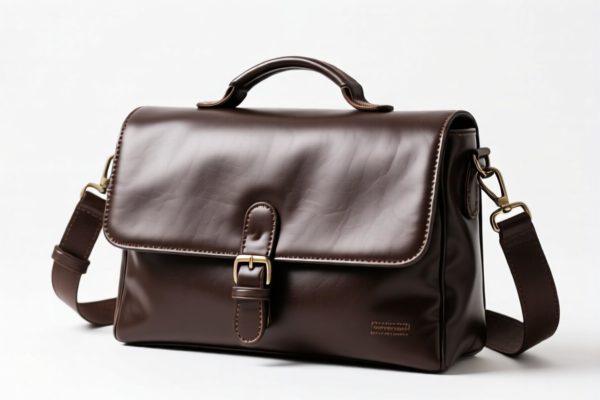
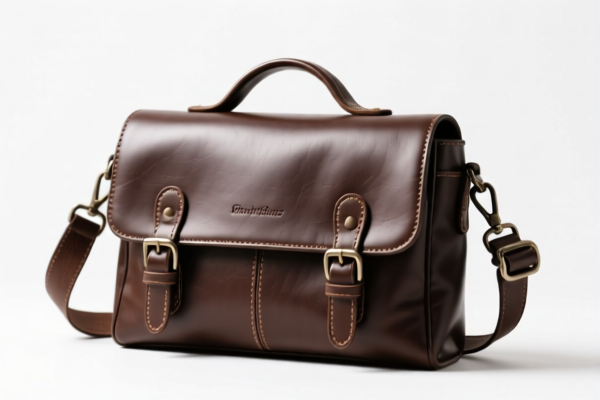
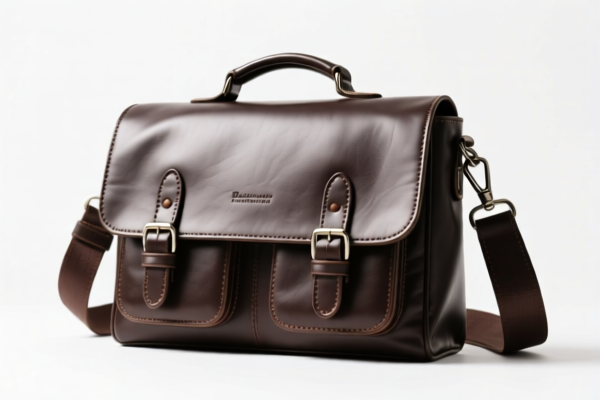
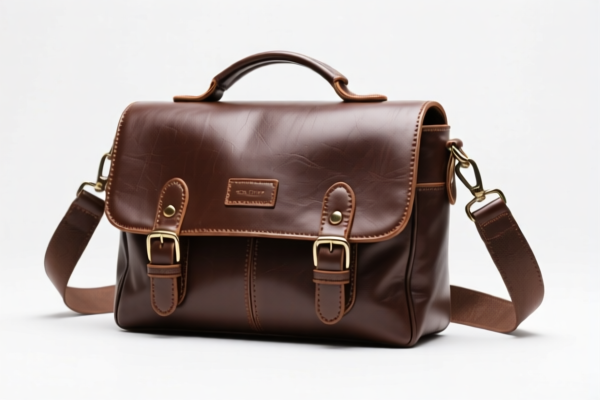
AI Analysis
🎒 Leather Bags & Pouches (Classification & Customs Clearance Guide)
🌐 HS Code Reference & Customs Clearance Strategy | 2026 Latest Tariff Analysis | Professional Entry Guide
📌 1. Product Definition: Are You Selling a "Bag" or a "Case"?
Leather goods are a broad category, but in international trade, the distinction between a container (for holding other items) and the material itself is critical. Based on the provided data, we are dealing with containers made of leather, composition leather, plastics, textiles, vulcanized fiber, or paperboard.
The key is function and form: * Trunks, Suitcases, Briefcases, School Satchels: Rigid or semi-rigid containers for travel, documents, or school supplies. * Handbags, Wallets, Purses, Clutches: Soft or semi-rigid containers for personal accessories, currency, or cosmetics.
⚠️ Critical Distinction:
- If the item is a briefcase, attache case, or school satchel with a leather/composition leather outer surface → It falls under 4202.11.00.
- If the item is a handbag (with or without shoulder strap) made of reptile leather → It falls under 4202.21.30.
- Note: Non-reptile handbags are not included in the provided dataset, but reptile handbags are explicitly listed.
📦 2. HS Code Classification Details (2026 Latest Tariff Authority)
| HS Code | Product Description | Application Scenario | Material Condition |
|---|---|---|---|
4202.11.00.30 |
Attache Cases, Briefcases, School Satchels, Occupational Luggage Cases, etc. | Business documents, school supplies, travel luggage | Outer surface of leather or composition leather |
4202.21.30.00 |
Handbags (with/without shoulder strap), Wallets, Purses, etc. | Personal fashion accessories, cosmetics, cards | Outer surface of reptile leather |
🔍 Key Reminder:
-4202.11.00.30is for structured containers (briefcases, satchels) made of standard leather/composition leather.
-4202.21.30.00is specifically for handbags made of reptile leather (e.g., crocodile, python, lizard).
- If your handbag is made of cowhide, sheepskin, or synthetic leather, it may fall under a different subheading (e.g., 4202.21.90 or 4202.22/23/29 depending on material), which is NOT covered in this specific data snippet. Ensure your product matches the exact material description!
💰 3. 2026 Latest Tariff Rate Details (Including Additional Taxes & Policy Add-ons)
✅ Applicable Country: United States (US)
✅ Country of Origin: China (CN)
✅ Effective Date: 2025-11-10 onwards
🎯 1. 4202.11.00.30 – Attache Cases, Briefcases, School Satchels (Leather/Composition Leather Outer Surface)
| Item | Detail |
|---|---|
| Basic Tariff | 0.0% |
| Additional Tariff (Section 301) | 0.0% |
| IEEPA Additional Tariff | 0.0% |
| Total Tax Rate | 0.0% |
| Tax Calculation | CIF Value × 0% = $0 |
| De Minimis Eligibility | ✅ Yes (If value < $800, no duty regardless of rate) |
| Legal Basis | HTSUS 4202.11.00.30 |
📌 Explanation:
- Despite being a leather good, briefcases and satchels with a leather/composition leather outer surface currently enjoy a 0% total tariff rate from China to the US.
- This is a significant cost advantage compared to other leather goods or electronics.
- No Section 301 or IEEPA penalties apply to this specific subheading.
🎯 2. 4202.21.30.00 – Handbags Made of Reptile Leather
| Item | Detail |
|---|---|
| Basic Tariff | 0.0% |
| Additional Tariff (Section 301) | 0.0% |
| IEEPA Additional Tariff | 0.0% |
| Total Tax Rate | 0.0% |
| Tax Calculation | CIF Value × 0% = $0 |
| De Minimis Eligibility | ✅ Yes (If value < $800, no duty regardless of rate) |
| Legal Basis | HTSUS 4202.21.30.00 |
📌 Explanation:
- Reptile leather handbags are also classified under a 0% total tariff rate.
- This includes exotic leathers like crocodile, alligator, and snake skin.
- No Section 301 or IEEPA penalties apply.
- Caution: Ensure the product is genuinely reptile leather. Mislabeling cowhide as reptile leather to seek a specific subheading could lead to penalties.
🛠️ 4. Customs Clearance Practical Advice (Real-World Pitfall Guide)
✅ 1. Required Documentation Checklist (Non-Negotiable)
| Document | Must Provide | Explanation |
|---|---|---|
| ✅ Commercial Invoice | ✔️ | Must clearly state "Attache Case" or "Handbag" and material ("Reptile Leather" or "Composition Leather"). |
| ✅ Packing List | ✔️ | Show quantity, weight, and dimensions. |
| ✅ Product Photos | ✔️ | Clear images showing the outer surface material. Must distinguish between leather, fabric, and reptile skin. |
| ✅ Material Composition Certificate | ✔️ | If claiming "Reptile Leather," provide proof. If "Composition Leather," clarify it is not genuine animal hide. |
| ✅ Brand Authorization | ✔️ | If branded, provide authorization to avoid IP seizure. |
✅ 2. Declaration Tips (Critical Keywords)
🔥 "Material First, Function Second, Name Precise!"
| Scenario | Correct Declaration | Incorrect Declaration |
|---|---|---|
| Leather Briefcase | "Attache Case, Outer Surface of Composition Leather, HS 4202.11.00.30" | "Leather Bag" → Vague, may lead to random inspection. |
| Reptile Handbag | "Handbag, Outer Surface of Reptile Leather, HS 4202.21.30.00" | "Leather Handbag" → Could be misclassified under non-reptile leather subheadings (different tax rates). |
| School Satchel | "School Satchel, Leather Outer, HS 4202.11.00.30" | "Backpack" → Backpacks may fall under textile categories (4202.92), which have different rules. |
📌 Warning:
- Do not use generic terms like "Leather Bag". Use the specific function (Briefcase, Satchel, Handbag).
- Material is key: "Reptile Leather" is a distinct category from "Leather" or "Composition Leather." Misdeclaration can lead to fraud penalties.
✅ 3. Special Cases & Handling
| Scenario | Handling Advice |
|---|---|
| Mixed Materials | If the bag has leather lining but textile exterior, check the outer surface rule. For 4202.11, it must be leather/composition leather outer. If textile, it may fall under 4202.22/23/29. |
| Reptile Import Restrictions | Ensure compliance with CITES (Convention on International Trade in Endangered Species). Even if duty-free, reptile products require CITES permits for import. |
| OEM/Custom Bags | Provide design drawings to prove the intended use (e.g., satchel vs. fashion handbag). |
| Samples | If value < $800, declare as De Minimis. No duty, but ensure accurate description to avoid customs flags. |
🌍 5. Global Market Comparison (2026 Latest)
| Country/Region | Recommended HS Code | Tariff Rate (China Origin) | Notes |
|---|---|---|---|
| 🇺🇸 USA | 4202.11.00.30 / 4202.21.30.00 |
0.0% | Duty-free for these specific subheadings. |
| 🇨🇳 China | 4202.11.00.30 / 4202.21.30.00 |
Varies | Check China’s import tariff schedule for return shipments. |
| 🇪🇺 EU | 4202.11 / 4202.21 |
4.0% - 12.0% | EU generally applies higher tariffs on leather goods than the US. |
| 🇬🇧 UK | 4202.11 / 4202.21 |
4.0% - 12.0% | Post-Brexit, UK aligns closely with EU but may have slight variations. |
| 🇯🇵 Japan | 4202.11 / 4202.21 |
8.0% - 12.0% | Higher tariffs on leather goods. |
📌 Conclusion:
- The US market currently offers a 0% tariff advantage for these specific leather bag categories.
- Other markets (EU, Japan) may impose 4-12% tariffs, making the US a more cost-effective destination for these goods.
📌 6. Common Errors & Pitfalls (Lessons from the Field)
❌ Error 1: Declaring a "Reptile Handbag" as "Leather Handbag"
👉 Consequence: May be misclassified under a higher-tariff subheading or flagged for CITES violations.
✅ Fix: Always specify "Reptile Leather" if applicable.
❌ Error 2: Calling a "Backpack" a "School Satchel"
👉 Consequence: Backpacks are often classified under textile materials (4202.92), which may have different tariff treatments.
✅ Fix: Use accurate functional names. If it’s a backpack with leather exterior, verify if it fits 4202.11 or if it’s 4202.92.
❌ Error 3: Ignoring CITES for Reptile Products
👉 Consequence: Seizure, fines, and legal action for illegal wildlife trade.
✅ Fix: Obtain CITES Permits before shipping reptile leather goods to the US.
🎯 7. Conclusion: Professional Declaration, Zero Duty, Smooth Clearance!
🎯 Remember the Mantra:
🔹 "Leather Outer? Check Function! Reptile? Check CITES! Briefcase/Satchel = 4202.11.00.30! Reptile Handbag = 4202.21.30.00!"
🔹 "0% Duty in the US, but 100% Compliance in Documents!"
📌 Pro Tip:
If your product is not reptile leather but a regular handbag (e.g., cowhide), it may not fall under the 0% rate in this specific dataset. Verify the exact subheading (e.g., 4202.21.90 or others) as they may have different tariffs. Always consult the latest HTSUS.
📣 Immediate Action:
📞 Contact your customs broker + Provide material proof + Verify CITES status for reptile products
🚀 Ensure accurate HS Code classification to benefit from the 0% tariff in the US market!
✨ Professional Customs Clearance Starts with Precise Classification!
💼 Every Dollar Saved is Pure Profit!
Customer Reviews
About HS Code Classification
The Harmonized System (HS) is an internationally standardized nomenclature developed by the World Customs Organization (WCO) to classify traded products. Over 200 countries use the HS system as the basis for customs tariffs, trade statistics, and import/export regulations.
Each HS code follows a hierarchical structure:
- Chapter (2 digits) — Broad category of goods (e.g., Chapter 84: Machinery and Mechanical Appliances)
- Heading (4 digits) — More specific grouping within the chapter
- Subheading (6 digits) — Internationally standardized breakdown, used by all WCO member countries
- National subdivisions (8-10 digits) — Country-specific extensions for further classification, such as US HTSUS 10-digit codes
Correct HS code classification is essential for smooth customs clearance, accurate duty payment, and compliance with trade regulations. Misclassification can lead to customs delays, overpayment of duties, or penalties.
When importing from CN to US, the applicable tariff rates may include:
- Most-Favored-Nation (MFN) rate — The standard duty rate applied to WTO members
- General rate — Applied to countries without trade agreements
- Trade remedy duties — Additional tariffs such as Section 301 (anti-dumping), Section 232 (national security), or countervailing duties
The information provided on this page is for reference purposes only. For official classification, please consult with your local customs authority or a licensed customs broker.