leather based composite leather strip
CN → US| HS Code | Tariff Rate | Origin | Destination | Doc |
|---|---|---|---|---|
| 4205008000 | 35.0% | CN | US | Official Doc |
| 4205001000 | 35.0% | CN | US | Official Doc |
| 6217109550 | 32.1% | CN | US | Official Doc |
| 6217909095 | 32.1% | CN | US | Official Doc |
| 3926906090 | 39.2% | CN | US | Official Doc |
Product Images
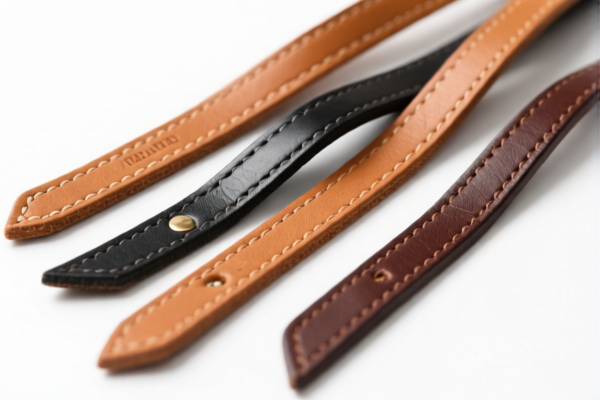
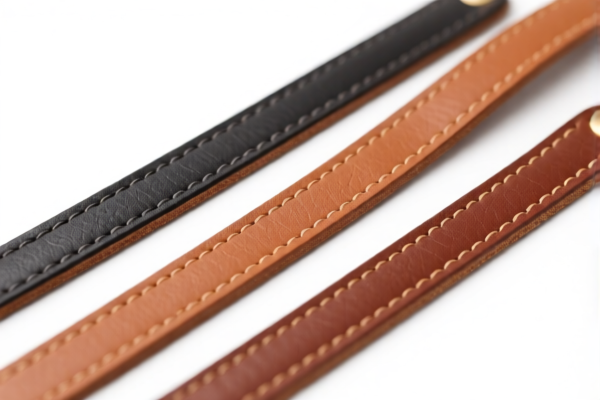
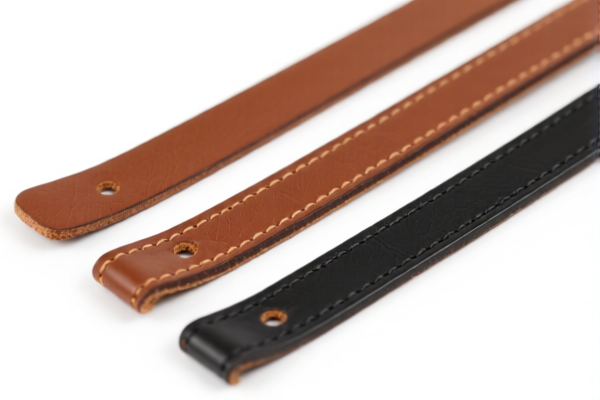
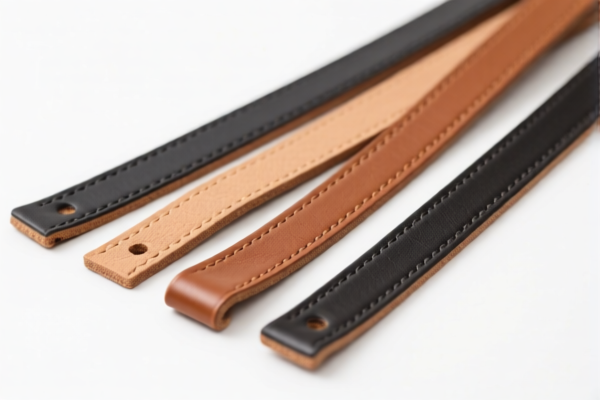
AI Analysis
🧵 Composite Leather Strips & Apparel Accessories
🌐 HS Code Reference & Customs Clearance Guide | 2026 Latest Tariff Analysis | Professional-Level Clearance Strategy
📌 I. Product Definition & Classification: What Exactly Are "Composite Leather Strips"?
"Composite Leather" (人造革/复合皮革) refers to a material made by bonding a base layer (often non-woven fabric, paper, or sponge) with a layer of polyurethane (PU), PVC, or other polymer, often embossed to resemble natural leather.
In international trade, Composite Leather Strips are typically classified not by the material itself, but by their final intended use and form. They fall into two main categories: 1. Apparel Accessories/Trim: Strips, bands, or small components used in garment manufacturing (e.g., waistbands, decorative trims, reinforcement tabs). These are highly specific and often have lower base duties but significant trade barriers. 2. Industrial/Other Leather Goods: If the strip is a component for something else (like a conveyor belt or non-apparel item), it falls under general "Articles of Leather" or "Plastic Articles."
⚠️ Critical Distinction:
- If the strip is intended for sewing into garments → It is an "Accessory" or "Part" of clothing (Chapter 62).
- If the strip is raw material for making bags/shoes but not yet formed into a specific part → It may be classified under Chapter 42 (Articles of Leather) or Chapter 39 (Plastics) depending on the binding agent and structure.
- Note: The data provided specifically highlights "Apparel Accessories" and "Other Leather/Plastic Articles," suggesting these strips are likely semi-finished or finished components rather than raw rolls.
📦 II. HS Code Classification Matrix (2026 Latest Tariff Concordance)
Based on the provided data, here are the 5 specific HS Codes applicable to "Leather-based Composite Leather Strips," categorized by their specific functional description in the dataset.
| HS Code | Product Description (Summary) | Category | Key Characteristics |
|---|---|---|---|
| 4205.00.80.00 | Composite leather apparel accessories, classified under "Other leather or synthetic leather articles" | General Leather Article | Used when the strip is a generic leather good, not specifically an "apparel accessory" under Ch 62, or a "part" under Ch 62. |
| 4205.00.10.00 | Composite leather apparel accessories, classified as "parts and fittings" of other leather articles | Leather Parts | Specifically for strips/components used to assemble other leather goods (e.g., handles, straps). |
| 6217.10.95.50 | Composite leather apparel accessories, classified as "Other made-up clothing accessories" | Apparel Accessory | Most Likely Code if the strip is a finished trim/band ready for garment sewing. Includes waistbands, belt loops, decorative trims. |
| 6217.90.90.95 | Composite leather apparel accessories, classified as the "Residual/Fallback" category for other clothing accessories | Residual Accessory | For accessories that don't fit neatly into 6217.10 (e.g., unique composite leather tabs, specific non-standard trims). |
| 3926.90.60.90 | Synthetic leather conveyor belts/strips, classified under "Plastic/Synthetic Material" transport belts | Plastic/Industrial Article | Used only if the "strip" is actually an industrial conveyor belt component made of composite leather-like material, or if the composite structure is predominantly plastic/polymer-based and treated as plastic goods. |
🔍 Key Insight:
- Chapters 42 vs. 62: Chapter 42 is for "Articles of Leather" (bags, belts, suits). Chapter 62 is for "Apparel and Clothing Accessories."
- If the strip is not sewn into clothing but is a component for a bag, use 4205.
- If the strip is trim for pants/shirts/jackets, use 6217.
- If the strip is industrial (e.g., for machinery), use 3926 (if plastic-dominated).
💰 III. 2026 Tariff Rate Breakdown (Including Add-ons & Policy Levies)
✅ Applicable Country: United States (US)
✅ Origin: China (CN)
✅ Effective Date: Post-2025/2026 (Current Trade Environment)
✅ Note: All rates include Base Duty + Section 301 Add-on + IEEPA 122 Clause.
🎯 1. 4205.00.80.00 & 4205.00.10.00 — Other Leather/Synthetic Leather Articles
| Item | Detail |
|---|---|
| Base Duty | 0.0% (Ad Valorem) |
| Section 301 Add-on | +25.0% (USITC Footnote 9903.42) |
| IEEPA 122 Clause | +10.0% (Targeted Chinese Imports) |
| Total Tax Rate | 35.0% |
| De Minimis Exemption | ❌ Not Eligible (Denied for Chinese-origin leather/plastic goods under current rules) |
| Legal Basis | Base: 4205.00.80.00 → 301: 25% → IEEPA: 10% |
📌 Explanation:
- These codes benefit from 0% base duty because "articles of leather" often have low traditional tariffs.
- However, the 35% total tax is driven entirely by trade war levies (301 + 122).
- Risk: High. These are non-differentiated, high-cost imports. No base duty advantage survives the add-ons.
🎯 2. 6217.10.95.50 & 6217.90.90.95 — Apparel Accessories
| Item | Detail |
|---|---|
| Base Duty | 14.6% (Standard MFN Duty for Clothing Accessories) |
| Section 301 Add-on | +7.5% (Reduced 301 rate for certain apparel parts/accessories) |
| IEEPA 122 Clause | +10.0% (Targeted Chinese Imports) |
| Total Tax Rate | 32.1% |
| De Minimis Exemption | ❌ Not Eligible |
| Legal Basis | Base: 6217.10.95.50 → 301: 7.5% → IEEPA: 10% |
📌 Explanation:
- Important: The base duty for apparel accessories (Chapter 62) is higher (14.6%) than for general leather articles (0%).
- However, the 301 add-on is lower (7.5% vs 25%).
- Net Result: The total tax is 32.1%, which is slightly lower (2.9% savings) than the 4205 codes.
- Recommendation: If the strip is truly for apparel, 6217.10.95.50 is the most cost-effective code among these options.
🎯 3. 3926.90.60.90 — Plastic/Synthetic Conveyor Belts/Strips
| Item | Detail |
|---|---|
| Base Duty | 4.2% (Plastic articles) |
| Section 301 Add-on | +25.0% (Full 301 rate for plastic goods) |
| IEEPA 122 Clause | +10.0% (Targeted Chinese Imports) |
| Total Tax Rate | 39.2% |
| De Minimis Exemption | ❌ Not Eligible |
| Legal Basis | Base: 3926.90.60.90 → 301: 25% → IEEPA: 10% |
📌 Explanation:
- This is the highest total tax rate (39.2%).
- Only use this code if the product is legally classified as a plastic article (e.g., a conveyor belt component) and not as an apparel accessory or leather good.
- Misclassification here could lead to severe penalties if customs determines it's an apparel accessory.
🛠️ IV. Customs Clearance Practical Advice (Avoiding Pitfalls)
✅ 1. Documentation Checklist (Non-Negotiable)
| Document | Requirement | Why It Matters |
|---|---|---|
| Product Specification Sheet | ✔️ Must clearly state: "Composite Leather Strip," "PU/PVC Material," "Width/Thickness," "End Use (e.g., Garment Trim)" | Distinguishes from natural leather or pure plastic rolls. |
| Material Composition Breakdown | ✔️ % of Base Fabric vs. Polymer Layer | Determines if it’s Chapter 42 (Leather-like) or Chapter 39 (Plastic). |
| Commercial Invoice | ✔️ Must specify "For Use in Apparel Manufacturing" if claiming 6217 | Justifies the 6217 classification over 4205. |
| Photos of Sample | ✔️ Front/Back/Edge view | Proves it's a "strip" or "accessory," not a raw roll. |
| Origin Certificate | ✔️ Proof of Chinese Origin | Triggers the correct 301/122 tariffs. |
✅ 2. Classification Strategy: The "Use Test"
🔥 "Function Defines Code!"
| Scenario | Recommended HS Code | Reason |
|---|---|---|
| Strip is sewn into pants/shirts/jackets | 6217.10.95.50 |
It's a "made-up clothing accessory." Lowest total tax (32.1%). |
| Strip is for bags, wallets, or belts | 4205.00.80.00 |
It's an "article of leather/synthetic leather." Higher tax (35%). |
| Strip is a raw material roll for further processing | 4205.00.10.00 or 3926.90.60.90 |
Only if it's not yet a "part." Risk: High scrutiny on "plastic vs. leather" definition. |
| Strip is for industrial machinery (conveyor) | 3926.90.60.90 |
It's a "plastic article." Highest tax (39.2%). |
📌 Critical Warning:
- Do NOT misclassify apparel trims as "plastic rolls" (3926) to avoid high base duties. Customs will inspect the product and may reclassify it, imposing penalties.
- Do NOT classify industrial strips as "apparel accessories" (6217) to get lower base duty. If it's not for clothing, it's illegal.
✅ 3. Special Case: "Composite" vs. "Natural" Leather
- Natural Leather: Would fall under Chapter 41 or 43. Different tariffs.
- Composite Leather (PU/PVC): Falls under Chapter 42 (if leather-like) or 39/40 (if plastic-dominated).
- Key Evidence: Provide a lab test report showing the polymer layer is >50% of the surface area and the backing is non-leather (e.g., polyester non-woven). This prevents customs from classifying it as "natural leather," which has different tariff structures.
🌍 V. Global Market Comparison (2026)
| Market | Recommended HS Code | Total Effective Tax | Notes |
|---|---|---|---|
| 🇺🇸 USA | 6217.10.95.50 |
32.1% | Lowest total tax. Best for apparel trims. |
| 🇺🇸 USA | 4205.00.80.00 |
35.0% | Higher tax. For general leather goods. |
| 🇨🇳 China (Import) | 6217.10.95.50 |
~10-14% | Lower base duties. No 301/122 clauses. |
| 🇪🇺 EU | 6217.10.95.50 |
~8-10% | No trade war tariffs. CE/RoHS required. |
| 🇻🇳 Vietnam (Re-export) | Varies | Varies | If re-exported from Vietnam, may qualify for zero duty to US under FTZ rules. |
📌 Conclusion:
- USA is the most expensive market for composite leather strips due to 301 + 122 tariffs.
- Apparel Accessories (6217) are cheaper to import into the US than general Leather Articles (4205).
- Supply Chain Tip: Consider assembly in Vietnam/Mexico to avoid US tariffs, if feasible.
📌 VI. Common Errors & Pitfalls (Learn from Mistakes)
❌ Error 1: Classifying garment trim as "Plastic Sheets" (3921)
👉 Result: Customs reclassifies to 6217 → Back taxes + penalties.
👉 Fix: Use correct accessory code.
❌ Error 2: Declaring "Composite Leather" as "Natural Leather"
👉 Result: Higher duties, misrepresentation, potential fraud charges.
👉 Fix: Be honest about material composition. Use "Synthetic/PU" in description.
❌ Error 3: Ignoring the 122 Clause
👉 Result: Underpaying by 10%.
👉 Fix: Always add +10% for Chinese-origin goods in these categories.
❌ Error 4: Not proving "Made-up" Status for 6217
👉 Result: Customs may view it as raw material, shifting it to 4205 or 39.
👉 Fix: Show that the strip is cut, hemmed, or punched (finished for sewing).
🎯 VII. Conclusion: Optimize Classification, Minimize Tax!
🎯 Key Takeaway:
🔹 "Apparel Trim = 6217 (32.1%)"
🔹 "General Leather Good = 4205 (35.0%)"
🔹 "Industrial Plastic = 3926 (39.2%)"
📌 Action Plan:
1. Determine End Use: Is it for clothing? → 6217.10.95.50.
2. Verify Material: Is it PU/PVC? → Confirm composite structure.
3. Prepare Docs: Invoice must say "Apparel Accessory/Trim."
4. Calculate Cost: Budget for 32.1% total duty for apparel trims from China.
📣 Immediate Action:
📞 Consult a Customs Broker: Submit a Pre-Ruling Request to CBP if the classification is ambiguous.
📄 Label Correctly: "Composite Leather Strip, PU/PVC, For Garment Use."
💰 Cost Benefit Analysis: If tax >10% of value, explore Vietnam/Mexico assembly options.
✨ Smart Classification, Smarter Profit!
💼 Don't let tariffs eat your margins. Classify correctly.
Customer Reviews
About HS Code Classification
The Harmonized System (HS) is an internationally standardized nomenclature developed by the World Customs Organization (WCO) to classify traded products. Over 200 countries use the HS system as the basis for customs tariffs, trade statistics, and import/export regulations.
Each HS code follows a hierarchical structure:
- Chapter (2 digits) — Broad category of goods (e.g., Chapter 84: Machinery and Mechanical Appliances)
- Heading (4 digits) — More specific grouping within the chapter
- Subheading (6 digits) — Internationally standardized breakdown, used by all WCO member countries
- National subdivisions (8-10 digits) — Country-specific extensions for further classification, such as US HTSUS 10-digit codes
Correct HS code classification is essential for smooth customs clearance, accurate duty payment, and compliance with trade regulations. Misclassification can lead to customs delays, overpayment of duties, or penalties.
When importing from CN to US, the applicable tariff rates may include:
- Most-Favored-Nation (MFN) rate — The standard duty rate applied to WTO members
- General rate — Applied to countries without trade agreements
- Trade remedy duties — Additional tariffs such as Section 301 (anti-dumping), Section 232 (national security), or countervailing duties
The information provided on this page is for reference purposes only. For official classification, please consult with your local customs authority or a licensed customs broker.