leather belts
CN → US| HS Code | Tariff Rate | Origin | Destination | Doc |
|---|---|---|---|---|
| 4205008000 | 35.0% | CN | US | Official Doc |
| 4203300000 | 37.7% | CN | US | Official Doc |
| 4203406000 | 35.0% | CN | US | Official Doc |
Product Images
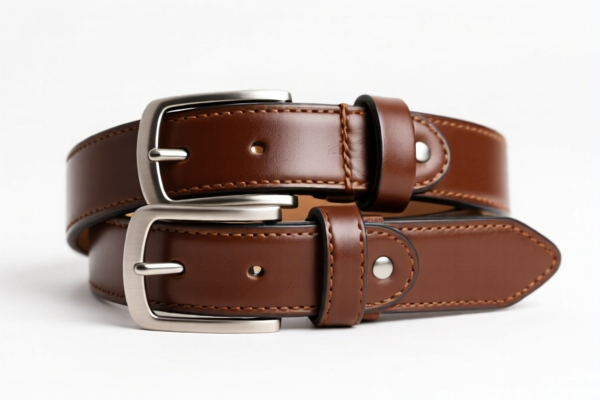
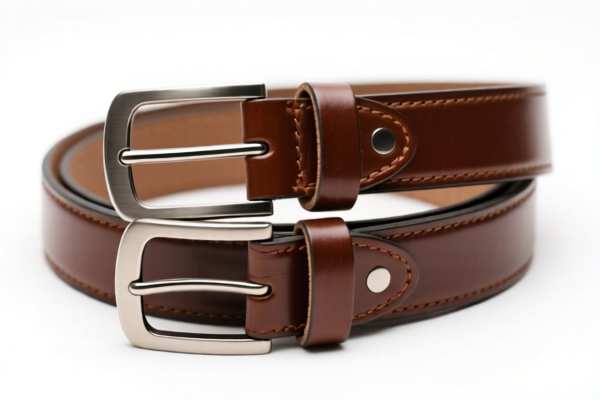
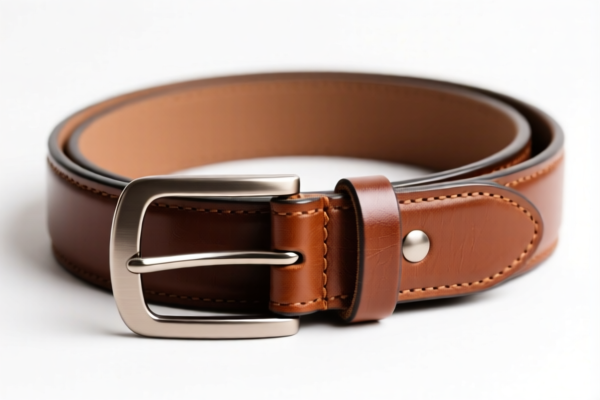
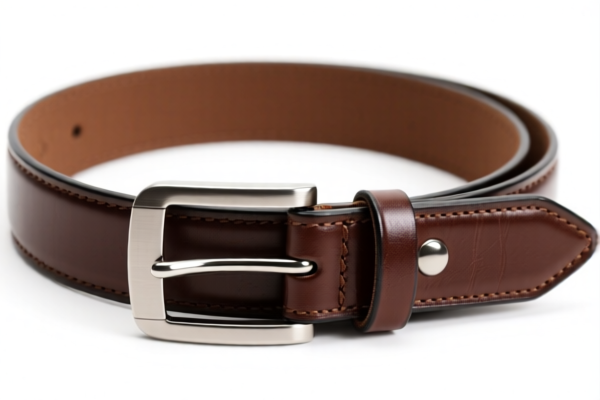
AI Analysis
🧳 Leather Belts & Leather Garment Accessories: The Ultimate 2026 US Import Guide
🌐 HS Code Reference & Customs Clearance Strategy | 2026 Tax Code Breakdown | Professional Entry Tips
📌 I. Product Definition & Classification: Are You Sure About Your "Leather Belts"?
Leather belts, as functional accessories for garments, are strictly categorized under Chapter 42 (Articles of Leather; Saddlery and Harness) in the Harmonized System. Their classification hinges on function, material, and design details.
In international trade, "leather belts" fall into two primary categories:
- Functional Belts with Buckles (Buckles Included): These are complete accessories where the buckle is an integral part of the product (e.g., metal buckle attached to leather strap).
- Other Leather Garment Accessories: This includes belts without buckles, or specialized leather parts (like straps without buckles) that serve a different function.
⚠️ Key Distinction Point:
- If the item is a belt with a buckle (e.g., a standard waist belt), it must be classified under 4203.30.00.00.
- If the item is a leather belt without a buckle, or a generic leather accessory (e.g., a plain strap, a decorative leather tab), it falls under 4203.40.60.00.
- If the item is a leather bag or case (not a belt), it falls under 4205.00.80.00.
📦 II. HS Code Classification Details (2026 Latest Tariff Authority)
| HS Code | Product Description | Application Scenario | Key Feature |
|---|---|---|---|
4203.30.00.00 |
Leather belts with buckles (e.g., standard waist belts) | Men's/women's fashion belts, utility belts, uniform accessories | ✅ Contains Buckle |
4203.40.60.00 |
Other leather garment accessories (e.g., leather straps, belts without buckles) | Fashion straps, decorative leather bands, non-buckled accessories | ❌ No Buckle |
4205.00.80.00 |
Other leather or synthetic leather articles (e.g., leather bags, wallets, pouches) | Leather bags, cases, wallets, other non-belt leather items | 🎒 Non-Belt Item |
🔍 Critical Reminder:
- Buckle is King: If your product has a buckle, it MUST be declared as4203.30.00.00. Declaring it as4203.40.60.00is a classification error that can lead to penalties.
- Synthetic Leather: Both codes apply to real leather and synthetic leather (man-made leather). The key is the presence of the buckle, not the material origin.
- Not a Bag: If the item is a small leather pouch or bag, it belongs to4205.00.80.00, not the belt categories.
💰 III. 2026 US Tariff Rate Breakdown (Including Add-ons & Policy Levies)
✅ Applicable Country: United States (US)
✅ Country of Origin: China (CN)
✅ Effective Date: November 10, 2025 (and subsequent imports)
🎯 1. 4203.30.00.00 — Leather Belts with Buckles
| Item | Content |
|---|---|
| Base Tariff | 2.7% (ad valorem) |
| Section 301 Add-on (25%) | +25.0% (Standard Section 301 tariff) |
| 122-Clause Add-on | +10.0% (Special Section 122 tariff on China) |
| Total Tariff Rate | 37.7% |
| Tax Calculation | CIF Value × 37.7% |
| De Minimis Eligibility | ❌ NO (Not eligible for small shipment exemptions) |
| Legal Pathway | Section 301: 25% + Section 122: 10% + Base: 2.7% |
📌 Explanation:
- The 25% is the standard Section 301 tariff applied to most Chinese goods.
- The 10% is a specific additional levy under Section 122 targeting Chinese leather goods.
- The 2.7% is the standard Most Favored Nation (MFN) base rate.
- Total 37.7% is a significant cost factor for leather belts with buckles.
🎯 2. 4203.40.60.00 — Other Leather Garment Accessories (No Buckle)
| Item | Content |
|---|---|
| Base Tariff | 0.0% (ad valorem) |
| Section 301 Add-on (25%) | +25.0% (Standard Section 301 tariff) |
| 122-Clause Add-on | +10.0% (Special Section 122 tariff on China) |
| Total Tariff Rate | 35.0% |
| Tax Calculation | CIF Value × 35.0% |
| De Minimis Eligibility | ❌ NO |
| Legal Pathway | Section 301: 25% + Section 122: 10% + Base: 0.0% |
📌 Explanation:
- Even though the base tariff is 0%, the 25% and 10% add-ons still apply.
- This results in a 35.0% total rate, which is still very high.
- Important: Do not assume "no buckle" means "zero tariff." The Section 301 and 122 clauses are the dominant factors here.
🎯 3. 4205.00.80.00 — Other Leather Articles (e.g., Bags)
| Item | Content |
|---|---|
| Base Tariff | 0.0% (ad valorem) |
| Section 301 Add-on (25%) | +25.0% |
| 122-Clause Add-on | +10.0% |
| Total Tariff Rate | 35.0% |
| Tax Calculation | CIF Value × 35.0% |
| De Minimis Eligibility | ❌ NO |
| Legal Pathway | Section 301: 25% + Section 122: 10% + Base: 0.0% |
📌 Note:
- This code applies to non-belt leather items. If you mistakenly declare a belt here, you risk a 35.0% rate instead of 37.7%, but the classification error will be flagged.
- Always verify if your product is a belt (with or without buckle) or a bag/accessory.
🛠️ IV. Customs Clearance Practical Advice (Battle-Tested Tips)
✅ 1. Preparation Checklist (Non-Negotiable)
| Document | Mandatory? | Details |
|---|---|---|
| ✅ Product Specification | ✔️ | Must clearly state "Leather Belt" or "Leather Accessory," material type (real/synthetic), and presence/absence of buckle. |
| ✅ Detailed Photos | ✔️ | Clear images of the buckle (if any), stitching, and overall structure. |
| ✅ Commercial Invoice | ✔️ | Must accurately reflect the HS Code, CIF value, and country of origin. |
| ✅ Packing List | ✔️ | Must match invoice details; avoid splitting a single belt into multiple shipments. |
| ✅ Material Declaration | ✔️ | Specify if the leather is "Genuine Leather" or "Synthetic Leather." |
| ✅ Origin Certificate | ✔️ | Required for China origin; can be used to verify Section 301/122 applicability. |
✅ 2. Declaration Strategy (Golden Rules)
🔥 "Buckle = 300.30, No Buckle = 300.40, Bag = 300.00!"
| Scenario | Correct Declaration | Incorrect Approach |
|---|---|---|
| Leather Belt with Metal Buckle | 4203.30.00.00 |
Declaring as 4203.40.60.00 → Classification Error |
| Leather Strap without Buckle | 4203.40.60.00 |
Declaring as 4203.30.00.00 → Higher Tax Risk |
| Leather Wallet/Bag | 4205.00.80.00 |
Declaring as a "belt" → Rejected/Returned |
| Mixed Pack (Belts + Buckles) | Split Declaration | Grouping all as "Belts" → Penalty |
✅ 3. Special Cases & Handling
| Scenario | Handling Suggestion |
|---|---|
| OEM Custom Belts | Provide design specs showing buckle placement; avoid vague terms like "Accessory." |
| Synthetic Leather Belts | Same tax rate as real leather; ensure material is declared accurately. |
| Belts with Decorative Buckles | If the buckle is removable but integral, still classify under 4203.30.00.00. |
| Belts for Uniforms | Still subject to same tax rates; no special exemption for uniforms. |
🌍 V. Global Market Comparison (2026 Latest)
| Country/Region | Recommended HS Code | Tariff (China Origin) | Certification | Notes |
|---|---|---|---|---|
| 🇺🇸 USA | 4203.30.00.00 |
37.7% | No special req | High tax due to Section 301 & 122 |
| 🇨🇳 China | 4203.30.00.00 |
2.7% | CCC | Base rate only |
| 🇪🇺 EU | 4203.30.00.00 |
0%~4% | CE + RoHS | Varies by material; no Section 301 |
| 🇦🇺 Australia | 4203.30.00.00 |
5% | RCM | Lower tax |
| 🇯🇵 Japan | 4203.30.00.00 |
0%~6% | PSE | No Section 301 |
📌 Conclusion:
- USA is the most expensive market for leather belts due to Section 301 (25%) + Section 122 (10%).
- EU and Japan offer significantly lower tariffs for Chinese-origin leather goods.
- Always verify if your product is a "belt" or "bag" before declaring.
📌 VI. Common Mistakes & Pitfalls (Lessons Learned)
❌ Mistake 1: Declaring a "Belt with Buckle" as 4203.40.60.00
👉 Consequence: Tax rate drops from 37.7% to 35.0%, but classification error leads to delays, fines, and potential seizure.
❌ Mistake 2: Declaring a "Leather Bag" as a "Belt" (4203.30.00.00)
👉 Consequence:海关 will reject the declaration; goods may be returned.
❌ Mistake 3: Failing to specify "Buckle" in the description
👉 Consequence: Customs may reclassify the item, leading to unexpected higher taxes.
✅ Correct Practice:
"Leather Belt, 100% Genuine Leather, with Metal Buckle, Model XYZ, Made in China"
OR
"Leather Strap, 100% Synthetic Leather, No Buckle, Model ABC, Made in China"
🎯 VII. Final Thoughts: Precision Classification = Savings!
🎯 Remember the Golden Rules:
🔹 "Buckle = 37.7%, No Buckle = 35.0%, Bag = 35.0%!"
🔹 "HS Code is Life, Tax Rate is Death, One Mistake = Huge Cost!"
📌 Pro Tips:
- If your leather belts are originating from Vietnam, Mexico, or Thailand, you may qualify for Section 301 exemptions, reducing taxes to 0%~5%.
- Apply for Advance Rulings (Customs Pre-Ruling) before shipping to avoid surprises.
- Always declare the exact product type and buckle status in your invoice and packing list.
📣 Take Action Now:
📞 Contact a professional customs broker + Provide product photos + Request HS Code Pre-Ruling
🚀 Ensure your leather belts clear customs smoothly, save costs, and boost profits!
✨ Professional Classification Starts with Accuracy!
💼 Every cent counts; calculate your tax precisely!
Customer Reviews
About HS Code Classification
The Harmonized System (HS) is an internationally standardized nomenclature developed by the World Customs Organization (WCO) to classify traded products. Over 200 countries use the HS system as the basis for customs tariffs, trade statistics, and import/export regulations.
Each HS code follows a hierarchical structure:
- Chapter (2 digits) — Broad category of goods (e.g., Chapter 84: Machinery and Mechanical Appliances)
- Heading (4 digits) — More specific grouping within the chapter
- Subheading (6 digits) — Internationally standardized breakdown, used by all WCO member countries
- National subdivisions (8-10 digits) — Country-specific extensions for further classification, such as US HTSUS 10-digit codes
Correct HS code classification is essential for smooth customs clearance, accurate duty payment, and compliance with trade regulations. Misclassification can lead to customs delays, overpayment of duties, or penalties.
When importing from CN to US, the applicable tariff rates may include:
- Most-Favored-Nation (MFN) rate — The standard duty rate applied to WTO members
- General rate — Applied to countries without trade agreements
- Trade remedy duties — Additional tariffs such as Section 301 (anti-dumping), Section 232 (national security), or countervailing duties
The information provided on this page is for reference purposes only. For official classification, please consult with your local customs authority or a licensed customs broker.