leather care agent
CN → US| HS Code | Tariff Rate | Origin | Destination | Doc |
|---|---|---|---|---|
| 3208100000 | 38.7% | CN | US | Official Doc |
| 3208200000 | 38.6% | CN | US | Official Doc |
| 3202105000 | 41.5% | CN | US | Official Doc |
| 3809935000 | 41.0% | CN | US | Official Doc |
| 3202905000 | 40.0% | CN | US | Official Doc |
Product Images

AI Analysis
🧴 Leather Care Agent (Special Effect & Softening Agents)
🌐 HS Code Reference & Customs Clearance Guide | 2026 Latest Tariff Analysis | Professional Clearance Strategy
📌 I. Product Definition & Classification: What Exactly Is "Leather Care Agent"?
Leather care agents are chemical auxiliaries used in the leather industry for post-treatment, softening, or surface finishing. In international trade, they are primarily classified based on their chemical composition (synthetic polymers vs. tanning agents) and application method (coating/finishing vs. impregnating/tanning).
⚠️ Key Distinction Points:
- If the product acts as a solvent or matrix for coating/finishing (like paints/varnishes) → Likely 3208.xx
- If it acts as a chemical softener or tanning agent (organic/inorganic tanning materials) → Likely 3202.xx
- If it is explicitly labeled as a leather auxiliary/finishing agent (general purpose) → Likely 3809.93
📦 II. HS Code Classification Details (2026 Latest Tariff Authority Comparison)
| HS Code | Product Description | Application Logic | Tax Category |
|---|---|---|---|
3208.10.00.00 |
Special effect agents for leather; synthetic polymer bases | Classified as coatings/varnishes using synthetic polymers as solvents/matrices | Coating/Finishing Agent |
3208.20.00.00 |
Special effect agents for leather; chemical auxiliaries | Fits the "catch-all" logic for chemical auxiliaries where painting/coating attributes do not conflict | Chemical Auxiliary |
3202.10.50.00 |
Leather softening agents; synthetic organic tanning materials | Material matches "Synthetic Organic Tanning Agents (Other)" | Synthetic Tanning Agent |
3809.93.50.00 |
Leather softening agents; explicitly named "Leather" + "Agent" | Fully matches the definition of "Preparation for the Leather Industry" | Leather Auxiliary |
3202.90.50.00 |
Leather softening agents; tanning/post-treatment chemicals | Material attributes align with "Synthetic/Inorganic Tanning Agents"; fits "Other Tanning Preparations" | Tanning Preparation |
🔍 Key Reminder:
- Products used for surface finishing/coating (creating effects, softening via coating) are often grouped under Chapter 32 (Tanning or Dyeing Extracts; Tanning and Dyeing Extracts; Paints and Varnishes...). - Products explicitly defined as leather auxiliaries or tanning agents may fall under 3202 (Tanning Preparations) or 3809 (Preparations for the Leather Industry). - Misclassification Risk: Declaring a "coating" as a "tanning agent" (or vice versa) can lead to significant tariff differences and customs delays.
💰 III. 2026 Latest Tariff Rate Breakdown (Including Surcharges & Policy Add-ons)
✅ Applicable Country: United States (US)
✅ Country of Origin: China (CN)
✅ Effective Date: Includes imports after November 10, 2025
🎯 1. 3208.10.00.00 —— Leather Special Effect Agent (Coating Type)
| Item | Details |
|---|---|
| Base Tariff | 3.7% (Ad Valorem) |
| Section 301 Surcharge | +25.0% (USITC Footnote 9903.88.01) |
| Section 122 Surcharge | +10.0% (Additional duty on specific chemical products) |
| Total Tariff Rate | 38.7% |
| Tax Calculation | CIF Value × 38.7% |
| De Minimis Exemption | ❌ Not Eligible (deny_de_minimis) |
| Legal Path | USITC:3208.10.00.00 → Section 301: 25% → Section 122: 10% |
📌 Explanation:
- The 25% Section 301 tariff applies to most chemical products of Chinese origin; - The 10% Section 122 tariff is a specific additional duty on certain chemical intermediates and preparations; - Total 38.7% is a high tariff, requiring advance planning for cost allocation.
🎯 2. 3208.20.00.00 —— Leather Special Effect Agent (Chemical Auxiliary)
| Item | Details |
|---|---|
| Base Tariff | 3.6% (Ad Valorem) |
| Section 301 Surcharge | +25.0% |
| Section 122 Surcharge | +10.0% |
| Total Tariff Rate | 38.6% |
| Tax Calculation | CIF Value × 38.6% |
| De Minimis Exemption | ❌ Not Eligible |
| Legal Path | USITC:3208.20.00.00 → Section 301: 25% → Section 122: 10% |
📌 Note:
- This code is used when the product is a "chemical auxiliary" that does not strictly fit the "paint/varnish" definition of 3208.10 but shares similar chemical nature; - The tariff structure is nearly identical to 3208.10, differing only by 0.1% in the base rate.
🎯 3. 3202.10.50.00 —— Leather Softening Agent (Synthetic Organic)
| Item | Details |
|---|---|
| Base Tariff | 6.5% (Ad Valorem) |
| Section 301 Surcharge | +25.0% |
| Section 122 Surcharge | +10.0% |
| Total Tariff Rate | 41.5% |
| Tax Calculation | CIF Value × 41.5% |
| De Minimis Exemption | ❌ Not Eligible |
| Legal Path | USITC:3202.10.50.00 → Section 301: 25% → Section 122: 10% |
📌 Explanation:
- Classified as a Synthetic Organic Tanning Agent; - Higher base tariff (6.5%) compared to coating agents (3.6-3.7%); - Often used for internal softening or impregnation rather than surface coating.
🎯 4. 3809.93.50.00 —— Leather Softening/Finishing Agent (General Auxiliary)
| Item | Details |
|---|---|
| Base Tariff | 6.0% (Ad Valorem) |
| Section 301 Surcharge | +25.0% |
| Section 122 Surcharge | +10.0% |
| Total Tariff Rate | 41.0% |
| Tax Calculation | CIF Value × 41.0% |
| De Minimis Exemption | ❌ Not Eligible |
| Legal Path | USITC:3809.93.50.00 → Section 301: 25% → Section 122: 10% |
📌 Note:
- This is the most precise classification for "Leather Care Agents" explicitly named as such; - Chapter 38 covers "Miscellaneous Chemical Products," and 3809 specifically covers "Preparations for the Leather Industry"; - Base tariff is 6.0%, slightly lower than 3202.10 (6.5%), making it 41.0% total.
🎯 5. 3202.90.50.00 —— Leather Softening Agent (Other Tanning Preparations)
| Item | Details |
|---|---|
| Base Tariff | 5.0% (Ad Valorem) |
| Section 301 Surcharge | +25.0% |
| Section 122 Surcharge | +10.0% |
| Total Tariff Rate | 40.0% |
| Tax Calculation | CIF Value × 40.0% |
| De Minimis Exemption | ❌ Not Eligible |
| Legal Path | USITC:3202.90.50.00 → Section 301: 25% → Section 122: 10% |
📌 Explanation:
- This is a "Catch-All" for Tanning Agents not specifically listed in 3202.10 (Synthetic Organic) or 3202.20/30 (Inorganic); - It has the lowest base tariff (5.0%) among the tanning categories, resulting in the lowest total tariff (40.0%) if applicable; - Suitable for generic "tanning or post-treatment" chemicals that don't fit the strict "Synthetic Organic" definition.
🛠️ IV. Customs Clearance Practical Advice (Proven Pitfall Avoidance Guide)
✅ 1. Required Documentation Checklist (Essential for Smooth Clearance)
| Document | Must Provide? | Description |
|---|---|---|
| ✅ Product Spec Sheet | ✔️ | Must detail chemical composition (e.g., % synthetic polymer, % tanning agent), pH, viscosity |
| ✅ MSDS (Safety Data Sheet) | ✔️ | Critical for customs and CBP to assess hazardous material status |
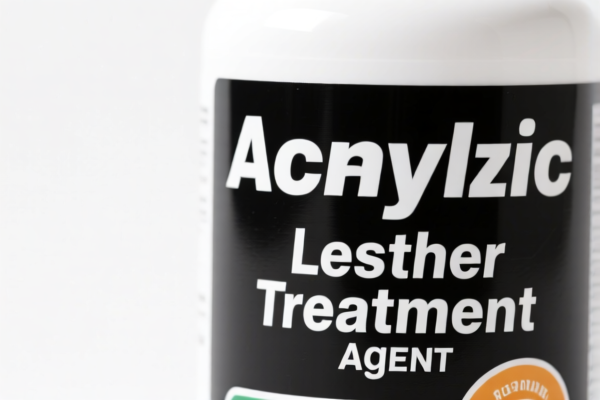
| ✅ Product Photos (Label) | ✔️ | Clear image of the label showing "Leather Care Agent," "Softener," or "Finisher" |
| ✅ Commercial Invoice | ✔️ | Must accurately describe the goods as "Leather Auxiliary" or "Tanning Agent," not generic "Chemical" |
| ✅ Packing List | ✔️ | Specify net/gross weight and packaging type |
| ✅ Proof of Use | ✔️ | If claiming 3809 (Leather Industry Prep), provide evidence of intended use in leather processing |
✅ 2. Declaration Tips (Key Mnemonic)
🔥 "Know Your Function: Coating vs. Tanning. Name Matches Code. Tax Saves Pennies!"
| Scenario | Correct HS Code | Wrong Code | Consequence |
|---|---|---|---|
| Surface Coating/Effect (e.g., shiny finish, color effect) | 3208.xx |
3809.93 |
Over-declared tax if base rates differ; potential misclassification penalty |
| Internal Softening/Tanning | 3202.xx or 3809.93 |
3208.xx |
Under-declared tax (if 3208 is cheaper) → Customs Audit & Penalties |
| Explicit "Leather Agent" | 3809.93.50.00 |
3202.90 |
3809 is more specific; using generic 3202 may lead to rejection |
| Generic Chemical Mix | 3202.90.50.00 |
3208.20 |
If it doesn't act as a coating, 3208 is wrong → Delay |
✅ 3. Special Situation Handling
| Situation | Handling Advice |
|---|---|
| OEM/Contract Manufacturing | Provide customer specs showing if it's a "finisher" (3208) or "tanner" (3202/3809) |
| Multi-Use Products | If used for both leather and textiles, classify based on primary intended use; document this clearly |
| High-Value Luxury Leather Goods | Use 3809.93.50.00 as it is the most specific "Leather Auxiliary" code, reducing ambiguity |
| Bulk Chemical Shipments | Ensure MSDS is provided; CBP may inspect for hazardous characteristics |
🌍 V. Global Main Market Clearance Comparison (2026 Latest)
| Country/Region | Recommended HS Code | Tariff (China Origin) | Certification Requirements | Notes |
|---|---|---|---|---|
| 🇺🇸 USA | 3809.93.50.00 / 3208.xx |
38.6% ~ 41.5% | None specific for customs, but EPA/FDA may apply depending on chemical | High tariffs due to 301 + 122 |
| 🇨🇳 China | 3809.93.50.00 |
6.0% | N/A | No additional surcharges |
| 🇪🇺 EU | 3809.93.50.00 |
6.5% | REACH Registration | No Section 301 equivalent |
| 🇬🇧 UK | 3809.93.50.00 |
6.5% | UK REACH | Post-Brexit tariff alignment with EU |
| 🇦🇺 Australia | 3809.93.50.00 |
5.0% | AICIS | Low base tariff, no major surcharges |
📌 Conclusion:
- The USA imposes the highest tariffs on leather care agents from China due to Section 301 (25%) and Section 122 (10%) surcharges; - Total costs in the US range from 38.6% to 41.5%, significantly higher than other major markets (5-7%); - Recommendation: For US imports, consider supply chain diversification (e.g., sourcing from Vietnam, India, or Mexico) if possible, to mitigate tariff impact.
📌 VI. Common Errors & Pitfall Guide (Lessons Learned)
❌ Error 1: Declaring "Leather Softener" as "General Chemical Cleaner" (3824)
👉 Consequence: Customs may reject due to lack of specificity; potential penalty for misclassification.
❌ Error 2: Using 3208 (Coating) for a product that is actually a Tanning Agent (3202)
👉 Consequence: If the product is absorbed into the leather (tanning) vs. sitting on top (coating), misclassification can lead to audit flags.
❌ Error 3: Ignoring Section 122 Tariffs
👉 Consequence: Many importers only account for Section 301 (25%). Forgetting the extra 10% leads to underpayment of duties.
❌ Error 4: Vague Product Names ("Chemical Agent")
👉 Consequence: CBP will assign the highest possible duty rate or hold the shipment for inspection.
✅ Correct Practice:
"Leather Softening Agent, Synthetic Polymer Based, For Use in Leather Finishing Process, MSDS Attached, Model XYZ"
🎯 VII. Conclusion: Precise Classification Saves Costs!
🎯 Remember the Mnemonic:
🔹 "Coating is 3208, Tanning is 3202, Auxiliary is 3809. Name it Right, Pay Less Light!"
🔹 "USA Tariffs are High (38-41%), Check Origin, Avoid the Pain!"
📌 Pro Tip:
If your leather care agent is originating from countries with Free Trade Agreements (FTAs) (e.g., Canada, Mexico under USMCA), tariffs may be 0%.
For US imports, consider Advance Rulings from CBP to lock in the correct HS Code and tariff rate before shipping.
📣 Immediate Action:
📞 Consult with a licensed customs broker
📄 Prepare detailed Product Specifications and MSDS
🚀 Ship with Confidence, Clear with Ease!
✨ Professional Clearance Starts with Accurate Classification!
💼 Every Percent of Tariff Matters to Your Bottom Line!
Customer Reviews
About HS Code Classification
The Harmonized System (HS) is an internationally standardized nomenclature developed by the World Customs Organization (WCO) to classify traded products. Over 200 countries use the HS system as the basis for customs tariffs, trade statistics, and import/export regulations.
Each HS code follows a hierarchical structure:
- Chapter (2 digits) — Broad category of goods (e.g., Chapter 84: Machinery and Mechanical Appliances)
- Heading (4 digits) — More specific grouping within the chapter
- Subheading (6 digits) — Internationally standardized breakdown, used by all WCO member countries
- National subdivisions (8-10 digits) — Country-specific extensions for further classification, such as US HTSUS 10-digit codes
Correct HS code classification is essential for smooth customs clearance, accurate duty payment, and compliance with trade regulations. Misclassification can lead to customs delays, overpayment of duties, or penalties.
When importing from CN to US, the applicable tariff rates may include:
- Most-Favored-Nation (MFN) rate — The standard duty rate applied to WTO members
- General rate — Applied to countries without trade agreements
- Trade remedy duties — Additional tariffs such as Section 301 (anti-dumping), Section 232 (national security), or countervailing duties
The information provided on this page is for reference purposes only. For official classification, please consult with your local customs authority or a licensed customs broker.