leather data cable organizer
CN → US| HS Code | Tariff Rate | Origin | Destination | Doc |
|---|---|---|---|---|
| 6307909891 | 24.5% | CN | US | Official Doc |
| 6307909875 | 24.5% | CN | US | Official Doc |
| 4202322000 | 55.0% | CN | US | Official Doc |
| 3926908700 | 40.3% | CN | US | Official Doc |
| 4202329300 | 52.6% | CN | US | Official Doc |
Product Images
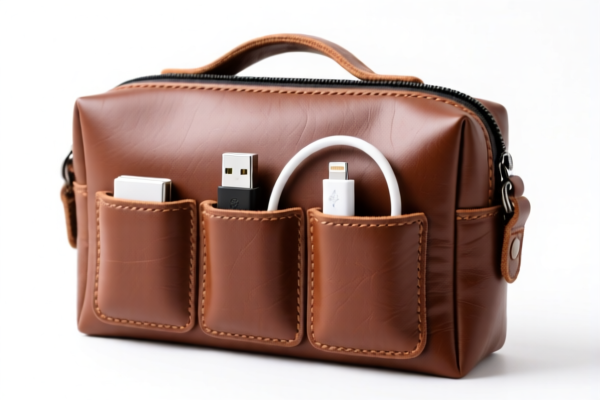
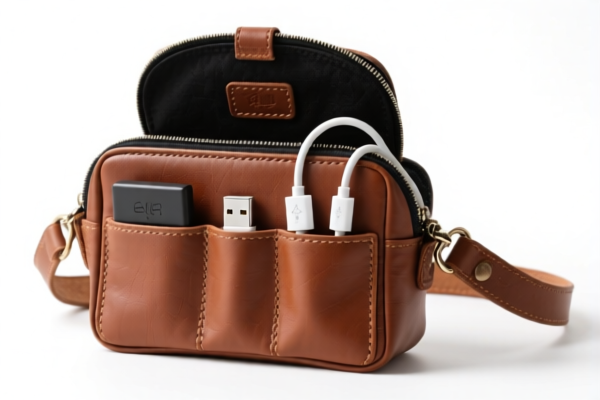
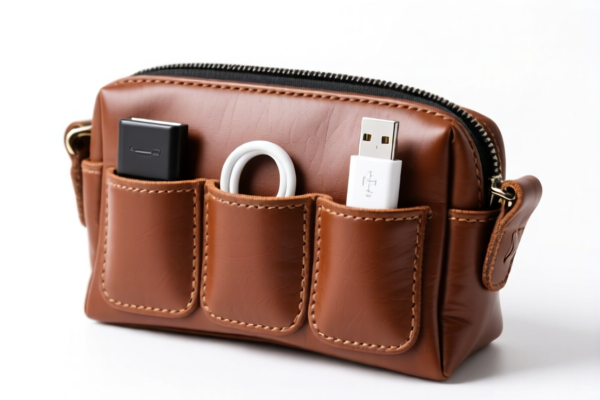
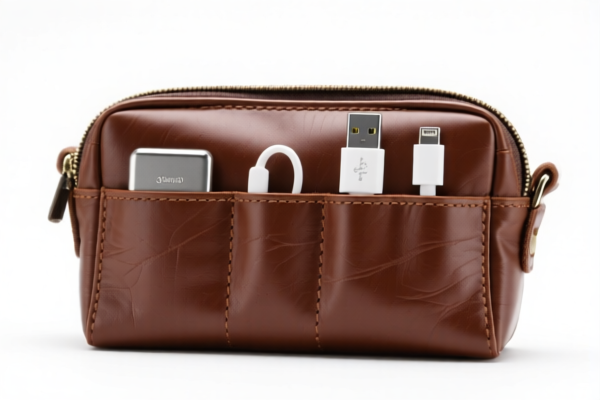
AI Analysis
🧳 Leather Data Cable Organizer (Charging Cable Purse)
🌐 HS Code Reference & Customs Clearance Guide | 2026 Latest Tariff Analysis | Professional Entry Strategy
📌 Part 1: Product Definition & Classification: What is a "Cable Organizer"?
A Leather Data Cable Organizer is a small accessory used to store, protect, and manage electronic accessories such as charging cables, earphones, and small adapters. In international trade, the classification depends heavily on the material composition and primary function:
1. Textile-Based Bags (Chapter 42):
If the exterior surface is made of textile materials (e.g., polyester, nylon, canvas) or if the product is considered a "bag" regardless of material (depending on specific national interpretations), it often falls under Heading 4202.
2. Plastic Articles (Chapter 39):
If the organizer is made primarily of plastic (or has a plastic exterior/lining) and is classified as an "other made-up article of plastic," it falls under Heading 3926.
3. Other Made-up Articles (Chapter 63):
If the product does not fit the strict definition of a "bag" (e.g., it’s a pouch, roll, or case without handles/zippers typical of bags) or is made of mixed materials that don't clearly align with 4202, it may be classified under 6307 (Other made-up articles).
⚠️ Key Distinction Point:
- If it’s a structured bag with handles/zippers, typically 4202;
- If it’s a simple pouch/roll made of plastic, typically 3926;
- If it’s a generic accessory without clear bag/plastic characteristics, potentially 6307.
📦 Part 2: HS Code Classification Details (2026 Latest Tariff对照)
| HS Code | Product Description | Material Assumption | Key Characteristics |
|---|---|---|---|
6307.90.98.91 |
Other made-up articles | Textile or Plastic (Mixed) | Generic "other" category; no specific bag/plastic definition met. |
6307.90.98.75 |
Other made-up articles (Accessory) | Textile or Plastic | Classified as an accessory/attachment; "other" logic applies. |
4202.32.20.00 |
Sachets and similar containers, of plastic sheeting or of textile materials | Plastic or Textile | Exterior is plastic sheeting or textile; functions as a container. |
3926.90.87.00 |
Other articles of plastics | Plastic | Made-up plastic article; "other" category for plastic goods. |
4202.32.93.00 |
Other containers, of textile materials | Textile | Exterior is textile material (e.g., polyester, nylon); bag-like form. |
🔍 Key Reminder:
- 4202 codes are generally preferred if the item is clearly a "bag" or "container" with textile/plastic exterior.
- 3926 code is used if the item is predominantly plastic and doesn't fit the "bag" definition in 4202.
- 6307 codes are fallbacks for "other made-up articles" when specific bag/plastic criteria aren't fully met.
💰 Part 3: 2026 Latest Tariff Rate Breakdown (Including Surcharges & Policy Add-ons)
✅ Applicable Country: United States (US)
✅ Country of Origin: China (CN)
✅ Effective Date: From November 10, 2025 (including subsequent imports)
🎯 1. 6307.90.98.91 & 6307.90.98.75 —— Other Made-up Articles
| Item | Details |
|---|---|
| Base Tariff | 7.0% |
| Section 301 Surcharge | 7.5% |
| Section 122 Tariff | 10.0% |
| Total Tax Rate | 24.5% |
| Calculation | CIF Value × 24.5% |
| De Minimis Eligibility | ❌ No (denied_de_minimis) |
| Legal Basis Path | Base: 7.0% + 301: 7.5% + 122: 10% |
📌 Explanation:
- These codes are classified under "Other made-up articles," which have a moderate base tariff.
- The Section 122 Tariff (10%) is a significant add-on for certain textile/apparel-related imports from China.
- Total 24.5% is moderately high but lower than plastic/textile bag classifications.
🎯 2. 4202.32.20.00 & 4202.32.93.00 —— Plastic/Textile Bags & Containers
| Item | Details |
|---|---|
| Base Tariff | 20.0% (Plastic) / 17.6% (Textile) |
| Section 301 Surcharge | 25.0% |
| Section 122 Tariff | 10.0% |
| Total Tax Rate | 55.0% (Plastic) / 52.6% (Textile) |
| Calculation | CIF Value × 55.0% / 52.6% |
| De Minimis Eligibility | ❌ No (denied_de_minimis) |
| Legal Basis Path | Base + 301: 25% + 122: 10% |
📌 Explanation:
- High Base Tariff: Bags and containers of plastic/textile have a high base tariff (20%/17.6%).
- Section 301 (25%): This is the standard surcharge for many Chinese-manufactured consumer goods.
- Section 122 (10%): Additional tariff for textile/apparel-related items.
- Total 52.6%-55.0% is very high, significantly impacting profitability.
🎯 3. 3926.90.87.00 —— Other Plastic Articles
| Item | Details |
|---|---|
| Base Tariff | 5.3% |
| Section 301 Surcharge | 25.0% |
| Section 122 Tariff | 10.0% |
| Total Tax Rate | 40.3% |
| Calculation | CIF Value × 40.3% |
| De Minimis Eligibility | ❌ No (denied_de_minimis) |
| Legal Basis Path | Base: 5.3% + 301: 25% + 122: 10% |
📌 Explanation:
- Low Base Tariff: Plastic articles have a much lower base tariff (5.3%).
- Section 301 (25%) and Section 122 (10%) still apply.
- Total 40.3% is lower than the 4202 bag codes but higher than the 6307 codes.
🛠️ Part 4: Customs Clearance Practical Advice (Pitfall Avoidance Guide)
✅ 1. Documentation Checklist (All Required)
| Document | Required | Notes |
|---|---|---|
| ✅ Product Specifications | ✔️ | Material (leather, PU, plastic, textile), dimensions, closure type. |
| ✅ Product Photos | ✔️ | Show exterior material, interior lining, and any brand labels. |
| ✅ Commercial Invoice | ✔️ | Clearly state "Leather Data Cable Organizer" or "Cable Pouch." |
| ✅ Packing List | ✔️ | Include quantity, weight, and HS Code reference. |
| ✅ Material Declaration | ✔️ | Specify exact material composition (e.g., "Exterior: PU Leather, Interior: Polyester"). |
| ✅ Certificate of Origin | ✔️ | If applicable for origin-based duties. |
✅ 2. Declaration Strategy (Key Tips)
🔥 "Material Determines Code, Bag vs. Article is Key!"
| Scenario | Correct Declaration | Wrong Declaration | Consequence |
|---|---|---|---|
| PU/Leather Exterior | 4202.32.93.00 (Textile/Plastic logic) or 6307.90.98.91 |
6307 without justification |
Potential reclassification → Higher duty + Penalty |
| Plastic Exterior | 3926.90.87.00 |
4202 (if not a "bag") |
Rejection or Misclassification |
| Generic Fabric Pouch | 6307.90.98.91 |
4202 (if not a bag) |
Dispute on "bag" definition |
| Structured Bag with Handles | 4202.32.93.00 |
6307 |
Underpayment of duty → Audit risk |
📌 Note:
- Leather/PU is often treated as textile/plastic equivalent in bag classifications. If it’s a "bag," 4202 is likely. If it’s a "pouch/case," 6307 may apply.
- Plastic items should use 3926 unless they clearly function as a "bag" (then 4202).
✅ 3. Special Cases
| Situation | Recommendation |
|---|---|
| Hybrid Material (Leather + Textile) | Declare as 4202 if it functions as a bag; otherwise 6307. |
| Small Pouch (No Handles) | Consider 6307.90.98.91 if not a "bag"; avoid 4202 to reduce risk. |
| Bulk Import (De Minimis) | ❌ No De Minimis Exemption: All these codes are subject to Section 301 and 122 tariffs. |
| Origin Shift | If manufactured in Vietnam/Mexico, check for IEEPA Exemptions (may reduce tariffs). |
🌍 Part 5: Global Market Comparison (2026 Latest)
| Country/Region | Recommended HS Code | Tariff (China Origin) | Certification | Notes |
|---|---|---|---|---|
| 🇺🇸 USA | 6307.90.98.91 / 4202.32.93.00 |
24.5% - 55.0% | None | High tariffs due to 301/122. |
| 🇨🇳 China | 4202.32.93.00 |
5% - 10% | CCC (if electronics) | No surcharges. |
| 🇪🇺 EU | 4202.32.93.00 |
4% - 12% | CE (if applicable) | Lower tariffs than US. |
| 🇬🇧 UK | 4202.32.93.00 |
4% - 12% | UKCA | Post-Brexit rules apply. |
| 🇦🇺 Australia | 4202.32.93.00 |
5% | RCM | Moderate tariffs. |
📌 Conclusion:
- USA has the highest tariffs due to Section 301 and Section 122.
- EU/UK/Australia are more favorable with lower base tariffs.
- De Minimis Exemption is NOT available for these HS codes in the US.
📌 Part 6: Common Errors & Pitfalls (Lessons Learned)
❌ Error 1: Classifying a "leather pouch" as a generic plastic item (3926)
👉 Result: Misclassification → Audit risk + Potential back taxes.
❌ Error 2: Using 6307 for a structured bag with handles
👉 Result: CBP may reclassify to 4202 → Higher duty (55%) + Penalties.
❌ Error 3: Assuming De Minimis applies to small items
👉 Result: No De Minimis for these codes → Full duty + Surcharge charged.
❌ Error 4: Vague material description ("Mixed Material")
👉 Result: Customs request for clarification → Delay in clearance.
✅ Correct Approach:
"Leather Data Cable Organizer, PU Exterior, Polyester Lining, Zipper Closure, Model XYZ"
- Be specific about material and form factor.
- If it’s a "bag," use 4202.
- If it’s a "pouch/case," use 6307.
🎯 Part 7: Conclusion: Precision in Classification Saves Money!
🎯 Remember:
🔹 "Bag = 4202 (High Duty), Pouch = 6307 (Medium Duty), Plastic = 3926 (Medium-High Duty)"
🔹 "No De Minimis in US for These Codes"
🔹 "Material + Form Factor = Correct HS Code"
📌 Tips:
- If your product is originating from Vietnam, Mexico, or Thailand, check for IEEPA Exemptions which may significantly reduce tariffs.
- Consider applying for an Advance Ruling from CBP to confirm the correct HS Code before shipping.
📣 Immediate Action:
📞 Consult a Licensed Customs Broker + Provide Material Specs + Apply for Advance Ruling
🚀 Ensure Smooth Clearance, Minimize Duties, Maximize Profit!
✨ Professional Customs Clearance Starts with Accurate Classification!
💼 Every Duty Paid is a Cost Saved with Precision!
Customer Reviews
About HS Code Classification
The Harmonized System (HS) is an internationally standardized nomenclature developed by the World Customs Organization (WCO) to classify traded products. Over 200 countries use the HS system as the basis for customs tariffs, trade statistics, and import/export regulations.
Each HS code follows a hierarchical structure:
- Chapter (2 digits) — Broad category of goods (e.g., Chapter 84: Machinery and Mechanical Appliances)
- Heading (4 digits) — More specific grouping within the chapter
- Subheading (6 digits) — Internationally standardized breakdown, used by all WCO member countries
- National subdivisions (8-10 digits) — Country-specific extensions for further classification, such as US HTSUS 10-digit codes
Correct HS code classification is essential for smooth customs clearance, accurate duty payment, and compliance with trade regulations. Misclassification can lead to customs delays, overpayment of duties, or penalties.
When importing from CN to US, the applicable tariff rates may include:
- Most-Favored-Nation (MFN) rate — The standard duty rate applied to WTO members
- General rate — Applied to countries without trade agreements
- Trade remedy duties — Additional tariffs such as Section 301 (anti-dumping), Section 232 (national security), or countervailing duties
The information provided on this page is for reference purposes only. For official classification, please consult with your local customs authority or a licensed customs broker.