leather dyeing chelating agent
CN → US| HS Code | Tariff Rate | Origin | Destination | Doc |
|---|---|---|---|---|
| 3809931000 | 41.5% | CN | US | Official Doc |
| 3202905000 | 40.0% | CN | US | Official Doc |
| 3202105000 | 41.5% | CN | US | Official Doc |
| 3809935000 | 41.0% | CN | US | Official Doc |
| 3402499000 | 38.7% | CN | US | Official Doc |
Product Images
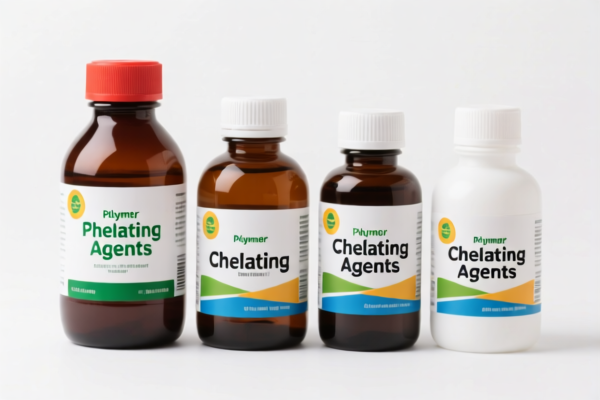
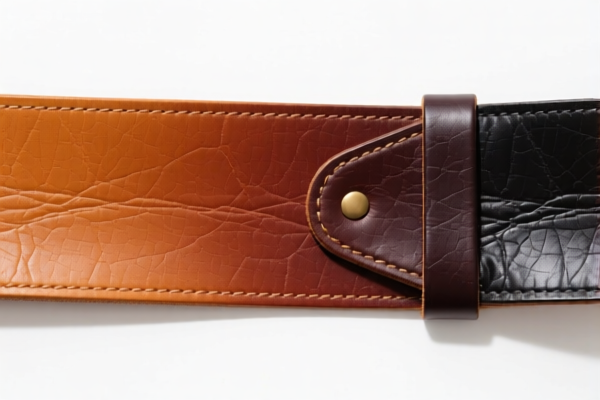
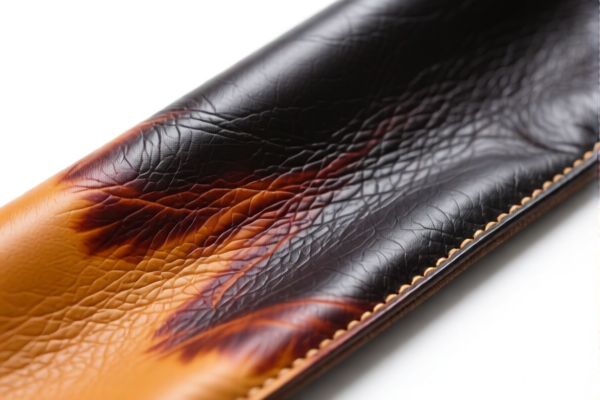
AI Analysis
🧪 Leather Dyeing Chelating Agent (Sequestrants & Buffers)
🌐 HS Code Reference & Customs Clearance Guide | 2026 Latest Tariff Analysis | Professional Strategy for Leather Auxiliaries
📌 I. Product Definition & Classification: What is a "Leather Dyeing Chelating Agent"?
In the leather tanning and finishing industry, Leather Dyeing Chelating Agents (often referred to as sequestrants, buffering agents, or dye carriers) are critical chemical auxiliaries. Their primary function is to bind heavy metal ions (like calcium, magnesium, iron, and copper) present in the water or raw hide, preventing them from interfering with dyeing, tanning, and finishing processes. They ensure uniform color uptake, smoothness, and prevent "dye spots" or uneven shading.
Depending on the chemical composition (organic vs. inorganic/synthetic) and the specific mechanism of action (chelating vs. surfactant vs. finishing additive), these products can fall under different HS Codes. Misclassification can lead to significant tariff discrepancies due to the complex US trade war tariffs (Section 301 + IEEPA).
⚠️ Key Distinction Point:
- Is it primarily a chelating agent/sequestrant acting on metals? → Look at Chapter 38 or Chapter 32.
- Is it primarily a synthetic organic tanning agent or dye carrier? → Look at Chapter 32.
- Is it primarily an organic surfactant (e.g., non-ionic/emulsifier) used for wetting/dispersion? → Look at Chapter 34.
📦 II. HS Code Classification Details (2026 Latest Tariff Authority Comparison)
Based on the provided data, here are the five possible HS Codes for Leather Dyeing Chelating Agents, with their corresponding tax structures.
| HS Code | Product Description | Application Scenario | Primary Chemical Nature |
|---|---|---|---|
3809.93.10.00 |
Leather Dyeing Buffering Agent | Matches leather material & buffering function | Specialized Chemical Mixture for leather processing |
3202.90.50.00 |
Leather Dyeing/Chelating Auxiliary | Chemical tanning/dyeing auxiliary | Chemical Tanning/Dyeing Aid |
3202.10.50.00 |
Synthetic Organic Tanning Agent | Fits attribute of synthetic organic tanning agents | Synthetic Organic Tanning Substance |
3809.93.50.00 |
Leather Finishing/Dye Carrier | Consistent with finishing agents & dye carriers | Finishing/Processing Aid |
3402.49.90.00 |
Leather Bonding/Wetting Agent | Organic surfactant chemical additive | Organic Surfactant (Non-ionic/Amphoteric) |
🔍 Critical Reminder:
-3809(Chapter 38) codes generally apply to prepared dyes, mordants, and other preparations used in leather processing that do not fit strictly into "tanning extracts" (Chapter 32).
-3202(Chapter 32) codes apply if the agent is primarily a tanning agent or a synthetic organic substance used in tanning/dyeing.
-3402(Chapter 34) applies if the product is predominantly an organic surface-active agent (surfactant) used for wetting, dispersing, or emulsifying, even if used in leather.
- Tariff Impact: All listed codes attract high US tariffs (38.7% - 41.5%) due to Section 301 and IEEPA measures.
💰 III. 2026 Latest Tariff Rate Breakdown (Detailed Tax Clauses)
✅ Applicable Country: USA (US)
✅ Origin: China (CN)
✅ Effective Date: November 10, 2025 (and subsequent imports)
🎯 1. 3809.93.10.00 —— Leather Dyeing Buffering Agent (Specialized Mixture)
| Item | Content |
|---|---|
| Base Tariff | 6.5% (Standard MFN) |
| Section 301 Additional Tariff | +25.0% (USITC Footnote 9903.88.01/3809) |
| IEEPA Additional Tariff | +10.0% (122 Clause Tariff for China/Products of China) |
| Total Tariff | 41.5% |
| Tax Calculation | CIF Value × 41.5% |
| De Minimis Eligibility | ❌ NO (Not eligible for de minimis exemption) |
| Legal Path | USITC:3809.93.10.00 → Section 301: +25% → IEEPA: +10% |
📌 Explanation:
- This code is used when the product is a specialized mixture specifically formulated for buffering leather dyeing.
- The 25% Section 301 tariff applies because Chapter 38 goods from China are subject to this duty.
- The 10% IEEPA tariff is added on top, resulting in a total of 41.5%. This is a high-cost item for importers.
🎯 2. 3202.90.50.00 —— Leather Dyeing/Chelating Auxiliary (General Chemical Aid)
| Item | Content |
|---|---|
| Base Tariff | 5.0% |
| Section 301 Additional Tariff | +25.0% |
| IEEPA Additional Tariff | +10.0% |
| Total Tariff | 40.0% |
| Tax Calculation | CIF Value × 40.0% |
| De Minimis Eligibility | ❌ NO |
| Legal Path | USITC:3202.90.50.00 → Section 301: +25% → IEEPA: +10% |
📌 Note:
- Lower base rate (5%) than3809.93.10.00, but still subject to full附加 taxes.
- Suitable for general chemical auxiliaries that act as tanning/dyeing aids but aren't strictly "tanning extracts."
🎯 3. 3202.10.50.00 —— Synthetic Organic Tanning Agent
| Item | Content |
|---|---|
| Base Tariff | 6.5% |
| Section 301 Additional Tariff | +25.0% |
| IEEPA Additional Tariff | +10.0% |
| Total Tariff | 41.5% |
| Tax Calculation | CIF Value × 41.5% |
| De Minimis Eligibility | ❌ NO |
| Legal Path | USITC:3202.10.50.00 → Section 301: +25% → IEEPA: +10% |
📌 Explanation:
- If the chelating agent has strong synthetic organic tanning properties, it may fall here.
- Same high tariff burden as3809.93.10.00.
🎯 4. 3809.93.50.00 —— Leather Finishing/Dye Carrier
| Item | Content |
|---|---|
| Base Tariff | 6.0% |
| Section 301 Additional Tariff | +25.0% |
| IEEPA Additional Tariff | +10.0% |
| Total Tariff | 41.0% |
| Tax Calculation | CIF Value × 41.0% |
| De Minimis Eligibility | ❌ NO |
| Legal Path | USITC:3809.93.50.00 → Section 301: +25% → IEEPA: +10% |
📌 Note:
- Slightly lower total tariff (41.0%) compared to3809.93.10.00(41.5%).
- Use if the product functions more as a finishing agent or dye carrier than a pure metal chelator.
🎯 5. 3402.49.90.00 —— Organic Surfactant (Bonding/Wetting Agent)
| Item | Content |
|---|---|
| Base Tariff | 3.7% |
| Section 301 Additional Tariff | +25.0% |
| IEEPA Additional Tariff | +10.0% |
| Total Tariff | 38.7% |
| Tax Calculation | CIF Value × 38.7% |
| De Minimis Eligibility | ❌ NO |
| Legal Path | USITC:3402.49.90.00 → Section 301: +25% → IEEPA: +10% |
📌 Critical Insight:
- Lowest Total Tariff (38.7%) among the options!
- Only applicable if the product is primarily an organic surfactant (e.g., non-ionic emulsifiers, wetting agents) used in leather processing.
- Risk: If customs determines the product is primarily a chelating agent (not a surfactant), this classification will be rejected, leading to penalties and back taxes.
- Strategy: If the product formulation is surfactant-heavy, this is the most cost-effective HS Code.
🛠️ IV. Customs Clearance Practical Advice (Avoiding Pitfalls)
✅ 1. Documentation Checklist (Mandatory)
| Document | Required | Description |
|---|---|---|
| ✅ Product Specification Sheet | ✔️ | Must detail chemical composition (e.g., % of surfactants, chelating groups like EDTA derivatives). |
| ✅ MSDS (Safety Data Sheet) | ✔️ | Crucial for classifying as hazardous/non-hazardous. Highlights primary function (surfactant vs. chelator). |
| ✅ Formula/Composition Breakdown | ✔️ | To support claim for 3402 (surfactant) vs. 3809/3202 (tanning/finishing aid). |
| ✅ Commercial Invoice | ✔️ | Clear description: e.g., "Organic Surfactant for Leather Wetting" vs. "Metal Chelating Agent for Leather Dyeing." |
| ✅ Certificate of Origin (CO) | ✔️ | Proves Chinese origin for tariff application. |
| ✅ Packaging List | ✔️ | Details net/gross weight, container type. |
✅ 2. Classification Strategy & Tips
🔥 "Function Determines Code, Composition Determines Risk!"
| Scenario | Recommended HS Code | Why? |
|---|---|---|
| Product is mostly surfactant/wetting agent | 3402.49.90.00 |
Lowest tariff (38.7%). Must prove surfactant nature. |
| Product is a specific buffering agent for leather | 3809.93.10.00 |
Specific to leather buffering. High tariff (41.5%). |
| Product is a general chelating auxiliary | 3202.90.50.00 |
General chemical aid. Moderate base rate (40.0%). |
| Product has tanning properties | 3202.10.50.00 |
Classified as tanning agent. High tariff (41.5%). |
| Product is a finishing/dye carrier | 3809.93.50.00 |
Finishing aid. Slightly lower than 3809.93.10.00 (41.0%). |
📌 Key Advice:
- Do NOT split shipments to avoid duties. All items are subject to Section 301 and IEEPA.
- Pre-shipment Sample Testing: If aiming for3402.49.90.00, get a third-party lab test confirming the primary function is surfactant action (wetting/dispersing) rather than metal chelation.
- Advance Ruling: Consider applying for a Binding Tariff Information (BTI) or US CBP Advance Ruling to lock in the classification before shipping.
✅ 3. Special Cases
| Situation | Handling Advice |
|---|---|
| Mixture of Surfactant + Chelator | If chelator content is minor, argue for 3402. If chelator is primary, use 3809 or 3202. |
| Customs Audit | Provide lab reports showing pH buffering capacity vs. surfactant activity. |
| De Minimis (Section 321) | ❌ Not Applicable. All these HS Codes are excluded from de minimis exemptions for Chinese goods. Full duties must be paid at entry. |
🌍 V. Global Market Comparison (2026)
| Country/Region | Recommended HS Code | Estimated Duty (China Origin) | Certification | Notes |
|---|---|---|---|---|
| 🇺🇸 USA | 3402.49.90.00 (Best Case) |
38.7% (Min) | OSHA/GHS SDS | All options have high duties (38.7%–41.5%). |
| 🇺🇸 USA | 3809.93.10.00 |
41.5% (Typical) | OSHA/GHS SDS | Most common for buffering agents. |
| 🇪🇺 EU | 3824.99.99 |
~4.3% + VAT | REACH Registration | No Section 301 tariffs. REACH compliance is critical. |
| 🇨🇳 China | 3824.99 (Local) |
~0% | None | For domestic use only. |
| 🇻🇳 Vietnam | 3824.99 |
~0% (if local production) | None | Potential for supply chain shift to avoid US tariffs. |
📌 Conclusion:
- USA is the most expensive market due to Section 301 + IEEPA tariffs.
- EU has no punitive tariffs but requires REACH registration, which can be costly and time-consuming.
- Strategy: For US imports, optimize HS Code to3402.49.90.00if possible to save ~2.8% in total duty.
📌 VI. Common Mistakes & Pitfalls (Lessons Learned)
❌ Mistake 1: Classifying a chelating agent as 3402.49.90.00 without proof of surfactant dominance.
👉 Consequence: Customs rejects classification, reclassifies to 3809 or 3202, back taxes + penalties.
❌ Mistake 2: Ignoring the 10% IEEPA tariff in cost calculations.
👉 Consequence: Profit margins eroded by 3–4% unexpectedly.
❌ Mistake 3: Splitting shipment into "chemicals" and "packaging" to avoid de minimis.
👉 Consequence: All parts are subject to full duties. No savings.
❌ Mistake 4: Using generic names like "Leather Chemical" on invoice.
👉 Consequence: Customs delays for inspection, potential detention.
✅ Correct Approach:
"Organic Non-Ionic Surfactant for Leather Wetting, CAS No. XXXXX-XX-X, Formulation: 50% Surfactant, 10% Chelating Agent, 40% Water."
🎯 VII. Conclusion: Professional Classification Saves Money!
🎯 Remember the Rules:
🔹 "Surfactant First? Use 3402 (38.7%)."
🔹 "Buffer/Chelator First? Use 3809 (41.5%)."
🔹 "Tanning Aid First? Use 3202 (40-41.5%)."
🔹 "No De Minimis for China! Pay Full Duty."
📌 Tips:
- If your product can be formulated to have a higher surfactant content, consider 3402.49.90.00 for tariff optimization.
- Always provide detailed composition data to CBP.
- For large volumes, consider supply chain diversification (e.g., production in Vietnam/India) to avoid US tariffs entirely.
📣 Immediate Action:
📞 Contact a Customs Broker + Provide MSDS & Formula + Apply for Advance Ruling
🚀 Minimize Tariff Burden, Ensure Smooth Clearance!
✨ Professional Classification, Starts with Precision!
💼 Every Percent Saved is Profit Added!
Customer Reviews
About HS Code Classification
The Harmonized System (HS) is an internationally standardized nomenclature developed by the World Customs Organization (WCO) to classify traded products. Over 200 countries use the HS system as the basis for customs tariffs, trade statistics, and import/export regulations.
Each HS code follows a hierarchical structure:
- Chapter (2 digits) — Broad category of goods (e.g., Chapter 84: Machinery and Mechanical Appliances)
- Heading (4 digits) — More specific grouping within the chapter
- Subheading (6 digits) — Internationally standardized breakdown, used by all WCO member countries
- National subdivisions (8-10 digits) — Country-specific extensions for further classification, such as US HTSUS 10-digit codes
Correct HS code classification is essential for smooth customs clearance, accurate duty payment, and compliance with trade regulations. Misclassification can lead to customs delays, overpayment of duties, or penalties.
When importing from CN to US, the applicable tariff rates may include:
- Most-Favored-Nation (MFN) rate — The standard duty rate applied to WTO members
- General rate — Applied to countries without trade agreements
- Trade remedy duties — Additional tariffs such as Section 301 (anti-dumping), Section 232 (national security), or countervailing duties
The information provided on this page is for reference purposes only. For official classification, please consult with your local customs authority or a licensed customs broker.