leather effect agent
CN → US| HS Code | Tariff Rate | Origin | Destination | Doc |
|---|---|---|---|---|
| 3209900000 | 40.9% | CN | US | Official Doc |
| 3209100000 | 40.1% | CN | US | Official Doc |
| 3208100000 | 38.7% | CN | US | Official Doc |
| 3208200000 | 38.6% | CN | US | Official Doc |
| 320990 | 0.0% | CN | US | Official Doc |
| 320890 | 0.0% | CN | US | Official Doc |
Product Images

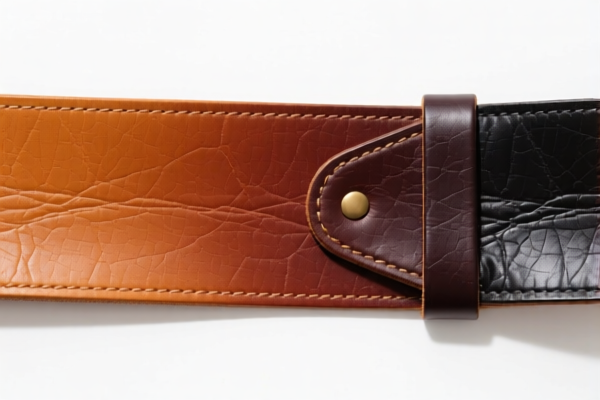
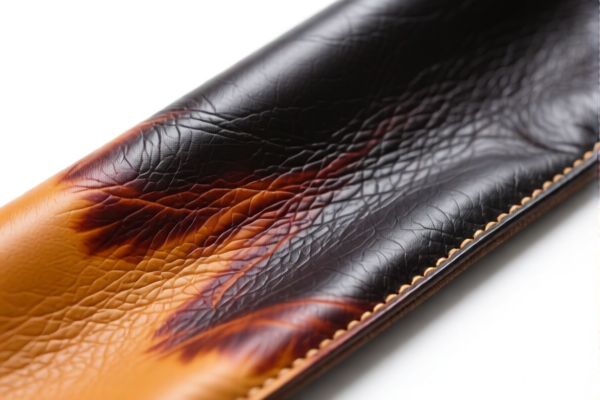
AI Analysis
🎨 Leather Effect Agent (Chemical Preparations)
🌐 HS Code Reference & Customs Clearance Guide | 2026 Latest Tariff Analysis | Professional Clearance Strategy
📌 I. Product Definition & Classification: What is a "Leather Effect Agent"?
Leather Effect Agents are chemical preparations used in the textile, leather, or coating industries to impart the look, feel, or finish of leather onto other materials (such as fabric, paper, or plastic). They are typically complex mixtures based on synthetic polymers or chemically modified natural polymers, dispersed or dissolved in specific media.
In international trade, these products are primarily classified under Chapter 32 (Tanning or Dyeing Extracts; Tannins and Their Derivatives; Dyes, Pigments and Other Colouring Matter; Paints and Varnishes; Putty, Glassers’ Putty and Fillers). The critical distinction lies in the solvent medium (aqueous vs. non-aqueous) and the polymer base (acrylic/vinyl vs. others like polyesters or others).
⚠️ Key Distinction Point:
- If the agent is water-based (dispersed/dissolved in water) → Goes to Heading 3209.
- If the agent is solvent-based (dissolved in non-aqueous medium) → Goes to Heading 3208.
- Crucial Detail: Within these headings, if the polymer is Acrylic or Vinyl-based, tariffs are often 0% (depending on trade agreements). If it is Polyester-based or Other, tariffs can be significantly higher, especially with additional duties.
📦 II. HS Code Classification Details (2026 Latest Tariff Authority Match)
Based on the provided <DATA>, here are the specific HS Codes and their corresponding tax implications. Note that "Failed to retrieve" codes are excluded from tariff analysis as they are incomplete for clearance calculation.
| HS Code | Product Description | Media Type | Polymer Base | Tax Status |
|---|---|---|---|---|
3209.10.00.00 |
Paints and varnishes based on synthetic polymers or chemically modified natural polymers, dispersed or dissolved in an aqueous medium: Based on acrylic or vinyl polymers | Aqueous (Water-based) | Acrylic or Vinyl | ✅ 0.0% Total Tax |
3209.90.00.00 |
Paints and varnishes based on synthetic polymers or chemically modified natural polymers, dispersed or dissolved in an aqueous medium: Other | Aqueous (Water-based) | Other (e.g., Polyester, PU, etc.) | ❌ 30.9% Total Tax |
3208.10.00.00 |
Paints and varnishes based on synthetic polymers or chemically modified natural polymers, dispersed or dissolved in a nonaqueous medium; solutions: Based on polyesters | Non-Aqueous (Solvent-based) | Polyester | ❌ 28.7% Total Tax |
3208.20.00.00 |
Paints and varnishes based on synthetic polymers or chemically modified natural polymers, dispersed or dissolved in a nonaqueous medium; solutions: Based on acrylic or vinyl polymers | Non-Aqueous (Solvent-based) | Acrylic or Vinyl | ✅ 0.0% Total Tax |
3209.90 |
Other preparations for the treatment of leather or for the manufacture of leather... | Data Incomplete | N/A | ⚠️ Error (Cannot calculate) |
3208.90 |
Other preparations for the treatment of leather or for the manufacture of leather... | Data Incomplete | N/A | ⚠️ Error (Cannot calculate) |
🔍 Important Note:
The codes3209.90and3208.90are 6-digit headings. In customs clearance, you must provide an 8-digit (or 10-digit, depending on the country) code for precise duty calculation. The provided data shows "Failed to retrieve tax information" for these broad headings, likely because they are parent codes that split into more specific sub-headings (like.00.00variants). Do not use these incomplete codes for final declaration. Always specify the exact sub-category (e.g., Acrylic vs. Other).
💰 III. 2026 Latest Tariff Rate Breakdown (Detailed Policy Explanation)
✅ Assumption: Based on the tax details provided ("Base Tariff + Additional Tariff"), this analysis reflects US Import Duties on Chinese Origin Goods (implied by the specific "Additional Tariff" structure often seen in US-China trade data).
✅ Origin: China (CN)
✅ Destination: United States (US)
🎯 1. 3209.10.00.00 & 3208.20.00.00 — Acrylic/Vinyl-Based Agents (Water & Solvent Based)
| Item | Content |
|---|---|
| Base Tariff | 0.0% (Most Favored Nation / Free) |
| Additional Tariff (Section 301) | 0.0% |
| Total Tax Rate | 0.0% |
| Tax Calculation | CIF Value × 0% = $0 Duty |
| Legal Basis | HTSUS 3209.10.00 and 3208.20.00 are generally exempt from Section 301 tariffs for these specific polymer types. |
📌 Explanation:
- Why 0%? Acrylic and vinyl polymers are often classified under subheadings that are excluded from the highest tariff brackets of the Section 301 list.
- Strategic Advantage: If your "Leather Effect Agent" is formulated primarily with Acrylic or Vinyl emulsions/solutions, it is duty-free. This makes it highly competitive in the US market.
- Verification: You must confirm the Material Safety Data Sheet (MSDS) and technical datasheet state that the primary binder is Acrylic or Vinyl. If it's a blend where other polymers dominate, it may be classified as "Other," triggering the 30%+ rate.
🎯 2. 3209.90.00.00 — Aqueous-Based Agents (Non-Acrylic/Vinyl)
| Item | Content |
|---|---|
| Base Tariff | 5.9% (Standard MFN Rate) |
| Additional Tariff (Section 301) | 25.0% (Retaliatory/Trade War Tariff) |
| Total Tax Rate | 30.9% |
| Tax Calculation | CIF Value × 30.9% |
| De Minimis Exemption | ❌ Not Eligible (Value exceeds $800 threshold for most commercial shipments) |
📌 Explanation:
- Why 30.9%? This falls under "Other" paints/varnishes in water-based medium. These are subject to the standard 25% Section 301 additional duty.
- Impact: This is a high-cost category. A $10,000 shipment incurs $3,090 in duties.
- Risk: Misclassification here from "Acrylic" (0%) to "Other" (30.9%) is a major audit risk.
🎯 3. 3208.10.00.00 — Non-Aqueous (Solvent-Based) Polyesters
| Item | Content |
|---|---|
| Base Tariff | 3.7% |
| Additional Tariff (Section 301) | 25.0% |
| Total Tax Rate | 28.7% |
| Tax Calculation | CIF Value × 28.7% |
📌 Explanation:
- Why 28.7%? Solvent-based coatings are often scrutinized for VOC (Volatile Organic Compounds) content. Polyesters are explicitly listed here with a 25% additional tariff.
- Environmental Note: Solvent-based agents may also require EPA/VOC compliance documentation in addition to duty payment.
🛠️ IV. Customs Clearance Practical Advice (Pitfall Avoidance Guide)
✅ 1. Documentation Checklist (Essential for Clearance)
| Document | Required? | Purpose |
|---|---|---|
| Technical Data Sheet (TDS) | ✅ YES | Critical: Must explicitly state the Polymer Type (Acrylic, Vinyl, Polyester, etc.) and Media Type (Aqueous/Water vs. Non-Aqueous/Solvent). |
| MSDS (Safety Data Sheet) | ✅ YES | Confirms chemical composition. Customs may check for hazardous materials. |
| Commercial Invoice | ✅ YES | Must clearly describe the item as "Leather Effect Chemical Agent" and specify the HS Code. |
| Certificate of Origin | ✅ YES | To prove origin (China) and verify eligibility for any potential exemptions (though unlikely for these codes). |
| Formula/Composition Breakdown | ✅ Recommended | If challenged, customs may request the percentage of acrylic/vinyl vs. other polymers to determine if it qualifies for the 0% rate. |
✅ 2. Classification Strategy (Key Tips)
🔥 "Check the Polymer, Check the Solvent, Zero Tax is Best!"
| Scenario | Correct HS Code | Tax Rate | Risk Level |
|---|---|---|---|
| Water-based + Acrylic/Vinyl Binder | 3209.10.00.00 |
0.0% | 🟢 Low (If documentation is clear) |
| Solvent-based + Acrylic/Vinyl Binder | 3208.20.00.00 |
0.0% | 🟢 Low (If documentation is clear) |
| Water-based + Polyester/Other Binder | 3209.90.00.00 |
30.9% | 🟡 Medium (High duty cost) |
| Solvent-based + Polyester Binder | 3208.10.00.00 |
28.7% | 🟡 Medium (High duty cost + VOC checks) |
| Vague Description ("Leather Finish") | High Risk | Penalties | 🔴 High (Likely reclassified to higher duty) |
✅ 3. Common Errors & How to Avoid Them
❌ Error 1: Using vague terms like "Leather Finish" or "Leather Aid" on the invoice.
👉 Consequence: Customs cannot determine the polymer type. They may classify it under the highest "Other" category (30.9%) or demand extensive documentation, causing delays.
✅ Fix: Use precise descriptions: "Water-based Acrylic Emulsion for Leather Effect Coating" or "Solvent-based Vinyl Resin for Leather Imitation."
❌ Error 2: Assuming all "Leather Agents" are the same.
👉 Consequence: A 0% duty item is misdeclared as 30.9%, leading to overpayment, or a 30.9% item is misdeclared as 0%, leading to seizure, fines, and back taxes.
✅ Fix: Always verify the active polymer in the TDS. If it contains >50% acrylic/vinyl, argue for the 0% code. If it's a blend, consult a customs broker.
❌ Error 3: Ignoring VOC Regulations for Solvent-Based Products.
👉 Consequence: Even if duty is paid, the shipment may be rejected by the EPA or state regulations (e.g., California) if VOC content exceeds limits.
✅ Fix: Provide VOC content data (lbs/gal) in the technical sheet.
🌍 V. Global Market Comparison (2026)
| Market | Recommended HS Code | Approx. Duty (China Origin) | Notes |
|---|---|---|---|
| 🇺🇸 USA | 3209.10.00.00 / 3208.20.00.00 |
0.0% | Best Case: Must be Acrylic/Vinyl. Otherwise 28-31%. |
| 🇪🇺 EU | 3208.20 / 3209.10 |
0.0% - 6.5% | Generally lower base duties than US. No Section 301 retaliation. |
| 🇨🇳 China | 3208.20 / 3209.10 |
0.0% - 5% | Low import duty. Focus on VAT (13%). |
📌 Conclusion:
- The US market is the most critical for duty optimization due to the 25% additional tariff.
- Acrylic/Vinyl based agents are duty-free in the US, making them significantly more profitable than Polyester/Other agents.
- Documentation is King: Without a clear TDS specifying "Acrylic" or "Vinyl," you risk paying 30.9% on a product that could be 0%.
📌 VI. Final Clearance Recommendation
- Identify Polymer Type: Check your technical sheet. Is it Acrylic or Vinyl?
- Identify Media: Is it Water-based (
3209) or Solvent-based (3208)? - Select Code:
- If Acrylic/Vinyl + Water →
3209.10.00.00(0%) - If Acrylic/Vinyl + Solvent →
3208.20.00.00(0%) - If Other/Polyester + Water →
3209.90.00.00(30.9%) - If Other/Polyester + Solvent →
3208.10.00.00(28.7%) - Apply for Advance Ruling: If the formulation is complex, submit a Binding Tariff Information (BTI) or Advance Ruling request to US Customs (CBP) before shipment to lock in the 0% rate.
📣 Action Item:
📞 Contact your formulation team to get the exact polymer breakdown.
📄 Update your Commercial Invoice with the precise HS Code and product description.
🚀 Avoid the 30% Pitfall: A small shift in classification saves thousands of dollars per container.
✨ Precision in Classification = Profit in Customs!
💼 Don't let "Leather Effect" cost you 30% of your margin.
Customer Reviews
About HS Code Classification
The Harmonized System (HS) is an internationally standardized nomenclature developed by the World Customs Organization (WCO) to classify traded products. Over 200 countries use the HS system as the basis for customs tariffs, trade statistics, and import/export regulations.
Each HS code follows a hierarchical structure:
- Chapter (2 digits) — Broad category of goods (e.g., Chapter 84: Machinery and Mechanical Appliances)
- Heading (4 digits) — More specific grouping within the chapter
- Subheading (6 digits) — Internationally standardized breakdown, used by all WCO member countries
- National subdivisions (8-10 digits) — Country-specific extensions for further classification, such as US HTSUS 10-digit codes
Correct HS code classification is essential for smooth customs clearance, accurate duty payment, and compliance with trade regulations. Misclassification can lead to customs delays, overpayment of duties, or penalties.
When importing from CN to US, the applicable tariff rates may include:
- Most-Favored-Nation (MFN) rate — The standard duty rate applied to WTO members
- General rate — Applied to countries without trade agreements
- Trade remedy duties — Additional tariffs such as Section 301 (anti-dumping), Section 232 (national security), or countervailing duties
The information provided on this page is for reference purposes only. For official classification, please consult with your local customs authority or a licensed customs broker.