leather fiber composite leather rolls
CN → US| HS Code | Tariff Rate | Origin | Destination | Doc |
|---|---|---|---|---|
| 420222 | 0.0% | CN | US | Official Doc |
| 391810 | 0.0% | CN | US | Official Doc |
| 3921901100 | 39.2% | CN | US | Official Doc |
| 3921902510 | 41.5% | CN | US | Official Doc |
Product Images
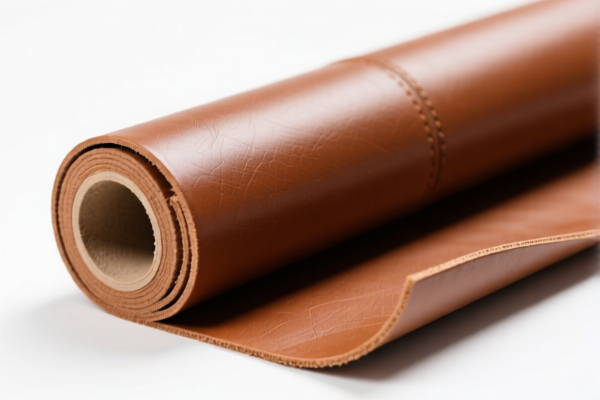
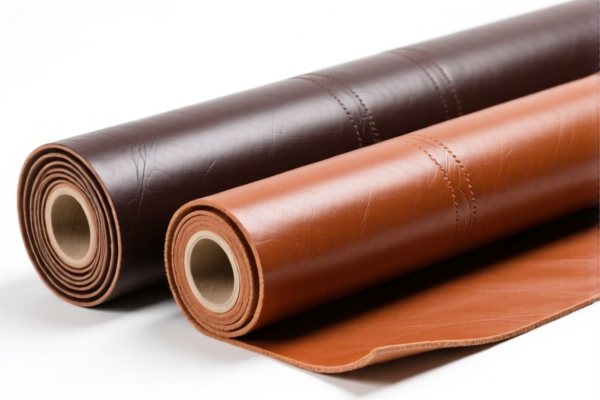
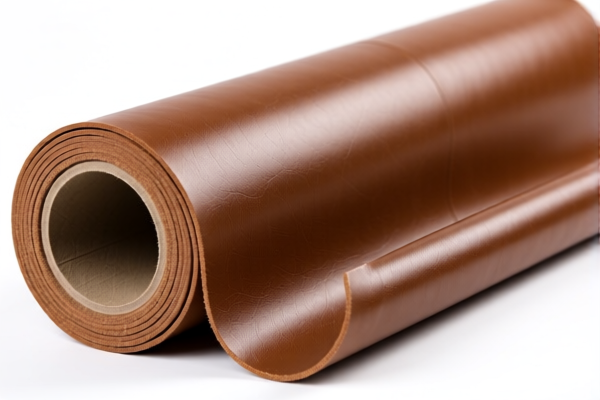
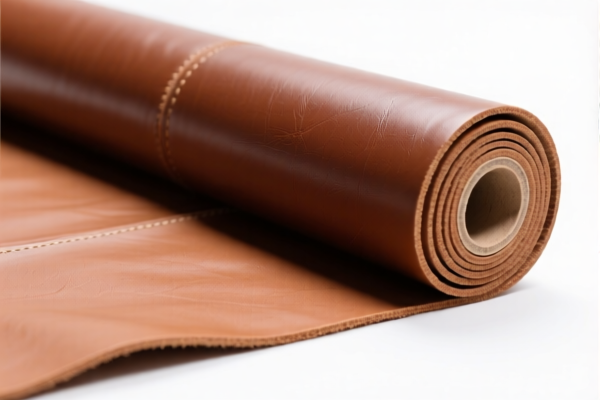
AI Analysis
🧵 Leather Fiber Composite Leather Rolls
🌐 HS Code Reference & Clearance Guide | 2026 Latest Tariff Analysis | Professional Customs Strategy
📌 I. Product Definition & Classification: Do You Truly Understand "Leather Fiber Composite"?
Leather Fiber Composite Leather is an engineered material created by bonding leather fibers (scrap leather processed into pulp or fine particles) together using synthetic resins (plastics). Unlike traditional full-grain leather, this material is a homogeneous composite where the binding agent plays a crucial role in classification.
In international trade, the key to classification lies in the primary material composition and functional application:
- Plastic-Primary Composite: If the product contains over 70% by weight of plastics and is used as a base for apparel/accessories, it may fall under Chapter 39 (Plastics).
- Leather-Primary Composite: If the product is primarily recognized as "composite leather" for fashion accessories and luggage, it often falls under Chapter 42 (Articles of Leather).
⚠️ Critical Distinction:
- If the plastic component exceeds 70% by weight and acts as the dominant matrix → Consider 3921.90.
- If the product is finished "composite leather" primarily for use in bags, belts, or apparel → Consider 4202.22 or 3918.10.
📦 II. HS Code Classification Details (2026 Latest Tariff Authority Comparison)
| HS Code | Product Description | Application Scenario | Key Classification Criteria |
|---|---|---|---|
3921.90.11.00 |
Plastic Plates/Sheets Combined with Textiles: Weighing ≤ 1.492 kg/m²; Man-made fibers predominate; >70% plastic by weight | Industrial films, light-weight composite sheets, packaging substrates | Weight < 1.492 kg/m² AND High Plastic Content |
3921.90.25.10 |
Plastic Plates/Sheets Combined with Textiles: Weighing > 1.492 kg/m²; Man-made fibers predominate; >70% plastic by weight | Heavy-duty composite boards, automotive interior panels, thick upholstery backing | Weight > 1.492 kg/m² AND High Plastic Content |
4202.22 |
Leather Fiber Composite Leather Rolls: Used primarily for manufacturing apparel, accessories, and luggage; composed of leather fibers bonded with synthetic resins | Fashion industry, luxury accessories, high-end upholstery | Primary Use: Apparel/Accessories/Luggage; Material: Leather Fibers + Resin |
3918.10 |
Synthetic Leather Rolls (Leather Fiber + Plastic): Designed for upholstery, footwear, and accessories; Primary material is composite suitable for industrial/consumer applications | Industrial manufacturing, mass-market footwear, furniture upholstery | Primary Material: Plastic/Resin dominant composite; Use: General Industrial/Consumer |
🔍 Key Reminder:
-3921.90.11.00&3921.90.25.10: These codes are specifically for plastic products combined with textile materials. If your "leather fiber" is processed into a textile-like mat and the plastic weight is >70%, these codes apply based on grammage (weight per square meter).
-4202.22: This is for finished composite leather goods. If the rolls are already processed into a leather-like sheet intended for immediate use in making bags/shoes, this is the more precise "article of leather" code.
-3918.10: Often used for synthetic flooring or wall coverings, but can apply to composite leather rolls if classified primarily as a plastic product for general use.
💰 III. 2026 Latest Tariff Rate Details (Including Surcharges & Policy Add-ons)
✅ Applicable Country: United States (US)
✅ Origin: China (CN)
✅ Status: Based on provided data
🎯 1. 3921.90.11.00 — Plastic Sheets Combined with Textiles (Lightweight, ≤1.492 kg/m²)
| Item | Content |
|---|---|
| Base Tariff | 0.0% |
| Section 301 / IEEPA Surcharges | 0.0% |
| Total Tax Rate | 0.0% |
| Tax Detail | Base: 0.0%, Add-on: 0.0% |
| De Minimis Eligibility | ✅ Yes (Potential for $800 de minimis exemption if value is low) |
| Legal Basis | HTSUS Chapter 39, Note 2; USITC General Rules of Interpretation |
📌 Explanation:
- This code benefits from a 0% base tariff.
- Currently, there are no additional surcharges listed for this specific plastic-textile composite subtype in the provided data.
- Low risk for anti-dumping or countervailing duties compared to raw leather or plastic resins.
🎯 2. 3921.90.25.10 — Plastic Sheets Combined with Textiles (Heavyweight, >1.492 kg/m²)
| Item | Content |
|---|---|
| Base Tariff | 0.0% |
| Section 301 / IEEPA Surcharges | 0.0% |
| Total Tax Rate | 0.0% |
| Tax Detail | Base: 0.0%, Add-on: 0.0% |
| De Minimis Eligibility | ⚠️ Check (High weight may push value above thresholds or trigger scrutiny) |
| Legal Basis | HTSUS Chapter 39, Note 2; USITC General Rules of Interpretation |
📌 Explanation:
- Despite being "heavier," the tax rate remains 0.0%.
- However, customs may scrutinize the weight measurement (kg/m²) more closely. Ensure accurate testing reports.
🎯 3. 4202.22 — Leather Fiber Composite Leather (For Apparel/Accessories/Luggage)
| Item | Content |
|---|---|
| Base Tariff | Error |
| Section 301 / IEEPA Surcharges | Error |
| Total Tax Rate | Error (Failed to Retrieve) |
| Tax Detail | Failed to retrieve tax information |
| De Minimis Eligibility | ❓ Unclear |
| Legal Basis | HTSUS Chapter 42; USITC Data Not Available in Current Feed |
📌 Warning:
- Data Retrieval Failed: This indicates a potential classification risk or a gap in the current tariff database.
- Recommendation: Do NOT rely on this code for final clearance without verifying with a licensed customs broker. Chapter 42 items from China often attract Section 301 tariffs (25%). The "Error" may hide a high-rate reality.
🎯 4. 3918.10 — Synthetic Leather Rolls (Industrial/Consumer Use)
| Item | Content |
|---|---|
| Base Tariff | Error |
| Section 301 / IEEPA Surcharges | Error |
| Total Tax Rate | Error (Failed to Retrieve) |
| Tax Detail | Failed to retrieve tax information |
| De Minimis Eligibility | ❓ Unclear |
| Legal Basis | HTSUS Chapter 39; USITC Data Not Available in Current Feed |
📌 Warning:
- Similar to4202.22, this code shows data failure.
- Risk:3918.10typically falls under plastic flooring/wall coverings. If misclassified, it may incur 6.5% base + 25% surcharge = 31.5%.
- Action Required: Verify if this truly fits "synthetic floor coverings" or if it should be4202or3921.
🛠️ IV. Customs Clearance Practical Advice (实战避坑指南)
✅ 1. Preparation Checklist (Essential Documents)
| Document | Required | Explanation |
|---|---|---|
| ✅ Technical Data Sheet | ✔️ | Must specify weight per square meter (gsm/kg/m²) to distinguish between 3921.90.11 and 3921.90.25. |
| ✅ Material Composition Statement | ✔️ | Clearly state % of leather fibers vs. synthetic resin. Must confirm if plastic >70% for Chapter 39 codes. |
| ✅ Product Photos | ✔️ | Show cross-section to prove it is a composite, not natural leather. |
| ✅ Intended Use Statement | ✔️ | "For use in manufacturing apparel/accessories" (supports 4202) vs. "Industrial backing" (supports 3921). |
| ✅ Commercial Invoice | ✔️ | Describe as "Leather Fiber Composite Leather Rolls" with HS Code. Avoid vague terms like "fake leather." |
✅ 2. Declaration Strategy (Key Mantras)
🔥 “Weight is King, Plastic % Determines Chapter, Usage Defines Final Code!”
| Scenario | Correct Declaration | Wrong Approach |
|---|---|---|
| Lightweight Sheet (<1.492 kg/m²), >70% Plastic | 3921.90.11.00 |
Misclassify as 4202 → Risk of higher tax |
| Heavyweight Sheet (>1.492 kg/m²), >70% Plastic | 3921.90.25.10 |
Misclassify as 3918 → Data error risk |
| Finished Composite Leather for Bags | 4202.22 (Verify Tax First!) |
Use 3921 → Customs may reject as "not plastic sheet" |
| Industrial Synthetic Leather | 3918.10 (Verify Tax First!) |
Use 3921 → May be considered incomplete product |
✅ 3. Special Handling for "Error" Codes
| Situation | Handling Advice |
|---|---|
4202.22 / 3918.10 show Tax Error |
DO NOT ship without verification. Contact a customs broker to confirm if these codes currently attract 25% Section 301 tariffs. |
| High Plastic Content | Prefer 3921 codes if possible, as they currently show 0% tax in the data. |
| Mixed Use | If used for both apparel and industrial, declare the primary intended use on the invoice. |
🌍 V. Global Market Comparison (2026 Latest)
| Country/Region | Recommended HS Code | Tariff Rate | Certification | Notes |
|---|---|---|---|---|
| 🇺🇸 USA | 3921.90.11.00 / 3921.90.25.10 |
0.0% | None Required | Lowest Tax Option if >70% plastic |
| 🇺🇸 USA | 4202.22 / 3918.10 |
Unknown/Error | None | High Risk: Likely subject to 25% surcharge |
| 🇨🇳 China | 3921.90.11.00 |
~5-6% | None | Import duty may apply |
| 🇪🇺 EU | 3921.90 |
6.5% | REACH Compliance | Standard plastic tariff |
| 🇬🇧 UK | 3921.90 |
6.5% | UKCA | Standard plastic tariff |
📌 Conclusion:
- For US imports,3921.90.11.00and3921.90.25.10are the most cost-effective options (0% tax), provided the product meets the >70% plastic and weight criteria.
- Avoid4202.22and3918.10unless verified, as they show tax retrieval errors, which often signal higher, unlisted tariffs (e.g., 25% Section 301).
📌 VI. Common Mistakes & Pitfalls (Blood & Tears Lessons)
❌ Mistake 1: Classifying composite leather as 4202 without verifying tax status.
👉 Consequence: Potential 25% surcharge if 4202 is subject to Section 301, whereas 3921 is 0%.
❌ Mistake 2: Ignoring the 1.492 kg/m² weight threshold.
👉 Consequence: Misclassification between 11 and 25 codes → Audit flags and potential penalties.
❌ Mistake 3: Not declaring plastic content percentage.
👉 Consequence: Customs may reclassify under a higher-duty plastic code (e.g., 3921.10) with 6.5% base + 25% surcharge.
❌ Mistake 4: Using "Synthetic Leather" without specifying composition.
👉 Consequence: Customs may suspect misdeclaration and delay cargo.
✅ Correct Practice:
"Leather Fiber Composite Leather Rolls, 80% Synthetic Resin, 20% Leather Fiber, Weight: 1.2 kg/m², For Apparel Manufacturing, Model XYZ"
🎯 VII. Conclusion: Precision Classification Saves Money!
🎯 Remember the Mantra:
🔹 "Plastic >70%? Check Weight! <1.492 kg/m² = 0% Tax! >1.492 kg/m² = 0% Tax! Avoid 'Error' Codes!"
🔹 "Chapter 39 is your friend (0% tax), Chapter 42 is a gamble (Error/High Tax)!"
📌 Pro Tip:
If your product is >70% plastic and can be described as a "sheet/plate combined with textile/leather fiber mat," strictly use 3921.90.11.00 or 3921.90.25.10 to secure the 0% tariff.
Consult a customs broker to confirm the weight measurement protocol (ASTM D3776 standard) to ensure compliance.
📣 Immediate Action:
📞 Verify plastic % and weight per m²
📄 Use3921.90.xxcodes for 0% duty
🚀 Avoid4202/3918until tax status is clarified!
✨ Professional Clearance, Starts with Precise Classification!
💼 Every Percent Saved is Pure Profit!
Customer Reviews
About HS Code Classification
The Harmonized System (HS) is an internationally standardized nomenclature developed by the World Customs Organization (WCO) to classify traded products. Over 200 countries use the HS system as the basis for customs tariffs, trade statistics, and import/export regulations.
Each HS code follows a hierarchical structure:
- Chapter (2 digits) — Broad category of goods (e.g., Chapter 84: Machinery and Mechanical Appliances)
- Heading (4 digits) — More specific grouping within the chapter
- Subheading (6 digits) — Internationally standardized breakdown, used by all WCO member countries
- National subdivisions (8-10 digits) — Country-specific extensions for further classification, such as US HTSUS 10-digit codes
Correct HS code classification is essential for smooth customs clearance, accurate duty payment, and compliance with trade regulations. Misclassification can lead to customs delays, overpayment of duties, or penalties.
When importing from CN to US, the applicable tariff rates may include:
- Most-Favored-Nation (MFN) rate — The standard duty rate applied to WTO members
- General rate — Applied to countries without trade agreements
- Trade remedy duties — Additional tariffs such as Section 301 (anti-dumping), Section 232 (national security), or countervailing duties
The information provided on this page is for reference purposes only. For official classification, please consult with your local customs authority or a licensed customs broker.