leather goods hs 4205008000
CN → US| HS Code | Tariff Rate | Origin | Destination | Doc |
|---|---|---|---|---|
| 4203102000 | 39.7% | CN | US | Official Doc |
| 4205001000 | 35.0% | CN | US | Official Doc |
| 4205008000 | 35.0% | CN | US | Official Doc |
| 4205008000 | 35.0% | CN | US | Official Doc |
| 4205006000 | 39.9% | CN | US | Official Doc |
Product Images
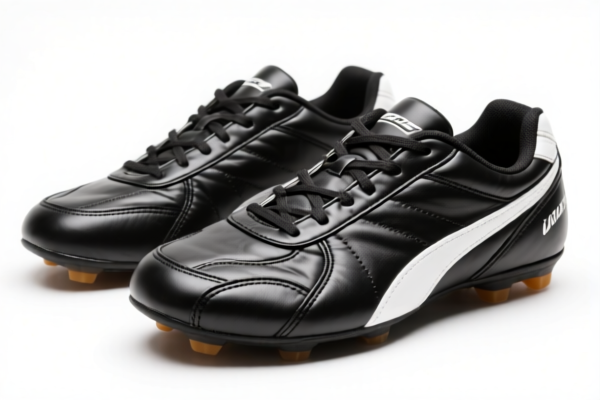
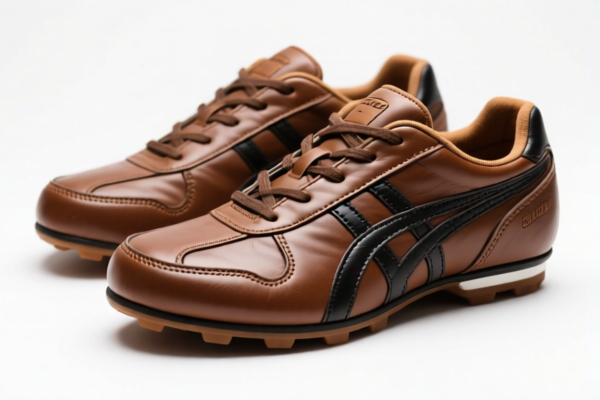
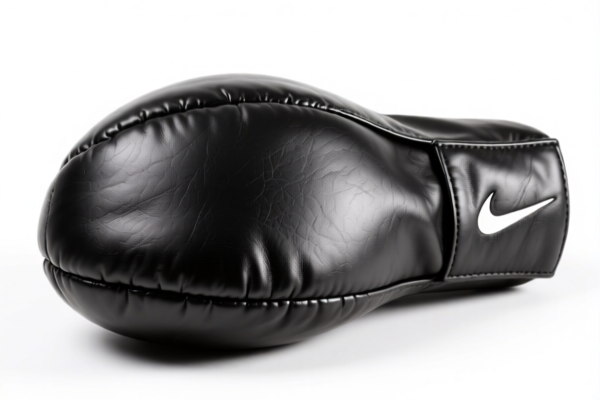
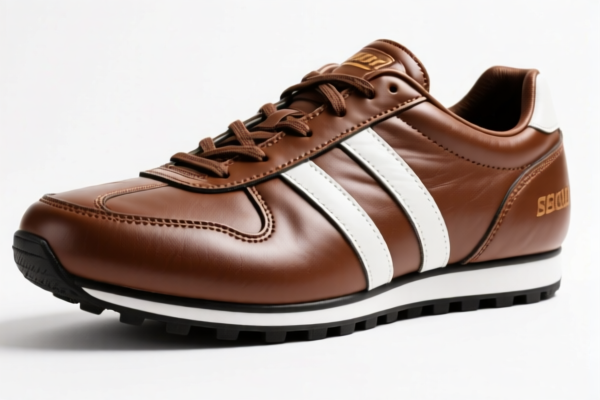
AI Analysis
🧳 Leather Goods (HS Code: 4205.00.80.00)
🌐 HS Code Reference & Customs Clearance Guide | 2026 Latest Tariff Analysis | Professional Entry Strategy
📌 I. Product Definition & Classification: Do You Really Know “Leather Goods”?
In international trade, leather products are broadly categorized under Chapter 42 of the HS Code. Specifically, HS Code 4205.00.80.00 falls under the category of "Other articles of leather or of composition leather."
This code is a catch-all category for leather items that do not fit into more specific classifications such as apparel (Chapter 42.03), travel goods/bags (Chapter 42.02), or technical/industrial leather parts (Chapter 42.05 subheadings 10).
Key Distinction: - If the item is worn on the body (e.g., jackets, gloves, belts), it generally belongs to 4203.10/4203.40. - If it is a technical part (e.g., seals, gaskets, conveyor belts), it belongs to 4205.00.10. - If it is a general-purpose leather article not listed elsewhere (e.g., decorative items, specialized non-technical accessories, fashion accessories not classified as apparel), it falls under 4205.00.80.
⚠️ Critical Note:
- Do not misclassify apparel as "other goods." Apparel has different tax treatments.
- Do not misclassify technical parts as general goods. Technical parts may have different duty implications depending on usage.
📦 II. HS Code Classification Details (2026 Tariff Data)
Based on the provided data, here are the relevant HS Codes within the leather goods category (4205 and related 4203/4205) and their specific classifications:
| HS Code | Product Description | Category | Tax Rate (Total) |
|---|---|---|---|
| 4205.00.80.00 | Other articles of leather or of composition leather: Other: Other: Other | General Leather Goods | 25.0% |
| 4205.00.10.00 | Other articles of leather or of composition leather: Of a kind used in machinery or mechanical appliances or for other technical uses: Other | Technical/Industrial Leather | 25.0% |
| 4203.10.20.00 | Articles of apparel and clothing accessories, of leather...: Articles of apparel: Of reptile leather | Reptile Leather Apparel | 0.0% |
| 4203.40.60.00 | Articles of apparel and clothing accessories...: Other clothing accessories: Other | Apparel Accessories | 25.0% |
🔍 Key Insight:
- 4205.00.80.00 is the primary code for general leather goods that are not technical parts, apparel, or accessories.
- All categories except reptile leather apparel are subject to a 25% total tax rate.
- Reptile leather apparel (4203.10.20.00) enjoys a 0% tax rate, but this is a very narrow classification.
💰 III. 2026 Tariff Rate Breakdown
✅ Applicable Country: United States (US)
✅ Origin: China (CN)
✅ Effective Date: 2025 November 10 onwards (for subsequent imports)
🎯 1. 4205.00.80.00 —— Other Leather Articles (General)
| Item | Detail |
|---|---|
| Base Duty | 0.0% |
| Section 301 Surcharge | +25.0% |
| Total Tax Rate | 25.0% |
| Calculation Method | CIF Value × 25% |
| De Minimis Exemption? | ❌ Not Eligible (Deny De Minimis) |
| Legal Basis Path | USITC:4205.00.80.00 → Section 301: 25% |
📌 Explanation:
- This product is subject to the 25% Section 301 tariff imposed on Chinese goods.
- Even though the base duty is 0%, the 25% surcharge makes the total cost significant.
- No de minimis exemption applies, meaning even small shipments are fully taxed.
🎯 2. 4205.00.10.00 —— Technical/Industrial Leather
| Item | Detail |
|---|---|
| Base Duty | 0.0% |
| Section 301 Surcharge | +25.0% |
| Total Tax Rate | 25.0% |
| Calculation Method | CIF Value × 25% |
| De Minimis Exemption? | ❌ Not Eligible |
| Legal Basis Path | USITC:4205.00.10.00 → Section 301: 25% |
📌 Note:
- Even though these are "technical" items, they are still subject to the 25% tariff.
- Do not assume technical use exempts you from Section 301 duties.
🎯 3. 4203.10.20.00 —— Reptile Leather Apparel
| Item | Detail |
|---|---|
| Base Duty | 0.0% |
| Section 301 Surcharge | 0.0% |
| Total Tax Rate | 0.0% |
| Calculation Method | CIF Value × 0% |
| De Minimis Exemption? | ✅ Eligible (if value < $800) |
| Legal Basis Path | USITC:4203.10.20.00 → No Section 301 |
📌 Important:
- This is the only zero-tax option in the provided data.
- However, it is strictly limited to apparel made of reptile leather (e.g., snake, alligator, crocodile).
- Not applicable to standard leather jackets, belts, or bags.
🎯 4. 4203.40.60.00 —— Other Clothing Accessories
| Item | Detail |
|---|---|
| Base Duty | 0.0% |
| Section 301 Surcharge | +25.0% |
| Total Tax Rate | 25.0% |
| Calculation Method | CIF Value × 25% |
| De Minimis Exemption? | ❌ Not Eligible |
| Legal Basis Path | USITC:4203.40.60.00 → Section 301: 25% |
📌 Note:
- Apparel accessories (e.g., gloves, hats, scarves) are also subject to 25%.
- Do not confuse "accessories" with "general leather goods" — both are taxed at 25%.
🛠️ IV. Customs Clearance Practical Advice
✅ 1. Documentation Checklist
| Document | Required | Purpose |
|---|---|---|
| Commercial Invoice | ✅ | Must clearly state "Leather Goods" or specific item description |
| Packing List | ✅ | Detail quantity, weight, and packaging |
| Product Photos | ✅ | Show material composition (genuine leather vs. composition) |
| Material Composition Statement | ✅ | Specify percentage of leather vs. synthetic materials |
| Usage Description | ✅ | Clarify if it’s apparel, technical, or general use |
| Origin Certificate | ✅ | If applicable for preferential treatment (not applicable for China-US) |
✅ 2. Classification Tips
🔥 “Don’t guess, classify accurately! Misclassification leads to penalties.”
| Situation | Correct HS Code | Error Risk |
|---|---|---|
| General leather bag, wallet, or decorative item | 4205.00.80.00 |
Misclassifying as apparel (4203) may lead to 0% if it were reptile, but high risk of audit |
| Leather belt | 4203.40.60.00 (Apparel Accessory) |
If misclassified as general goods, still 25%, but may trigger additional scrutiny |
| Leather seal or gasket | 4205.00.10.00 (Technical) |
Misclassification as general goods (4205.00.80) doesn’t change tax, but may affect compliance |
| Snake-skin jacket | 4203.10.20.00 |
Only if it’s apparel and reptile leather. Otherwise, high risk of penalty |
✅ 3. Special Cases
| Case | Recommendation |
|---|---|
| Composition Leather | If the product is made of "composition leather" (not genuine), it still falls under Chapter 42. Ensure documentation reflects this. |
| Mixed Materials | If the product contains both leather and non-leather parts, classify based on the principal material. If leather is principal, it goes to Chapter 42. |
| Sample Shipments | Even samples are subject to the 25% tariff if not de minimis. Plan accordingly. |
🌍 V. Global Market Comparison (2026)
| Country/Region | Recommended HS Code | Tariff | Notes |
|---|---|---|---|
| 🇺🇸 United States | 4205.00.80.00 |
25% | Section 301 applies to China-origin goods |
| 🇨🇳 China | 4205.00.80.00 |
~5-10% | Lower base duty, no Section 301 |
| 🇪🇺 European Union | 4205.00.80.00 |
~5% | No additional surcharges for Chinese goods |
| 🇬🇧 United Kingdom | 4205.00.80.00 |
~5% | Post-Brexit tariffs may vary |
| 🇨🇦 Canada | 4205.00.80.00 |
~5% | CUSMA may apply for specific origins |
📌 Conclusion:
- The US is the most expensive market for Chinese leather goods due to the 25% Section 301 tariff.
- EU and Canada offer more favorable rates.
- Consider supply chain diversification if targeting the US market.
📌 VI. Common Mistakes & Pitfalls
❌ Mistake 1: Classifying apparel as "general leather goods"
👉 Consequence: If it’s actually apparel, it should be under 4203. Misclassification can lead to audits and penalties.
❌ Mistake 2: Assuming all leather goods are "technical"
👉 Consequence: Only items used in machinery (seals, gaskets) go to 4205.00.10. General goods go to 4205.00.80.
❌ Mistake 3: Ignoring the "Reptile Leather" exemption
👉 Consequence: If you’re shipping snake-skin apparel, ensure it’s correctly classified as 4203.10.20.00 to benefit from 0% tax. Otherwise, you’ll pay 25%.
❌ Mistake 4: Believing "de minimis" applies
👉 Consequence: Section 301 goods are not eligible for de minimis exemption, even for small packages.
✅ Correct Approach:
"Leather Bag, Genuine Leather, for Personal Use, Model XYZ, Made in China"
🎯 VII. Conclusion: Accurate Classification Saves Money!
🎯 Key Takeaway:
🔹 Most leather goods from China to the US are taxed at 25% due to Section 301.
🔹 Only reptile leather apparel enjoys a 0% tax rate.
🔹 Technical leather parts are also taxed at 25%.
🔹 Always verify the product’s true nature before classification.
📌 Pro Tip:
If your products are not made in China, check if they qualify for preferential tariffs under free trade agreements (e.g., CUSMA for Canada, EU-Mercosur for South America).
📣 Immediate Action:
📞 Consult a licensed customs broker + Provide product details + Request a binding ruling from US Customs.
🚀 Ensure smooth customs clearance and minimize unexpected costs!
✨ Professional clearance starts with accurate classification!
💼 Every percentage point of tax matters!
Customer Reviews
About HS Code Classification
The Harmonized System (HS) is an internationally standardized nomenclature developed by the World Customs Organization (WCO) to classify traded products. Over 200 countries use the HS system as the basis for customs tariffs, trade statistics, and import/export regulations.
Each HS code follows a hierarchical structure:
- Chapter (2 digits) — Broad category of goods (e.g., Chapter 84: Machinery and Mechanical Appliances)
- Heading (4 digits) — More specific grouping within the chapter
- Subheading (6 digits) — Internationally standardized breakdown, used by all WCO member countries
- National subdivisions (8-10 digits) — Country-specific extensions for further classification, such as US HTSUS 10-digit codes
Correct HS code classification is essential for smooth customs clearance, accurate duty payment, and compliance with trade regulations. Misclassification can lead to customs delays, overpayment of duties, or penalties.
When importing from CN to US, the applicable tariff rates may include:
- Most-Favored-Nation (MFN) rate — The standard duty rate applied to WTO members
- General rate — Applied to countries without trade agreements
- Trade remedy duties — Additional tariffs such as Section 301 (anti-dumping), Section 232 (national security), or countervailing duties
The information provided on this page is for reference purposes only. For official classification, please consult with your local customs authority or a licensed customs broker.