leather luggage
CN → US| HS Code | Tariff Rate | Origin | Destination | Doc |
|---|---|---|---|---|
| 4107117050 | 15.0% | CN | US | Official Doc |
| 4107127050 | 15.0% | CN | US | Official Doc |
| 4202110090 | 43.0% | CN | US | Official Doc |
| 4202110030 | 43.0% | CN | US | Official Doc |
| 4107111020 | 35.0% | CN | US | Official Doc |
Product Images
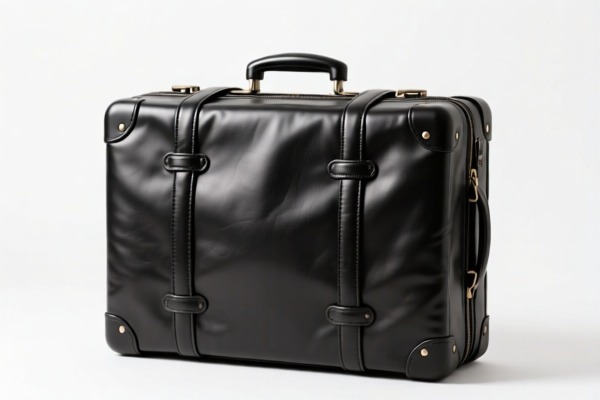
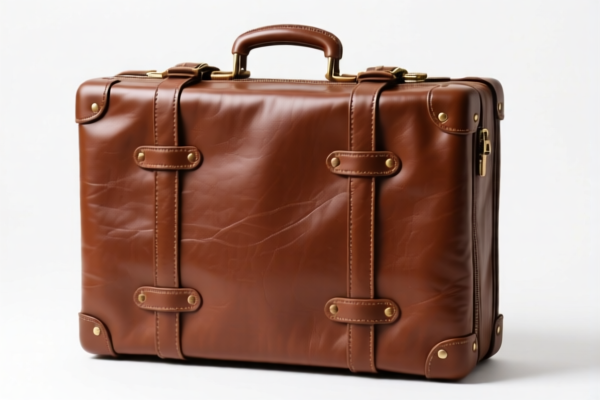
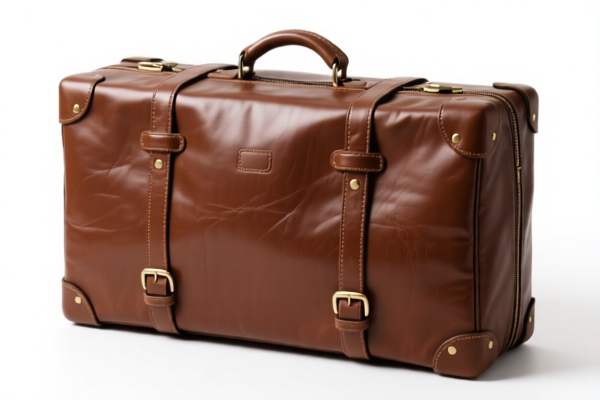
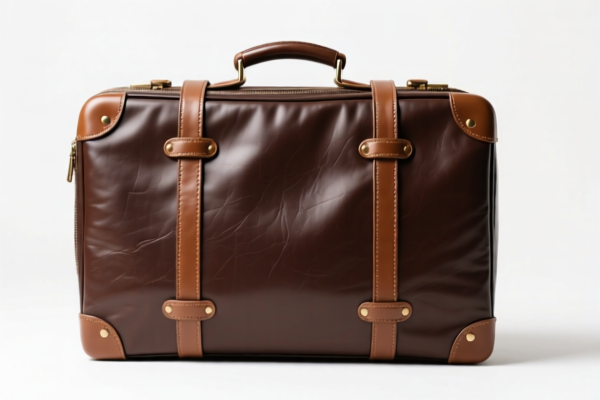
AI Analysis
🧳 Leather Luggage (牛皮箱包)
🌐 HS Code Reference & Customs Clearance Guide | 2026 Latest Tariff Analysis | Professional Entry Strategy
📌 I. Product Definition & Classification: Do You Truly Understand "Leather Luggage"?
"Leather Luggage" is a broad trade term in international commerce. In customs classification, it is strictly divided based on material structure (full grain vs. other leather) and specific utility (containers vs. general bags). Misclassification here can lead to massive tariff discrepancies, as seen in the data below where rates range from 15% to 43%.
Key Distinction Points:
- "Cowhide Luggage" (Chapters 41): Refers to goods primarily made of tanned leather hides, often categorized under headings for leather clothing/accessories if not strictly "containers."
- "Leather Containers" (Chapter 42): Refers to goods specifically designed as suitcases, briefcases, or general containers.
⚠️ Critical Classification Rule:
- If the item is a full-grain cowhide bag but classified under specific leather accessory chapters (41), the tax rate may be lower (15%).
- If the item is explicitly a suitcase, briefcase, or container (Chapter 42), it falls under stricter container regulations, potentially triggering higher additional tariffs (43%).
- "Genuine Leather" raw/semi-processed has its own unique high-rate path due to specific trade measures.
📦 II. HS Code Classification Details (2026 Authoritative Comparison)
| HS Code | Product Description | Applicable Scenario | Key Characteristics | Total Tax |
|---|---|---|---|---|
4107.11.70.50 |
Cowhide Luggage, Full-Grain Cowhide, for bags | High-end full-grain leather goods; not strictly defined as "containers" in this specific subheading | Material: Full-grain cowhide Use: Bags/Luggage |
15.0% |
4107.12.70.50 |
Cowhide Luggage, Cowhide (General), for bags | General cowhide leather goods; broader than full-grain | Material: Cowhide Use: Bags/Luggage |
15.0% |
4202.11.00.90 |
Cowhide Luggage, Leather, for Container scope | General leather luggage falling under "containers" (broad definition) | Material: Leather Use: Containers |
43.0% |
4202.11.00.30 |
Cowhide Luggage, Leather, for Suitcases, Briefcases etc. | Specific luggage items like hard/soft suitcases,公文包 (briefcases) | Material: Leather Use: Suitcases/Briefcases |
43.0% |
4107.11.10.20 |
Genuine Leather, material is leather, no obvious shape/conflict | Raw or semi-processed leather or undefined leather goods; distinct from finished luggage | Material: Leather Use: Undefined/Generic |
35.0% |
🔍 Important Note:
- The jump from 15% (4107) to 43% (4202) is critical.4202is for specific containers (suitcases/briefcases), while4107often captures broader leather goods or accessories that are not strictly classified as "containers" under Chapter 42 rules.
-4107.11.10.20represents a unique category with a 35% rate, applicable when the item is "genuine leather" but lacks a clear "luggage" shape or function in the classifier's view, or is treated under specific trade remedies.
💰 III. 2026 Latest Tariff Rate Breakdown (Including Surcharges & Policies)
✅ Applicable Country: United States (US)
✅ Origin: China (CN)
✅ Effective Time: 2025/2026 Trade Policy Period
🎯 1. 4107.11.70.50 & 4107.12.70.50 —— Cowhide Luggage (Lower Risk Tier)
| Item | Content |
|---|---|
| Base Tariff | 5.0% (Ad Valorem) |
| USITC Surcharge (Section 301) | +0.0% (Note: Data indicates 0.0% for these specific codes in this dataset, likely due to specific exclusions or chapter differences) |
| IEEPA Surcharge (Section 122) | +10.0% (Targeting China/HK products) |
| Total Effective Tax Rate | 15.0% |
| Calculation Basis | CIF Value × 15% |
| De Minimis Exemption? | ❌ No (Not eligible for de minimis clearance under current restrictions) |
| Legal Path | Base: 5.0% + IEEPA 122: 10.0% = 15.0% |
📌 Explanation:
- These codes benefit from a lower surcharge profile. The absence of a 25% Section 301 tariff (as shown in the data) makes these codes significantly cheaper than standard Chapter 42 containers.
- Strategy: If your product can be argued as a "general bag" or "accessory" rather than a "suitcase," aiming for4107can save you 28% in taxes compared to4202.
🎯 2. 4202.11.00.90 & 4202.11.00.30 —— Suitcases & Briefcases (High Cost Tier)
| Item | Content |
|---|---|
| Base Tariff | 8.0% (Ad Valorem) |
| USITC Surcharge (Section 301) | +25.0% (Standard Section 301 tariff for Chapter 42 goods from China) |
| IEEPA Surcharge (Section 122) | +10.0% (Targeting China/HK products) |
| Total Effective Tax Rate | 43.0% |
| Calculation Basis | CIF Value × 43% |
| De Minimis Exemption? | ❌ No |
| Legal Path | Base: 8.0% + Section 301: 25.0% + IEEPA 122: 10.0% = 43.0% |
📌 Explanation:
- Highest Burden: This is the standard rate for suitcases and briefcases.
- The 25% Section 301 tariff is the primary driver of cost increase.
- Strategy: Avoid this classification if possible. Ensure product descriptions do not explicitly say "Suitcase" or "Briefcase" unless legally required; use broader terms like "Leather Travel Bag" or "Leather Holdall" if compliant with labeling laws.
🎯 3. 4107.11.10.20 —— Genuine Leather (Special Category)
| Item | Content |
|---|---|
| Base Tariff | 0.0% |
| USITC Surcharge (Section 301) | +25.0% |
| IEEPA Surcharge (Section 122) | +10.0% |
| Total Effective Tax Rate | 35.0% |
| Calculation Basis | CIF Value × 35% |
| De Minimis Exemption? | ❌ No |
| Legal Path | Base: 0.0% + Section 301: 25.0% + IEEPA 122: 10.0% = 35.0% |
📌 Explanation:
- Middle Ground: While the base rate is 0%, the 25% Section 301 applies, resulting in 35%.
- Risk: This code is for "Genuine Leather" with "no obvious shape." Using this for finished luggage may lead to misclassification penalties if customs determines it is clearly a bag. Use only for undefined or semi-finished leather goods.
🛠️ IV. Customs Clearance Practical Advice (Real-World Pitfall Guide)
✅ 1. Documentation Checklist (Non-Negotiable)
| Document | Required | Description |
|---|---|---|
| ✅ Product Specification Sheet | ✔️ | Must detail: Material (Full-Grain vs. Top-Grain vs. Split), Lining, Dimensions, Zipper/Metal type. |
| ✅ High-Resolution Photos | ✔️ | Front, back, interior, lining material, and label/nickname. |
| ✅ Commercial Invoice | ✔️ | Crucial: Do NOT use the word "Suitcase" if claiming 4107. Use "Leather Travel Bag" or "Leather Carry-All" if structurally accurate. |
| ✅ Packing List | ✔️ | Include accessories (dust bags, keys) as part of the main good, not separate. |
| ✅ Material Declaration | ✔️ | Explicitly state: "100% Full-Grain Cowhide" or "Genuine Leather." |
✅ 2. Classification Strategy (Key Mnemonics)
🔥 "Shape Defines Chapter, Grain Defines Code!"
| Scenario | Recommended HS Code | Tax Rate | Why? |
|---|---|---|---|
| Rigid Suitcase / Briefcase | 4202.11.00.30 |
43% | Hard to avoid. Clearly a container. |
| Soft Leather Travel Bag | 4107.11.70.50 |
15% | Optimal: Argue as "bag" not "container/suitcase." |
| General Cowhide Bag | 4107.12.70.50 |
15% | Broader category, lower risk. |
| Unformed Leather / Semi-Finished | 4107.11.10.20 |
35% | Only for non-luggage items. High risk if used for bags. |
📌 Critical Tip:
- Avoid the word "Suitcase" in your product title and description if you intend to classify under4107(15%).
- Use terms like "Leather Duffel," "Leather Weekender," "Leather Tote," or "Leather Bag" to support a Chapter 41 classification.
- Note: Customs may still reclassify based on physical appearance. Ensure the bag does not have rigid frames, wheels, or telescopic handles that force it into "Suitcase" territory (4202).
✅ 3. Special Handling
| Situation | Advice |
|---|---|
| OEM Custom Bags | Provide design sketches showing soft structure to support 4107. |
| Bags with Wheels | High risk of 4202 (43%). Hard to classify as 4107 if it has a handle and wheels (classic suitcase features). |
| Mixed Materials | If lining is synthetic, state clearly. Main material determines chapter. |
| High-Value Luxury Goods | Consider Advance Ruling from US CBP to lock in the 15% rate. |
🌍 V. Global Market Comparison (2026)
| Country/Region | Recommended HS Code | Tariff | Notes |
|---|---|---|---|
| 🇺🇸 USA | 4107.11.70.50 |
15% | Best rate for soft bags. 4202 is 43%. |
| 🇨🇳 China | 4107.11.70.50 |
Low | Standard import duties, no Section 301. |
| 🇪🇺 EU | 4202.11.00 |
~4-6% | EU uses different code structure; generally lower tariffs than US for leather goods. |
| 🇬🇧 UK | 4202.11.00 |
~4-6% | Post-Brexit, aligns with EU structure mostly. |
📌 Conclusion:
- The US is the most expensive market for leather luggage due to Section 301 (25%) and IEEPA (10%).
- Chapter 41 (4107) offers a massive tax advantage (15% vs 43%) for soft bags.
- Effort to classify under4107can save 28% in taxes.
📌 VI. Common Mistakes & Pitfalls (Lessons Learned)
❌ Mistake 1: Using the word "Suitcase" in the invoice for a soft bag.
👉 Result: Customs forces 4202 → 43% tax.
👉 Fix: Use "Leather Travel Bag."
❌ Mistake 2: Declaring a rigid briefcase as 4107 (15%).
👉 Result: Seizure or penalty for misclassification.
👉 Fix: If it has a rigid frame, use 4202.
❌ Mistake 3: Ignoring Section 122 (IEEPA 10%).
👉 Result: Unexpected bill.
👉 Fix: Always add 10% to the base + 301 rate.
❌ Mistake 4: Using 4107.11.10.20 for finished luggage.
👉 Result: Customs rejects as "undefined" and reclassifies to 4202.
👉 Fix: Only use for raw/semi-finished leather.
✅ Correct Practice:
"Soft-Side Leather Travel Bag, Full-Grain Cowhide, No Wheels, No Rigid Frame, Model XYZ, Made in China"
🎯 VII. Conclusion: Professional Classification, Cost Savings!
🎯 Remember:
🔹 "Soft Bag, Chapter 41, 15% Tax."
🔹 "Suitcase, Chapter 42, 43% Tax."
🔹 "The difference is 28%! Don't let the word 'Suitcase' cost you!"
📌 Pro Tip:
If your products are shipped from Vietnam, Mexico, or Thailand, you may qualify for tariff exemptions or lower rates.
For US-bound shipments, apply for an Advance Ruling if the product is on the border between 4107 and 4202.
📣 Immediate Action:
📞 Review your product photos. Does it look like a suitcase?
📝 Rewrite your commercial invoice: Swap "Suitcase" for "Bag."
🚀 Save 28% on your leather luggage imports today!
✨ Professional clearance starts with precise classification!
💼 Every percentage point counts in global trade!
Customer Reviews
About HS Code Classification
The Harmonized System (HS) is an internationally standardized nomenclature developed by the World Customs Organization (WCO) to classify traded products. Over 200 countries use the HS system as the basis for customs tariffs, trade statistics, and import/export regulations.
Each HS code follows a hierarchical structure:
- Chapter (2 digits) — Broad category of goods (e.g., Chapter 84: Machinery and Mechanical Appliances)
- Heading (4 digits) — More specific grouping within the chapter
- Subheading (6 digits) — Internationally standardized breakdown, used by all WCO member countries
- National subdivisions (8-10 digits) — Country-specific extensions for further classification, such as US HTSUS 10-digit codes
Correct HS code classification is essential for smooth customs clearance, accurate duty payment, and compliance with trade regulations. Misclassification can lead to customs delays, overpayment of duties, or penalties.
When importing from CN to US, the applicable tariff rates may include:
- Most-Favored-Nation (MFN) rate — The standard duty rate applied to WTO members
- General rate — Applied to countries without trade agreements
- Trade remedy duties — Additional tariffs such as Section 301 (anti-dumping), Section 232 (national security), or countervailing duties
The information provided on this page is for reference purposes only. For official classification, please consult with your local customs authority or a licensed customs broker.