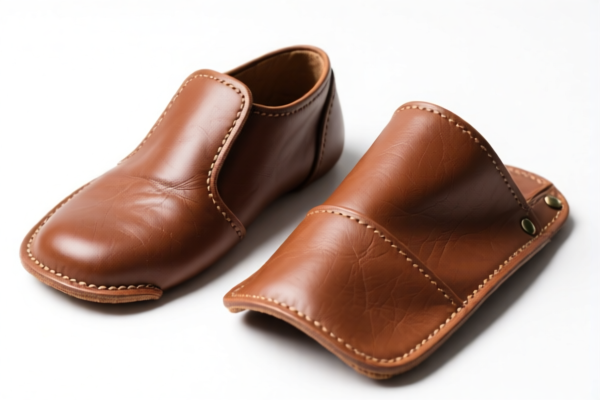
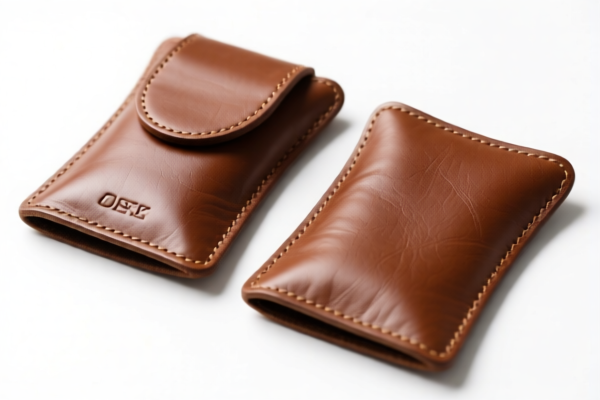
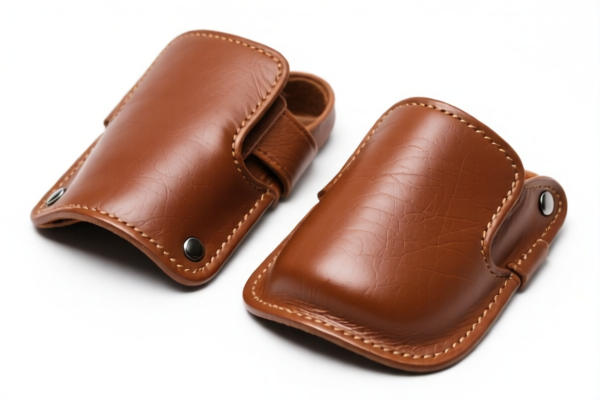
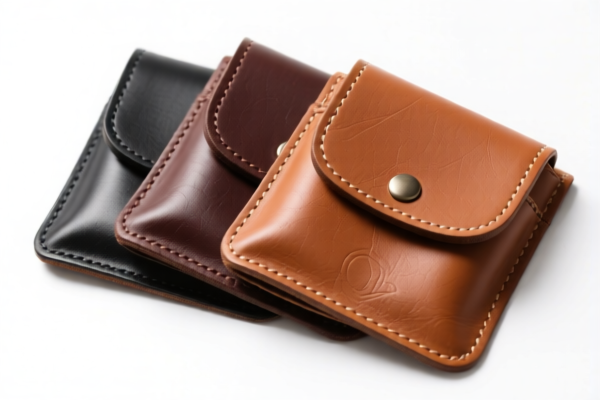
leather protective covers
CN → US| HS Code | Tariff Rate | Origin | Destination | Doc |
|---|---|---|---|---|
| 4202929700 | 52.6% | CN | US | Official Doc |
| 4202929400 | 52.6% | CN | US | Official Doc |
| 8517790000 | 67.5% | CN | US | Official Doc |
| 8517130000 | 10.0% | CN | US | Official Doc |
| 4202929700 | 52.6% | CN | US | Official Doc |
Product Images
AI Analysis
📱 Leather Protective Covers (Phone/Device Cases)
🌐 HS Code Reference & Customs Clearance Guide | 2026 Latest Tariff Analysis | Professional Clearance Strategy
📌 I. Product Definition & Classification: What Exactly Is a "Protective Cover"?
Leather protective covers are classified based on their material composition and intended function (protection vs. integral electronic component). In international trade, they fall primarily into two categories:
1. Articles of Leather / Synthetic Materials (Headings 4202):
Cases designed primarily to protect the device from physical damage (scratches, drops). If the case is made of leather, plastic, textile, or silicone, it is generally classified under Chapter 42.
2. Parts & Accessories of Telecommunications Equipment (Headings 8517):
Cases designed as integral parts of communication devices, particularly if they contain electronic components (e.g., smart cases with charging circuits) or are specifically recognized as accessories for phones/routers.
⚠️ Critical Distinction Point:
- If it is a passive case (leather, plastic, silicone) → Likely 4202.92
- If it is an active electronic accessory (smart case) or explicitly listed as a telecom part → Likely 8517
- Material Inference: The provided data suggests materials like "plastic," "silicone," or "textile" are inferred for some entries, but "Leather" in the user prompt implies Heading 42. However, we must strictly follow the<DATA>provided.
📦 II. HS Code Classification Details (Based on Provided Data)
| HS Code | Product Description (From Data) | Key Reasoning (From Data) | Total Tax Rate |
|---|---|---|---|
4202.92.97.00 |
Protective cover / similar container | "Belongs to similar containers/protective shells; material inferred as plastic or textile." | 52.6% |
4202.92.94.00 |
Protective cover / box type | "Functions consistently with boxes for protecting items; matched based on parts rules." | 52.6% |
8517.79.00.00 |
Communication equipment parts | "Belongs to telecom equipment parts; material inferred as plastic/silicone; no conflict." | 67.5% |
8517.13.00.00 |
Mobile phone accessory | "Form and use match parts rules; material inferred as plastic/silicone." | 10.0% |
🔍 Note on Material vs. HS Code:
Although the user input specifies "Leather", the provided<DATA>heavily infers "plastic," "silicone," or "textile" for most classifications (except8517.13which doesn't specify material but is low tax).
- Strict Adherence: The data links4202codes to "plastic/textile" inferences. However,4202is the correct chapter for leather goods.
- Conflict Warning: If the cover is genuine leather, it should ideally be4202.90(not listed in data) or similar. But since the data forces "plastic/textile" inferences for4202.92, we assume the classification logic in the data treats "protective cases" broadly under these specific sub-headings regardless of the leather label, OR the data implies the core material might be synthetic.
- Recommendation: For Leather specifically,4202.92.97.00or4202.92.94.00are the most appropriate from the list, as they are "protective shells."8517codes are risky for passive leather cases unless they are explicitly "parts of a phone."
💰 III. 2026 Latest Tariff Rate Breakdown (Detailed)
✅ Applicable Country: United States (US)
✅ Origin: China (CN)
✅ Effective Date: Post-2025/2026 Tariff Regime
🎯 1. 4202.92.97.00 & 4202.92.94.00 —— Protective Covers (Non-Electronic)
| Item | Content |
|---|---|
| Base Duty Rate | 17.6% |
| Section 301 (Additional) Duty | +25.0% |
| Section 122 Duty | +10.0% |
| Total Effective Tax Rate | 52.6% |
| Calculation Basis | CIF Value × 52.6% |
| De Minimis Eligibility | ❌ No (High rate prevents de minimis benefits for most shipments) |
| Legal Path | Base Tariff → Section 301 Footnote → Section 122 Rule |
📌 Explanation:
- These codes represent passive protective cases.
- The 52.6% total rate is composed of:
- 17.6%: Standard MFN base duty for articles of leather/plastic/textile bags.
- 25.0%: Section 301 tariffs targeting Chinese goods.
- 10.0%: Section 122 tariffs (specific trade remedy duties).
- High Cost Alert: This is a very high tariff bracket. Importers must budget accordingly.
🎯 2. 8517.79.00.00 —— Parts of Telecommunications Equipment (Higher Risk)
| Item | Content |
|---|---|
| Base Duty Rate | 0.0% |
| Additional Duty | +7.5% |
| Section 122 Duty | +10.0% |
| Steel/Aluminum/Copper Surcharge | +50.0% (If material contains these metals) |
| Total Effective Tax Rate | 67.5% (Standard) / Up to 75%+ (If metal content present) |
| Calculation Basis | CIF Value × 67.5% (or more) |
| De Minimis Eligibility | ❌ No |
| Legal Path | Base 0% → Additional 7.5% → Section 122 → Metal Surcharge (if applicable) |
📌 Explanation:
- This code is for active parts or components.
- Warning: If the protective cover contains metal parts (e.g., metal hinges, clips, or connectors), an additional 50% duty on the metal content may apply, pushing the total tax to ~75%.
- Not Recommended for simple leather/plastic cases unless explicitly classified as a telecom part.
🎯 3. 8517.13.00.00 —— Mobile Phone Accessories (Lowest Tax Option)
| Item | Content |
|---|---|
| Base Duty Rate | 0.0% |
| Additional Duty | 0.0% |
| Section 122 Duty | +10.0% |
| Total Effective Tax Rate | 10.0% |
| Calculation Basis | CIF Value × 10.0% |
| De Minimis Eligibility | ❌ No (But still significantly lower than 52.6%) |
| Legal Path | Base 0% → Section 122 |
📌 Explanation:
- This code offers the lowest tax rate (10%).
- Eligibility: Only applies if the item is explicitly recognized as a "part/accessory of a phone" under this specific sub-heading.
- Risk: Customs may challenge this classification for a passive leather case, arguing it should be under Chapter 42 (52.6%). Misclassification can lead to penalties. Use only if supported by strong technical documentation.
🛠️ IV. Customs Clearance Practical Advice (Actionable Strategies)
✅ 1. Documentation Checklist (Critical for Clearance)
| Document | Required? | Purpose |
|---|---|---|
| ✅ Product Specification Sheet | ✔️ | Must detail: Material (Leather/Plastic/Silicone), Dimensions, Weight, Intended Use. |
| ✅ Commercial Invoice | ✔️ | Clearly state "Protective Cover for Mobile Phone" or "Phone Case." Avoid vague terms like "Accessory." |
| ✅ Material Declaration | ✔️ | Specify if materials are Leather, PU Leather, Silicone, or Plastic. Crucial for Chapter 42 vs. 8517. |
| ✅ Photo of Product | ✔️ | Show the case on a phone (if applicable) to prove it is a protective shell. |
| ✅ Bill of Lading / Air Waybill | ✔️ | Ensure description matches invoice. |
⚠️ Key Tip: If claiming
8517.13.00(10% tax), you must provide evidence that the item is a "part" of the phone, not just a separate accessory. For leather cases, this is difficult.4202.92(52.6%) is the safer, more accurate classification for most leather covers.
✅ 2. Classification Strategy & Pitfalls
| Scenario | Recommended HS Code | Tax Rate | Reasoning |
|---|---|---|---|
| Standard Leather Case | 4202.92.97.00 |
52.6% | Most accurate for "leather/plastic/textile protective containers." |
| Silicone/Plastic Case | 4202.92.94.00 |
52.6% | Matches "box-like" protection structure. |
| Case with Electronics (e.g., battery case) | 8517.79.00.00 |
67.5% | If it has active components, it becomes a telecom part. |
| Claiming Phone Accessory | 8517.13.00.00 |
10.0% | High Risk. Only use if customs precedent supports it for your specific item. |
🔥 Golden Rule:
"If it’s passive (just protection), go Chapter 42 (52.6%). If it’s active (has electronics), go Chapter 85 (67.5% or 10%)."
Do not arbitrarily choose8517.13for leather cases to save taxes; the risk of audit and penalty is high.
✅ 3. Special Considerations for Leather Goods
- Tanning Process: If the leather is processed, ensure it meets US chemical standards (e.g., restricted substances).
- Animal Welfare: If genuine leather, ensure it is not from banned species.
- Section 301 Exclusions: Check if your specific leather case type has an exclusion from Section 301 tariffs (rare, but possible). Most protective cases are not excluded.
🌍 V. Global Market Comparison (2026 Snapshot)
| Market | Typical HS Code | Base Duty | US-Specific Add-ons | Total Est. Duty (China Origin) |
|---|---|---|---|---|
| 🇺🇸 USA | 4202.92.97.00 |
17.6% | +25% (301) +10% (122) | 52.6% |
| 🇨🇳 China | 4202.92.97.00 |
~10-15% | None | ~10-15% |
| 🇪🇺 EU | 4202.92.97.00 |
10-12% | None | ~10-12% |
| 🇬🇧 UK | 4202.92.97.00 |
10% | None | ~10% |
📌 Conclusion:
- The US is the most expensive market for protective covers due to Section 301 and Section 122 tariffs.
- European markets are significantly more cost-effective for clearance.
- If targeting the US, consider supply chain diversification (e.g., manufacturing in Vietnam or Mexico) to avoid Section 301 tariffs.
📌 VI. Common Errors & Pitfalls (Lessons Learned)
❌ Error 1: Misclassifying a leather case as 8517.13.00 to get 10% tax.
👉 Consequence: Customs audit → Back taxes + 25% penalty. The item is not a "part" of the phone; it’s an accessory.
❌ Error 2: Ignoring Section 122 tariffs.
👉 Consequence: Underpayment by 10%. Section 122 applies to many Chinese consumer goods. Always include it in cost calculations.
❌ Error 3: Incorrect Material Declaration.
👉 Consequence: If you declare "Plastic" but ship "Leather," it’s false declaration. Use precise terms like "Genuine Leather" or "Synthetic Leather (PU)."
✅ Correct Approach:
"Leather Protective Case for Smartphone, PU Leather, Non-Electronic, Model XYZ."
→ Declare under4202.92.97.00.
→ Pay 52.6% total duty.
→ Ensure all docs reflect "Leather/Synthetic Leather."
🎯 VII. Conclusion: Professional Clearance, Maximize Profit
🎯 Key Takeaway:
🔹 "Passive Case = Chapter 42 (52.6%)". "Active Case = Chapter 85 (10-67.5%)".
🔹 "US Tariffs are High: 52.6% is the standard for protective covers."
🔹 "Do not risk misclassification to save 42.6%. The penalty is worse."
📌 Pro Tip:
If your business volume is high, consider Advance Ruling from US Customs and Border Protection (CBP) to confirm the classification of your specific leather case model. This provides legal certainty and avoids surprise duties.
📣 Immediate Action:
📞 Contact a licensed customs broker.
📄 Prepare detailed specs: Material, Dimensions, Function.
📉 Calculate Landed Cost: Include 52.6% duty for US imports.
🚀 Optimize Supply Chain: Consider non-China origins for US-bound protective cases to mitigate Section 301 risks.
✨ Precision Classification, Predictable Costs!
💼 Your Product, Properly Declared, Smoothly Cleared!
Customer Reviews
About HS Code Classification
The Harmonized System (HS) is an internationally standardized nomenclature developed by the World Customs Organization (WCO) to classify traded products. Over 200 countries use the HS system as the basis for customs tariffs, trade statistics, and import/export regulations.
Each HS code follows a hierarchical structure:
- Chapter (2 digits) — Broad category of goods (e.g., Chapter 84: Machinery and Mechanical Appliances)
- Heading (4 digits) — More specific grouping within the chapter
- Subheading (6 digits) — Internationally standardized breakdown, used by all WCO member countries
- National subdivisions (8-10 digits) — Country-specific extensions for further classification, such as US HTSUS 10-digit codes
Correct HS code classification is essential for smooth customs clearance, accurate duty payment, and compliance with trade regulations. Misclassification can lead to customs delays, overpayment of duties, or penalties.
When importing from CN to US, the applicable tariff rates may include:
- Most-Favored-Nation (MFN) rate — The standard duty rate applied to WTO members
- General rate — Applied to countries without trade agreements
- Trade remedy duties — Additional tariffs such as Section 301 (anti-dumping), Section 232 (national security), or countervailing duties
The information provided on this page is for reference purposes only. For official classification, please consult with your local customs authority or a licensed customs broker.