leather scrap shoe material
CN → US| HS Code | Tariff Rate | Origin | Destination | Doc |
|---|---|---|---|---|
| 4107996050 | 15.0% | CN | US | Official Doc |
| 4107998000 | 12.4% | CN | US | Official Doc |
| 6406906000 | 17.5% | CN | US | Official Doc |
| 6406909000 | 17.5% | CN | US | Official Doc |
Product Images
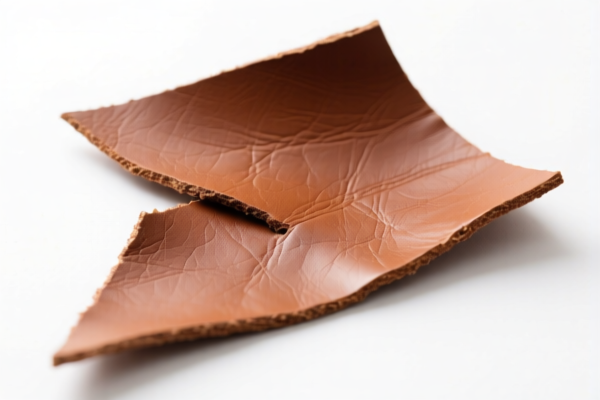
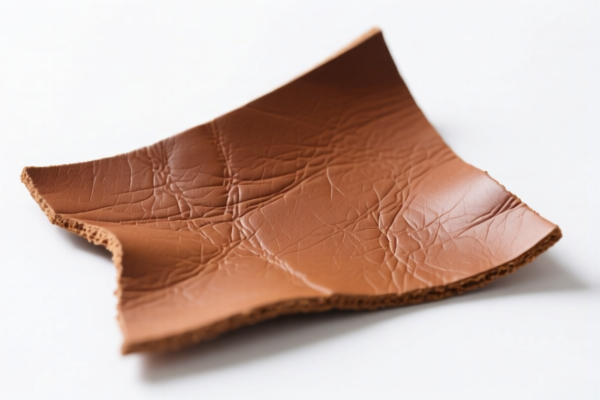
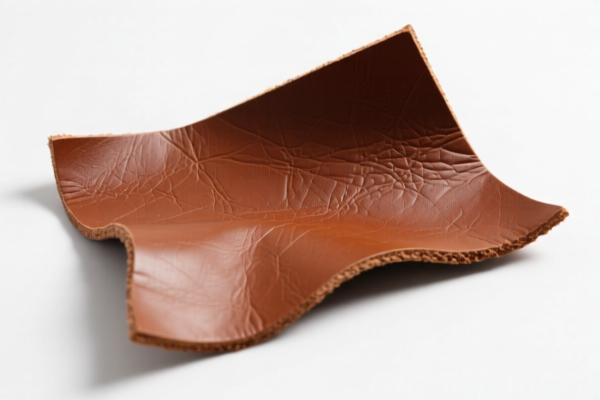

AI Analysis
🧵 Leather Scrap Shoe Material (Parts of Footwear)
🌐 HS Code Reference & Customs Clearance Guide | 2026 Latest Tariff Analysis | Professional Clearance Strategy
📌 I. Product Definition & Classification: Do You Really Understand "Leather Scrap Shoe Material"?
"Leather scrap shoe material" is a broad commercial term that can refer to two distinct categories in international trade, leading to vastly different tariff outcomes. It is crucial to distinguish between:
- Finished Leather Components (Upper Leather): Pieces of tanned leather (often from bovine or equine animals) cut or prepared specifically to be used as the upper part of footwear. This is "prepared leather."
- Scrap/Waste (Offcuts): Leftover pieces from leather tanning or footwear manufacturing, intended for recycling or reprocessing. This is "waste."
⚠️ Critical Distinction Point:
- If the item is tanned, finished, and ready to be sewn into a shoe upper → It falls under Heading 6406 (Parts of footwear).
- If the item is raw scrap, waste, or unprocessed hides → It falls under Heading 4115 (Offal, leather dust, powder, etc.) or 4114 (Chamois-dressed leather), not in the provided data list.Note: The provided
<DATA>only contains HS Codes for Parts of Footwear (6406) and Further Prepared Leather (4107). It does not include waste/scrap codes like 4115.00. Therefore, we must assume the "material" is considered a part or prepared leather suitable for manufacturing, not pure waste. If it is truly "scrap/waste," it is NOT covered by the provided HS Codes.
📦 II. HS Code Classification Details (Based on Provided Data Only)
Since the prompt asks to classify based on <DATA>, and <DATA> only contains 4107 and 6406, we must determine which applies.
| HS Code | Product Description (from DATA) | Applicable Scenario | Tax Rate (China Origin) |
|---|---|---|---|
6406.90.60.00 |
Parts of footwear... Of other materials: Of leather | Leather uppers or prepared leather components specifically for shoes (e.g., cut leather pieces, stamped uppers) | 7.5% (Base 0% + Additional 7.5%) |
6406.90.90.00 |
Parts of footwear... Of other materials: Other | Non-leather shoe parts (e.g., rubber, plastic, textile soles/linings). Note: This code is for non-leather materials. | 7.5% (Base 0% + Additional 7.5%) |
4107.99.60.50 |
Leather further prepared... Upper leather; sole leather | Tanned leather (bovine/equine, without hair) specifically designated as upper or sole leather, not yet cut into final shoe parts. | 0.0% (Base 0% + Additional 0%) |
4107.99.80.00 |
Leather further prepared... Fancy | Decorative or specialty tanned leather (fancy leather) for footwear or other uses. | 2.4% (Base 2.4% + Additional 0%) |
🔍 Key Insight:
- If your "leather scrap" is actually finished tanned leather sheets/skins meant to be cut into shoe parts → Use4107.99.60.50(0% tariff) or4107.99.80.00(2.4% tariff) depending on type.
- If your "leather scrap" is pre-cut pieces, uppers, or components ready for assembly → Use6406.90.60.00(7.5% tariff).
- Do NOT use6406.90.90.00for leather parts — it is for other materials.
💰 III. 2026 Latest Tariff Rate Breakdown (Including Additional Duties)
✅ Applicable Country: United States (US)
✅ Origin: China (CN)
✅ Effective Date: 2025-11-10 onwards (for imports from China)
🎯 1. 4107.99.60.50 — Leather Further Prepared (Upper/Sole Leather)
| Item | Content |
|---|---|
| Base Tariff | 0% (ad valorem) |
| Additional Tariff (Section 301) | 0% |
| Total Tariff | 0.0% |
| Tax Calculation | CIF Value × 0% = $0 |
| De Minimis Eligibility | ❌ No (if value > $800, full duty applies; but since duty is 0%, it doesn't matter) |
| Legal Basis Path | HTSUS:4107.99.60.50 |
📌 Explanation:
- This is the most favorable code if your material is tanned leather (not yet cut into final shoe parts).
- Zero tariff makes it highly competitive.
- Caution: Must prove it is "upper leather" or "sole leather" and further prepared after tanning.
🎯 2. 4107.99.80.00 — Leather Further Prepared (Fancy Leather)
| Item | Content |
|---|---|
| Base Tariff | 2.4% (ad valorem) |
| Additional Tariff (Section 301) | 0% |
| Total Tariff | 2.4% |
| Tax Calculation | CIF Value × 2.4% |
| De Minimis Eligibility | ❌ No (if value > $800) |
| Legal Basis Path | HTSUS:4107.99.80.00 |
📌 Explanation:
- For specialty, decorative, or "fancy" tanned leather.
- Still very low tariff (2.4%).
- Common for high-end fashion footwear components.
🎯 3. 6406.90.60.00 — Parts of Footwear (Leather Parts)
| Item | Content |
|---|---|
| Base Tariff | 0% |
| Additional Tariff (Section 301) | 7.5% |
| Total Tariff | 7.5% |
| Tax Calculation | CIF Value × 7.5% |
| De Minimis Eligibility | ❌ No (Section 301 duties apply to footwear parts from China) |
| Legal Basis Path | IEEPA:9903.01.25 → USITC:6406.90.60.00 → FOOTNOTE:9903.75.01 |
📌 Explanation:
- This applies if the leather is already cut/formed into shoe parts (uppers, linings, etc.).
- 7.5% additional tariff is imposed due to Section 301 trade measures on Chinese footwear parts.
- Total cost impact: Higher than tanned leather (4107).
🎯 4. 6406.90.90.00 — Parts of Footwear (Other Materials)
| Item | Content |
|---|---|
| Base Tariff | 0% |
| Additional Tariff (Section 301) | 7.5% |
| Total Tariff | 7.5% |
| Tax Calculation | CIF Value × 7.5% |
| De Minimis Eligibility | ❌ No |
| Legal Basis Path | IEEPA:9903.01.25 → USITC:6406.90.90.00 → FOOTNOTE:9903.75.01 |
📌 Explanation:
- Not applicable for leather parts. This is for rubber, plastic, textile, etc.
- If misclassified as leather parts under6406.90.60.00, the rate is the same (7.5%), but description must be accurate to avoid customs penalties.
🛠️ IV. Customs Clearance Practical Advice (Avoiding Pitfalls)
✅ 1. Preparation Checklist (Required Documents)
| Document | Required | Purpose |
|---|---|---|
| ✅ Product Specification Sheet | ✔️ | Detail: Type of leather (bovine/equine), tanning process, finish (fancy/super), whether pre-cut |
| ✅ Product Photos | ✔️ | Show texture, cut edges, size, and whether it's a sheet or a formed part |
| ✅ Commercial Invoice | ✔️ | Must clearly state: "Tanned Leather Upper Material" or "Leather Shoe Upper Parts" |
| ✅ Packing List | ✔️ | Show weight, quantity, and dimensions |
| ✅ Certificate of Origin (CO) | ✔️ | If claiming preferential treatment under other FTAs (though not applicable for China-US here) |
| ✅ Third-Party Test Report | ✔️ | If requested, to verify leather type and chemical content (Chrome-free, etc.) |
✅ 2. Classification Strategy (Key Decision Tree)
🔥 "Sheet vs. Part: The 7.5% Difference!"
| Scenario | Correct HS Code | Tariff | Why? |
|---|---|---|---|
| Raw tanned leather sheets/skins (not cut into shoe shape) | 4107.99.60.50 |
0.0% | Classified as "Leather Further Prepared," not a "Part of Footwear" |
| Fancy/Decorative tanned leather | 4107.99.80.00 |
2.4% | Specialty leather, still not a finished part |
| Pre-cut leather uppers or shoe components | 6406.90.60.00 |
7.5% | Classified as "Parts of Footwear" → Subject to Section 301 duty |
| Non-leather shoe parts (rubber, plastic) | 6406.90.90.00 |
7.5% | Not leather, but still a footwear part |
📌 Critical Warning:
- Do NOT call pre-cut leather uppers "Leather Scrap" or "Raw Material" if they are already shaped. Customs may reclassify them as6406.90.60.00and charge 7.5%.
- If you ship tanned leather sheets and cut them in the US, you pay 0%.
- If you ship pre-cut uppers from China, you pay 7.5%.
✅ 3. Special Situations
| Situation | Recommendation |
|---|---|
| "Scrap" = Waste/Offcuts | If the material is truly waste (shavings, dust, unusable offcuts), it falls under 4115 (not in <DATA>). Declaring it as 4107 or 6406 is misclassification and risks penalties. |
| Mixed Materials | If leather is combined with textiles/rubber, the principal material determines classification. |
| OEM Custom Parts | Provide design drawings to prove they are "parts of footwear" (6406) or "prepared leather" (4107). |
| De Minimis ($800) | Since Section 301 duties apply to footwear parts and further prepared leather from China, de minimis does NOT exempt these goods from tariffs. |
🌍 V. Global Market Comparison (2026)
| Country/Region | Recommended HS Code | Tariff (China Origin) | Notes |
|---|---|---|---|
| 🇺🇸 United States | 4107.99.60.50 |
0.0% | Best option for tanned leather sheets |
| 🇺🇸 United States | 6406.90.60.00 |
7.5% | Higher duty for pre-cut parts |
| 🇪🇺 European Union | 4107.99.60.50 |
0.0% | No Section 301 equivalent |
| 🇨🇳 China | 4107.99.60.50 |
0.0% | Domestic production |
| 🇬🇧 United Kingdom | 4107.99.60.50 |
0.0% | Post-Brexit tariff alignment with EU |
📌 Conclusion:
- US is the only major market imposing additional tariffs (7.5%) on footwear parts from China.
- Tanned leather (4107) is tariff-free in the US, making it a strategic advantage to ship raw tanned leather and cut locally.
📌 VI. Common Mistakes & Pitfalls (Lessons Learned)
❌ Mistake 1: Calling pre-cut leather uppers "Leather Scrap" to avoid duty
👉 Consequence: Customs reclassifies as 6406.90.60.00 → 7.5% duty + penalties!
❌ Mistake 2: Using 6406.90.90.00 for leather parts
👉 Consequence: Misclassification. While tariff is same (7.5%), description mismatch can lead to audits.
❌ Mistake 3: Assuming "scrap" means waste under 4115 when it's actually 4107 or 6406
👉 Consequence: If it's usable leather, declaring as waste is fraud. If it's true waste, declaring as 4107 is wrong. Be precise.
❌ Mistake 4: Ignoring Section 301 applicability
👉 Consequence: Not paying 7.5% additional duty on 6406 goods from China → Seizure, fines, and back taxes.
✅ Correct Approach:
"Ship Tanned Sheets (0%) → Cut in US → Avoid 7.5% Duty on Parts."
OR
"Declare as 'Tanned Leather Upper Material' (4107) if not yet cut."
🎯 VII. Conclusion: Professional Classification Saves Money!
🎯 Key Takeaway:
🔹 "Leather Scrap" is ambiguous.
🔹 Tanned Leather Sheets = 0% (4107.99.60.50)
🔹 Pre-Cut Shoe Parts = 7.5% (6406.90.60.00)
🔹 Fancy Leather = 2.4% (4107.99.80.00)🔹 "Cut in US" is your best strategy to save 7.5% duty.
📌 Pro Tip:
If your "leather scrap" is truly waste (shavings, dust), do not use the HS Codes in <DATA>. They are for prepared leather and footwear parts. Waste falls under 4115, which is not covered here.
📣 Immediate Action:
📞 Clarify with Supplier: Is it "tanned leather sheets" or "pre-cut shoe parts"?
🚀 If sheets: Use4107.99.60.50(0% duty).
🚀 If pre-cut: Use6406.90.60.00(7.5% duty).
🚀 Do NOT guess. Misclassification leads to costly delays.
✨ Professional Classification, Precision in Tariffs!
💼 Your profit margin depends on accurate HS Codes!
Customer Reviews
About HS Code Classification
The Harmonized System (HS) is an internationally standardized nomenclature developed by the World Customs Organization (WCO) to classify traded products. Over 200 countries use the HS system as the basis for customs tariffs, trade statistics, and import/export regulations.
Each HS code follows a hierarchical structure:
- Chapter (2 digits) — Broad category of goods (e.g., Chapter 84: Machinery and Mechanical Appliances)
- Heading (4 digits) — More specific grouping within the chapter
- Subheading (6 digits) — Internationally standardized breakdown, used by all WCO member countries
- National subdivisions (8-10 digits) — Country-specific extensions for further classification, such as US HTSUS 10-digit codes
Correct HS code classification is essential for smooth customs clearance, accurate duty payment, and compliance with trade regulations. Misclassification can lead to customs delays, overpayment of duties, or penalties.
When importing from CN to US, the applicable tariff rates may include:
- Most-Favored-Nation (MFN) rate — The standard duty rate applied to WTO members
- General rate — Applied to countries without trade agreements
- Trade remedy duties — Additional tariffs such as Section 301 (anti-dumping), Section 232 (national security), or countervailing duties
The information provided on this page is for reference purposes only. For official classification, please consult with your local customs authority or a licensed customs broker.