led
CN → US| HS Code | Tariff Rate | Origin | Destination | Doc |
|---|---|---|---|---|
| 9405428440 | 38.9% | CN | US | Official Doc |
| 9405118010 | 38.9% | CN | US | Official Doc |
| 8541410000 | 35.0% | CN | US | Official Doc |
| 8539520091 | 12.0% | CN | US | Official Doc |
| 8541499500 | 60.0% | CN | US | Official Doc |
Product Images
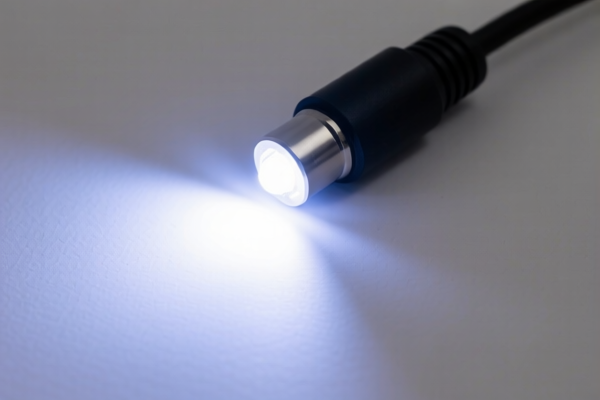
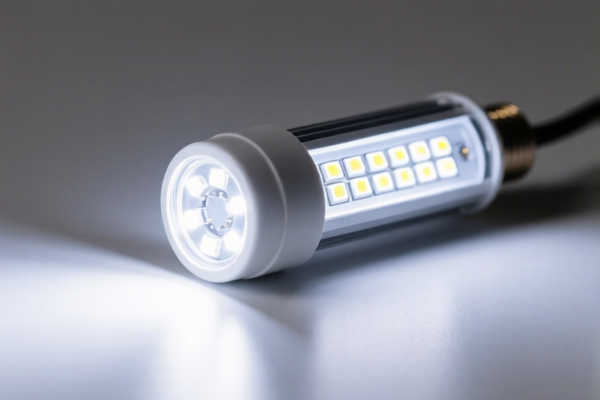
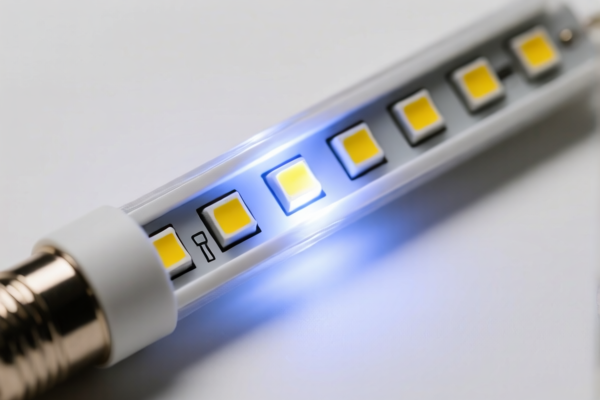
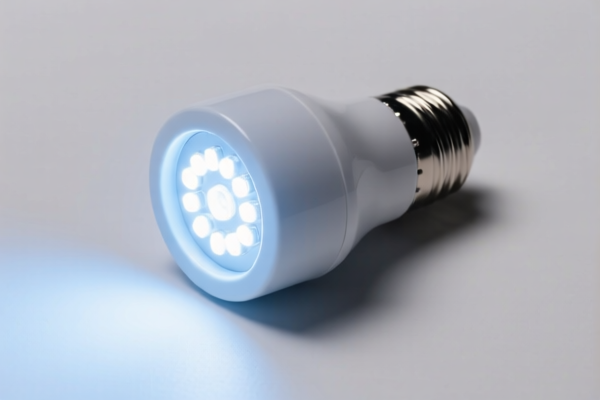
AI Analysis
💡 LED (Light Emitting Diodes & Lighting Fixtures)
🌐 HS Code Reference & Customs Clearance Guide | 2026 Latest Tariff Breakdown | Professional Clearance Strategy
📌 I. Product Definition & Classification: Do You Really Understand "LED"?
LED (Light Emitting Diode) is the core semiconductor component used in lighting. In international trade, it is often confused with the finished lighting fixtures it powers. Misclassification leads to massive tax penalties.
It is strictly divided into two categories:
-
Semiconductor Components (The "Chip"):
- The raw LED chip, diode, or bare component.
- Key Feature: No housing, no lamp base, no integrated light source casing.
- Risk: High tariff rates due to "122 Clauses" and "Section 301" additions.
-
Finished Lighting Fixtures (The "Lamp"):
- Complete lights (street lamps, downlights, bulb replacements) or LED strips.
- Key Feature: Includes housing, driver (power supply), lamp base (E27/E14), and optics.
- Risk: Often caught under "Lamp Fallback" categories if the specific code is not matched.
⚠️ Critical Distinction: - If it is just a chip/diode (bare semiconductor) →归入
8541series (Components). - If it is a finished lamp (light bulb/street light) →归入9405series (Furniture/Fixtures). - Warning: The term "LED Lamp" is ambiguous. You must specify if it is the component or the finished product.
📦 II. HS Code Classification Matrix (2026 Data & Tax Logic)
Based on the provided data, here is the authoritative breakdown for LED products.
| HS Code | Product Description (Summary) | Classification Logic | Total Tariff | Tax Composition Breakdown |
|---|---|---|---|---|
| 9405.42.84.40 | LED Lighting Fixtures (Finished Lamps) | Finished fixtures, not electric lamps for data processing. | 38.9% | Base: 3.9% + Add: 25.0% + 122-Cl: 10% |
| 9405.11.80.10 | Lamp Category Fallback (Catch-all) | Used if the specific LED lamp type doesn't fit other specific codes. | 38.9% | Base: 3.9% + Add: 25.0% + 122-Cl: 10% |
| 8541.41.00.00 | LED Component (Standard Diode) | Standard Light Emitting Diode chip/module. | 35.0% | Base: 0.0% + Add: 25.0% + 122-Cl: 10% |
| 8539.52.00.91 | LED Lamp (Specific Bulb Type) | Specific type of LED lamp/bulb (often incandescent replacement style). | 12.0% | Base: 2.0% + Add: 0.0% + 122-Cl: 10% |
| 8541.49.95.00 | LED Component (Other/High Power) | Other Light Emitting Diodes (High power/industrial). | 60.0% | Base: 0.0% + Add: 50.0% + 122-Cl: 10% |
| 8539.52.00.20 | LED Lamp (Another Specific Type) | Another specific LED lamp variant (e.g., specific beam angle/type). | 12.0% | Base: 2.0% + Add: 0.0% + 122-Cl: 10% |
| 8539.51.00.00 | LED Strip Lights | LED Strip/Light Strip. | 10.0% | Base: 0.0% + Add: 0.0% + 122-Cl: 10% |
🔍 Key Insight: - The "Trap":
8541.49.95.00carries a staggering 60% tariff. This is often applied to high-power or specialized LED chips. - The "Safe Zone":8539.52.00.91/20and8539.51.00.00(Finished Lamps & Strips) have much lower total tariffs (10-12%) because they attract 0% Additional Duty (Section 301), only the 10% "122 Clause". - The "Furnishing" Zone:9405codes (Finished Fixtures) attract the 25% Additional Duty, totaling 38.9%.
💰 III. 2026 Tariff Structure Deep Dive
✅ Applicable Country: USA (US)
✅ Origin: China (CN)
✅ Relevant Clause: 122 Clause (Section 301 / IEEPA related additions)
🎯 1. The "Component" Trap (HS: 8541.49.95.00)
- Total Tax: 60.0%
- Breakdown:
- Base Duty: 0.0% (Free entry for semiconductors usually)
- Add'l Duty (301): +50.0% (Huge penalty for specific high-tech/industrial chips)
- 122 Clause: +10.0% (Mandatory China surcharge)
- 💡 Strategy: This is the highest risk code. Ensure your product is not misidentified as "Other LED" (
49.95) if it falls under standard diodes (41.00).
🎯 2. The "Finished Lamp" Sweet Spot (HS: 8539.52.00.91 / .20)
- Total Tax: 12.0%
- Breakdown:
- Base Duty: 2.0%
- Add'l Duty (301): 0.0% (Exempt from Section 301 surcharge for these specific lamp types!)
- 122 Clause: +10.0%
- 💡 Strategy: Best Value. If your product is a finished LED bulb or light, verify if it qualifies for
8539(Electric Lamps) rather than8541(Semiconductors) or9405(Furniture).
🎯 3. The "Fixtures" Standard (HS: 9405.42.84.40 / 9405.11.80.10)
- Total Tax: 38.9%
- Breakdown:
- Base Duty: 3.9%
- Add'l Duty (301): +25.0% (Standard China penalty)
- 122 Clause: +10.0%
- 💡 Strategy: Applies to street lights, ceiling fixtures, and chandeliers. High cost, but standard for "Furniture" category.
🛠️ IV. Customs Clearance Practical Advice (Pitfall Avoidance)
✅ 1. Material & Documentation Checklist
| Document | Requirement | Why? |
|---|---|---|
| Product Spec Sheet | Must state: "Component" vs "Finished Fixture" | Determines if it goes to 8541, 8539, or 9405. |
| Circuit Diagram | Must show if "Driver" is integrated | 8539 requires a driver; 8541 is just the diode. |
| HS Code Pre-Ruling | Highly Recommended | 60% tax vs 12% tax is a 5x difference. Don't guess. |
| Invoice (Commercial) | Must explicitly say "LED Diode" or "LED Lamp" | Avoid generic "LED" which leads to fallback codes. |
| CO (Certificate of Origin) | China Origin Declaration | Triggers the 10% 122 Clause. |
✅ 2. Classification Strategy (The "Golden Rules")
🔥 Rule #1: Component vs. Product - If you sell chips to a factory → Use
8541.41.00.00(35%) or8541.49.95.00(60% - Avoid if possible). - If you sell bulbs/lamps to a retailer → Use8539.52.00.91(12% - Target this).🔥 Rule #2: The "Fallback" Danger - If your specific LED fixture doesn't match
9405.42.84.40, it might fall to9405.11.80.10("Lamp Category Fallback"). - Result: Tax stays at 38.9%. Always try to match the specific description first.🔥 Rule #3: LED Strips - If selling flexible LED strips (
8539.51.00.00), ensure they are not classified as "LED Components". - Benefit: 10% total tax (Base 0% + 122 10%).
🌍 V. Global Market Comparison (USA Focus)
| Destination | HS Code Category | Est. Total Tax | Key Note |
|---|---|---|---|
| 🇺🇸 USA | 8541 (Chips) |
35% - 60% | High Risk. 122 Clause + 301 Add-ons. |
| 🇺🇸 USA | 8539 (Bulbs) |
10% - 12% | Low Risk. Only 122 Clause applies. |
| 🇺🇸 USA | 9405 (Fixtures) |
38.9% | Standard penalty for furniture/lamps. |
| 🇪🇺 EU | 9405 |
~0% - 4% | Generally no 122 Clause (check current rules). |
| 🇨🇳 China | 9405 |
~0% | No export tax. |
📌 Conclusion: The USA is the most aggressive market for LED goods. The difference between a 60% tariff and a 12% tariff is purely in the HS Code description (Chip vs. Lamp).
📌 VI. Common Errors & "Blood & Tears" Lessons
❌ Error 1: Calling a Finished Bulb a "Component"
* Action: Declaring an LED Bulb as 8541.41.00.00.
* Consequence: Tax jumps from 12% to 35% + potential fraud investigation for misdeclaration.
❌ Error 2: The "Other LED" Trap (8541.49.95.00)
* Action: Putting high-power chips or non-standard diodes here.
* Consequence: 60% Tax. This is the most expensive code in the list.
* Fix: Check if it fits 8541.41.00.00 (35%) or if it's actually a "Lamp" (8539).
❌ Error 3: Vague Descriptions
* Action: "LED Light" on the invoice.
* Consequence: Customs uses Fallback Code 9405.11.80.10 (38.9%).
* Fix: Use "LED Downlight", "LED Bulb E27", or "LED Strip".
🎯 VII. Strategic Conclusion
The "LED" Tax Game is a War of Codes. * Chips = High Tax (35-60%) * Fixtures = High Tax (38.9%) * Finished Lamps (Bulbs/Strips) = Low Tax (10-12%) ✅ TARGET THIS!
🚀 Action Plan:
1. Audit your product line. Are they chips or lamps?
2. Rename your invoice descriptions to match 8539 (Lamps) if possible.
3. Verify against 8541.49.95.00 to avoid the 60% pitfall.
4. Apply for Pre-Rulings before shipping large volumes.
✨ Pro Tip: "If it has a screw base or a plug, it's likely an 8539 (12%). If it's just a semiconductor chip, it's 8541 (35-60%). Know the difference, save the money!"
💼 Your profit margin depends on this 25% difference.
📞 Contact your broker today to verify your HS Code!
Customer Reviews
About HS Code Classification
The Harmonized System (HS) is an internationally standardized nomenclature developed by the World Customs Organization (WCO) to classify traded products. Over 200 countries use the HS system as the basis for customs tariffs, trade statistics, and import/export regulations.
Each HS code follows a hierarchical structure:
- Chapter (2 digits) — Broad category of goods (e.g., Chapter 84: Machinery and Mechanical Appliances)
- Heading (4 digits) — More specific grouping within the chapter
- Subheading (6 digits) — Internationally standardized breakdown, used by all WCO member countries
- National subdivisions (8-10 digits) — Country-specific extensions for further classification, such as US HTSUS 10-digit codes
Correct HS code classification is essential for smooth customs clearance, accurate duty payment, and compliance with trade regulations. Misclassification can lead to customs delays, overpayment of duties, or penalties.
When importing from CN to US, the applicable tariff rates may include:
- Most-Favored-Nation (MFN) rate — The standard duty rate applied to WTO members
- General rate — Applied to countries without trade agreements
- Trade remedy duties — Additional tariffs such as Section 301 (anti-dumping), Section 232 (national security), or countervailing duties
The information provided on this page is for reference purposes only. For official classification, please consult with your local customs authority or a licensed customs broker.