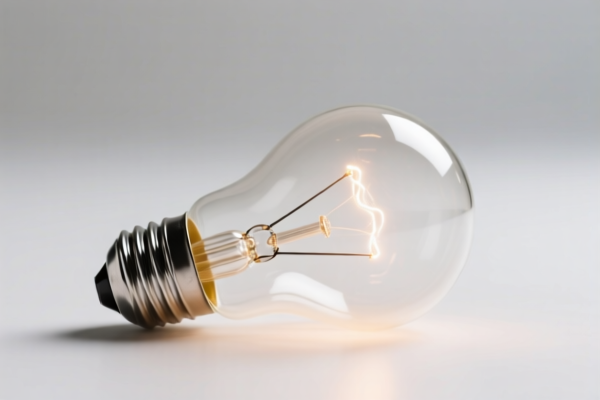
led bulb
CN → US| HS Code | Tariff Rate | Origin | Destination | Doc |
|---|---|---|---|---|
| 8541410000 | 35.0% | CN | US | Official Doc |
| 9405428440 | 38.9% | CN | US | Official Doc |
| 8539520020 | 12.0% | CN | US | Official Doc |
| 8539520091 | 12.0% | CN | US | Official Doc |
| 9405428410 | 38.9% | CN | US | Official Doc |
Product Images


AI Analysis
Here is the comprehensive LED Bulb HS Code Classification Guide based strictly on your provided data, formatted in a vibrant, Wiki-style layout for easy reading and quick decision-making.
💡 LED Bulb (Light Emitting Diode Lamp) | Global HS Code & Tax Strategy Guide 2026
🌐 Smart Classification & Duty Breakdown | Decoding the 5 Possible HS Codes | Professional Customs Strategy
📌 One Product, Five Classifications, Five Different Tax Rates!
LED Bulbs are the world's most efficient lighting solution, but in international trade, their classification depends on structure, integration, and specific design intent. Misclassification can lead to massive tax gaps (0% vs. 38.9%) and customs delays.
Below are the 5 possible HS Codes derived from your data, analyzed for their specific criteria and tax implications.
📦 Part 1: The 5 HS Code Classifications (2026 Tax Reality)
| HS Code | Classification Description | Key Distinction (Why it fits) | Total Duty Rate | Risk Level |
|---|---|---|---|---|
| 8539.52.00.20 | Specific LED Lamp | Perfect match: Material (LED) + Function (Light Source/Lamp). | 12.0% | 🟢 Low |
| 8539.52.00.91 | Other LED Lamps | Matches "Light-emitting diode (LED) lamps" fully in usage/shape. | 12.0% | 🟢 Low |
| 9405.42.84.40 | LED Lighting Fixture | Classified as a fixture specifically designed only for LED sources. | 38.9% | 🔴 High |
| 9405.42.84.10 | LED Lighting Fixture | Same as above: "Specifically designed for LED light sources." | 38.9% | 🔴 High |
| 8541.41.00.00 | LED Device/Assembly | Classified as the component/device itself (Diode) or its assembly. | 35.0% | 🟠 Medium |
⚠️ CRITICAL INSIGHT:
There is a 26.9% difference between the lowest (12.0%) and highest (38.9%) tax rates! - 12.0% applies if treated as a Light Source (8539). - 38.9% applies if treated as a Lighting Fixture/Chandelier (9405). - 35.0% applies if treated as the Electronic Component (8541).
💰 Part 2: Deep Dive into Tax Rates & Legal Breakdown
✅ Applicable Market: United States (US)
✅ Origin: China (CN)
✅ Structure:Base Tariff+Section 301 (Add-on)+Section 122 (China Add-on)
🎯 Scenario A: The Low-Tax Path (12.0%)
Target Codes: 8539.52.00.20 & 8539.52.00.91
| Tax Component | Rate | Legal Basis | Explanation |
|---|---|---|---|
| Base Tariff | 2.0% | HTSUS General | Standard duty for LED lamps. |
| Section 301 (Add-on) | 0.0% | USITC 9903 | No additional 301 tariff for these specific LED lamp codes. |
| Section 122 (China) | 10.0% | IEEPA | Specific surcharge on Chinese LED lighting products. |
| TOTAL | 12.0% | ✅ Most Economical Classification |
📌 Logic: If the product is sold as a "replacement bulb" (screw-in type) intended to replace standard incandescent bulbs, it falls under 8539. This is the preferred classification to minimize costs.
🎯 Scenario B: The Medium-Tax Path (35.0%)
Target Code: 8541.41.00.00
| Tax Component | Rate | Legal Basis | Explanation |
|---|---|---|---|
| Base Tariff | 0.0% | HTSUS General | Duty-free for the semiconductor device. |
| Section 301 (Add-on) | 25.0% | USITC 9903 | High surcharge for "Light Emitting Diodes" and assemblies. |
| Section 122 (China) | 10.0% | IEEPA | Additional China surcharge. |
| TOTAL | 35.0% | ⚠️ Risk: Classified as a component, not a finished lamp. |
📌 Logic: If the bulb is declared as an "LED Diode Assembly" rather than a "Lamp," you hit the 25% Section 301 tariff. Avoid this unless the product is strictly a component part for repair.
🎯 Scenario C: The High-Tax Path (38.9%)
Target Codes: 9405.42.84.40 & 9405.42.84.10
| Tax Component | Rate | Legal Basis | Explanation |
|---|---|---|---|
| Base Tariff | 3.9% | HTSUS General | Duty for "Luminaires" (Fixtures). |
| Section 301 (Add-on) | 25.0% | USITC 9903 | High surcharge applied to lighting fixtures. |
| Section 122 (China) | 10.0% | IEEPA | Additional China surcharge. |
| TOTAL | 38.9% | ❌ Most Expensive Classification |
📌 Logic: If the product is classified as a Fixture (e.g., a pendant light, chandelier, or a "fixture" designed only for LEDs), the Section 301 tariff (25%) kicks in. -
8539= Lamp (Source) -9405= Fixture (Holder/Luminaires)
🛠️ Part 3: Customs Clearance Strategy & Operational Advice
✅ 1. Product Definition & Naming Strategy
To achieve the 12.0% rate (8539), your commercial invoice and product description must strictly align with the Lamp definition, not the Fixture.
| ❌ Avoid These Terms | ✅ Use These Terms | Reason |
|---|---|---|
| "LED Fixture" | "LED Bulb" / "LED Lamp" | Avoids 9405 (Fixture) classification. |
| "LED Light Assembly" | "LED Lighting Device" | Avoids 8541 (Component) classification. |
| "LED Chandelier" | "Standard Screw-in Bulb" | Prevents 9405 high tax. |
| "Specifically Designed for LED" (in context of fixture) | "General Purpose LED Replacement" | Focus on "Light Source" utility. |
✅ 2. Documentation Checklist (Must-Haves)
To prevent customs audits and ensure the 12.0% rate is applied:
- Product Technical Sheet: Must highlight "Replaceable Light Source" and "Standard Base (E26/E27/E14)".
- Photo of Product: Clearly show the bulb shape (screw or bayonet), not a ceiling-mounted fixture.
- Bill of Materials (BOM): If applicable, show it is a self-contained unit, not a part of a larger fixture.
- Declaration Statement: Explicitly state: "This is a Light Emitting Diode Lamp (HS 8539), not a Lighting Fixture (HS 9405)."
✅ 3. Pitfall Alert: The "Fixture Trap"
- The Trap: Many LED "bulbs" are sold as part of a lamp set (bulb + socket + shade).
- The Consequence: If the product is a complete unit designed only for LEDs (e.g., a smart bulb that requires a specific socket), customs may argue it belongs to 9405.
- The Fix: Ship the bulb only separately. If selling a fixture, separate the bulb line item from the fixture line item on the invoice.
🌍 Part 4: Global Market Comparison (US Focus)
| Classification | HS Code | Total Tax (China Origin) | Best For |
|---|---|---|---|
| LED Lamp | 8539.52.00.20 / .91 |
12.0% | ✅ Standard Screw-in Bulbs (Best for cost) |
| LED Device | 8541.41.00.00 |
35.0% | ⚠️ Industrial LED Diodes (Avoid for consumer bulbs) |
| LED Fixture | 9405.42.84.10 / .40 |
38.9% | ❌ Ceiling Lights / Chandeliers (Use only if unavoidable) |
💡 Pro Tip: If you are exporting LED Bulbs (the screw-in type), INSIST on
8539.52.00.xx. If the customs broker suggests9405, challenge them immediately. The 26.9% tax difference is the deciding factor for profit margins.
🎯 Summary: Action Plan for Importers
- Identify: Is it a Lamp (8539) or a Fixture (9405)?
- Declare: Use "LED Bulb" or "LED Lamp" in all documents. Never use "Fixture".
- Calculate: Expect 12.0% Total Duty (2% Base + 0% Section 301 + 10% Section 122).
- Verify: Ensure the product is not a "Fixture designed for LEDs" (which triggers 38.9%).
- Comply: Prepare technical drawings showing a standard bulb shape.
✨ Professional Customs Clearance Start Here!
Don't let a 26.9% tax surprise destroy your margin. Classify right, declare correctly, save big!
🚀 Safe & Efficient Trade!
Customer Reviews
About HS Code Classification
The Harmonized System (HS) is an internationally standardized nomenclature developed by the World Customs Organization (WCO) to classify traded products. Over 200 countries use the HS system as the basis for customs tariffs, trade statistics, and import/export regulations.
Each HS code follows a hierarchical structure:
- Chapter (2 digits) — Broad category of goods (e.g., Chapter 84: Machinery and Mechanical Appliances)
- Heading (4 digits) — More specific grouping within the chapter
- Subheading (6 digits) — Internationally standardized breakdown, used by all WCO member countries
- National subdivisions (8-10 digits) — Country-specific extensions for further classification, such as US HTSUS 10-digit codes
Correct HS code classification is essential for smooth customs clearance, accurate duty payment, and compliance with trade regulations. Misclassification can lead to customs delays, overpayment of duties, or penalties.
When importing from CN to US, the applicable tariff rates may include:
- Most-Favored-Nation (MFN) rate — The standard duty rate applied to WTO members
- General rate — Applied to countries without trade agreements
- Trade remedy duties — Additional tariffs such as Section 301 (anti-dumping), Section 232 (national security), or countervailing duties
The information provided on this page is for reference purposes only. For official classification, please consult with your local customs authority or a licensed customs broker.