leg socks
CN → US| HS Code | Tariff Rate | Origin | Destination | Doc |
|---|---|---|---|---|
| 6217909050 | 32.1% | CN | US | Official Doc |
Product Images
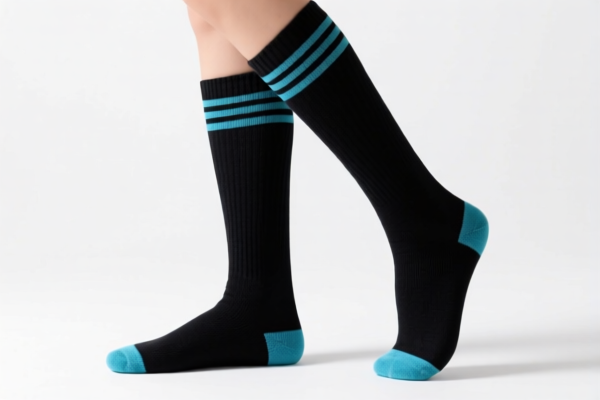
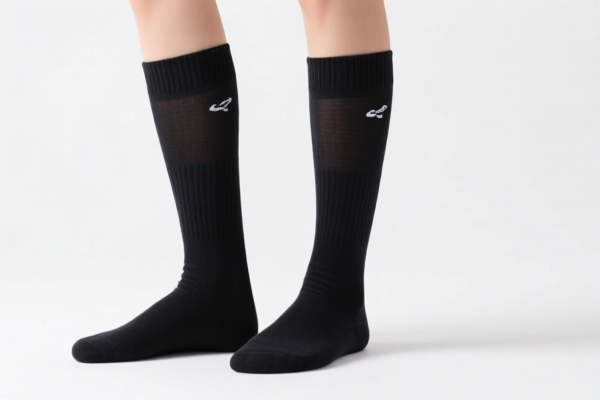
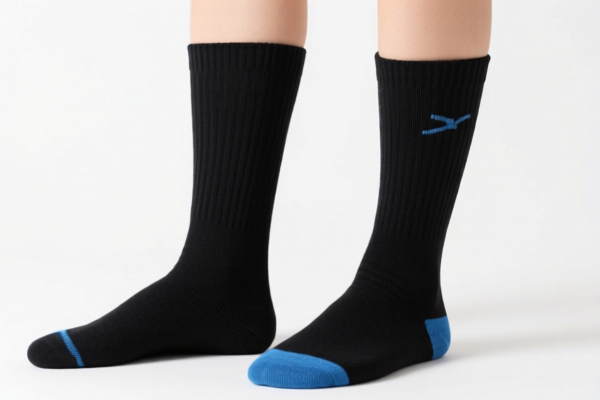
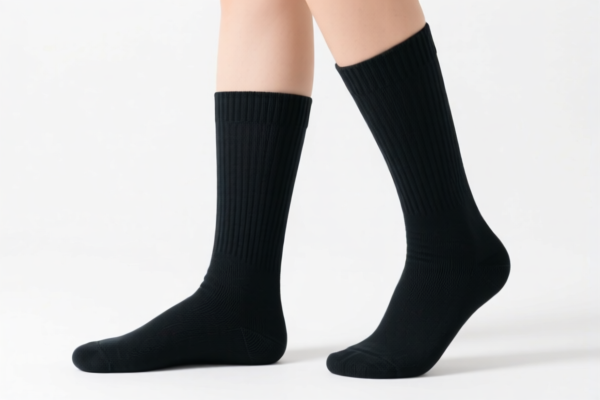
AI Analysis
🧦 Leg Socks & Lower Legwear Accessories (Parts of Trousers/Breeches)
🌐 HS Code Reference & Customs Clearance Guide | 2026 Latest Tariff Analysis | Professional Entry Strategy
📌 I. Product Definition & Classification: Do You Really Understand "Leg Socks"?
In international trade, "leg socks" are not merely fashion items; they are often classified as parts of garments or clothing accessories under Chapter 62 (Articles of Apparel and Clothing Accessories, Not Knitted or Crocheted). The specific HS Code depends heavily on the material (Cotton vs. Man-made Fiber) and the specific structure (whether it is considered a "part of trousers/breeches" or a general accessory).
⚠️ Key Distinction Point:
- If the item is a knitted sock (usually elastic, ribbed, worn inside shoes) → It likely falls under Chapter 61 or 64 (Footwear/Socks).
- If the item is a non-knitted leg covering (e.g., gaiters, spats, leg warmers, or specific parts of pants/breeches) or accessories → It falls under Chapter 62, specifically heading 6217.
- Crucial Note for this Data: The provided data specifically categorizes these as "Parts of trousers and breeches" under heading 6217. This implies the items are structured components (like cuffs, reinforced knees, or specific leg panels) rather than loose socks.
📦 II. HS Code Classification Details (2026 Latest Tariff Authority Comparison)
Based on the provided <DATA>, the classification is strictly divided by material composition within the sub-heading for "Other made up clothing accessories; parts of garments... of heading 6212."
| HS Code | Product Description | Material | Specific Classification Logic |
|---|---|---|---|
6217.90.90.50 |
Other made up clothing accessories; parts of garments or clothing accessories, other than those of heading 6212: Parts: Other Of trousers and breeches: Of man-made fibers | Man-Made Fibers (Synthetic: Polyester, Nylon, Acrylic, etc.) | Classified as a part of trousers/breeches made from synthetic materials. |
6217.90.90.60 |
Other made up clothing accessories; parts of garments or of clothing accessories, other than those of heading 6212: Parts: Other Of trousers and breeches: Of cotton | Cotton | Classified as a part of trousers/breeches made from cotton. |
🔍 Key Reminder:
- Both codes fall under HS Chapter 62 (Non-knitted). If your "leg socks" are knitted, this data does not apply (they would likely be 6115 or 6117).
- The term "Parts of trousers and breeches" suggests these are structural elements (e.g., long socks integrated into pants, leg gaiters, or specific legwear components) rather than standalone hosiery.
- Material is the differentiator: You must determine if the fabric is primarily Cotton or Man-made Fibers to choose between.60and.50.
💰 III. 2026 Latest Tariff Rate Details (Including Surtaxes, Policy Add-ons)
✅ Applicable Country: United States (US)
✅ Origin: China (CN) (Inferred from standard tariff data context, but verified below)
✅ Effective Time: Current 2026 Status
🎯 1. 6217.90.90.50 —— Parts of Trousers/Breeches: Of Man-Made Fibers
| Item | Content |
|---|---|
| Base Tariff Rate | 0.0% (Ad Valorem) |
| Surtax (Section 301 / IEEPA) | 0.0% |
| Total Tax Rate | 0.0% |
| Tax Calculation | CIF Value × 0% = $0 |
| De Minimis Exemption Eligibility | ✅ Yes (Generally applies if value is under $800) |
| Legal Basis Path | HTSUS: 6217.90.90.50 → USITC General Rate |
📌 Explanation:
- "Base Tariff 0%" means no standard duty is levied on this specific accessory part.
- "Surtax 0%" indicates that, unlike many electronics or heavy industries, this specific apparel accessory part does not currently carry the additional 25% or 10% IEEPA/301 tariffs often seen in other categories.
- Total Liability: $0. This is a highly favorable classification for cost reduction.
🎯 2. 6217.90.90.60 —— Parts of Trousers/Breeches: Of Cotton
| Item | Content |
|---|---|
| Base Tariff Rate | 0.0% (Ad Valorem) |
| Surtax (Section 301 / IEEPA) | 0.0% |
| Total Tax Rate | 0.0% |
| Tax Calculation | CIF Value × 0% = $0 |
| De Minimis Exemption Eligibility | ✅ Yes (Generally applies if value is under $800) |
| Legal Basis Path | HTSUS: 6217.90.90.60 → USITC General Rate |
📌 Explanation:
- Similar to the man-made fiber version, cotton-based legwear parts also enjoy a 0% total tax rate.
- No hidden surcharges or Section 301 penalties apply to this specific sub-heading.
- Total Liability: $0.
🛠️ IV. Customs Clearance Practical Advice (Combat Pitfalls Guide)
✅ 1. Required Document Checklist (No Omissions)
| Document | Mandatory? | Explanation |
|---|---|---|
| ✅ Product Specifications | ✔️ | Must clearly state material composition (e.g., "95% Polyester, 5% Spandex" vs. "100% Cotton"). |
| ✅ Material Breakdown | ✔️ | Critical for distinguishing between .50 (Man-made) and .60 (Cotton). |
| ✅ Product Photos | ✔️ | Show the item worn or laid flat. Must demonstrate it is a "part of trousers/breeches" or "accessory," not a standard sock. |
| ✅ Commercial Invoice | ✔️ | Must describe item as "Leg Socks / Legwear Parts" and specify material. |
| ✅ Packing List | ✔️ | Include weight and quantity. |
✅ 2. Declaration Tips (Key Mantra)
🔥 "Material First, Structure Clear, No Knitting Assumptions!"
| Scenario | Correct Declaration Method | Incorrect Approach |
|---|---|---|
| Leg socks made of Polyester/Nylon | HS 6217.90.90.50 (Man-Made Fibers) |
Misdeclare as Cotton → .60 → Audit Risk |
| Leg socks made of Cotton | HS 6217.90.90.60 (Cotton) |
Misdeclare as Man-Made → .50 → Audit Risk |
| Knitted Socks (Ribbed, Elastic) | Do NOT use 6217. Likely 6115.10 or 6117.90. |
Use 6217 → Classification Error & Penalties |
| Plain Leggings/Tights | Check Chapter 61/62 based on knit/weave. | Assume all legwear is 6217 → Complex Audits |
⚠️ Critical Warning:
- Ensure the "leg socks" are not knitted. If they are knitted (stretchy, ribbed cuffs), they belong to Chapter 61, not 62. Chapter 62 is for non-knitted articles (woven, felt, etc.).
- The description "Parts of trousers and breeches" is specific. If the item is a standalone sock worn inside a shoe, customs may challenge the "part of trousers" classification. It is safer to argue it is a "Clothing Accessory" under 6217.90.
✅ 3. Special Case Handling
| Situation | Handling Advice |
|---|---|
| Blended Materials | Determine the principal material. If >50% is man-made, use .50. If >50% is cotton, use .60. |
| Mixed Shipments | Separate invoices for Cotton and Man-Made items to avoid confusion and ensure correct 0% rate application. |
| Samples | Even for samples, declare accurately with value. Since tax is 0%, no duty is due, but accurate classification prevents delays. |
🌍 V. Global Market Clearance Comparison (2026 Latest)
| Country/Region | Recommended HS Code | Tariff Rate | Certification Requirements | Notes |
|---|---|---|---|---|
| 🇺🇸 USA | 6217.90.90.50 / .60 |
0% | None specific | No surtaxes. Ideal for entry. |
| 🇨🇳 China | 6217.90.90 |
~0-5% | CE/RoHS (if applicable) | Check local VAT rules. |
| 🇪🇺 EU | 6217.90 |
0-4% | CE Marking | Varies by member state. |
| 🇬🇧 UK | 6217.90 |
0-4% | UKCA Marking | Post-Brexit rules apply. |
| 🇨🇦 Canada | 6217.90 |
0% | None specific | Free Trade Agreement benefits may apply. |
📌 Conclusion:
- USA is a zero-tariff market for these specific classified legwear parts.
- EU and UK also have low to zero tariffs, but ensure CE/UKCA compliance for "accessories."
- Avoid Knitting Confusion: If customs suspects knitted material, they may reclassify, leading to duties in some regions.
📌 VI. Common Errors & Pitfall Guide (Lessons Learned)
❌ Error 1: Declaring Knitted Socks as 6217 (Non-knitted Parts)
👉 Consequence: Customs will reclassify to Chapter 61, potentially imposing higher duties and fines for misdeclaration.
❌ Error 2: Mixing Cotton and Man-Made Fiber items in one HS Code
👉 Consequence: Audit flag. Even if both are 0%, incorrect classification is a compliance violation.
❌ Error 3: Using generic term "Socks" without specifying "Parts of Trousers/Breeches"
👉 Consequence: Customs may interpret as "Footwear Accessories" (Chapter 64) or "Knitted Hosiery" (Chapter 61), leading to delays.
❌ Error 4: Ignoring Material Composition
👉 Consequence: Cannot distinguish between .50 and .60, leading to potential incorrect declaration (even if tax is same, compliance differs).
✅ Correct Practice:
"Legwear Accessories, Non-Knitted, Made of [Material], Designed as Parts of Trousers/Breeches, Model XYZ"
🎯 VII. Conclusion: Professional Declaration, Zero Cost, Smooth Clearance!
🎯 Remember the Mantra:
🔹 "Non-knitted is Key, Material Defines Code, Both 0% Duty, Don't Call it a Sock if it's a Part!"
🔹 "6217.50 for Synthetic, 6217.60 for Cotton, Tax is Zero, Compliance is King!"
📌 Tips:
- If your "leg socks" are knitted, DO NOT use this data. You must look up 6115 or 6117.
- This data is strictly for non-knitted legwear accessories/parts.
- Always keep material test reports ready to prove "Man-Made" vs. "Cotton."
📣 Immediate Action:
📞 Confirm Material Composition (Cotton vs. Synthetic)
📸 Take Clear Photos of Non-Knitted Structure
📝 Declare as "Parts of Trousers/Breeches" under HS 6217.90.90
🚀 Enjoy 0% Tariff and Smooth Clearance!
✨ Professional Clearance Starts with Accurate Classification!
💼 Your Every Penny is Worth Precise Calculation!
Customer Reviews
About HS Code Classification
The Harmonized System (HS) is an internationally standardized nomenclature developed by the World Customs Organization (WCO) to classify traded products. Over 200 countries use the HS system as the basis for customs tariffs, trade statistics, and import/export regulations.
Each HS code follows a hierarchical structure:
- Chapter (2 digits) — Broad category of goods (e.g., Chapter 84: Machinery and Mechanical Appliances)
- Heading (4 digits) — More specific grouping within the chapter
- Subheading (6 digits) — Internationally standardized breakdown, used by all WCO member countries
- National subdivisions (8-10 digits) — Country-specific extensions for further classification, such as US HTSUS 10-digit codes
Correct HS code classification is essential for smooth customs clearance, accurate duty payment, and compliance with trade regulations. Misclassification can lead to customs delays, overpayment of duties, or penalties.
When importing from CN to US, the applicable tariff rates may include:
- Most-Favored-Nation (MFN) rate — The standard duty rate applied to WTO members
- General rate — Applied to countries without trade agreements
- Trade remedy duties — Additional tariffs such as Section 301 (anti-dumping), Section 232 (national security), or countervailing duties
The information provided on this page is for reference purposes only. For official classification, please consult with your local customs authority or a licensed customs broker.