legging
CN → USProduct Images
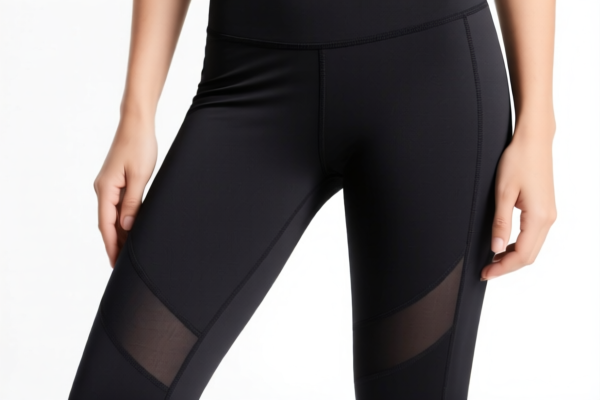
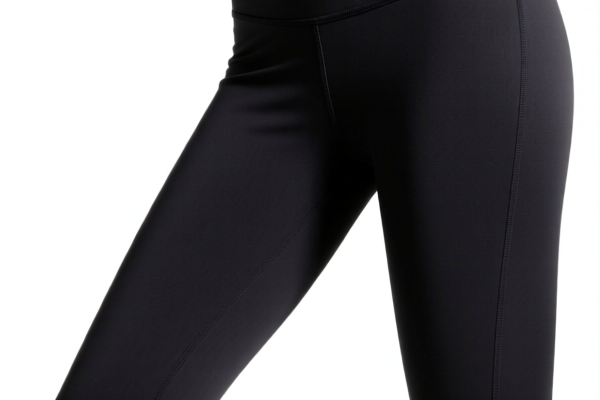
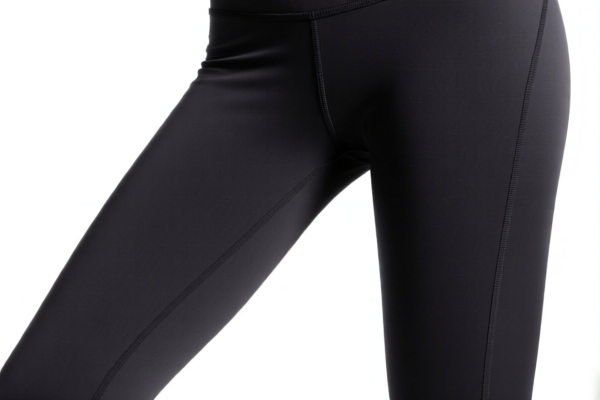
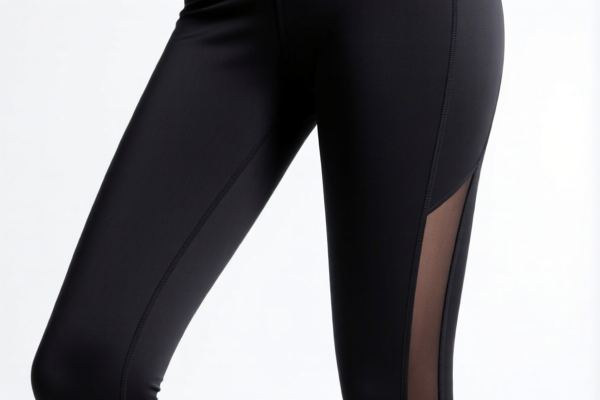
AI Analysis
👖 Leggings (Women's/Men's Tights)
🌐 HS Code Reference & Customs Clearance Guide | 2026 Latest Tariff Analysis | Professional Clearance Strategy
📌 I. Product Definition & Classification: Do You Really Understand "Leggings"?
Leggings are tight-fitting, stretchable garments worn from the waist to the ankles. In international trade, they are not a single category but are strictly classified based on material composition and knitting method.
Key Distinction: * Knitted/Textile Leggings: Made of cotton, polyester, spandex blends, wool, etc. → Chapter 61 or 62. * Non-Knitted/Plastic Coated Leggings: Less common, but if coated with plastic → Chapter 61/62 depending on construction.
⚠️ Critical Classification Point:
- If the main fabric is knitted (stretchy, jersey, rib knit) →归类 to Chapter 61 (Knitted or Crocheted).
- If the main fabric is woven (non-stretch denim, heavy cotton twill) →归类 to Chapter 62 (Non-knitted).
- Do NOT confuse with "Tights" (Pantyhose) which are often sheer and knitted →归入 6116 or 6117. Leggings are opaque and thicker.
📦 II. HS Code Classification Details (2026 Latest Tariff Authority Cross-Reference)
| HS Code | Product Description | Applicable Scenario | Material Key |
|---|---|---|---|
6104.63.20.00 |
Women's or girls' knit or crocheted trousers, breeches and shorts: Synthetic fibers: Other (Leggings) | Most common women's leggings (polyester/spandex blend) | ✅ Synthetic (Polyester/Nylon) |
6104.63.40.00 |
Women's or girls' knit or crocheted trousers, breeches and shorts: Of Man-made Fibers: Other (Leggings) | Synthetic leggings (not classified above) | ✅ Synthetic |
6104.63.10.00 |
Women's or girls' knit or crocheted trousers, breeches and shorts: Cotton: Other (Leggings) | Cotton leggings (less common, usually blended) | ✅ Cotton |
6104.62.00.00 |
Women's or girls' knit or crocheted trousers, breeches and shorts: Of Wool or Fine Animal Hair | Wool blend leggings (winter wear) | ✅ Wool/Animal Fiber |
6104.61.00.00 |
Women's or girls' knit or crocheted trousers, breeches and shorts: Of Synthetic Fibers: Jeans | NOT LEGGINGS. This is for denim jeans. | ✅ Synthetic Denim |
6204.63.00.00 |
Women's or girls' woven trousers, breeches and shorts: Of Synthetic Fibers | Woven leggings (rare, e.g., structured fashion leggings) | ❌ Woven |
🔍 Key Reminder:
- Most "Leggings" on the market are knitted. Therefore, they almost always fall under 6104.63.x.x. - If the leggings are made of 80% Polyester + 20% Spandex, they are classified as "Of Synthetic Fibers" because the main character is synthetic. - Spandex/Elastane content does not change the chapter (still Chapter 61), but it confirms the "knitted" nature.
💰 III. 2026 Latest Tariff Rate Details (Including Additional Duties & Policy Surcharges)
✅ Applicable Country: United States (US)
✅ Country of Origin: China (CN)
✅ Effective Date: From November 10, 2025 (including subsequent imports)
🎯 1. 6104.63.20.00 / 6104.63.40.00 —— Knitted Leggings (Synthetic Fibers)
| Item | Content |
|---|---|
| Base Rate | 16% (ad valorem) |
| USITC Additional Duty | +25% (from USITC Footnote 9903.88.01, Section 301) |
| IEEPA Additional Duty | +10% (Targeting China/HK products, effective Nov 10, 2025) |
| Total Rate | 51% |
| Tax Calculation | CIF Value × 51% |
| De Minimis Eligibility | ❌ No (deny_de_minimis applies to most apparel from China under 301/IEEPA) |
| Legal Basis Path | IEEPA:9903.01.25 → IEEPA:9903.01.24 → USITC:6104.63.20.00 → FOOTNOTE:9903.88.01 |
📌 Explanation:
- 16% is the standard Most Favored Nation (MFN) rate for synthetic knit trousers. - +25% is the Section 301 tariff on "Apparel and Clothing Accessories". - +10% is the new IEEPA tariff on Chinese textiles/apparel. - Total 51% is extremely high. This erodes profit margins significantly.
🎯 2. 6104.63.10.00 —— Knitted Leggings (Cotton)
| Item | Content |
|---|---|
| Base Rate | 16% |
| USITC Additional Duty | +25% |
| IEEPA Additional Duty | +10% |
| Total Rate | 51% |
| Tax Calculation | CIF Value × 51% |
| De Minimis Eligibility | ❌ No |
📌 Note:
- Cotton and synthetic leggings face the same high tariff structure when originating from China. - Even if the leggings are "Cotton" (6104.63.10), the additional duties apply equally.
🎯 3. 6104.62.00.00 —— Knitted Leggings (Wool/Animal Hair)
| Item | Content |
|---|---|
| Base Rate | 9.8% |
| USITC Additional Duty | +25% |
| IEEPA Additional Duty | +10% |
| Total Rate | 44.8% |
| Tax Calculation | CIF Value × 44.8% |
📌 Note:
- Wool leggings have a slightly lower base rate (9.8% vs 16%), but the additional duties push the total to nearly 45%.
🛠️ IV. Customs Clearance Practical Advice (Battle-tested Pitfall Avoidance Guide)
✅ 1. Required Documentation Checklist (None Missing)
| Document | Mandatory | Explanation |
|---|---|---|
| ✅ Product Specification Sheet | ✔️ | Must specify fiber content % (e.g., 80% Polyester, 20% Spandex). Critical for HS Code. |
| ✅ Material Composition Label | ✔️ | Photo of the inner tag showing fiber content. |
| ✅ Product Photos | ✔️ | Front, back, and detail shots (showing knit texture vs woven). |
| ✅ Commercial Invoice | ✔️ | Clearly describe as "Knitted Women's Leggings, Synthetic Fiber". Do NOT just say "Pants". |
| ✅ Packing List | ✔️ | Include net/gross weight, number of pairs. |
| ✅ FDA/FTC Compliance (if applicable) | ✔️ | For labeling accuracy. |
✅ 2. Declaration Tips (Key Mnemonic)
🔥 "Knit vs Woven, Fiber Content is King, Name it Right, Rates Spring!"
| Scenario | Correct Declaration | Wrong Practice |
|---|---|---|
| Stretchy Leggings (Poly/Spandex) | 6104.63.20.00 |
Declare as "Trousers" (Chapter 62) → Higher base rate + Inspection Delay |
| Cotton Leggings | 6104.63.10.00 |
Declare as "Jeans" (6104.61) → False Classification, Heavy Penalty |
| Sheer Tights (Pantyhose) | 6116.92.00.00 (if knitted) |
Declare as "Leggings" → Misclassification, 45%+ tax instead of potential lower rates |
| Leggings + Socks Set | Primary Purpose Rule | Split declaration → May be rejected if not sold separately |
✅ 3. Special Situation Handling
| Situation | Handling Advice |
|---|---|
| OEM Leggings with Customer Logo | Provide PO + Design Sheet. Ensure "Country of Origin" is correctly marked as China. |
| Leggings Made in Vietnam | If the fabric is cut and sewn in Vietnam → Vietnam Origin. Eligible for IEEPA Exemption (0-5% total). |
| Leggings Made in China, Fabric from India | China Origin (Substantial Transformation occurs at sewing). High Tariff (51%) applies. |
| "Athleisure" Leggings | Still Classify as Leggings (6104.63). Do NOT try to classify as "Sports Bras" or other items. |
🌍 V. Global Market Clearance Comparison (2026 Latest)
| Country/Region | Recommended HS Code | Tariff (China Origin) | Certification Requirement | Notes |
|---|---|---|---|---|
| 🇺🇸 USA | 6104.63.20.00 |
51% (Synthetic) | FTC Labeling | High barrier. Consider Vietnam/Mexico production. |
| 🇨🇳 China | 6104.63.20.00 |
14% + 9% VAT | None | Domestic trade. |
| 🇪🇺 EU | 6104.63.20.00 |
12% | REACH, CE (if protective) | No IEEPA/301 surcharges. |
| 🇦🇺 Australia | 6104.63.20.00 |
5% | ACCC Labeling | Low tariff. |
| 🇯🇵 Japan | 6104.63.20.00 |
16.6% | JIS Standards | Moderate tariff. |
📌 Conclusion:
- USA is the most hostile market for Chinese-made leggings due to 51% combined tariffs. - EU/Australia/Japan are more favorable for Chinese imports (no additional surcharges). - Strategy: For US market, shift production to Vietnam, Bangladesh, or Turkey to avoid IEEPA/301 duties.
📌 VI. Common Mistakes & Pitfall Guide (Lessons Learned)
❌ Mistake 1: Declaring "Leggings" as "Trousers" (Chapter 62)
👉 Consequence: If customs determines they are knitted, they will reclassify to Chapter 61, but you may face penalties for false declaration and delayed clearance.
❌ Mistake 2: Ignoring Fiber Content
👉 Consequence: If you say "100% Cotton" but the tag says "80% Polyester", customs will reject the entry or impose fines. Label must match invoice.
❌ Mistake 3: Confusing "Leggings" with "Jeans"
👉 Consequence: Jeans (6104.61) have different duties. Misclassification leads to corrective tariffs.
❌ Mistake 4: Assuming "De Minimis" ($800) applies
👉 Consequence: Apparel from China is EXCLUDED from De Minimis under recent IEEPA/301 updates. Even small shipments must pay 51% tax.
✅ Correct Approach:
"Women's Knitted Leggings, 80% Polyester, 20% Elastane, Opaque, Size M-XXL, HS 6104.63.20.00"
🎯 VII. Conclusion: Smart Classification Saves Money!
🎯 Remember the Mantra:
🔹 "Knit vs Woven, 61 vs 62, Synthetics are King, Cotton is King, Wool is Rare."
🔹 "China Origin = 51% Tax, Vietnam Origin = 5% Tax. Supply Chain Shift is Key!"
📌 Pro Tip:
If your leggings are assembled in Vietnam but the fabric is from China:
- If the fabric is imported into Vietnam and then cut/sewn, you MAY claim Vietnam Origin (subject to local rules).
- If the fabric is made in Vietnam, you are 100% Vietnam Origin.
- Result: Tariff drops from 51% to ~5-10% (depending on FTA).
📣 Immediate Action:
📞 Consult a Customs Broker for Advance Ruling on your specific fabric blend.
🚀 Re-evaluate your Supply Chain: If targeting the US, consider Vietnam/Bangladesh assembly to save ~45% in duties.
✨ Professional Clearance Starts with Precise Classification!
💼 Your Margin Depends on Your HS Code!
Customer Reviews
About HS Code Classification
The Harmonized System (HS) is an internationally standardized nomenclature developed by the World Customs Organization (WCO) to classify traded products. Over 200 countries use the HS system as the basis for customs tariffs, trade statistics, and import/export regulations.
Each HS code follows a hierarchical structure:
- Chapter (2 digits) — Broad category of goods (e.g., Chapter 84: Machinery and Mechanical Appliances)
- Heading (4 digits) — More specific grouping within the chapter
- Subheading (6 digits) — Internationally standardized breakdown, used by all WCO member countries
- National subdivisions (8-10 digits) — Country-specific extensions for further classification, such as US HTSUS 10-digit codes
Correct HS code classification is essential for smooth customs clearance, accurate duty payment, and compliance with trade regulations. Misclassification can lead to customs delays, overpayment of duties, or penalties.
When importing from CN to US, the applicable tariff rates may include:
- Most-Favored-Nation (MFN) rate — The standard duty rate applied to WTO members
- General rate — Applied to countries without trade agreements
- Trade remedy duties — Additional tariffs such as Section 301 (anti-dumping), Section 232 (national security), or countervailing duties
The information provided on this page is for reference purposes only. For official classification, please consult with your local customs authority or a licensed customs broker.