lifter
CN → US| HS Code | Tariff Rate | Origin | Destination | Doc |
|---|---|---|---|---|
| 8705100050 | 35.0% | CN | US | Official Doc |
| 8426200000 | 10.0% | CN | US | Official Doc |
| 8426410010 | 35.0% | CN | US | Official Doc |
| 8426990000 | 35.0% | CN | US | Official Doc |
| 8425110000 | 35.0% | CN | US | Official Doc |
| 8425190000 | 35.0% | CN | US | Official Doc |
| 8428100000 | 17.5% | CN | US | Official Doc |
Product Images
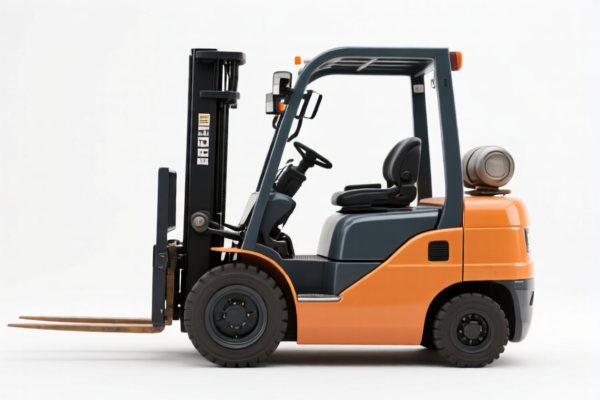
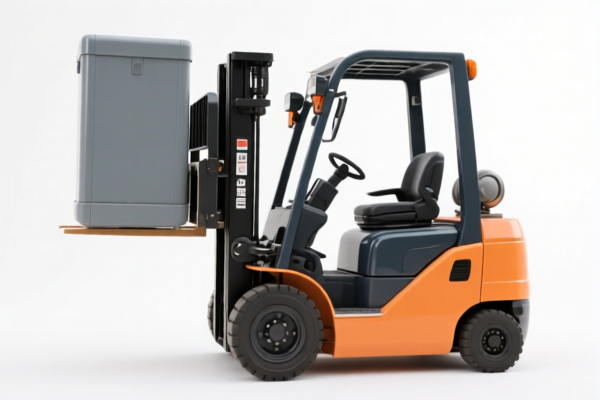
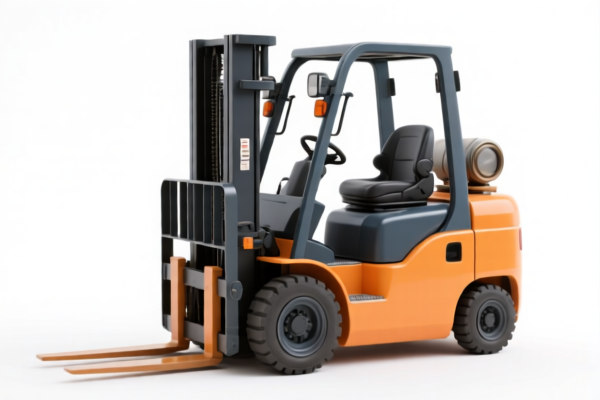
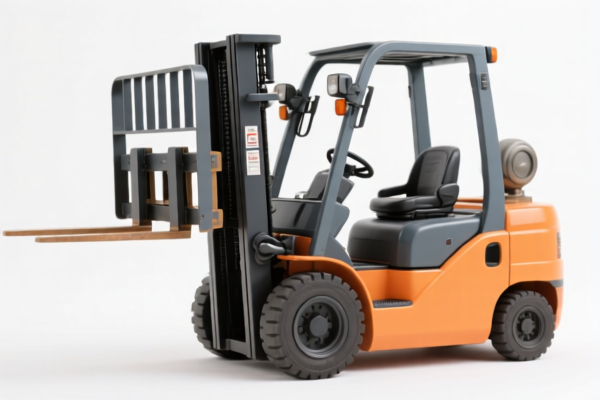
AI Analysis
🏗️ Lifter (Cranes, Hoists & Lifting Machinery)
🌐 HS Code Reference & Customs Clearance Guide | 2026 Latest Tariff Analysis | Professional Clearance Strategy
📌 I. Product Definition & Classification: What Exactly is a "Lifter"?
In international trade, the term "Lifter" is a generic descriptor that covers a wide range of mechanical equipment designed for vertical or horizontal movement of loads. Proper classification depends entirely on the structure, driving method, and specific application of the machine. Misclassification here can lead to significant tariff discrepancies due to the complex US-China trade war tariffs (Section 301 and IEEPA).
Key Distinctions: * Mobile Cranes (8705.10.50): Self-propelled, used on roads or construction sites. * Tower/Overhead Cranes (8426.20.00/8426.41.00): Fixed or rail-mounted, typically for factories or ports. * Winches/Hoists (8425.11/8425.19): Cable-based lifting, often motorized, used for vertical pull. * Other Lifting Machinery (8428.10): Includes fork lifts, conveyor systems, or general handling equipment not specified elsewhere.
⚠️ Critical Classification Point:
- If it is mobile and self-propelled → Look at Chapter 87 (8705).
- If it is a crane structure (tower, gantry, bridge) → Look at Chapter 84 (8426).
- If it is a simple winch/hoist mechanism → Look at Chapter 84 (8425).
- If it is general lifting/handling (forklifts, pallet jacks) → Look at Chapter 84 (8428).
📦 II. HS Code Classification Matrix (2026 Tariff Schedule)
| HS Code | Product Description | Application Scenario | Key Features |
|---|---|---|---|
8705.10.00.50 |
Mobile Crane | Construction sites, road maintenance | Self-propelled, vehicle chassis, crane superstructure. |
8426.20.00.00 |
Tower Crane | Construction, heavy industrial | Fixed or rail-mounted, jib structure, high lifting height. |
8426.41.00.10 |
Overhead Crane / Gantry Crane | Factories, warehouses, ports | Travels on rails or structure, heavy-duty, precise positioning. |
8426.99.00.00 |
Other Cranes & Lifting Frames | Specialized lifting, frames | Includes lifting frames, jibs, and other crane types not elsewhere specified. |
8425.11.00.00 |
Electric Winches / Hoists | Factories, ships, elevators | Motor-driven, cable/wire rope, vertical lift focus. |
8425.19.00.00 |
Other Winches / Hoists | General lifting, backup systems | Non-electric or other motor-driven hoists (fallback category). |
8428.10.00.00 |
Other Lifting/Handling Machinery | Forklifts, conveyors, pallet jacks | General material handling, not strictly "cranes" or "winches." |
🔍 Important Note:
- "Lifter" is not a valid HS Code description. You must specify the type (e.g., "Electric Hoist," "Tower Crane," "Mobile Crane").
- The term "Lifting Frame" in8426.99.00.00is often used for specialized structural lifting devices.
💰 III. 2026 Tariff Rate Breakdown (US Imports from China)
✅ Applicable Country: United States (US)
✅ Country of Origin: China (CN)
✅ Effective Date: November 10, 2025 (and ongoing)
🎯 1. High-Tariff Category: Mobile & Fixed Cranes (8705.10.00.50, 8426.41.00.10, 8426.99.00.00)
These items are subject to the highest combined tariffs due to broader Section 301 coverage.
| Item | Content |
|---|---|
| Base Tariff | 0% (Ad Valorem) |
| Section 301 Surcharge | +25% (USITC Footnote 9903.88.01) |
| 122-Clause Tariff | +10% (Specific provision for certain industrial equipment) |
| Total Tariff | 35.0% |
| Tax Calculation | CIF Value × 35% |
| De Minimis Exemption | ❌ Not Eligible (Section 321 exemption blocked for these HS codes) |
| Legal Basis | IEEPA:9903.01.25 → USITC:8705.10.00.50 / 8426.41.00.10 / 8426.99.00.00 → FOOTNOTE:9903.88.01 |
📌 Explanation:
- The 25% is the standard Section 301 tariff for industrial machinery.
- The 10% is an additional "122-Clause" tariff applied to specific lifting equipment.
- Total 35% makes this a high-cost import. Proper documentation is essential to avoid misclassification penalties.
🎯 2. Medium-Tariff Category: Winches & Hoists (8425.11.00.00, 8425.19.00.00)
Similar to cranes, these fall under the broader Section 301 industrial goods list.
| Item | Content |
|---|---|
| Base Tariff | 0% |
| Section 301 Surcharge | +25% |
| 122-Clause Tariff | +10% |
| Total Tariff | 35.0% |
| Tax Calculation | CIF Value × 35% |
| De Minimis Exemption | ❌ Not Eligible |
| Legal Basis | IEEPA:9903.01.24 → USITC:8425.11.00.00 / 8425.19.00.00 → FOOTNOTE:9903.88.01 |
📌 Note:
- Even though winches are smaller, they are classified as industrial lifting machinery and attract the same 35% rate.
- Do not attempt to ship small hoists via postal courier claiming de minimis status; CBP will seize and assess duties.
🎯 3. Low-Tariff Category: Tower Crane (8426.20.00.00) & Other Handling (8428.10.00.00)
Tower Cranes benefit from a lower Section 301 rate. Other Handling Machinery (like some forklifts or conveyors) may have different treatment.
A. Tower Crane (8426.20.00.00)
| Item | Content |
|---|---|
| Base Tariff | 0% |
| Section 301 Surcharge | 0% (Exempted/Lower Rate for this specific subheading) |
| 122-Clause Tariff | +10% |
| Total Tariff | 10.0% |
| Tax Calculation | CIF Value × 10% |
| De Minimis Exemption | ❌ Not Eligible |
| Legal Basis | IEEPA:9903.01.24 → USITC:8426.20.00.00 |
📌 Key Advantage:
- This is the most cost-effective classification for cranes.
- If your "lifter" is a tower crane or a similar fixed jib crane, ensure it is correctly identified as 8426.20 to save 25% in duties.
B. Other Lifting/Handling Machinery (8428.10.00.00)
| Item | Content |
|---|---|
| Base Tariff | 0% |
| Section 301 Surcharge | +7.5% (Partial Section 301 list) |
| 122-Clause Tariff | +10% |
| Total Tariff | 17.5% |
| Tax Calculation | CIF Value × 17.5% |
| De Minimis Exemption | ❌ Not Eligible |
| Legal Basis | IEEPA:9903.01.24 → USITC:8428.10.00.00 |
📌 Opportunity:
- If your equipment is a forklift, pallet jack, or conveyor system, it may fall under8428.10.
- This saves 17.5% compared to the 35% crane/hoist rate.
- Warning: Do not misdeclare a crane as a "forklift" to save taxes. CBP will inspect and penalize.
🛠️ IV. Customs Clearance Practical Advice (Pitfall Avoidance Guide)
✅ 1. Required Documentation Checklist
| Document | Mandatory? | Description |
|---|---|---|
| ✅ Product Specification Sheet | ✔️ | Must detail type (Tower, Mobile, Winch), load capacity, dimensions, motor power. |
| ✅ Engineering Drawings | ✔️ | Critical for distinguishing between 8426 (Crane) and 8428 (Other Handling). |
| ✅ Photos (With Label) | ✔️ | Show the entire machine, nameplate, and key components (e.g., jib, wheels, winch drum). |
| ✅ Commercial Invoice | ✔️ | Must use precise descriptions: "Tower Crane, 50 Ton Capacity" NOT just "Lifter". |
| ✅ Certificate of Origin (CO) | ✔️ | Required for US origin verification; CN origin triggers tariffs. |
| ✅ Packing List | ✔️ | Show if parts are shipped together (assembled) or separately (knocked-down). |
✅ 2. Declaration Strategies
🔥 "Be Specific, Not Generic: 'Lifter' Gets Rejected!"
| Scenario | Correct HS Code | Wrong HS Code | Consequence |
|---|---|---|---|
| Mobile Crane on Truck | 8705.10.00.50 |
8426.20.00.00 |
35% vs 10% → Overpaid 25% |
| Tower Crane | 8426.20.00.00 |
8426.41.00.10 |
10% vs 35% → Saved 25% |
| Electric Hoist | 8425.11.00.00 |
8428.10.00.00 |
35% vs 17.5% → Overpaid 17.5% |
| Forklift | 8428.10.00.00 |
8426.20.00.00 |
17.5% vs 10% → Under-declared (Risk of Penalty) |
📌 Tip:
- If you are importing a Tower Crane, explicitly state "Tower Crane" in the invoice description.
- If you are importing a Winch, specify "Electric Winch" and motor power.
- Avoid using the word "Lifter" alone. Use "Crane," "Hoist," "Winch," or "Handling Equipment."
✅ 3. Special Cases
| Case | Handling Advice |
|---|---|
| Shipped as Parts (KD) | If shipped as disassembled tower crane parts, still classify as 8426.20.00.00. Do not split into bolts + steel structure. |
| Custom OEM Equipment | Provide design drawings to prove it fits the HS definition. CBP may request an Advance Ruling. |
| Used Equipment | Ensure it meets US safety standards (OSHA/ANSI). Inspection may be stricter. |
| De Minimis (Section 321) | Do Not Use. Lifting machinery is explicitly excluded from the $800 de minimis exemption when originating from China. |
🌍 V. Global Market Clearance Comparison (2026)
| Country/Region | Recommended HS Code | Tariff (China Origin) | Key Certification | Notes |
|---|---|---|---|---|
| 🇺🇸 USA | 8426.20.00.00 (Tower) |
10% (Savings!) | ASME, OSHA Compliance | High scrutiny on classification. |
| 🇪🇺 EU | 8425.11.00.00 (Hoist) |
0-2.7% (Duty) | CE Marking, Machinery Directive | Lower base duty, but VAT applies. |
| 🇨🇳 China | 8426.20.00.00 |
5-10% (Import) | CCC (if applicable) | Export incentives may apply. |
| 🇦🇺 Australia | 8426.41.00.10 |
5% | RCM, AS/NZS Standards | Standard low tariff. |
| 🇯🇵 Japan | 8426.20.00.00 |
0% | JIS Standards | No major surcharges. |
📌 Conclusion:
- USA is the most tariff-sensitive market for lifters.
- Tower Cranes (8426.20) are the most cost-effective to import into the US (10%).
- Mobile Cranes (8705) and Winches (8425) are heavily taxed (35%).
- General Handling (8428) sits in the middle (17.5%).
📌 VI. Common Mistakes & Pitfalls (Lessons Learned)
❌ Mistake 1: Using "Lifter" as the product name on the Invoice.
👉 Result: Customs delays, request for clarification, potential misclassification.
❌ Mistake 2: Misdeclaring a Crane as "Auto Parts" or "Machine Parts."
👉 Result: Seizure, penalties, and loss of tariff benefit. Cranes are complete machines.
❌ Mistake 3: Assuming small winches qualify for De Minimis ($800).
👉 Result: CBP will reject the entry, assess 35% duty + storage fees + penalties.
❌ Mistake 4: Confusing Tower Cranes (8426.20) with Overhead Cranes (8426.41).
👉 Result: Overpaying 25% in tariffs. Tower cranes are specifically exempt from the 25% Section 301 surcharge.
✅ Correct Approach:
"Tower Crane, 50-Ton Capacity, Self-Propelled on Rails, Motor Power 30KW, Model T-50, Compliant with ASME B30.5"
🎯 VII. Conclusion: Precision Saves Money!
🎯 Remember the Golden Rules:
🔹 "Tower Crane = 10% (Save Big!)"
🔹 "Mobile/Winch/Crane = 35% (High Cost)"
🔹 "Other Handling (Forklift) = 17.5% (Middle Ground)"
🔹 "Never use 'Lifter' alone."
📌 Pro Tip:
If you are importing Tower Cranes, emphasize the "Tower" structure in your documentation to ensure classification under 8426.20.00.00. This single decision can save you 25% in duties. For all other lifters, prepare for 17.5%-35% tariffs.
📣 Immediate Action:
📞 Consult a licensed customs broker before shipping.
📄 Provide detailed engineering drawings for Advance Ruling if unsure.
🚀 Accurate classification is the key to profitable imports.
✨ Professional Clearance Starts with Precise Classification!
💼 Every Percentage Point Matters in International Trade!
Customer Reviews
About HS Code Classification
The Harmonized System (HS) is an internationally standardized nomenclature developed by the World Customs Organization (WCO) to classify traded products. Over 200 countries use the HS system as the basis for customs tariffs, trade statistics, and import/export regulations.
Each HS code follows a hierarchical structure:
- Chapter (2 digits) — Broad category of goods (e.g., Chapter 84: Machinery and Mechanical Appliances)
- Heading (4 digits) — More specific grouping within the chapter
- Subheading (6 digits) — Internationally standardized breakdown, used by all WCO member countries
- National subdivisions (8-10 digits) — Country-specific extensions for further classification, such as US HTSUS 10-digit codes
Correct HS code classification is essential for smooth customs clearance, accurate duty payment, and compliance with trade regulations. Misclassification can lead to customs delays, overpayment of duties, or penalties.
When importing from CN to US, the applicable tariff rates may include:
- Most-Favored-Nation (MFN) rate — The standard duty rate applied to WTO members
- General rate — Applied to countries without trade agreements
- Trade remedy duties — Additional tariffs such as Section 301 (anti-dumping), Section 232 (national security), or countervailing duties
The information provided on this page is for reference purposes only. For official classification, please consult with your local customs authority or a licensed customs broker.