lifting rope
CN → US| HS Code | Tariff Rate | Origin | Destination | Doc |
|---|---|---|---|---|
| 5607493000 | 38.6% | CN | US | Official Doc |
| 5607909000 | 41.3% | CN | US | Official Doc |
| 8425110000 | 35.0% | CN | US | Official Doc |
| 8425190000 | 35.0% | CN | US | Official Doc |
| 7312106060 | 85.0% | CN | US | Official Doc |
| 7312109090 | 85.0% | CN | US | Official Doc |
Product Images
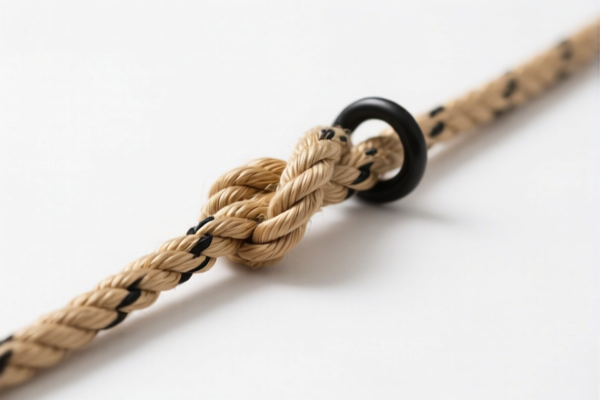



AI Analysis
🚀 Lifting Rope (Steel Wire Ropes & Cables) – WARNING: HIGH TARIFF ALERT 🚨
🌐 HS Code Reference & Customs Clearance Guide | 2026 Latest Tariff Analysis | Strategic Compliance Strategy 📌 I. Product Definition & Classification: Do You Know Your "Lifting Rope"?
"Lifting Rope" is a generic term in international trade. However, under the Harmonized System (HS), the specific material composition determines the HS Code and, consequently, the massive tariff implications.
There are two primary categories for lifting ropes/cables relevant to this data:
1. Steel Wire Ropes (High Risk / High Tariff) * Definition: Stranded wires, ropes, and cables made of Iron or Steel (including Stainless Steel). These are the heavy-duty lifts used in cranes, elevators, and industrial winches. * Key Feature: Magnetic, metallic, high tensile strength.
2. Polymeric Ropes (Low Risk / Low Tariff) * Definition: Ropes made of Polyethylene (PE) or Polypropylene (PP). These are lightweight synthetic ropes often used in sailing, light-duty rigging, or consumer goods. * Key Feature: Non-magnetic, plastic-like, flexible.
⚠️ Critical Distinction: * If your rope is Metallic (Steel/Iron/Stainless) → It falls under Chapter 73 → Subject to 75% Total Tariff! * If your rope is Plastic (PE/PP) → It falls under Chapter 56 → Subject to 0% Total Tariff!
📦 II. HS Code Classification Matrix (2026 Latest Tariff Data)
| HS Code | Product Description | Material | Application Example | Tariff Risk |
|---|---|---|---|---|
7312.10.60.60 |
Stranded wire, ropes, cables... of Stainless Steel | Stainless Steel | Marine lifting, corrosive environments, high-end industrial lifts | 🔴 CRITICAL (75%) |
7312.10.90.90 |
Stranded wire, ropes, cables... of Iron/Steel (Other) | Carbon Steel | Cranes, construction hoists, heavy-duty industrial lifting | 🔴 CRITICAL (75%) |
5607.49.30.00 |
Twine, cordage, ropes... of Polyethylene or Polypropylene | Plastic (PE/PP) | Light-duty rigging, sailing, pet leashes, light cargo tying | 🟢 SAFE (0%) |
🔍 Important Note: * Do NOT misdeclare Steel Ropes as "Polymer Ropes" to avoid tariffs. Customs will detect the material composition (magnetic test or density check) and apply penalties for fraud. * "Lifting Rope" must be specified by material in the commercial invoice. Vague descriptions like "Lifting Rope" may lead to classification errors and delays.
💰 III. 2026 Tariff Rate Breakdown (Detailed Analysis)
✅ Applicable Country: United States (US) ✅ Country of Origin: China (CN) (Implied by the specific "Additional Tariff" language in the source data) ✅ Effective Date: As per current USITC and IEEPA regulations
🎯 1. Steel & Stainless Steel Ropes (7312.10.60.60 & 7312.10.90.90)
| Item | Content |
|---|---|
| Base Tariff | 0.0% (Ad Valorem) |
| USITC Additional Tariff | +25.0% (Section 301 Duties) |
| China-Specific Surcharge | +50.0% (Specific "Steel, Aluminum, Copper Products" Surcharge) |
| Total Tax Rate | 75.0% |
| Tax Calculation | CIF Value × 75% |
| De Minimis Exemption | ❌ NOT ELIGIBLE |
| Legal Basis Path | USITC:7312.10 → Footnote: Steel/Aluminum/Copper Surcharge (50%) + Section 301 (25%) |
📌 Explanation: * The 75% total tariff is a punitive measure targeting specific Chinese steel products. * Even if the base duty is 0%, the combination of Section 301 (25%) and the specific steel surcharge (50%) results in a 75% tax burden. * This makes steel lifting ropes from China extremely expensive to import into the US.
🎯 2. Polyethylene/Polypropylene Ropes (5607.49.30.00)
| Item | Content |
|---|---|
| Base Tariff | 0.0% |
| USITC Additional Tariff | 0.0% |
| China-Specific Surcharge | 0.0% |
| Total Tax Rate | 0.0% |
| Tax Calculation | $0 |
| De Minimis Exemption | ✅ Eligible (if value < $800) |
| Legal Basis Path | Standard HTSUS Chapter 56 provisions |
📌 Note: * Synthetic ropes made of PE or PP are not subject to the steel surcharges. * This offers a zero-tariff alternative for non-metallic lifting applications.
🛠️ IV. Customs Clearance Practical Advice
✅ 1. Documentation Checklist (Non-Negotiable)
| Document | Required? | Notes |
|---|---|---|
| ✅ Commercial Invoice | ✔️ | Must specify Material (e.g., "304 Stainless Steel Wire Rope" or "PP Rope") |
| ✅ Packing List | ✔️ | List weight, quantity, and dimensions |
| ✅ Product Description | ✔️ | Avoid generic terms. Use: "Stranded Steel Cable, 1/2 inch, Galvanized" |
| ✅ HS Code Declaration | ✔️ | Self-declaration based on material analysis |
| ✅ Country of Origin Cert | ✔️ | Essential for tariff verification |
✅ 2. Classification Strategy (Key Mantra)
🔥 "Steel = 75% Tax, Plastic = 0% Tax. Know Your Material!"
| Scenario | Correct HS Code | Risk Level |
|---|---|---|
| Steel Wire Rope (Magnetic) | 7312.10.60.60 or 7312.10.90.90 |
🔴 HIGH (75% Tax) |
| Stainless Steel Rope (Non-magnetic but metallic) | 7312.10.60.60 |
🔴 HIGH (75% Tax) |
| PP/PE Synthetic Rope (Non-magnetic, plastic) | 5607.49.30.00 |
🟢 LOW (0% Tax) |
| Cotton/Nylon Rope | Not in provided data | ⚠️ Check Elsewhere |
⚠️ Warning: * Do NOT mix steel and plastic components in a way that obscures the primary material. * If the rope is cored (e.g., steel core with plastic coating), it is still likely classified as Steel (
7312.10.xxxx) due to the structural core.
✅ 3. Special Handling Tips
| Situation | Recommendation |
|---|---|
| OEM Custom Ropes | Provide detailed material specs (e.g., "316L Stainless Steel") to avoid misclassification |
| Mixed Shipments | Declare Steel and Plastic ropes separately with distinct HS Codes |
| Samples for Testing | If sending samples, ensure they are clearly labeled as "Non-Commercial Samples" to potentially utilize De Minimis (if < $800) |
| Steel Rope Alternatives | Consider sourcing steel ropes from non-China countries (e.g., Vietnam, Germany) to avoid the 75% China-specific surcharge |
🌍 V. Global Market Comparison (2026 Overview)
| Market | Steel Rope (7312.10.90.90) |
Plastic Rope (5607.49.30.00) |
Notes |
|---|---|---|---|
| 🇺🇸 USA | 75% (China Origin) | 0% | High barriers for Chinese steel |
| 🇪🇺 EU | Varies (Check local rules) | Varies | No specific 50% surcharge like US |
| 🇨🇳 China | Varies | Varies | Import duties apply, not export |
📌 Conclusion: * USA is the most challenging market for Chinese steel lifting ropes due to the 75% total tariff. * Plastic/PE/PP ropes remain a tax-efficient option for light-duty lifting in the US.
📌 VI. Common Mistakes & Pitfalls
❌ Mistake 1: Declaring Steel Ropes as "Rope" without specifying material 👉 Consequence: Customs may assign the highest default duty or delay shipment for material testing.
❌ Mistake 2: Using "Polymer Rope" for Steel Ropes with Plastic Coating 👉 Consequence: If the core is steel, it is still Steel. Penalty for misclassification.
❌ Mistake 3: Ignoring the "Stainless Steel" classification
👉 Consequence: Stainless steel is still Steel (7312.10.60.60). It does NOT escape the 75% tariff.
✅ Correct Practice:
For Steel: "Galvanized Steel Wire Rope, 10mm Diameter, for Industrial Lifting, HS 7312.10.90.90" For Plastic: "Polypropylene Synthetic Lifting Rope, 5mm Diameter, for Light Duty, HS 5607.49.30.00"
🎯 VII. Conclusion: Strategic Sourcing & Compliance
🎯 Key Takeaway:
🔹 Steel Lifting Ropes from China to US = 75% Tax. 🔹 Plastic (PE/PP) Lifting Ropes from China to US = 0% Tax.
🔹 Action Plan: 1. If you need Steel Ropes: Consider sourcing from Vietnam, India, or EU to avoid the China-specific 50% surcharge. 2. If you can use Plastic Ropes: Utilize PE/PP ropes for cost savings and zero tariff. 3. Always Declare Material: Be explicit in your invoices to avoid customs holds.
📣 Immediate Action Required:
📞 Contact your customs broker to verify the HS Code for your specific rope material. 📄 Request a Pre-Ruling from CBP if you are unsure about the classification of coated or composite ropes. 🚀 Optimize your supply chain by shifting steel rope sourcing or switching to synthetic alternatives where feasible.
✨ Professional Clearance Starts with Accurate Classification! 💼 Every Percent of Tariff Counts – Save 75% by Getting the HS Code Right!
Customer Reviews
About HS Code Classification
The Harmonized System (HS) is an internationally standardized nomenclature developed by the World Customs Organization (WCO) to classify traded products. Over 200 countries use the HS system as the basis for customs tariffs, trade statistics, and import/export regulations.
Each HS code follows a hierarchical structure:
- Chapter (2 digits) — Broad category of goods (e.g., Chapter 84: Machinery and Mechanical Appliances)
- Heading (4 digits) — More specific grouping within the chapter
- Subheading (6 digits) — Internationally standardized breakdown, used by all WCO member countries
- National subdivisions (8-10 digits) — Country-specific extensions for further classification, such as US HTSUS 10-digit codes
Correct HS code classification is essential for smooth customs clearance, accurate duty payment, and compliance with trade regulations. Misclassification can lead to customs delays, overpayment of duties, or penalties.
When importing from CN to US, the applicable tariff rates may include:
- Most-Favored-Nation (MFN) rate — The standard duty rate applied to WTO members
- General rate — Applied to countries without trade agreements
- Trade remedy duties — Additional tariffs such as Section 301 (anti-dumping), Section 232 (national security), or countervailing duties
The information provided on this page is for reference purposes only. For official classification, please consult with your local customs authority or a licensed customs broker.