light coated folder paper
CN → US| HS Code | Tariff Rate | Origin | Destination | Doc |
|---|---|---|---|---|
| 4823906000 | 35.0% | CN | US | Official Doc |
| 4823906700 | 35.0% | CN | US | Official Doc |
| 4820300040 | 35.0% | CN | US | Official Doc |
| 4820300020 | 35.0% | CN | US | Official Doc |
| 4811592000 | 10.0% | CN | US | Official Doc |
| 4811596000 | 35.0% | CN | US | Official Doc |
Product Images
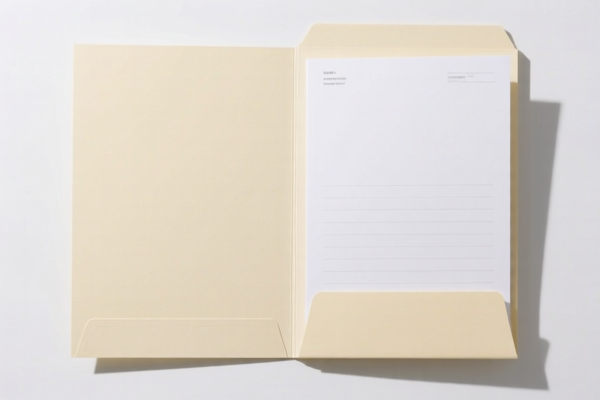
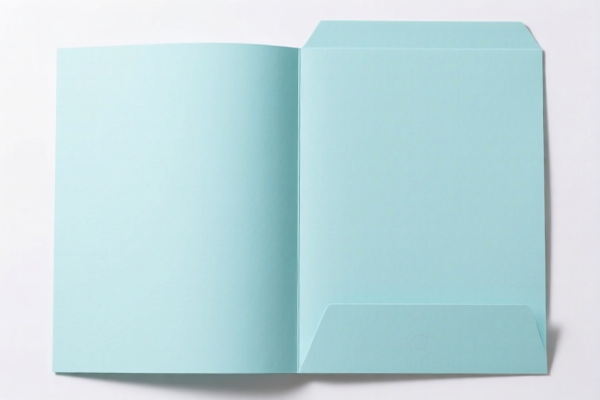
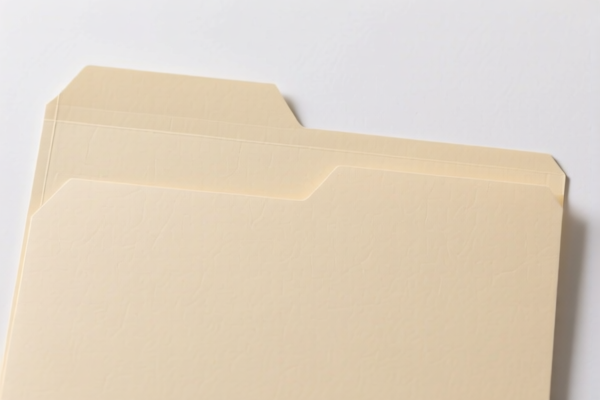

AI Analysis
📄 Light Coated Folder Paper (Paper & Paperboard)
🌐 HS Code Reference & Customs Clearance Guide | 2026 Latest Tariff Analysis | Professional Compliance Strategy
📌 I. Product Definition: What is "Light Coated Folder Paper"?
Light Coated Folder Paper refers to paper or paperboard that has been coated, impregnated, covered, surface-colored, surface-decorated, or printed. In the context of international trade and customs classification, these products fall under Chapter 48 (Paper and paperboard; articles of paper pulp, of paper or of paperboard).
Crucially, this category excludes goods of heading 4803, 4809, or 4810. It specifically covers paper products that have undergone surface treatment for aesthetic or functional purposes, such as: * Coated/Impregnated: Treated with plastics (excluding adhesives) or other substances. * Printed/Decorated: Used for high-quality stationery, business forms, or packaging materials. * Format: Sold in rolls or rectangular (including square) sheets of any size.
⚠️ Key Distinction:
- If the paper is printed and meets specific dimension criteria → Falls under 4811.59.20.00.
- If the paper is coated/impregnated (but not primarily defined as printing paper) or printed but does not meet the "printing paper" definition → Falls under 4811.59.60.00.
- If processed into specific stationery items (binders, folders) → Falls under 4820.30 series.
- If cut to size and made into seals/gaskets → Falls under 4823.90.
📦 II. HS Code Classification Details (2026 Latest Tariff Authority)
| HS Code | Product Description | Applicable Scenario | Key Features |
|---|---|---|---|
4811.59.20.00 |
Printing Paper | Paper/coated paperboard, coated/impregnated/covered/printed, in strips/rolls >15cm or sheets (>36cm x >15cm) | Specifically for printing paper that is coated or printed. |
4811.59.60.00 |
Other Paper | Same format as above, but not classified as "Printing Paper" | Coated/impregnated paper for other uses (e.g., decorative, industrial lining, non-printing stationary base). |
4820.30.00.40 |
Other Binders/Folders/File Covers | Manufactured stationery articles (looseleaf binders, folders, file covers) made of paper/paperboard | Finished goods: Not raw paper, but assembled/semi-assembled stationery items. |
4820.30.00.20 |
Looseleaf Binders | Specific type of binder: Looseleaf binders made of paper/paperboard | Finished goods: Specifically looseleaf mechanisms or covers. |
4823.90.60.00 |
Gaskets/Seals (Coated) | Articles of coated paperboard/cut to shape | Specialized items: Gaskets, washers, seals made from coated paper. |
4823.90.67.00 |
Other Coated Paper Articles | Other cut-to-size articles of coated paper/paperboard | Specialized items: Any other shaped/coated paper product not listed above. |
🔍 Critical Note:
- Raw Material vs. Finished Good:4811codes are for sheets/rolls of paper.4820codes are for assembled stationery (binders/folders). Do not misdeclare finished folders as raw paper sheets.
- Coating Type: Ensure the coating is with plastics (excluding adhesives) for4811.59. If coated with adhesive, it may fall under4809or4810.
- Dimensions: For4811, the size matters. Rolls >15cm or sheets >36cm x 15cm trigger the "Other" subheadings.
💰 III. 2026 Latest Tariff Rate Details (Including Surtaxes & Policy Add-ons)
✅ Applicable Country: United States (US)
✅ Country of Origin: China (CN)
✅ Effective Date: Ongoing (as per 2026 tariff structure)
🎯 1. 4811.59.20.00 & 4811.59.60.00 —— Coated/Printed Paper Sheets/Rolls
| Item | Content |
|---|---|
| Base Tariff Rate | 0.0% (ad valorem) |
| Section 301 Surcharge | +25.0% |
| Total Tax Rate | 25.0% |
| Tax Calculation | CIF Value × 25% |
| De Minimis Exemption | ❌ Not Applicable (Highly scrutinized under Section 301) |
| Legal Basis Path | USITC:4811.59.20.00 → Footnote 9903.88.01 (Section 301) |
📌 Explanation:
- Although the Base Tariff is 0%, a significant 25% surcharge is applied to these paper products originating from China.
- This is a direct result of Section 301 of the Trade Act of 1974.
- Total Cost Impact: For every $1,000 of CIF value, you must pay $250 in duties.
- No De Minimis: Small packages under $800 generally do not qualify for exemption if the HS code is subject to Section 301 surcharges (check latest CBP rulings).
🎯 2. 4820.30.00.20 & 4820.30.00.40 —— Stationery (Binders/Folders)
| Item | Content |
|---|---|
| Base Tariff Rate | 0.0% (ad valorem) |
| Section 301 Surcharge | +25.0% |
| Total Tax Rate | 25.0% |
| Tax Calculation | CIF Value × 25% |
| De Minimis Exemption | ❌ Not Applicable |
| Legal Basis Path | USITC:4820.30.00.xx → Footnote 9903.88.01 (Section 301) |
📌 Note:
- Finished stationery items like binders and folders face the same 25% total duty.
- Classification as "Binders" vs. "Paper" changes the HS code but not the tax burden in this context.
- Strategic Tip: If you can prove the item is a "finished good" vs. "raw material," ensure the description matches4820precisely to avoid misclassification penalties.
🎯 3. 4823.90.60.00 & 4823.90.67.00 —— Special Paper Articles (Gaskets/Seals)
| Item | Content |
|---|---|
| Base Tariff Rate | 0.0% (ad valorem) |
| Section 301 Surcharge | +25.0% |
| Total Tax Rate | 25.0% |
| Tax Calculation | CIF Value × 25% |
| De Minimis Exemption | ❌ Not Applicable |
📌 Note:
- Even niche paper products like coated gaskets or seals are subject to the 25% total duty.
- Ensure proper documentation for "coated" status to avoid rejection at customs.
🛠️ IV. Customs Clearance Practical Advice (Battle-Tested Guide)
✅ 1. Documentation Checklist (Non-Negotiable)
| Document | Required? | Explanation |
|---|---|---|
| ✅ Commercial Invoice | ✔️ | Must clearly state "Light Coated Folder Paper" and HS Code. |
| ✅ Packing List | ✔️ | Detail roll widths, sheet dimensions, and quantities. |
| ✅ Product Specification Sheet | ✔️ | Describe coating type (e.g., plastic, resin), basis weight, and finish. |
| ✅ Origin Certificate | ✔️ | Confirm China origin to assess Section 301 liability. |
| ✅ Labeling | ✔️ | Products must be labeled for end-use (e.g., "For Printing," "For Binding"). |
✅ 2. Declaration Strategy (Key Mnemonics)
🔥 “Code Right, Pay Right; Misclassify, Pay Twice!”
| Scenario | Correct Declaration | Wrong Practice |
|---|---|---|
| Raw Coated Paper Rolls | 4811.59.20.00 (if printing) or 4811.59.60.00 (other) |
Declaring as "Cardboard" or "Uncoated Paper" → Audit Risk |
| Finished Binders/Folders | 4820.30.00.40 (Other) or 4820.30.00.20 (Looseleaf) |
Declaring as raw paper → Penalty for Misdeclaration |
| Cut-to-Size Coated Paper | 4823.90.67.00 (if other) or 4823.90.60.00 (if gaskets) |
Declaring as 4811 rolls → Incorrect Classification |
📌 Crucial Tip:
- If the product is printed, ensure the description includes "Printed."
- If it is coated with plastic, explicitly state "Coated with Plastics (Excluding Adhesives)."
✅ 3. Special Circumstances
| Situation | Handling Advice |
|---|---|
| Mixed Shipment (Raw Paper + Finished Binders) | Separate Lines! Declare 4811 on one line, 4820 on another. Do not lump them. |
| Sample Sent for Approval | Even samples are subject to duty if >$800 value or if Section 301 applies. Plan accordingly. |
| Coating Unclear | Provide lab test results or coating specifications to prove it is "Plastic Coating" and not "Adhesive." |
🌍 V. Global Market Comparison (2026 Latest)
| Country/Region | Recommended HS Code | Duty Rate (China Origin) | Certification/Notes |
|---|---|---|---|
| 🇺🇸 USA | 4811.59.20.00 / 4820.30.00.xx |
25% Total (0% Base + 25% 301) | Strict Section 301 enforcement. |
| 🇨🇳 China | 4811.59.20.00 / 4820.30.00.xx |
5-13% (Import Duty) | No Section 301. VAT applies. |
| 🇪🇺 EU | 4811.59 / 4820.30 |
0-6.5% | No additional surcharges. CE/RoHS may apply for coatings. |
| 🇯🇵 Japan | 4811.59 / 4820.30 |
3-8% | No additional surcharges. |
📌 Conclusion:
- The US market is the most expensive for Chinese paper products due to the 25% Section 301 surcharge.
- EU, Japan, and other markets offer significantly lower duty rates (often 0-8%).
- Strategy: If targeting the US, factor in the 25% cost in your pricing model. Consider diversifying to non-US markets if margins are tight.
📌 VI. Common Mistakes & Pitfalls (Blood & Tears Lessons)
❌ Mistake 1: Declaring "Coated Paper" as "Uncoated Paper" (4802/4803)
👉 Consequence: If audited, you will be hit with the 25% duty retroactively, plus penalties.
❌ Mistake 2: Mixing "Raw Paper" and "Finished Binders" on one line item
👉 Consequence: Customs may reject the entire shipment or classify the whole lot at the highest duty rate. Separate lines are mandatory.
❌ Mistake 3: Ignoring Section 301 for "Small" Packages
👉 Consequence: Even small batches of coated paper are subject to 301 duties. Do not assume de minimis applies.
✅ Correct Practice:
"Light Coated Paper, Plastic Coated, Printing Grade, Roll Width 20cm, Origin China, HS Code 4811.59.20.00"
🎯 VII. Conclusion: Precision Classification, Profit Protection!
🎯 Remember the Rules:
🔹 "Base is Zero, 301 is Twenty-Five!"
🔹 "Raw Paper vs. Finished Binder: Declare Separately!"
🔹 "Coated Paper = 25% Total Duty in US!"
📌 Pro Tip:
If you are exporting to the US, consider Value Engineering:
- Can you shift production to a third country (e.g., Vietnam, Mexico) to avoid Section 301?
- Can you reclassify "Looseleaf Binders" (4820.30.00.20) vs. "Other Binders" (4820.30.00.40) based on exact design to ensure accuracy?
📣 Immediate Action:
📞 Consult a Customs Broker: Verify HS codes with the latest USITC database.
🚀 Plan for 25% Duty: Include this cost in your FOB pricing for US shipments.
📄 Document Everything: Keep coating specs and product photos for customs audits.
✨ Professional Clearance Starts with Accurate Classification!
💼 Your Bottom Line Depends on This 25%!
Customer Reviews
About HS Code Classification
The Harmonized System (HS) is an internationally standardized nomenclature developed by the World Customs Organization (WCO) to classify traded products. Over 200 countries use the HS system as the basis for customs tariffs, trade statistics, and import/export regulations.
Each HS code follows a hierarchical structure:
- Chapter (2 digits) — Broad category of goods (e.g., Chapter 84: Machinery and Mechanical Appliances)
- Heading (4 digits) — More specific grouping within the chapter
- Subheading (6 digits) — Internationally standardized breakdown, used by all WCO member countries
- National subdivisions (8-10 digits) — Country-specific extensions for further classification, such as US HTSUS 10-digit codes
Correct HS code classification is essential for smooth customs clearance, accurate duty payment, and compliance with trade regulations. Misclassification can lead to customs delays, overpayment of duties, or penalties.
When importing from CN to US, the applicable tariff rates may include:
- Most-Favored-Nation (MFN) rate — The standard duty rate applied to WTO members
- General rate — Applied to countries without trade agreements
- Trade remedy duties — Additional tariffs such as Section 301 (anti-dumping), Section 232 (national security), or countervailing duties
The information provided on this page is for reference purposes only. For official classification, please consult with your local customs authority or a licensed customs broker.