light luxury creative fruit bowl
CN → US| HS Code | Tariff Rate | Origin | Destination | Doc |
|---|---|---|---|---|
| 7323999080 | 88.4% | CN | US | Official Doc |
| 7323999030 | 88.4% | CN | US | Official Doc |
| 7013496090 | 24.7% | CN | US | Official Doc |
| 7013998090 | 21.3% | CN | US | Official Doc |
| 6911103710 | 25.5% | CN | US | Official Doc |
| 6911103810 | 23.0% | CN | US | Official Doc |
Product Images
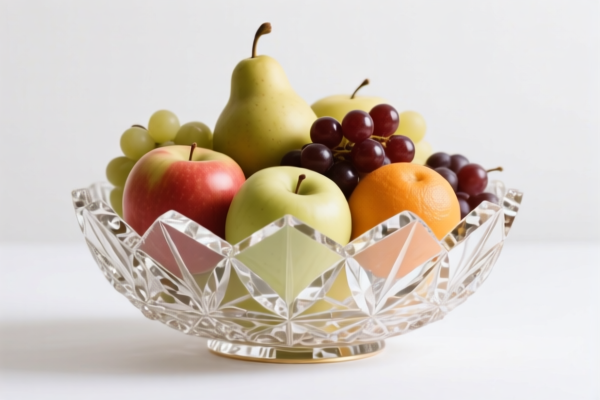
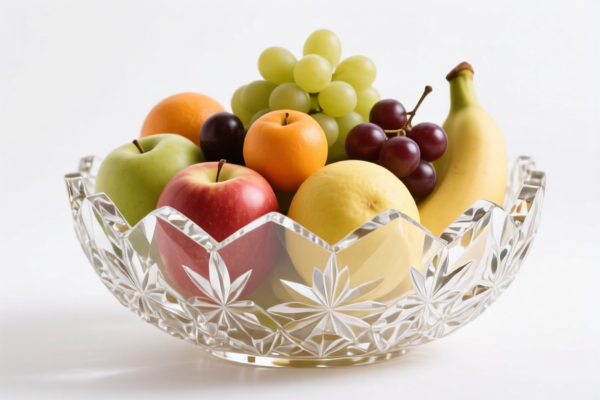
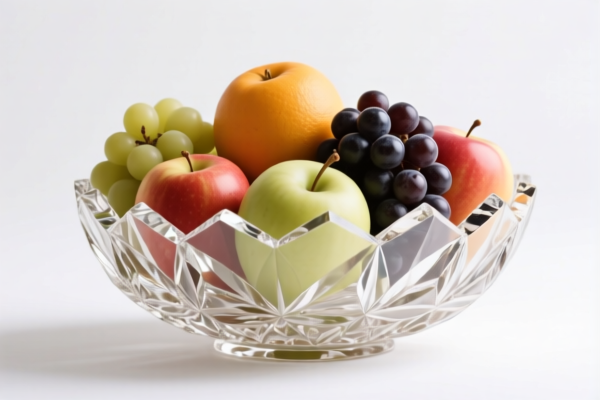
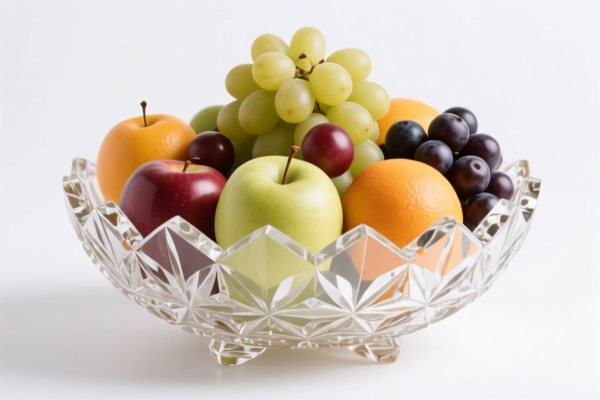
AI Analysis
🍎 Light Luxury Creative Fruit Bowl (Light Luxury Creative Fruit Bowl)
🌐 HS Code Reference & Customs Clearance Guide | 2026 Latest Tariff Analysis | Professional Clearance Strategy
📌 I. Product Definition & Classification: Do You Really Understand "Fruit Bowls"?
The "Light Luxury Creative Fruit Bowl" is a broad term often used in e-commerce and retail to describe high-end, aesthetically designed containers for serving fruit, snacks, or condiments. In international trade, these items are strictly classified by material. The term "Light Luxury" (referring to price point or design) does not exist in customs classification; only the material composition and intended use matter.
These products generally fall into three main material categories: 1. Iron/Steel: Metallic finishes, wire baskets, or coated steel bowls. 2. Porcelain/China: Ceramic bowls, often glazed, with intricate patterns. 3. Glass: Crystal, tempered, or decorative glass bowls.
⚠️ Critical Classification Point:
- If the bowl is metallic (even if gold-plated or coated for aesthetics), it falls under Chapter 73.
- If the bowl is ceramic/porcelain, it falls under Chapter 69.
- If the bowl is glass, it falls under Chapter 70.
- Mistake Alert: Do not classify based on "luxury" or "design." A gold-plated steel bowl is still steel for tariff purposes unless the gold plating is the primary value driver (which is rare for household goods).
📦 II. HS Code Classification Details (2026 Latest Tariff Authority对照)
| HS Code | Product Description | Material | Applicable Scenario | Total Tax Rate (China to US) |
|---|---|---|---|---|
7323.99.90.80 |
Table, kitchen or other household articles... of iron or steel; Other | Iron/Steel | Metal fruit bowls, wire baskets, coated steel containers | 78.4% |
7323.99.90.30 |
Table, kitchen or other household articles... of iron or steel; Kitchen or tableware suitable for food contact | Iron/Steel | Steel bowls specifically marked for food contact | 78.4% |
6911.10.37.10 |
Tableware, kitchenware... of porcelain or china... Value $\le$ $200 (Aggregate) | Porcelain/China | Ceramic fruit bowls, sets where aggregate value $\le$ $200 | 15.5% |
6911.10.38.10 |
Tableware, kitchenware... of porcelain or china... Value $> $200 (Aggregate) | Porcelain/China | Ceramic fruit bowls, sets where aggregate value $> $200 | 13.5% |
7013.49.60.90 |
Glassware... of a kind used for table... Valued over $5 each | Glass | Glass fruit bowls, priced $> $5 per unit | 14.7% |
7013.99.80.90 |
Glassware... Other... Valued over $3 but not over $5 each | Glass | Glass fruit bowls, priced $3 - $5 per unit | 11.3% |
🔍 Key Clarification:
- Iron/Steel: The high tax rate (78.4%) is due to the 50% Section 301 tariff on steel products plus the 25% general additional tariff.
- Porcelain/China: The tax rate depends on the aggregate value of the set. If you sell individual bowls, check the value per unit. If sold in sets, the total value of all listed items in the set determines the bracket.
- Glass: Glass is taxed differently based on unit value. Higher-value glass items (> $5) have a higher base tariff (7.2%) compared to lower-value items.
💰 III. 2026 Latest Tariff Rate Details (Including Surtaxes & Policy Add-ons)
✅ Applicable Country: United States (US)
✅ Origin: China (CN)
✅ Effective Date: 2025/2026 Tariff Schedule
🎯 1. 7323.99.90.80 & 7323.99.90.30 —— Iron/Steel Fruit Bowls
| Item | Content |
|---|---|
| Base Tariff | 3.4% (ad valorem) |
| Additional Tariff (Section 301) | +25% |
| Steel, Aluminum, Copper Surcharge | +50% (Specific to steel products under recent trade actions) |
| Total Tax Rate | 78.4% |
| Tax Calculation | CIF Value × 78.4% |
| De Minimis Exemption? | ❌ No (Denied for Chinese steel/aluminum products) |
| Legal Basis Path | USITC:7323.99.90.80 → FOOTNOTE:Steel/Aluminum Surcharge |
📌 Explanation:
- The 78.4% rate is extremely high. It combines the standard duty (3.4%), the Section 301 tariff (25%), and the specific 50% surcharge on steel products.
- This applies to all iron/steel household articles, including "light luxury" plated or coated ones, unless the plating is precious metal (which is rare and requires specific proof).
- Cost Impact: A $10 steel fruit bowl incurs $7.84 in duties alone.
🎯 2. 6911.10.37.10 & 6911.10.38.10 —— Porcelain/Ceramic Fruit Bowls
| Item | Content |
|---|---|
| Base Tariff | 6.0% - 8.0% (depending on value) |
| Additional Tariff | +7.5% |
| Total Tax Rate | 13.5% - 15.5% |
| Tax Calculation | CIF Value × Rate |
| De Minimis Exemption? | ❌ No (For values > $800, but de minimis rules vary; generally, these goods are subject to full duty) |
| Legal Basis Path | USITC:6911.10.37.10 / 6911.10.38.10 |
📌 Explanation:
- Value Threshold:
- If the aggregate value of the set is ≤ $200, the rate is 15.5% (Base 8% + 7.5%).
- If the aggregate value of the set is > $200, the rate is 13.5% (Base 6% + 7.5%).
- Recommendation: If selling premium high-value ceramic bowls, ensure they are valued appropriately to qualify for the lower base rate (6%) if possible, though the 7.5% add-on remains.
🎯 3. 7013.49.60.90 & 7013.99.80.90 —— Glass Fruit Bowls
| Item | Content |
|---|---|
| Base Tariff | 7.2% (for > $5) / 11.3% (for $3-$5) |
| Additional Tariff | +7.5% (for > $5) / 0.0% (for $3-$5) |
| Total Tax Rate | 14.7% (for > $5) / 11.3% (for $3-$5) |
| Tax Calculation | CIF Value × Rate |
| De Minimis Exemption? | ❌ No |
| Legal Basis Path | USITC:7013.49.60.90 / 7013.99.80.90 |
📌 Explanation:
- Price Sensitivity: Glass tariffs are price-dependent.
- High-Value Glass (> $5): Higher base tariff (7.2%) but with a 7.5% add-on, totaling 14.7%.
- Mid-Value Glass ($3-$5): Higher base tariff (11.3%) but no add-on, totaling 11.3%.
- Strategy: If possible, price glass fruit bowls between $3-$5 to benefit from the 0% additional tariff and lower total rate (11.3%) compared to high-value items (14.7%).
🛠️ IV. Customs Clearance Practical Advice (Practical Pitfall Avoidance Guide)
✅ 1. Preparation Checklist (Must-Have Documents)
| Document | Must Provide | Explanation |
|---|---|---|
| ✅ Product Specifications | ✔️ | Material composition (100% porcelain, tempered glass, etc.), dimensions, weight. |
| ✅ Product Photos | ✔️ | Clear images of the bowl, showing material texture, any coatings, and markings. |
| ✅ Commercial Invoice | ✔️ | Must clearly state: "Fruit Bowl, Material: [Porcelain/Glass/Steel], Value: $XX." |
| ✅ Packing List | ✔️ | Indicate if sold as a set. If a set, list individual items and their values to prove the aggregate value bracket. |
| ✅ Third-Party Lab Report | ✔️ | For food-contact items, provide migration test reports (heavy metals) to prove safety compliance. |
✅ 2. Declaration Tips (Key Mantras)
🔥 "Material First, Value Second, Set Value Clear!"
| Situation | Correct Declaration | Wrong Action |
|---|---|---|
| Steel Fruit Bowl | HS: 7323.99.90.80Desc: "Steel Fruit Bowl, Coated" |
Describe as "Decorative Item" → Risk of reclassification |
| Ceramic Set (Total $150) | HS: 6911.10.37.10Desc: "Porcelain Fruit Bowl Set, Value ≤ $200" |
Declare individual items separately to avoid "set" classification → Audit risk |
| Glass Bowl ($6) | HS: 7013.49.60.90Desc: "Glass Bowl, Value $6" |
Declare as "Glass Decor" → May be misclassified under different chapters |
| Glass Bowl ($4) | HS: 7013.99.80.90Desc: "Glass Bowl, Value $4" |
Declare as "$6 bowl" to avoid low-value category → Fraud risk |
✅ 3. Special Situation Handling
| Situation | Handling Advice |
|---|---|
| "Light Luxury" Plated Steel | If the steel bowl is plated with gold/silver, still classify as Steel (7323.99.90.80) unless the plating value exceeds the steel value significantly (rare). Do not attempt to classify as "Precious Metal" without strong proof. |
| Mixed Material Bowls | If a bowl has a ceramic body with a metal handle, classify based on the essential character (usually ceramic). If metal is dominant, classify as Steel. |
| Food Safety Compliance | Ensure all ceramic and steel items meet FDA Food Contact standards. Provide test reports to avoid detention for "unsafe food contact materials." |
| Set Valuation | For porcelain sets, clearly state the total value and itemized values. If the aggregate value is $201, you pay the lower rate (13.5%), but if it’s $199, you pay the higher rate (15.5%). |
🌍 V. Global Market Comparison (2026 Latest)
| Country/Region | Recommended HS Code | Tariff | Certification | Notes |
|---|---|---|---|---|
| 🇺🇸 USA | 7323.99.90.80 (Steel) / 6911.10.38.10 (Ceramic) |
78.4% (Steel) / 13.5% (Ceramic) | FDA + RoHS | Highest tariff for steel! |
| 🇨🇳 China | 7323.99.90.80 / 6911.10.38.10 |
0% (Export) | CCC (for domestic) | Export duty-free for these items. |
| 🇪🇺 EU | 7323.99.90 / 6911.10 |
6.0% (Steel) / 6.0% (Ceramic) | CE + Food Contact | No Section 301 surcharges. |
| 🇬🇧 UK | 7323.99.90 / 6911.10 |
6.0% (Steel) / 6.0% (Ceramic) | UKCA + Food Contact | Post-Brexit rules apply. |
📌 Conclusion:
- USA is the most expensive market for steel fruit bowls due to the 78.4% tariff.
- Porcelain and Glass are relatively affordable to export to the US (11-15% tariff).
- Strategy: If targeting the US market, consider porcelain or glass alternatives to steel for "light luxury" fruit bowls to save significant costs.
📌 VI. Common Mistakes & Pitfall Avoidance (Lessons Learned)
❌ Mistake 1: Classifying a Steel Bowl as "Home Decor" (9403)
👉 Consequence: Misclassification leads to 78.4% duty instead of potential lower rates, plus penalties.
❌ Mistake 2: Under-declaring Glass Bowl Value
👉 Consequence: If a $6 bowl is declared as $2, it shifts from 7013.49.60.90 (14.7%) to a different bracket. Customs will re-value and charge back-duties + fines.
❌ Mistake 3: Ignoring Food Contact Regulations for Steel/Ceramic
👉 Consequence: Goods detained at US border for lack of FDA compliance.
✅ Correct Approach:
"Fruit Bowl, 100% Porcelain, Glazed, Food-Grade, Value $25, FDA Compliant"
🎯 VII. Conclusion: Precise Classification Saves Money!
🎯 Remember the Mantra:
🔹 "Steel is 78%, Ceramic is 13%, Glass is 14%."
🔹 "Material Dictates HS Code, Value Dictates Rate."
📌 Pro Tip:
If your "Light Luxury" fruit bowl is made of Stainless Steel, it is still subject to the 78.4% tariff. Consider Ceramic (13.5%) or Glass (14.7%) for better cost efficiency in the US market.
For steel items, explore Tariff Engineering or Supply Chain Diversification (e.g., final assembly in a non-China country) to mitigate risks.
📣 Immediate Action:
📞 Consult with a Customs Broker
📄 Prepare FDA & Material Test Reports
🚀 Classify Correctly, Clear Smoothly, Maximize Profit!
✨ Professional Clearance Starts with Accurate Classification!
💼 Every Percent Saved is Pure Profit!
Customer Reviews
About HS Code Classification
The Harmonized System (HS) is an internationally standardized nomenclature developed by the World Customs Organization (WCO) to classify traded products. Over 200 countries use the HS system as the basis for customs tariffs, trade statistics, and import/export regulations.
Each HS code follows a hierarchical structure:
- Chapter (2 digits) — Broad category of goods (e.g., Chapter 84: Machinery and Mechanical Appliances)
- Heading (4 digits) — More specific grouping within the chapter
- Subheading (6 digits) — Internationally standardized breakdown, used by all WCO member countries
- National subdivisions (8-10 digits) — Country-specific extensions for further classification, such as US HTSUS 10-digit codes
Correct HS code classification is essential for smooth customs clearance, accurate duty payment, and compliance with trade regulations. Misclassification can lead to customs delays, overpayment of duties, or penalties.
When importing from CN to US, the applicable tariff rates may include:
- Most-Favored-Nation (MFN) rate — The standard duty rate applied to WTO members
- General rate — Applied to countries without trade agreements
- Trade remedy duties — Additional tariffs such as Section 301 (anti-dumping), Section 232 (national security), or countervailing duties
The information provided on this page is for reference purposes only. For official classification, please consult with your local customs authority or a licensed customs broker.