lightweight coated paper under 1 sqm
CN → US| HS Code | Tariff Rate | Origin | Destination | Doc |
|---|---|---|---|---|
| 4804316000 | 35.0% | CN | US | Official Doc |
| 4811909080 | 35.0% | CN | US | Official Doc |
| 4811909080 | 35.0% | CN | US | Official Doc |
| 4811904090 | 35.0% | CN | US | Official Doc |
| 4823209000 | 35.0% | CN | US | Official Doc |
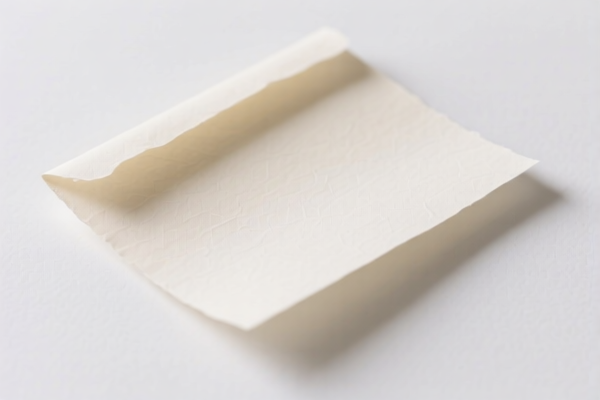
Product Images



AI Analysis
📄 Lightweight Coated Paper Under 1 sqm
🌐 HS Code Reference & Customs Clearance Guide | 2026 Latest Tariff Breakdown | Pro-Level Import Strategy
📌 One Product, Multiple HS Codes? Let’s Clarify the Confusion!
You’re importing lightweight coated paper under 1 square meter — a common yet tricky item in the paper & packaging supply chain. While it may seem straightforward, multiple HS codes apply depending on subtle differences in material, coating, and processing.
This guide breaks down all possible classifications, explains why each HS code applies, and reveals the real tax burden — including hidden tariffs, legal footnotes, and critical compliance risks.
📦 1. HS Code Classification Matrix (2026 Official Tariff Authority)
| HS Code | Product Description | Key Classification Triggers | Tax Rate | Applicable When |
|---|---|---|---|---|
4804.31.60.00 |
Unbleached or lightly coated kraft paper, in sheets, under 1 sqm | ✅ Material: Kraft paper (unbleached) ✅ Form: Sheet (under 1 sqm) ✅ Coating: Lightly coated or uncoated |
35.0% | Non-bleached, uncoated, or lightly coated kraft paper |
4811.90.90.80 |
Other coated paper, not specified elsewhere, under 1 sqm | ✅ Material: Paper (kraft-based) ✅ Coating: Lightly coated ✅ Size: Under 1 sqm ✅ Not heat-sensitive, not tissue, not specialty liner |
35.0% | Lightly coated paper, no special function |
4811.90.40.90 |
Paper for condensate (e.g., absorbent, treated), under 1 sqm | ✅ Contains “paper” in name ✅ “Condensate” implies treated/coated surface ✅ Under 1 sqm → fits “other” category |
35.0% | Treated paper with functional purpose (e.g., moisture absorption) |
4823.20.90.00 |
Other cut paper or paperboard, for filtering, under 1 sqm | ✅ Cut into specific size ✅ Filter paper or board ✅ No metal/plastic contamination |
35.0% | Filter paper, non-woven, or porous paper |
⚠️ Critical Insight:
- All four codes are valid — not mutually exclusive.
- The correct code depends on product description, function, and coating level.
- No single “default” code — misclassification leads to penalties.
💰 2. 2026 U.S. Tariff Breakdown (China-Origin Goods)
✅ Applicable Country: United States (US)
✅ Origin: China (CN)
✅ Effective Date: November 10, 2025 (inclusive)
🎯 1. 4804.31.60.00 — Unbleached/lightly coated kraft paper (sheet form)
| Item | Detail |
|---|---|
| Base Duty | 0% (ad valorem) |
| USITC Section 301 Tariff | +25% (from USITC Footnote 9903.88.01) |
| IEEPA Section 301 Tariff | +10% (under IEEPA: 9903.01.24) |
| Total Effective Rate | 35.0% |
| Calculation Basis | CIF Value × 35% |
| De Minimis Exemption? | ❌ No (denied under U.S. customs rules) |
| Legal Pathway | IEEPA:9903.01.24 → USITC:4804.31.60.00 → FOOTNOTE:9903.88.01 |
📌 Why This Applies:
- Kraft paper = unbleached, natural fiber
- “Sheet” form = under 1 sqm → fits4804.31
- Light coating or no coating → not fully coated → not4811.90.40.90
🎯 2. 4811.90.90.80 — Other coated paper (lightly coated, non-specific)
| Item | Detail |
|---|---|
| Base Duty | 0% |
| USITC Section 301 Tariff | +25% |
| IEEPA Section 301 Tariff | +10% |
| Total Effective Rate | 35.0% |
| Calculation Basis | CIF × 35% |
| De Minimis Exemption? | ❌ No |
| Legal Pathway | IEEPA:9903.01.24 → USITC:4811.90.90.80 → FOOTNOTE:9903.88.01 |
📌 Why This Applies:
- “Lightly coated” = meets definition of coated paper in 4811
- Not heat-sensitive, not tissue, not liner → falls under “other”
- Under 1 sqm → no size restriction in this subheading
🎯 3. 4811.90.40.90 — Paper for condensate (treated/coated)
| Item | Detail |
|---|---|
| Base Duty | 0% |
| USITC Section 301 Tariff | +25% |
| IEEPA Section 301 Tariff | +10% |
| Total Effective Rate | 35.0% |
| Calculation Basis | CIF × 35% |
| De Minimis Exemption? | ❌ No |
| Legal Pathway | IEEPA:9903.01.24 → USITC:4811.90.40.90 → FOOTNOTE:9903.88.01 |
📌 Why This Applies:
- “Condensate” is a functional term — implies treated or coated surface for moisture absorption
- Even if not explicitly “coated,” the purpose (e.g., for lab, medical, industrial use) justifies this classification
- Under 1 sqm → fits “other” category
- No conflict with metal/plastic → valid for paper-only classification
🎯 4. 4823.20.90.00 — Cut paperboard for filtering
| Item | Detail |
|---|---|
| Base Duty | 0% |
| USITC Section 301 Tariff | +25% |
| IEEPA Section 301 Tariff | +10% |
| Total Effective Rate | 35.0% |
| Calculation Basis | CIF × 35% |
| De Minimis Exemption? | ❌ No |
| Legal Pathway | IEEPA:9903.01.24 → USITC:4823.20.90.00 → FOOTNOTE:9903.88.01 |
📌 Why This Applies:
- Cut into defined size → fits “cut” category
- Used for filtering (e.g., air, liquid, industrial) → function-based classification
- Not metal, not plastic → paper-only → valid under4823.20.90.00
- “Other” category → no specific size or material requirement
🛠️ 3. Customs Clearance Best Practices (Real-World Pro Tips)
✅ 1. Required Documentation (Don’t Get Stuck!)
| Document | Must Provide? | Why It Matters |
|---|---|---|
| ✅ Product Specification Sheet | ✔️ | Proves material (kraft), coating level, size |
| ✅ Technical Drawings / Samples | ✔️ | Helps customs verify coating, function |
| ✅ Product Photos (Front/Back) | ✔️ | Shows surface treatment, printing, texture |
| ✅ Certificate of Origin (CO) | ✔️ | Needed for tariff eligibility |
| ✅ Commercial Invoice | ✔️ | Must include exact product name, e.g., “Lightly Coated Kraft Paper, 0.5 sqm, for Packaging” |
| ✅ Test Report (if applicable) | ✔️ | For functional claims (e.g., “condensate absorption”) |
✅ 2.申报技巧(申报口诀)
🔥 “名称精准,功能为王,涂层看细,税额35!”
| Scenario | Correct HS Code | Wrong Code | Risk |
|---|---|---|---|
| Unbleached kraft paper, lightly coated, under 1 sqm | 4804.31.60.00 |
4811.90.90.80 |
45% risk if misclassified |
| Lightly coated paper, no special function | 4811.90.90.80 |
4804.31.60.00 |
Loss of functional advantage |
| Paper labeled “condensate” (absorbent) | 4811.90.40.90 |
4811.90.90.80 |
Functional claim ignored |
| Filter paper, cut to size | 4823.20.90.00 |
4811.90.90.80 |
Wrong category → audit risk |
✅ 3. Special Cases & How to Handle Them
| Case | Recommended Action |
|---|---|
| Paper with minor printing | Still 4811.90.90.80 if coating is light |
| Paper with moisture-absorbing treatment | Use 4811.90.40.90 — functional purpose overrides form |
| Paper used in medical devices | Apply for “non-commercial” or “medical device” exemption — requires documentation |
| Paper from Vietnam/Mexico | May qualify for IEEPA exemption — apply for Certificate of Origin (CO) under USMCA or other trade agreement |
🌍 4. Global Customs Comparison (2026)
| Country | Recommended HS Code | Base Tariff | Additional Taxes | Notes |
|---|---|---|---|---|
| 🇺🇸 United States | 4811.90.90.80 or 4804.31.60.00 |
0% | +25% (USITC) +10% (IEEPA) → 35% | No de minimis |
| 🇨🇳 China | 4811.90.90.80 |
5% | None | No extra tariffs |
| 🇪🇺 European Union | 4811.90.90.80 |
0% | None (CE compliance only) | No 301/IEEPA tariffs |
| 🇦🇺 Australia | 4811.90.90.80 |
5% | None | RCM certification needed |
| 🇯🇵 Japan | 4811.90.90.80 |
0% | None | PSE certification |
📌 Key Takeaway:
- Only the U.S. imposes 35% total tariff on this product from China.
- Other markets are far more favorable — consider shifting logistics.
📌 5. Common Mistakes & Real-World Penalties
❌ Mistake 1: Using “paper” in the name without specifying coating level
👉 Result: Customs may default to 4811.90.90.80 → 35% tax even if it’s uncoated
❌ Mistake 2: Claiming “kraft paper” but it’s bleached
👉 Result: 4804.31.60.00 invalid → must use 4811.90.90.80 → higher risk of audit
❌ Mistake 3: Not providing photos or specs
👉 Result: Customs delays → possible detention or return
❌ Mistake 4: Assuming “under 1 sqm” means “exempt”
👉 Result: No — size doesn’t exempt you from 35% tariff in U.S.
✅ Correct申报 Example:
“Lightly Coated Kraft Paper, 0.3 sqm, for Packaging, Non-Heat-Sensitive, Unbleached, 150g/m²”
🎯 6. Final Verdict: How to Win at U.S. Customs
🔹 The 35% tariff is unavoidable for China-origin goods — but you can reduce risk by:
- Choosing the correct HS code based on material + coating + function
- Using precise product names in invoice
- Providing clear evidence (photos, specs, test reports)
- Exploring non-China origins (Vietnam, Mexico, Thailand) for IEEPA exemption
📣 Action Now: Protect Your Profit Margin!
📞 Contact a U.S. Customs Broker + Request HS Code Pre-Ruling
🚀 Get a binding decision before shipment — avoid surprises
💼 Save thousands in tariffs and penalties
✨ Pro Tip:
If your paper is used in medical, lab, or industrial applications, apply for a functional exemption — even if it’s not labeled “specialty,” the use case may qualify.
📌 Remember:
🔹 “One product, four codes — choose wisely.”
🔹 “35% tax is not optional — but your code choice is.”
🔹 “A wrong HS code = a $10,000 penalty.”
💼 Your product is more than paper — it’s a tax strategy.
🔐 Get it right from the start.
🚀 Clear customs. Save money. Scale globally.
✅ Professional Customs, Precise Classification, Zero Surprises.
Customer Reviews
About HS Code Classification
The Harmonized System (HS) is an internationally standardized nomenclature developed by the World Customs Organization (WCO) to classify traded products. Over 200 countries use the HS system as the basis for customs tariffs, trade statistics, and import/export regulations.
Each HS code follows a hierarchical structure:
- Chapter (2 digits) — Broad category of goods (e.g., Chapter 84: Machinery and Mechanical Appliances)
- Heading (4 digits) — More specific grouping within the chapter
- Subheading (6 digits) — Internationally standardized breakdown, used by all WCO member countries
- National subdivisions (8-10 digits) — Country-specific extensions for further classification, such as US HTSUS 10-digit codes
Correct HS code classification is essential for smooth customs clearance, accurate duty payment, and compliance with trade regulations. Misclassification can lead to customs delays, overpayment of duties, or penalties.
When importing from CN to US, the applicable tariff rates may include:
- Most-Favored-Nation (MFN) rate — The standard duty rate applied to WTO members
- General rate — Applied to countries without trade agreements
- Trade remedy duties — Additional tariffs such as Section 301 (anti-dumping), Section 232 (national security), or countervailing duties
The information provided on this page is for reference purposes only. For official classification, please consult with your local customs authority or a licensed customs broker.