lightweight writing paper school use
CN → USProduct Images
AI Analysis
📄 Lightweight Writing Paper for School Use
🌐 HS Code Reference & Clearance Guide | 2026 Latest Tariff Analysis | Professional Customs Strategy
📌 I. Product Definition and Classification: What is "Lightweight Writing Paper"?
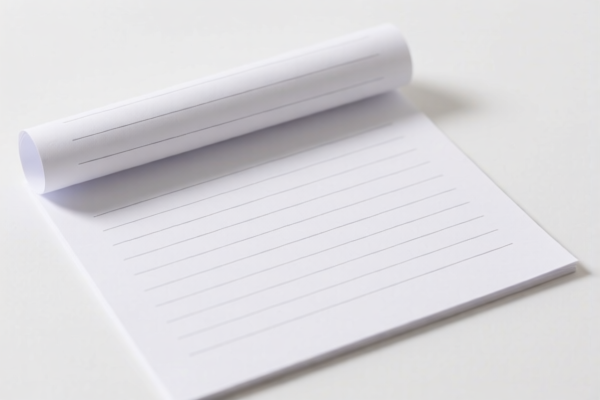
Lightweight writing paper, commonly known as standard printer/copier paper or office paper, is a high-quality, uncoated paper primarily used for printing, writing, and general office or school administrative purposes. In international trade, it is strictly classified based on its grammage (weight) and composition.
Key Characteristics: - Material: Typically 100% wood pulp (chemical pulp, often bleached). - Weight: "Lightweight" in the context of school/office paper usually refers to standard 70–80 gsm (grams per square meter) paper. - Format: Usually supplied in rolls (for industrial printers) or sheets (for personal/school use). - Surface: Uncoated, smooth finish suitable for inkjet or laser printing.
⚠️ Critical Distinction:
- If the paper is in sheets, it is generally classified under 4802.
- If the paper is in rolls, it may still fall under 4802, but specific sub-headings depend on whether it is "for printing" or "writing."
- Note: "Lightweight" can sometimes be confused with newsprint (HS 4801) if the grammage is very low (<67 gsm) and used for newspapers/magazines. However, for school writing/learning materials, the standard is 4802.59 (unprinted, bleached, uncoated, in sheets) or 4802.61/62 (in rolls).
📦 II. HS Code Classification Details (2026 Official Tariff Concordance)
| HS Code | Product Description | Application Scenario | Form Factor | Key Criterion |
|---|---|---|---|---|
4802.59.00.00 |
Unprinted paper in sheets, bleached, uncoated, suitable for printing/writing | Standard A4/Letter paper for schools, office printing, notebooks | Sheets | ✅ Bleached, Uncoated, <67gsm? No, usually 70-80gsm. If <67gsm, see 4802.53. |
4802.61.00.00 |
Unprinted paper in rolls, uncoated, suitable for printing/writing | Industrial print rolls, bulk school supply contracts | Rolls | ✅ Uncoated, Width >36cm |
4802.62.00.00 |
Unprinted paper in rolls, uncoated, suitable for printing/writing | Same as above, different size/weight specs | Rolls | ✅ Uncoated |
4801.00.00.00 |
Newsprint in rolls or sheets | NOT for school writing (too low quality) | Rolls/Sheets | ❌ Not applicable for quality school paper |
🔍 Key Reminder:
- Most "school writing paper" is bleached wood pulp paper in sheet format. Therefore,4802.59.00.00is the most common classification for retail/school packs.
- If the paper is unbleached (yellowish/recycled), it falls under4802.56.00.00.
- Avoid classifying standard white paper as 4801 (Newsprint) to avoid customs scrutiny, as 4801 has different tariff implications and quality standards.
💰 III. 2026 Latest Tariff Rate Details (Including Surcharges & Policy Add-ons)
✅ Applicable Country: United States (US)
✅ Country of Origin: China (CN)
✅ Effective Date: November 10, 2025 (and subsequent imports)
🎯 1. 4802.59.00.00 – Unprinted Paper in Sheets, Bleached, Uncoated
| Item | Content |
|---|---|
| Base Tariff Rate | 4.2% (ad valorem) |
| USITC Additional Tariff | +25% (under USITC Footnote 9903.88.01) |
| IEEPA Additional Tariff | +10% (for China/HK origin, effective from Nov 10, 2025) |
| Total Tariff Rate | 44.2% |
| Tax Calculation | CIF Value × 44.2% |
| De Minimis Exemption Available? | ❌ No (deny_de_minimis) |
| Legal Basis Path | IEEPA:9903.01.25 → IEEPA:9903.01.24 → USITC:4802.59.00.00 → FOOTNOTE:9903.88.01 |
📌 Explanation:
- Base Rate (4.2%): Standard MFN rate for paper products.
- USITC 25%: Applied under Section 301 of the Trade Act of 1974, targeting specific Chinese manufactured goods, including certain paper products.
- IEEPA 10%: Additional levy under the International Emergency Economic Powers Act, specifically targeting China-origin goods in this category.
- Total 44.2%: This is a high tariff burden. Importers must factor this into their landed cost.
🎯 2. 4802.61.00.00 / 4802.62.00.00 – Paper in Rolls
| Item | Content |
|---|---|
| Base Tariff Rate | 4.2% (ad valorem) |
| USITC Additional Tariff | +25% |
| IEEPA Additional Tariff | +10% |
| Total Tariff Rate | 44.2% |
| Tax Calculation | CIF Value × 44.2% |
| De Minimis Exemption Available? | ❌ No |
| Legal Basis Path | Same as above |
📌 Note:
- Whether in sheets or rolls, bleached uncoated paper from China faces the same 44.2% total tariff.
- If the paper is recycled/unbleached (4802.56.00.00), the same rates apply.
🛠️ IV. Customs Clearance Practical Advice (Real-World Pitfall Avoidance)
✅ 1. Required Documentation Checklist (Mandatory)
| Document | Required | Description |
|---|---|---|
| ✅ Commercial Invoice | ✔️ | Must clearly state: "Unbleached/Bleached Uncoated Paper, Sheets/Rolls, Grammage: XX gsm" |
| ✅ Packing List | ✔️ | Detail number of reams/cartons, gross/net weight |
| ✅ Product Specification Sheet | ✔️ | Confirm material: 100% Wood Pulp, not mixed with synthetic fibers |
| ✅ Bill of Lading/Air Waybill | ✔️ | Standard shipping document |
| ✅ Certificate of Origin (CO) | ✔️ | To verify China origin (or claim FTA benefits if from other countries) |
| ✅ Fumigation Certificate | ✔️ | If packaged in wood crates, ISPM 15 compliance is required |
✅ 2. Declaration Tips (Key Mnemonics)
🔥 "Sheet vs Roll, Bleach vs Gray, Origin Matters, Don't Lie!"
| Scenario | Correct Declaration | Wrong Practice |
|---|---|---|
| Standard White A4 Paper | 4802.59.00.00 (Bleached, Sheets) |
Misdeclare as "Stationery" (9608) → Higher risk of inspection |
| Yellow/Recycled Paper | 4802.56.00.00 (Unbleached) |
Declare as white paper → Discrepancy in quality |
| Paper in Rolls | 4802.61.00.00 or 4802.62.00.00 |
Declare as sheets → Customs may reclassify or penalize |
| Non-Chinese Origin (e.g., Vietnam) | Same HS Code, Different Tax | Claim China origin to avoid tax → Customs Fraud Risk |
✅ 3. Special Handling for School Supplies
| Situation | Recommendation |
|---|---|
| Small School Orders (<$800) | ❌ No De Minimis: Even small shipments face 44.2% tax. Do not rely on $800 exemption for China-origin paper. |
| Bulk School Contracts | ✅ Pre-Arrangement: Negotiate FOB/CIF terms carefully. Factor 44.2% into pricing. |
| Recycled Paper | ✅ Label Clearly: State "100% Recycled Post-Consumer Waste" to comply with EPA guidelines, but tax rate is same. |
| Branded Paper (e.g., Staples, HP) | ✅ No Difference in HS: Trademark doesn't change classification. Still 4802.59. |
🌍 V. Global Market Clearance Comparison (2026 Latest)
| Country/Region | Recommended HS Code | Tariff Rate | Certification Requirements | Notes |
|---|---|---|---|---|
| 🇺🇸 USA | 4802.59.00.00 |
44.2% (China origin) | FCC N/A (Paper is non-electronic) | High tariff due to 301 + IEEPA |
| 🇨🇳 China | 4802.59.00.00 |
4.2% | N/A | Base rate for imports into China |
| 🇪🇺 EU | 4802.59 |
6.5% | Ecolabel (Voluntary) | No US-style surcharges |
| 🇬🇧 UK | 4802.59 |
6.5% | UKCA (if packaging) | Post-Brexit rules apply |
| 🇲🇽 Mexico | 4802.59 |
0-2% (if under USMCA) | NOM Certification | Favorable if from US/Canada |
📌 Conclusion:
- USA is the most expensive market for China-origin paper due to layered tariffs.
- EU and UK have lower base tariffs but no additional surcharges.
- Recommendation: If targeting the US market, consider sourcing from Vietnam, Malaysia, or Mexico to mitigate the 44.2% tariff burden (subject to strict origin verification).
📌 VI. Common Mistakes & Pitfall Guide (Lessons Learned)
❌ Mistake 1: Declaring paper as "Stationery" (HS 9608 or 9609)
👉 Consequence: Customs will reclassify to 4802, assess 44.2% tariff, and may impose penalties for misdeclaration.
❌ Mistake 2: Ignoring "Bleached" vs "Unbleached" distinction
👉 Consequence: Incorrect HS sub-code (e.g., using 4802.59 for unbleached paper) → Customs delays, reclassification, and fines.
❌ Mistake 3: Assuming small school orders qualify for De Minimis ($800 exemption)
👉 Consequence: Denial of entry. Paper from China is explicitly denied de minimis status. Even one box of A4 paper from China is subject to full duties.
❌ Mistake 4: Misdeclaring paper weight (gsm)
👉 Consequence: If declared as "Newsprint" (<67 gsm) but actual weight is 80 gsm, customs may penalize for fraud.
✅ Correct Practice:
"Unbleached/Bleached Wood Pulp Paper, Uncoated, in Sheets, 70-80 gsm, HS 4802.59.00.00, Origin: China"
🎯 VII. Conclusion: Professional Declaration, Cost Control, and Efficiency!
🎯 Remember the Mnemonics:
🔹 "Sheets 4802, Rolls 4802, Bleach 59, Unbleach 56, China 44%, De Minimis NO!"
🔹 "HS Code saves money, misdeclaration costs time, paper is paper, don't call it stationery!"
📌 Tips:
- If your school paper is imported from Vietnam or Indonesia, the tariff may be 0-2% (subject to USITC rulings and origin verification).
- For large-scale school supply contracts, apply for an Advance Ruling from US Customs to confirm HS code and duty liability.
- Consider consolidating shipments only if you have calculated the 44.2% cost into your budget.
📣 Immediate Action:
📞 Contact a licensed customs broker + Provide product specs + Verify origin country
🚀 Let your school supplies clear smoothly, avoid penalties, and stay on budget!
✨ Professional clearance starts with precise classification!
💼 Every dollar of duty counts in the low-margin paper business!
Customer Reviews
About HS Code Classification
The Harmonized System (HS) is an internationally standardized nomenclature developed by the World Customs Organization (WCO) to classify traded products. Over 200 countries use the HS system as the basis for customs tariffs, trade statistics, and import/export regulations.
Each HS code follows a hierarchical structure:
- Chapter (2 digits) — Broad category of goods (e.g., Chapter 84: Machinery and Mechanical Appliances)
- Heading (4 digits) — More specific grouping within the chapter
- Subheading (6 digits) — Internationally standardized breakdown, used by all WCO member countries
- National subdivisions (8-10 digits) — Country-specific extensions for further classification, such as US HTSUS 10-digit codes
Correct HS code classification is essential for smooth customs clearance, accurate duty payment, and compliance with trade regulations. Misclassification can lead to customs delays, overpayment of duties, or penalties.
When importing from CN to US, the applicable tariff rates may include:
- Most-Favored-Nation (MFN) rate — The standard duty rate applied to WTO members
- General rate — Applied to countries without trade agreements
- Trade remedy duties — Additional tariffs such as Section 301 (anti-dumping), Section 232 (national security), or countervailing duties
The information provided on this page is for reference purposes only. For official classification, please consult with your local customs authority or a licensed customs broker.