little bear wood slice
CN → US| HS Code | Tariff Rate | Origin | Destination | Doc |
|---|---|---|---|---|
| 4421999880 | 38.3% | CN | US | Official Doc |
| 4421919880 | 38.3% | CN | US | Official Doc |
| 9503000073 | 10.0% | CN | US | Official Doc |
| 9503000071 | 10.0% | CN | US | Official Doc |
| 6702906500 | 34.5% | CN | US | Official Doc |
| 6702104000 | 13.4% | CN | US | Official Doc |
Product Images
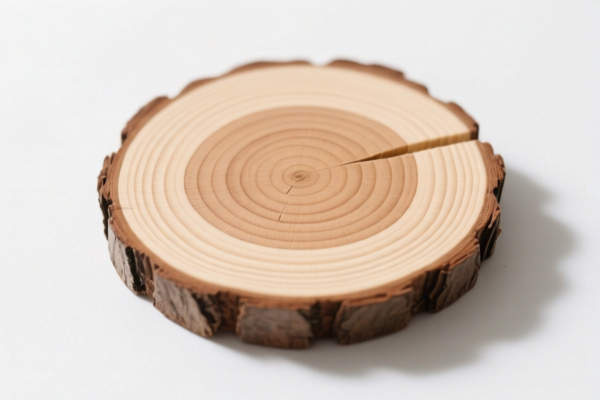
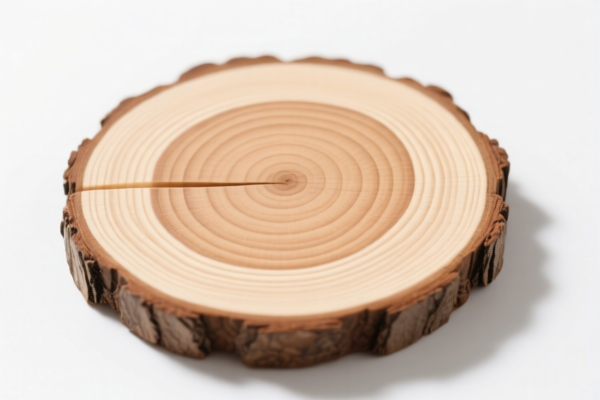


AI Analysis
🐻 Little Bear Wood Slice (Natural Wood Carvings & Decor)
🌐 HS Code Reference & Customs Clearance Guide | 2026 Latest Tariff Analysis | Professional Clearance Strategy for Natural Wood Products
📌 I. Product Definition & Classification: Are You Sure It’s Just "Wood"?
"Little Bear Wood Slice" typically refers to decorative items made from natural wood, often in the shape of bears or featuring bear motifs. In international trade, these products are categorized based on their material composition, processing level, and intended use.
They generally fall into two main categories: 1. Artificial/DIY Craft Materials: Unfinished or simply sanded wood slices used for crafting, signage, or decoration. These are often classified under "Other articles of wood." 2. Finished Decorative Articles: If the wood is intricately carved, painted, or assembled into a specific art object, it may still fall under "Other articles of wood" unless it is explicitly classified as an "Artificial flower/plant" (which is unlikely for solid wood).
⚠️ Key Distinction:
- If the item is a solid natural wood slice (even if carved), it belongs to Chapter 44 (Wood and Articles of Wood).
- It is NOT "Artificial Flowers" (Chapter 67) unless it is made of plastic/resin mimicking wood (which contradicts the name "Wood Slice").
- It is NOT a "Toy" (Chapter 95) unless it is specifically designed for children's play with interactive features, but simple decorative wood slices are usually non-play items.
📦 II. HS Code Classification Details (2026 Latest Tariff Authority Comparison)
Based on the provided <DATA>, here are the applicable HS Codes for "Little Bear Wood Slices." Note that while <DATA> lists specific codes, we must select the most appropriate one for natural wood products.
| HS Code | Product Description | Applicable Scenario | Tax Rate (US Origin: CN) |
|---|---|---|---|
4421.99.98.80 |
Other articles of wood: Other: Of bamboo: Other: Other Other | Note: This description seems inconsistent. 4421.99 is usually "Other articles of wood" (non-bamboo), but the label says "Of bamboo." However, the tax rate (28.3%) suggests a high-tariff category. For natural wood (oak, pine, birch, etc.) slices used for decoration/DIY, this is the most likely candidate among the provided options for "Other articles of wood." |
28.3% |
4421.91.98.80 |
Other articles of wood: Other: Of bamboo: Other: Other Other | Note: Specifically for Bamboo wood slices. If your "Little Bear" is made of bamboo, use this. | 28.3% |
6702.10.40.00 |
Artificial flowers... Of plastics: Other, including parts | Exclude: Only if the "wood slice" is actually made of plastic/resin imitating wood. | 3.4% |
6702.90.65.00 |
Artificial flowers... Of other materials: Other | Exclude: Only if made of non-plastic, non-wood artificial materials. | 24.5% |
9503.00.00.73 / 9503.00.00.71 |
Toys (Dolls, etc.) | Exclude: Unless the wood slice is part of a toy set for children (0–12 years). Simple decorative slices are not toys. | 0.0% |
🔍 Critical Analysis:
- "Little Bear Wood Slice" is primarily a wood product.
- It does not fit6702(Artificial Flowers) because it is not a flower.
- It does not fit9503(Toys) unless it is explicitly marketed and used as a child's toy.
- Therefore, the correct classification is Chapter 44.
- Between4421.99.98.80and4421.91.98.80:
- Use4421.99.98.80if made of coniferous or non-coniferous wood (e.g., birch, pine, oak).
- Use4421.91.98.80if made of bamboo.
💰 III. 2026 Latest Tariff Rate Breakdown (Detailed Tax Clauses)
✅ Applicable Country: United States (US)
✅ Origin: China (CN)
✅ Effective Date: 2025/2026 (Including subsequent imports)
🎯 1. 4421.99.98.80 —— Other Articles of Wood (Non-Bamboo)
| Item | Content |
|---|---|
| Base Tariff | 3.3% (ad valorem) |
| Section 301 Additional Tariff | +25.0% (From USITC Footnote 9903.88.01) |
| Total Tax Rate | 28.3% |
| Tax Calculation | CIF Value × 28.3% |
| De Minimis Exemption | ❌ Not Eligible (Section 301 tariffs apply) |
| Legal Basis Path | USITC:4421.99.98.80 → FOOTNOTE:9903.88.01 → Section 301 |
📌 Explanation:
- The 3.3% is the standard MFN (Most Favored Nation) duty for "Other articles of wood."
- The 25% is the Section 301 tariff imposed on Chinese-made wood products (including decorative wood items).
- Total: 28.3%. This is a significant cost driver for wood-based crafts.
🎯 2. 4421.91.98.80 —— Other Articles of Wood (Bamboo)
| Item | Content |
|---|---|
| Base Tariff | 3.3% (ad valorem) |
| Section 301 Additional Tariff | +25.0% |
| Total Tax Rate | 28.3% |
| Tax Calculation | CIF Value × 28.3% |
| De Minimis Exemption | ❌ Not Eligible |
| Legal Basis Path | USITC:4421.91.98.80 → FOOTNOTE:9903.88.01 |
📌 Note: Bamboo products from China also face the same 25% additional tariff under Section 301.
🎯 3. Alternative: 9503.00.00.73 / 71 —— If Classified as Toys (Low Risk, Low Volume)
| Item | Content |
|---|---|
| Base Tariff | 0.0% |
| Section 301 Additional Tariff | 0.0% |
| Total Tax Rate | 0.0% |
| Condition | Must be proven as a toy (e.g., labeled for ages 0–12, used for play). |
⚠️ Warning:
Customs may reclassify decorative wood slices as "Articles of Wood" if they lack toy-like features. Misclassifying wood decor as toys to avoid the 28.3% tariff is high risk and can lead to penalties, back taxes, and seizure.
🛠️ IV. Customs Clearance Practical Advice (Avoid Pitfalls)
✅ 1. Prepare Essential Documentation
| Document | Required | Notes |
|---|---|---|
| Product Specification | ✔️ | Include material (e.g., "Birch Wood," "Pine Wood"), dimensions, and finish (e.g., "Sanded," "Stained"). |
| Photos | ✔️ | Clear images of the product, showing it is a solid wood slice (not plastic/resin). |
| Commercial Invoice | ✔️ | Describe as "Decorative Wood Slices, Bear Shape, Natural Wood," NOT "Artificial Flowers" or "Toys" unless accurate. |
| Material Declaration | ✔️ | Confirm it is natural wood, not plastic imitating wood. |
✅ 2. Declaration Tips
🔥 "Be Honest: Wood is Wood. Decor is Decor. Don’t fake it as a Toy."
| Scenario | Correct Declaration | Wrong Practice |
|---|---|---|
| Natural Wood Decor | 4421.99.98.80 (Wood Articles) |
Declare as 6702 (Artificial Flower) → False Classification |
| Bamboo Wood Decor | 4421.91.98.80 (Bamboo Articles) |
Declare as 4421.99 → Minor Error, but possible |
| Plastic Resin "Wood" Look | 6702.10.40.00 (Artificial Plastic) |
Declare as 4421.99 → Overpayment |
| Children's Toy Set | 9503.00.00.73 (Toy) |
Declare as 4421.99 → Underpayment Risk if challenged |
✅ 3. Special Cases
| Situation | Handling Advice |
|---|---|
| Mixed Materials | If the wood slice has non-wood parts (e.g., plastic stand), the essential character (wood) determines the classification. |
| Painted/Carved | Still 4421.99.98.80. Painting does not change the HS Code from Chapter 44. |
| Small Quantities (De Minimis) | Caution: Even if under $800 (Section 321), Section 301 tariffs may still apply for certain goods. Verify with your broker. Do not assume 0% tax. |
🌍 V. Global Market Comparison (2026)
| Country | Recommended HS Code | Tariff (CN Origin) | Notes |
|---|---|---|---|
| 🇺🇸 USA | 4421.99.98.80 |
28.3% | High tariff due to Section 301. |
| 🇨🇳 China | 4421.99.98.80 |
10–15% (Import) | Domestic production may have VAT refunds. |
| 🇪🇺 EU | 4421.99 |
0% (Mostly) | No additional tariffs on wood crafts. |
| 🇬🇧 UK | 4421.99 |
0% | Post-Brexit tariff-free for many wood items. |
📌 Conclusion:
- USA is the most expensive market for wood slices due to the 25% Section 301 tariff.
- Consider local sourcing or third-country assembly (e.g., Vietnam) if exporting to the US, but ensure substantial transformation occurs.
📌 VI. Common Mistakes & Pitfalls
❌ Mistake 1: Declaring Wood Slices as "Artificial Flowers" (6702)
👉 Result: Customs rejects the declaration because the product is not a flower. Penalty + Back Tax.
❌ Mistake 2: Declaring Wood Slices as "Toys" (9503) to avoid 28.3%
👉 Result: If the item is not clearly a toy (no play instructions, not marketed for children), customs will reclassify it and charge 28.3% + penalties.
❌ Mistake 3: Ignoring Material Composition
👉 Result: If the product is plastic but labeled as "Wood," customs will classify it under 6702 (3.4%) but may investigate for fraud if photos show wood grain.
✅ Correct Practice:
"Natural Birch Wood Slices, Bear Shape, Unfinished, For DIY Decoration, Made in China"
🎯 VII. Conclusion: Professional Classification Saves Money
🎯 Remember:
🔹 "Wood is Wood: 28.3% in the US."
🔹 "Don’t fake it as a toy: Risk of audit."
🔹 "Check material: Plastic is 3.4%, Wood is 28.3%."
📌 Tips:
- If your volume is small, consider shipping from a third country (e.g., Malaysia, Vietnam) if legally permissible (ensure substantial transformation).
- Always provide photos to prove it is natural wood to avoid misclassification under Chapter 67 or 95.
📣 Action:
📞 Contact a Customs Broker to verify the exact HS Code for your specific wood type (Birch vs. Pine vs. Bamboo).
🚀 Clear your Little Bear Wood Slices smoothly!
✨ Professional Clearance, Starting with Accurate Classification!
💼 Every dollar saved is a profit earned!
Customer Reviews
About HS Code Classification
The Harmonized System (HS) is an internationally standardized nomenclature developed by the World Customs Organization (WCO) to classify traded products. Over 200 countries use the HS system as the basis for customs tariffs, trade statistics, and import/export regulations.
Each HS code follows a hierarchical structure:
- Chapter (2 digits) — Broad category of goods (e.g., Chapter 84: Machinery and Mechanical Appliances)
- Heading (4 digits) — More specific grouping within the chapter
- Subheading (6 digits) — Internationally standardized breakdown, used by all WCO member countries
- National subdivisions (8-10 digits) — Country-specific extensions for further classification, such as US HTSUS 10-digit codes
Correct HS code classification is essential for smooth customs clearance, accurate duty payment, and compliance with trade regulations. Misclassification can lead to customs delays, overpayment of duties, or penalties.
When importing from CN to US, the applicable tariff rates may include:
- Most-Favored-Nation (MFN) rate — The standard duty rate applied to WTO members
- General rate — Applied to countries without trade agreements
- Trade remedy duties — Additional tariffs such as Section 301 (anti-dumping), Section 232 (national security), or countervailing duties
The information provided on this page is for reference purposes only. For official classification, please consult with your local customs authority or a licensed customs broker.