lockable storage box
CN → US| HS Code | Tariff Rate | Origin | Destination | Doc |
|---|---|---|---|---|
| 4202929700 | 52.6% | CN | US | Official Doc |
| 3926909989 | 22.8% | CN | US | Official Doc |
| 3923109000 | 38.0% | CN | US | Official Doc |
| 4202929336 | 52.6% | CN | US | Official Doc |
| 3923900080 | 38.0% | CN | US | Official Doc |
Product Images
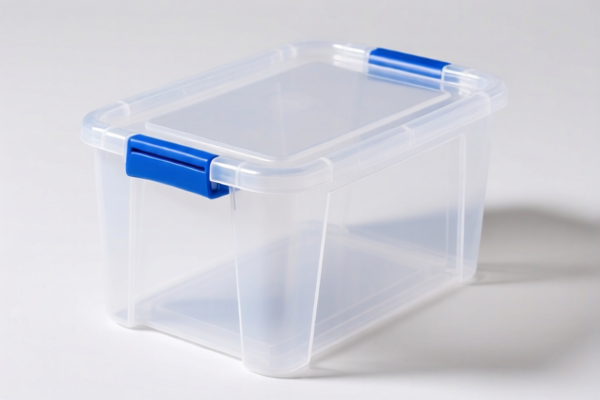
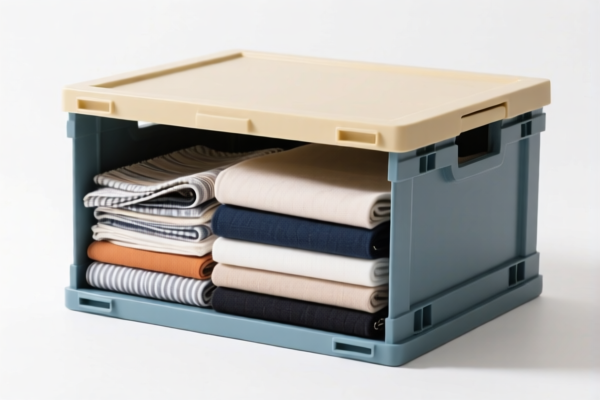
AI Analysis
🔒 Lockable Storage Box: The Ultimate Guide to HS Code Classification & US Customs Clearance (2026)
🌐 HS Code Reference & Clearance Strategy | 2026 Latest Tariff Analysis | Professional Clearance Protocols
📌 I. Product Definition & Classification: Do You Really Understand "Lockable Storage Boxes"?
A Lockable Storage Box is a versatile container used for secure organization of personal items, industrial tools, or commercial goods. In international trade, its classification hinges on material composition and intended use. It is not a single product but a category split across different Harmonized System (HS) chapters.
Key Distinction Logic:
1. Plastic Storage Boxes: If the box is made primarily of plastic (sheets, molded, or films), it falls under Chapter 39.
2. Other Material Storage Boxes: If made of materials like leather, fabric, wood, or metal, and intended for personal use, it falls under Chapter 42.
3. Packaging vs. Household Goods: Is it a disposable packaging wrapper or a durable reusable container? This determines if it’s 3923 (Packaging) or 4202/3926 (Household/Personal goods).
⚠️ Critical Decision Point:
- Plastic + Durable Reusable + Personal/Industrial Use → Often4202.92(if considered similar to containers) OR3926.90(if considered other plastic articles).
- Plastic + Packaging Purpose →3923.10or3923.90.
- Non-Plastic (e.g., Fabric/Leather) + Personal Use →4202.92.
📦 II. HS Code Classification Details (2026 Official Tariff Data)
Based on the provided dataset, here are the 5 valid HS Codes for Lockable Storage Boxes, categorized by material and function:
| HS Code | Product Description | Material | Key Characteristics | Total Tax Rate (US from CN) |
|---|---|---|---|---|
4202.92.97.00 |
Similar containers (storage boxes), plastic sheet material | Plastic Sheets | Durable, reusable, personal/industrial storage | 52.6% |
3926.90.99.89 |
Other plastic articles, general purpose | Plastic | General plastic制品, no specific packaging function | 22.8% |
3923.10.90.00 |
Boxes, cases, crates (packaging items) | Plastic | Packaging-oriented storage, durable | 38.0% |
4202.92.93.36 |
Plastic sheet containers, specific type | Plastic Sheets | Specific plastic sheet-formed containers | 52.6% |
3923.90.00.80 |
Other packaging supplies, plastic | Plastic | General packaging containers | 38.0% |
🔍 Important Note:
-4202codes typically apply to durable, reusable containers (like high-end toolboxes or fashion storage) and carry higher taxes due to "Section 301" tariffs.
-3923codes are for packaging-related items, often cheaper but still subject to significant tariffs.
-3926.90is a "catch-all" for other plastic goods, offering the lowest tax rate in this set.
💰 III. 2026 Tariff Rate Breakdown (US Import from China)
✅ Applicable Country: United States (US)
✅ Origin: China (CN)
✅ Effective Date: Current rates apply as per 2026 data
✅ Tax Components: Base Tariff + Section 301 Tariff + 122 Clause Tariff
🎯 1. High-Tax Category: Plastic Sheet Containers (4202.92.97.00 / 4202.92.93.36)
| Item | Rate | Details |
|---|---|---|
| Base Tariff | 17.6% | Standard Most Favored Nation (MFN) rate |
| Section 301 Tariff | 25.0% | Added by USITC Footnote 9903.88.01 |
| 122 Clause Tariff | 10.0% | Specific trade remedy tariff |
| Total Tax | 52.6% | Very High Cost |
| De Minimis Exemption | ❌ Not Applicable | Must declare properly |
| Legal Path | IEEPA:9903.01.25 → USITC:4202.92.97.00 → FOOTNOTE:9903.88.01 |
📌 Interpretation:
These codes are likely classified as "similar containers" or "personal use items," triggering the highest tariff band. If your box is marketed as a luxury organizer or durable tool case, it may fall here.
🎯 2. Low-Tax Category: General Plastic Articles (3926.90.99.89)
| Item | Rate | Details |
|---|---|---|
| Base Tariff | 5.3% | Standard MFN rate |
| Section 301 Tariff | 7.5% | Reduced Section 301 rate for this subheading |
| 122 Clause Tariff | 10.0% | Specific trade remedy tariff |
| Total Tax | 22.8% | Most Cost-Effective |
| De Minimis Exemption | ❌ Not Applicable | Must declare properly |
| Legal Path | IEEPA:9901.25 → USITC:3926.90.99.89 → FOOTNOTE:9903.88.01 |
📌 Interpretation:
This is the best-case scenario for cost savings. It classifies the box as a general "other plastic article," avoiding the higher "container" or "packaging" surcharges. Ideal for simple, molded plastic storage bins.
🎯 3. Mid-Tax Category: Packaging-Type Boxes (3923.10.90.00 / 3923.90.00.80)
| Item | Rate | Details |
|---|---|---|
| Base Tariff | 3.0% | Standard MFN rate |
| Section 301 Tariff | 25.0% | Full Section 301 rate |
| 122 Clause Tariff | 10.0% | Specific trade remedy tariff |
| Total Tax | 38.0% | Moderate Cost |
| De Minimis Exemption | ❌ Not Applicable | Must declare properly |
| Legal Path | IEEPA:9903.01.24 → USITC:3923.10.90.00 → FOOTNOTE:9903.88.01 |
📌 Interpretation:
These codes treat the box as "packaging supplies." While the base tariff is low (3%), the 25% Section 301 tariff makes it expensive. Use this if the box is primarily for shipping/packaging rather than long-term household storage.
🛠️ IV. Clearance Practical Advice (Real-World Pitfall Avoidance)
✅ 1. Documentation Checklist (Mandatory)
| Document | Required | Purpose |
|---|---|---|
| ✅ Product Specification Sheet | ✔️ | Details material (plastic type, thickness), dimensions, lock mechanism |
| ✅ Material Declaration | ✔️ | Explicitly state "100% Plastic" or "Plastic Sheets" to justify 3926 vs 4202 |
| ✅ Product Photos | ✔️ | Show lock, hinges, and overall structure. Avoid ambiguous images |
| ✅ Commercial Invoice | ✔️ | Clearly state "Lockable Storage Box, Plastic, for Household/Industrial Use" |
| ✅ Packing List | ✔️ | Confirm quantity and weight |
| ✅ Certificate of Origin | ✔️ | Required for tariff calculation |
✅ 2. Declaration Strategy (Key Mnemonic)
🔥 "Material First, Use Second, Code Third!"
| Scenario | Recommended HS Code | Reason |
|---|---|---|
| Simple Plastic Bin with Lock | 3926.90.99.89 |
Classified as "other plastic article," lowest tax (22.8%) |
| High-End Tool Case (Plastic Sheet) | 4202.92.97.00 |
Classified as "similar container," high tax (52.6%) |
| Packaging Box for Shipping | 3923.10.90.00 |
Classified as "packaging," medium tax (38.0%) |
| Fabric/Wood Box with Plastic Lock | 4202.92.97.00 |
Non-plastic main material triggers Chapter 42 |
📌 Crucial Tip:
- Avoid4202if possible: The 52.6% tax is significantly higher than3926(22.8%).
- Justify3926: Emphasize the item is a "general plastic article" not primarily for packaging or personal luxury.
- Be Consistent: If the product looks like a "box," but you claim it's "packaging," customs may challenge it. Use3926for durable storage,3923for disposable/reusable packaging.
✅ 3. Special Cases
| Situation | Advice |
|---|---|
| Mixed Materials (e.g., Plastic Body, Metal Lock) | Declare as Plastic if plastic is >50% by weight. Justify under 3926.90.99.89. |
| Foldable Plastic Boxes | Still 3926.90.99.89 if durable. Avoid 3923 unless clearly for shipping. |
| OEM Custom Boxes | Provide client design specs. Ensure description matches the physical product. |
| Small "De Minimis" Shipments | NOT ELIGIBLE: All these codes have deny_de_minimis = true. Every package must be formally declared. |
🌍 V. Global Market Comparison (2026)
| Country/Region | Recommended HS Code | Est. Tax (China Origin) | Notes |
|---|---|---|---|
| 🇺🇸 USA | 3926.90.99.89 |
22.8% | Best Option for plastic boxes |
| 🇨🇳 China | 3926.90.99.89 |
~5-10% | Lower base tariffs, no Section 301 |
| 🇪🇺 EU | 3926.90.99.89 |
~6.5% | Standard CE marking required |
| 🇬🇧 UK | 3926.90.99.89 |
~6.5% | Post-Brexit tariffs apply |
📌 Conclusion:
- USA is the most challenging market due to Section 301 and 122 Clause tariffs.
-3926.90.99.89is the optimal HS Code for minimizing duties on plastic lockable storage boxes imported into the US.
📌 VI. Common Mistakes & Pitfalls (Lessons Learned)
❌ Mistake 1: Classifying a durable plastic box as "Packaging" (3923) unnecessarily
👉 Result: Higher tax (38.0% vs 22.8%) because 3923 often carries 25% Section 301, while 3926 may have reduced rates.
❌ Mistake 2: Using 4202 for simple plastic boxes
👉 Result: Massive tax hit (52.6%) due to misclassification as "personal use container." Reserve 4202 for high-end, non-plastic, or fashion-oriented storage.
❌ Mistake 3: Ignoring the "Lock" component
👉 Result: If the lock is metal and significant, customs may question the plastic-only classification. Ensure plastic is the primary material.
❌ Mistake 4: Assuming "De Minimis" exemption
👉 Result: All codes listed deny de minimis. Every shipment, regardless of value, must be formally cleared.
✅ Correct Declaration Example:
"Plastic Lockable Storage Box, Molded Polypropylene, 10L Capacity, for Home Office Organization, HS Code 3926.90.99.89"
🎯 VII. Conclusion: Smart Classification Saves Money!
🎯 Remember the Golden Rule:
🔹 "Plastic Box? Try
3926first! (22.8% Tax)"
🔹 "Packaging? Use3923(38.0% Tax)"
🔹 "Luxury/Other?4202(52.6% Tax) – Avoid if possible!"
📌 Pro Tip:
If your box is exclusively plastic, durable, and not primarily for packaging, 3926.90.99.89 is your best friend. It offers the lowest total tax burden (22.8%) among all options. Always provide clear photos and material declarations to support this classification.
📣 Immediate Action:
📞 Consult a licensed customs broker to verify the 2026 tariff schedules.
📸 Photograph your product to prove it’s a general plastic article.
📄 Declare accurately using3926.90.99.89to save 30% in taxes compared to4202!
✨ Professional Clearance Starts with Precision!
💼 Every dollar saved in duties is pure profit!
Customer Reviews
About HS Code Classification
The Harmonized System (HS) is an internationally standardized nomenclature developed by the World Customs Organization (WCO) to classify traded products. Over 200 countries use the HS system as the basis for customs tariffs, trade statistics, and import/export regulations.
Each HS code follows a hierarchical structure:
- Chapter (2 digits) — Broad category of goods (e.g., Chapter 84: Machinery and Mechanical Appliances)
- Heading (4 digits) — More specific grouping within the chapter
- Subheading (6 digits) — Internationally standardized breakdown, used by all WCO member countries
- National subdivisions (8-10 digits) — Country-specific extensions for further classification, such as US HTSUS 10-digit codes
Correct HS code classification is essential for smooth customs clearance, accurate duty payment, and compliance with trade regulations. Misclassification can lead to customs delays, overpayment of duties, or penalties.
When importing from CN to US, the applicable tariff rates may include:
- Most-Favored-Nation (MFN) rate — The standard duty rate applied to WTO members
- General rate — Applied to countries without trade agreements
- Trade remedy duties — Additional tariffs such as Section 301 (anti-dumping), Section 232 (national security), or countervailing duties
The information provided on this page is for reference purposes only. For official classification, please consult with your local customs authority or a licensed customs broker.