locking ring binder
CN → US| HS Code | Tariff Rate | Origin | Destination | Doc |
|---|---|---|---|---|
| 3926904800 | 13.4% | CN | US | Official Doc |
| 3926908800 | 0.0% | CN | US | Official Doc |
| 4107197050 | 15.0% | CN | US | Official Doc |
| 4107127050 | 15.0% | CN | US | Official Doc |
| 4820300020 | 35.0% | CN | US | Official Doc |
| 4820300040 | 35.0% | CN | US | Official Doc |
| 8302106060 | 88.5% | CN | US | Official Doc |
| 8302416080 | 88.9% | CN | US | Official Doc |
Product Images
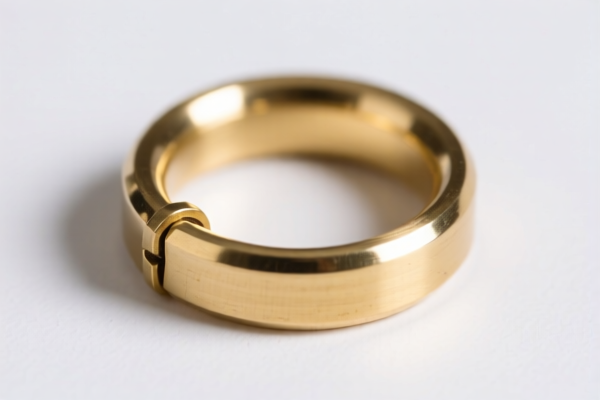
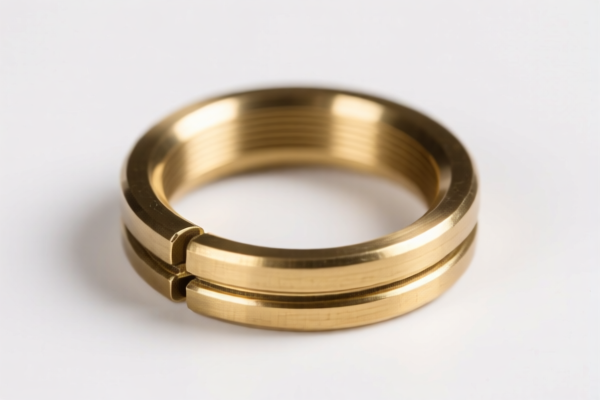
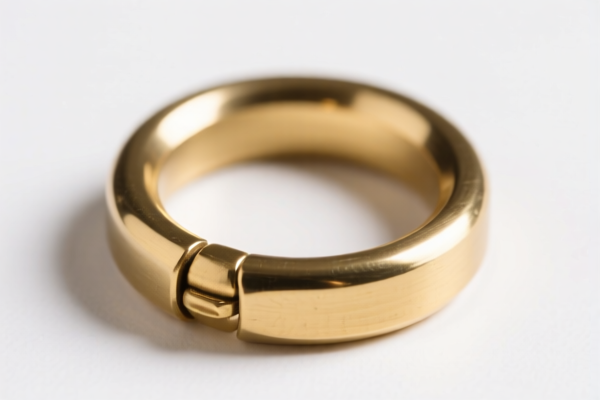
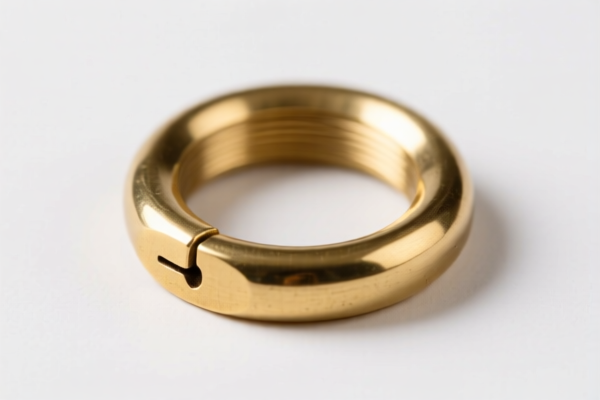
AI Analysis
🔒 Locking Ring Binder: The Ultimate Guide to HS Classification & US Customs Clearance (2026 Edition)
🌐 HS Code Reference & Customs Strategy | 2026 Latest Tariff Analysis | Professional Clearance Protocol
📌 I. Product Definition & Classification: Do You Really Know What a "Locking Ring Binder" Is?
A Locking Ring Binder is not just a piece of stationery; it is a complex assembly of materials designed for document security and organization. In international trade, its classification depends heavily on its primary material and functional mechanism.
It is generally categorized into two main families:
1. Paper/Cardboard Binders: Made primarily of paperboard, featuring metal or plastic ring mechanisms.
2. Plastic Binders: Made primarily of synthetic polymers (PVC, PP, ABS), often with integrated locking tabs or rolled structures.
⚠️ Key Distinction Point:
- If the binder is looseleaf (has removable rings/bars): It falls under Chapter 48 (Paper).
- If the binder is plastic/flexible or photo album: It falls under Chapter 39 (Plastics).
- Note: The "Locking" mechanism (if metal hinges/fasteners) does not determine the primary classification of the binder itself, but may affect accessory classification if sold separately.
📦 II. HS Code Classification Details (2026 Latest Tariff Authority)
Based on the provided data, here are the specific HS Codes and descriptions for Locking Ring Binders:
| HS Code | Product Description | Material/Feature | Applicability |
|---|---|---|---|
4820.30.00.20 |
Looseleaf Binders of Paper/Paperboard | Paper/Cardboard body with looseleaf rings | Standard office notebooks, accounting books |
4820.30.00.40 |
Other Binders of Paper/Paperboard | Paper/Cardboard body (non-looseleaf or other types) | Folder-style binders, non-looseleaf |
3926.90.48.00 |
Photo Albums (Plastics) | Plastic construction | Specifically for photos, not general documents |
3926.90.88.00 |
Flexible Plastic Document Binders | Plastic, with tabs, rolled or flat | Plastic folder-style binders, tabbed organizers |
🔍 Critical Reminder:
- Do not classify a plastic "Locking Ring Binder" under4820(Paper). If the body is >50% plastic or primarily plastic, it goes to Chapter 39.
- "Looseleaf" is the key keyword for4820.30.00.20. If it has removable rings for adding pages, this is the preferred code for paper binders.
- Metal Hinges/Fasteners: If the "locking" feature is a separate metal hinge sold separately, see the metal classifications below (8302). However, if integrated into the binder, it is usually included in the binder's code.
💰 III. 2026 US Tariff Rate Breakdown (Including Section 301 & IEEPA Surcharges)
✅ Applicable Country: United States (US)
✅ Origin: China (CN)
✅ Effective Date: Post-2025 Policies (Including latest trade measures)
🎯 1. HS Code 4820.30.00.20 & 4820.30.00.40 (Paper/Cardboard Binders)
These are the most common codes for standard office ring binders.
| Item | Detail |
|---|---|
| Base Tariff | 0.0% (ad valorem) |
| Section 301 Surchage | +25.0% (Trade Act of 1974, Section 301) |
| Total Tax Rate | 25.0% |
| Tax Calculation | CIF Value × 25% |
| De Minimis Exemption | ❌ Not Available (Values > $800 do not qualify for low-value exemption if taxed; below $800 may still face duty if declared) |
| Legal Basis | USITC:4820.30.00.20 → Section 301 List 4A |
📌 Explanation:
- Although the base tariff is 0%, the 25% Section 301 surcharge applies to almost all paper products of Chinese origin.
- This is a flat 25% on the total customs value.
- No extra "Steel/Aluminum" tariff applies here (as it’s paper/plastic), but verify if metal rings are significant components (usually ignored for primary classification).
🎯 2. HS Code 3926.90.48.00 (Plastic Photo Albums)
For binders specifically designed as photo albums made of plastic.
| Item | Detail |
|---|---|
| Base Tariff | 3.4% |
| Section 301 Surcharge | 0.0% (Not on List 4A for this specific subheading in the provided data) |
| Total Tax Rate | 3.4% |
| Tax Calculation | CIF Value × 3.4% |
| De Minimis Exemption | ❌ Not Available (Standard duty applies) |
📌 Explanation:
- Plastic photo albums have a much lower tax burden (3.4%) compared to paper binders (25%).
- Strategic Tip: If your "Locking Ring Binder" can be legitimately classified as a "Photo Album" (e.g., designed for photos, not general documents), this offers significant savings. However, customs may challenge this if it contains document pockets, not photo sleeves.
🎯 3. HS Code 3926.90.88.00 (Flexible Plastic Document Binders)
For plastic binders with tabs, rolled or flat.
| Item | Detail |
|---|---|
| Base Tariff | Error / Failed to Retrieve |
| Section 301 Surcharge | Error / Failed to Retrieve |
| Total Tax Rate | Error |
| Recommendation | ⚠️ Verify with Current HTSUS Database |
📌 Explanation:
- The provided data indicates a retrieval error for this specific code.
- General Industry Knowledge: Most3926.90plastic articles from China are subject to 7.5% - 10% base duty + 25% Section 301, totaling 32.5% - 35%.
- Action: Do not rely on the "Error" value. Consult a customs broker for the current 2026 HTSUS rate for3926.90.88.00. It is likely higher than the paper binder code (25%).
🎯 4. Metal Hinges/Fasteners (If Sold Separately)
If the "locking ring" mechanism is a separate metal product (e.g., a metal hinge for a cabinet, not part of the binder).
| HS Code | Description | Total Tax Rate |
|---|---|---|
8302.10.60.60 |
Hinges for furniture, of base metal (Steel/Aluminum/Zinc) | 78.5% |
8302.41.60.80 |
Other mountings/fittings for buildings, of base metal | 50.0% |
📌 Warning:
- If you import separate metal hinges for furniture (not binders), the tax is sky-high (50-78.5%).
- Crucial: Ensure the "locking ring" is declared as part of the Binder (HS 4820/3926) and NOT as a separate metal hinge. If declared separately, you will face massive tariffs.
🛠️ IV. Customs Clearance Practical Advice (Avoiding Pitfalls)
✅ 1. Documentation Checklist (Essential)
| Document | Requirement | Explanation |
|---|---|---|
| Commercial Invoice | Must specify "Locking Ring Binder" | Clear description of use (office/photo) |
| Product Photos | High-res images of the binder | Show the locking mechanism and material |
| Material Composition | % of Paper vs. Plastic vs. Metal | Critical for correct HS code selection |
| Design Drawings | If unique structure | Helps prove if it’s a "Photo Album" or "Document Binder" |
| Origin Certificate | CO (China Origin) | Required for Section 301 determination |
✅ 2. Declaration Strategy (Key Mantras)
🔥 "Material Matters, Function Defines, Mechanism Included!"
| Scenario | Correct Declaration | Incorrect Declaration | Risk |
|---|---|---|---|
| Paper Binder with Metal Rings | 4820.30.00.20 - "Paper Looseleaf Binder" |
"Metal Hinge" or "Stationery Part" | 78.5% Tax! |
| Plastic Photo Album | 3926.90.48.00 - "Plastic Photo Album" |
"Plastic Document Binder" | Higher Tax |
| Plastic Tabbed Binder | 3926.90.88.00 - "Plastic Document Binder" |
"Paper Binder" | Misclassification Penalty |
| Separate Metal Hinges | Not imported with binders | "Binder Accessories" | 50-78.5% Tax |
✅ 3. Special Cases & Optimization
| Case | Advice |
|---|---|
| Can it be a Photo Album? | If your binder has pockets for 4x6 photos and is plastic, declare as 3926.90.48.00 (3.4% tax) instead of a document binder. |
| Mixed Materials | If the binder is 70% plastic, use Chapter 39. If 70% paper, use Chapter 48. |
| OEM/Private Label | Ensure the invoice matches the physical product. Don’t declare "Generic Binder" if it has a specific locking mechanism. |
| Low-Value Shipments | Even if under $800, if it’s a "binding machine" or large commercial order, it may not qualify for de minimis. |
🌍 V. Global Market Comparison (2026)
| Country | Recommended HS Code | Tax Rate (China Origin) | Notes |
|---|---|---|---|
| 🇺🇸 USA | 4820.30.00.20 |
25.0% | High Section 301 surcharge |
| 🇪🇺 EU | 4820.10.00 |
~2.7% + VAT | Lower tariffs, no Section 301 |
| 🇨🇳 China | 4820.10.00 |
5% | Import tax for Chinese re-exports |
| 🇲🇽 Mexico | 4820.10.00 |
0% (USMCA) | If manufactured in Mexico |
📌 Conclusion:
- USA is the most expensive market for paper binders due to the 25% surcharge.
- Plastic Photo Albums (3926.90.48.00) are tax-efficient in the US (3.4%).
- Metal Accessories are prohibitively expensive (50-78.5%). Keep them integrated.
📌 VI. Common Mistakes & Pitfalls (Lessons Learned)
❌ Mistake 1: Declaring a Paper Binder as a Plastic Binder to avoid Section 301
👉 Consequence: Customs inspection reveals paper material → Fine + Back Duties.
❌ Mistake 2: Declaring Metal Hinges separately from the Binder
👉 Consequence: Pay 78.5% on the hinge value instead of 0% base + 25% on the binder.
❌ Mistake 3: Using "Binding Machine" HS Code for "Binders"
👉 Consequence: Machine codes (84.41) have different taxes and may trigger stricter regulations.
❌ Mistake 4: Ignoring the "Looseleaf" vs. "Other" distinction in 4820.30
👉 Consequence: Misclassification can lead to delays, though tax rate is same (25%).
✅ Correct Approach:
"Locking Ring Binder, Paper, Looseleaf, 3-Ring, 11x14 inch, Model XYZ, Chinese Origin"
🎯 VII. Conclusion: Smart Classification, Lower Costs!
🎯 Remember the Mantra:
🔹 "Paper = 25%, Plastic Album = 3.4%, Metal Separate = 78.5%!"
🔹 "Don’t Separate the Hinge, Keep it with the Binder!"
🔹 "Photo Album? Use Plastic Code, Save Money!"
📌 Pro Tip:
If you are importing large quantities, consider:
1. Pre-Ruling: Request an Advance Ruling from US Customs (CBP) for your specific product.
2. Material Shift: If possible, design the binder with plastic photo-album features to utilize the 3.4% rate.
3. Supply Chain: Source from Vietnam, Mexico, or Malaysia to avoid Section 301 (25% surcharge).
📣 Act Now:
📞 Contact a Customs Broker to verify the exact material composition of your "Locking Ring Binder."
🚀 Optimize Your HS Code to save thousands in duties.
✨ Professional Clearance, Starting with Accurate Classification!
💼 Every Dollar of Duty is Calculated, Every Second of Clearance is Saved!
Customer Reviews
About HS Code Classification
The Harmonized System (HS) is an internationally standardized nomenclature developed by the World Customs Organization (WCO) to classify traded products. Over 200 countries use the HS system as the basis for customs tariffs, trade statistics, and import/export regulations.
Each HS code follows a hierarchical structure:
- Chapter (2 digits) — Broad category of goods (e.g., Chapter 84: Machinery and Mechanical Appliances)
- Heading (4 digits) — More specific grouping within the chapter
- Subheading (6 digits) — Internationally standardized breakdown, used by all WCO member countries
- National subdivisions (8-10 digits) — Country-specific extensions for further classification, such as US HTSUS 10-digit codes
Correct HS code classification is essential for smooth customs clearance, accurate duty payment, and compliance with trade regulations. Misclassification can lead to customs delays, overpayment of duties, or penalties.
When importing from CN to US, the applicable tariff rates may include:
- Most-Favored-Nation (MFN) rate — The standard duty rate applied to WTO members
- General rate — Applied to countries without trade agreements
- Trade remedy duties — Additional tariffs such as Section 301 (anti-dumping), Section 232 (national security), or countervailing duties
The information provided on this page is for reference purposes only. For official classification, please consult with your local customs authority or a licensed customs broker.