long body brush
CN → US| HS Code | Tariff Rate | Origin | Destination | Doc |
|---|---|---|---|---|
| 4421919880 | 38.3% | CN | US | Official Doc |
| 3926903500 | 24.0% | CN | US | Official Doc |
| 4421999880 | 38.3% | CN | US | Official Doc |
| 3926909989 | 22.8% | CN | US | Official Doc |
| 9603298090 | 0.0% | CN | US | Official Doc |
Product Images
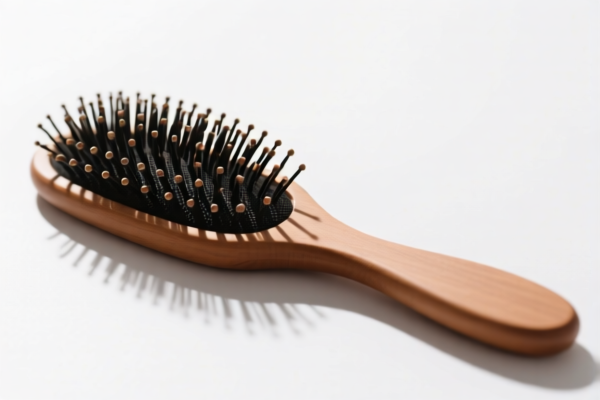
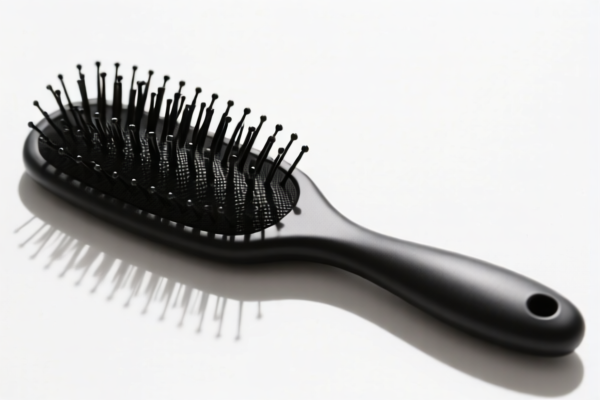
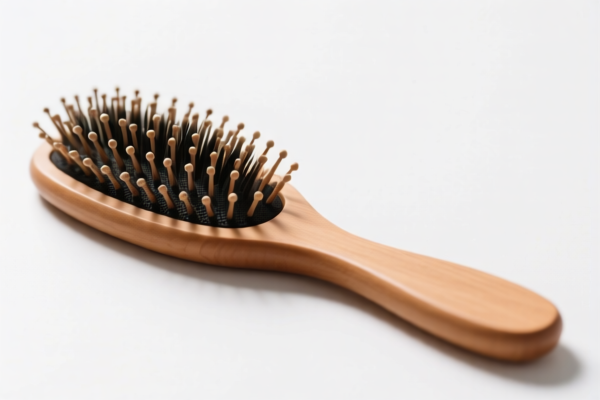
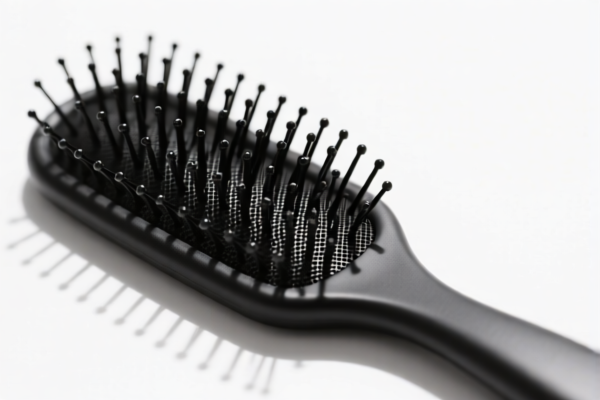
AI Analysis
🖌️ Long Body Brush (沐浴刷 / Bath Brush)
🌐 HS Code Reference & Customs Clearance Guide | 2026 Latest Tariff Analysis | Professional Clearance Strategy
📌 One, Product Definition & Classification: Do You Really Understand "Long Body Brush"?
A long body brush is a personal hygiene tool designed for exfoliating and cleaning the back and hard-to-reach areas of the body. It typically consists of a long handle for reach and bristles for scrubbing. In international trade, its classification depends heavily on the material composition (Wood vs. Plastic) and the specific functional description (Brush vs. Other Article).
⚠️ Key Classification Logic:
- If the handle and bristle base are primarily Wood/Bamboo → Likely Chapter 44 (Wood Articles).
- If the handle and bristle base are primarily Plastic → Likely Chapter 39 (Plastic Articles).
- If classified specifically as a "Toilet Brush" or similar human-use brush → Likely Chapter 96 (Brooms/Brushes).
📦 Two, HS Code Classification Details (2026 Latest Tariff Authority Comparison)
| HS Code | Product Description | Material Inference | Tax Rate (Total) | Tax Breakdown |
|---|---|---|---|---|
4421.91.98.80 |
Other articles of wood/bamboo (Catch-all for Wooden/Bamboo Body Brushes) | Wood/Bamboo Inferred from handle/body material. Matches "Other articles of wood" fallback category. No material conflict. |
38.3% | Base: 3.3% Section 301: 25.0% IEEPA 122: 10% |
3926.90.35.00 |
Other plastic articles (Catch-all for Plastic Body Brushes) | Plastic Inferred from handle/body material. Matches "Other plastic articles" fallback category. No material conflict. |
24.0% | Base: 6.5% Section 301: 7.5% IEEPA 122: 10% |
4421.99.98.80 |
Other wooden articles (Catch-all for Mixed/Material Body Brushes) | Wood/Composite Handle often wood; bristles may be mixed. Fits "Other wooden articles" logic. No material conflict. |
38.3% | Base: 3.3% Section 301: 25.0% IEEPA 122: 10% |
3926.90.99.89 |
Other plastic articles (High-tier Plastic Body Brushes) | Plastic Handle/body primarily plastic. Fits "Other plastic articles" logic. No material conflict. |
22.8% | Base: 5.3% Section 301: 7.5% IEEPA 122: 10% |
9603.29.80.90 |
Other brushes for cleaning the human body (Catch-all for Toilet/Human-use Brushes) | Mixed Inferred as "Toilet Brush" category. Long handle fits "Other brushes for human use." Material can be wood or plastic. |
3.6% + $0.003/ea | Base: 0.3¢/each + 3.6% Section 301: 0.0% IEEPA 122: 10% |
🔍 Key Reminder:
- Wooden Brushes fall under HS 4421. High base tariff but high Section 301 (25%).
- Plastic Brushes fall under HS 3926. Lower base tariff, lower Section 301 (7.5% or 10%).
- Special Brush Category (HS 9603): If declared specifically as a "Brush for human body cleaning," it may qualify for 0% Section 301 tariff, significantly lowering the total tax burden, though it adds a per-unit fee.
💰 Three, 2026 Latest Tariff Rate Details (Including Surcharges & Policy Add-ons)
✅ Applicable Country: United States (US)
✅ Origin: China (CN)
✅ Effective Time: Post-2025 Policy Framework
🎯 1. 4421.91.98.80 / 4421.99.98.80 —— Wooden/Bamboo Body Brushes
| Item | Content |
|---|---|
| Base Tariff | 3.3% (ad valorem) |
| USITC Surcharge (Section 301) | +25% (From USITC Footnote related to Chapter 44) |
| IEEPA Surcharge (122 Clause) | +10% (Targeting China/HK products) |
| Total Tariff | 38.3% |
| Tax Calculation | CIF Value × 38.3% |
| De Minimis Exemption | ❌ Not Eligible (High risk of audit due to high tariff) |
| Legal Basis Path | IEEPA:9903.01.25 → IEEPA:9903.01.24 → USITC:4421.91.98.80 → FOOTNOTE:9903.88.01 |
📌 Explanation:
- Wooden products face a high combined tariff (38.3%).
- The 25% Section 301 tariff is a major cost driver.
- Cost-Saving Tip: If the brush is not strictly "wooden" but has plastic components, consider Plastic HS Codes to reduce the Section 301 portion.
🎯 2. 3926.90.35.00 / 3926.90.99.89 —— Plastic Body Brushes
| Item | Content |
|---|---|
| Base Tariff | 5.3% - 6.5% (ad valorem) |
| USITC Surcharge (Section 301) | +7.5% (Standard for plastic articles under Section 301) |
| IEEPA Surcharge (122 Clause) | +10% |
| Total Tariff | 22.8% - 24.0% |
| Tax Calculation | CIF Value × 22.8%~24.0% |
| De Minimis Exemption | ❌ Not Eligible |
| Legal Basis Path | IEEPA:9903.01.24 → USITC:3926.90.99.89 → FOOTNOTE:9903.88.01 |
📌 Note:
- Plastic brushes are significantly cheaper to import into the US than wooden ones due to the lower Section 301 rate (7.5% vs. 25%).
- Even if the brush has a wooden handle, if the primary character is plastic (e.g., plastic bristle block, plastic grip), HS 3926 may be applicable.
- Cost-Saving Tip: Optimize material design to lean towards plastic if tariff reduction is the priority.
🎯 3. 9603.29.80.90 —— Brushes for Cleaning the Human Body
| Item | Content |
|---|---|
| Base Tariff | $0.003 per piece + 3.6% ad valorem |
| USITC Surcharge (Section 301) | 0.0% (Critical Advantage!) |
| IEEPA Surcharge (122 Clause) | +10% |
| Total Tariff | 3.6% + $0.003/piece |
| Tax Calculation | (CIF Value × 3.6%) + ($0.003 × Quantity) |
| De Minimis Exemption | ❌ Not Eligible (Generally) |
| Legal Basis Path | IEEPA:9903.01.24 → USITC:9603.29.80.90 → FOOTNOTE:9903.88.01 |
📌 Critical Insight:
- This is the Lowest Tariff Option if the product can be correctly classified as a "Brush for cleaning the human body."
- The 0% Section 301 tariff saves 7.5%~25% compared to other codes.
- Risk: Customs may challenge this classification if the product is seen as a "general household brush" rather than a specific "body brush."
- Requirement: Clear labeling and marketing as "Bath Brush," "Back Scrubber," or "Body Brush" to support this classification.
🛠️ Four, Customs Clearance Practical Advice (Battle-Tested Pitfall Guide)
✅ 1. Required Documentation Checklist (Non-negotiable)
| Document | Must Provide | Description |
|---|---|---|
| ✅ Product Specs | ✔️ | Dimensions, bristle type (natural/synthetic), handle material. |
| ✅ Material Composition | ✔️ | % of Wood, Plastic, Bristles, Metal (if any). |
| ✅ Product Photos | ✔️ | Clear shots of handle, bristle block, and overall shape. |
| ✅ Commercial Invoice | ✔️ | Must state "Long Body Brush" or "Bath Brush," not generic "Household Item." |
| ✅ Packing List | ✔️ | Unit count (for the $0.003/unit tax calculation). |
| ✅ Origin Certificate | ✔️ | If not CN, may qualify for lower IEEPA rates. |
✅ 2. Declaration Strategy (Key Mantras)
🔥 "Material Matters, Function Defines, Section 301 is the Killer!"
| Scenario | Correct Declaration | Wrong Action |
|---|---|---|
| Plastic Body Brush | 3926.90.99.89 |
Misdeclaring as Wood → 38.3% |
| Wooden Body Brush | 4421.91.98.80 |
Misdeclaring as Plastic → Audit Risk |
| Body Brush (Specific Use) | 9603.29.80.90 |
Generic "Household Brush" → 24%+ |
| Mixed Material (Plastic + Wood) | 3926.90.99.89 (if plastic dominant) |
Generic "Wooden Item" → 38.3% |
✅ 3. Special Case Handling
| Situation | Handling Advice |
|---|---|
| OEM Custom Brush | Provide design specs to prove material dominance. If plastic bristle base + wooden handle, argue for HS 3926 if plastic >50% by value/weight. |
| Bamboo Handle + Plastic Bristles | Typically HS 4421 (Wood/Bamboo). High tax. Consider switching handle to plastic for cost savings. |
| Eco-Friendly Claims | Do not use "Eco" in HS description unless it triggers specific exemptions (rare). Focus on material facts. |
| Bulk Import | For HS 9603, the $0.003/unit fee adds up. Calculate if 3.6% base is better for high-value items. |
🌍 Five, Global Market Clearance Comparison (2026 Latest)
| Country/Region | Recommended HS Code | Tariff (China Origin) | Certification | Notes |
|---|---|---|---|---|
| 🇺🇸 USA | 9603.29.80.90 (if applicable) |
3.6% + $0.003/ea | None | Lowest tariff if classified as body brush. Otherwise 22-38%. |
| 🇨🇳 China | 9603.29.80.90 |
~5-10% | RoHS | Lower base tariffs globally. |
| 🇪🇺 EU | 9603.29.80 |
0-6% | CE | No Section 301 equivalent. |
| 🇬🇧 UK | 9603.29.80.90 |
0-6% | UKCA | Post-Brexit rules apply. |
📌 Conclusion:
- The US market is the most complex due to Section 301 (7.5-25%) and IEEPA (10%) tariffs.
- HS 9603 is the "Golden Ticket" for US imports, but requires strict classification support.
- HS 3926 is the "Safe Harbor" for plastic brushes, balancing cost and classification stability.
📌 Six, Common Errors & Pitfall Guide (Blood & Tears Lessons)
❌ Error 1: Declaring a Plastic Body Brush as 4421.91.98.80 (Wood)
👉 Consequence: Pay 38.3% tax instead of 22.8%. Overpay $15 per $100!
❌ Error 2: Declaring a Body Brush as 9603.29.80.90 without proof of "Human Use"
👉 Consequence: Customs reclassifies to 3926 or 4421 → Back taxes + Penalties.
❌ Error 3: Ignoring the $0.003/unit fee in HS 9603 for low-value items
👉 Consequence: For cheap brushes, the per-unit fee + 3.6% might be higher percentage-wise than ad valorem only. Calculate carefully.
❌ Error 4: Missing IEEPA 10% in all HS Codes
👉 Consequence: All imports from China face +10% IEEPA. If you forget this, your total cost projection is wrong by 10%.
✅ Correct Practice:
"Plastic Long Handle Bath Brush, with Synthetic Bristles, Model BBR-101, For Personal Hygiene"
🎯 Seven, Conclusion: Professional Declaration, Save Time, Reduce Costs!
🎯 Remember the Mantra:
🔹 "Wood = 38%, Plastic = 23%, Body Brush = 3.6%! Choose Wisely!"
🔹 "Section 301 is the Tax Trap, Material is the Key!"
📌 Pro Tip:
- If your brush has mixed materials, provide a detailed BOM (Bill of Materials) to support the dominant material classification.
- For HS 9603, ensure your marketing materials clearly state "Body Brush" or "Bath Brush" to align with customs records.
- Consider Advance Ruling for large volume imports to lock in the HS 9603 classification and save ~20% in tariffs.
📣 Action Required:
📞 Contact a Professional Customs Broker
🖼️ Provide Clear Product Images + Material Specs
🚀 Optimize Your HS Code, Maximize Your Profit!
✨ Professional Clearance Starts with Accurate Classification!
💼 Every Cent Counts in International Trade!
Customer Reviews
About HS Code Classification
The Harmonized System (HS) is an internationally standardized nomenclature developed by the World Customs Organization (WCO) to classify traded products. Over 200 countries use the HS system as the basis for customs tariffs, trade statistics, and import/export regulations.
Each HS code follows a hierarchical structure:
- Chapter (2 digits) — Broad category of goods (e.g., Chapter 84: Machinery and Mechanical Appliances)
- Heading (4 digits) — More specific grouping within the chapter
- Subheading (6 digits) — Internationally standardized breakdown, used by all WCO member countries
- National subdivisions (8-10 digits) — Country-specific extensions for further classification, such as US HTSUS 10-digit codes
Correct HS code classification is essential for smooth customs clearance, accurate duty payment, and compliance with trade regulations. Misclassification can lead to customs delays, overpayment of duties, or penalties.
When importing from CN to US, the applicable tariff rates may include:
- Most-Favored-Nation (MFN) rate — The standard duty rate applied to WTO members
- General rate — Applied to countries without trade agreements
- Trade remedy duties — Additional tariffs such as Section 301 (anti-dumping), Section 232 (national security), or countervailing duties
The information provided on this page is for reference purposes only. For official classification, please consult with your local customs authority or a licensed customs broker.