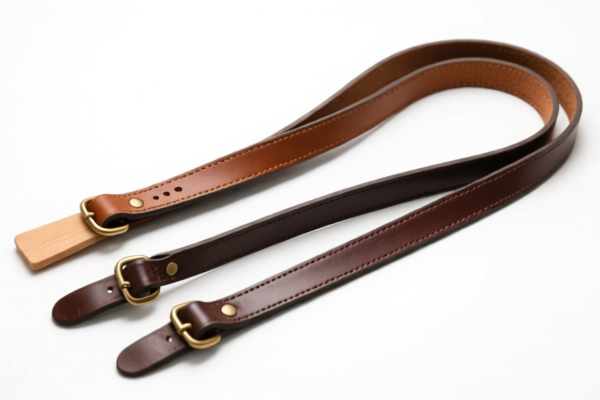
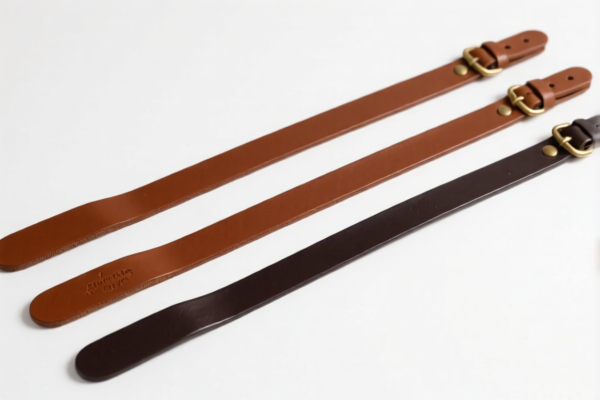
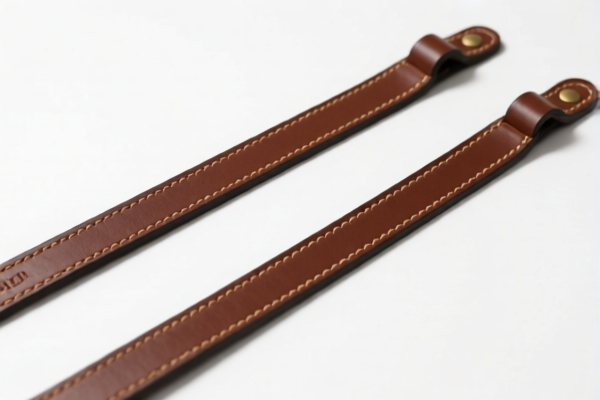
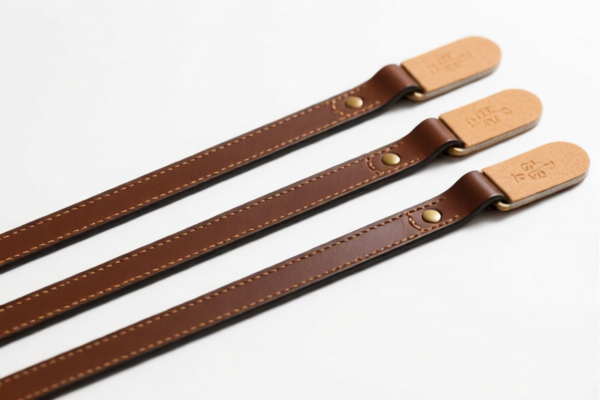
long leather stropping straps
CN → US| HS Code | Tariff Rate | Origin | Destination | Doc |
|---|---|---|---|---|
| 4205008000 | 35.0% | CN | US | Official Doc |
| 8205595560 | 40.3% | CN | US | Official Doc |
| 4205004000 | 36.8% | CN | US | Official Doc |
| 3926906090 | 39.2% | CN | US | Official Doc |
Product Images
AI Analysis
🧵 Long Leather Stropping Straps (Leather Honing Belts)
🌐 HS Code Reference & Customs Clearance Guide | 2026 Latest Tariff Analysis | Professional Clearance Strategy
📌 I. Product Definition & Classification: Do You Really Understand "Stropping Straps"?
Long leather stropping straps are specialized tools used in the sharpening process of blades (knives, razors, swords). They are not the abrasive surface itself (which is often cloth or paper), but the leather substrate that holds the compound. In international trade, they are categorized based on their material composition and function.
Leather Substrate (Leather Goods): The core item is made of processed leather, designed to carry sharpening compound. It is considered a finished leather article or a strap variant. Tool Accessory/Consumable: From a functional perspective, it is an accessory or consumable for hand tools, where the leather serves as a non-metallic medium.
⚠️ Key Distinction Point:
- If classified strictly by Material (Leather) → Falls under Chapter 42 (Leather Goods)
- If classified by Function (Tool Part) → Falls under Chapter 82 (Hand Tools) or 85 (Electrical) depending on usage
- Critical Logic: Customs often looks at the essential character. If it's purely a leather strap for sharpening, Chapter 42 is the most direct description of the material, while Chapter 82 views it as a tool accessory. The provided data highlights a debate between these two chapters.
📦 II. HS Code Classification Details (2026 Latest Tariff Authority Comparison)
| HS Code | Product Description | Applicable Scenario | Classification Logic |
|---|---|---|---|
4205.00.80.00 |
Other articles of leather or composition leather | Leather-based stropping straps; fits "other leather articles" | ✅ Primary Material: Leather processing form |
8205.59.55.60 |
Other hand tools including glass cutters; sets/goods of this chapter | Stropping belts as tool accessories/consumables; non-metallic material | ✅ Function: Accessory for sharpening tools |
4205.00.40.00 |
Other articles of leather or composition leather (Straps/Belts) | Leather straps; variant of belt shape; leather/re-leathered goods | ✅ Shape Variant: Regarded as a specific leather strap |
3926.90.60.90 |
Other articles of plastics and articles of other materials of heading 3901 to 3914 | "Other materials" fallback for non-plastic belts; general goods | ❌ Fallback: Less accurate if leather is dominant |
🔍 Key Reminder:
-4205Series: Emphasizes that the product is leather. Customs sees "Leather Stropping Strap" and links it to leather articles. -8205Series: Emphasizes that it is a tool accessory. Even though the material is leather, its purpose is to sharpen tools. -3926Series: Often a "catch-all" but is generally less favored for genuine leather goods compared to Chapter 42.
💰 III. 2026 Latest Tariff Rate Breakdown (Including Additional Taxes & Policy Surcharges)
✅ Applicable Country: United States (US)
✅ Origin: China (CN)
✅ Effective Date: 2025/2026 Import Period
🎯 1. 4205.00.80.00 — Other Leather Articles (Leather-Centric View)
| Item | Content |
|---|---|
| Base Tariff | 0.0% (Ad valorem) |
| USITC Additional Tax | +25.0% (Section 301 Duties) |
| Section 122 Duties | +10.0% (Specific provision for certain goods) |
| Total Tariff | 35.0% |
| Tax Calculation | CIF Value × 35% |
| De Minimis Eligibility | ❌ No (Denied) |
| Legal Basis Path | USITC:4205.00.80.00 → Section 301: Footnote 9903.88.01 → Section 122: 10% surcharge |
📌 Explanation:
- Base duty is 0% for many leather articles. - The 25% Section 301 tariff applies to Chinese-origin goods. - The 10% Section 122 tariff adds an additional layer. - Total 35% is high but slightly lower than the tool category in this dataset.
🎯 2. 8205.59.55.60 — Hand Tools/Accessories (Function-Centric View)
| Item | Content |
|---|---|
| Base Tariff | 5.3% (Ad valorem) |
| USITC Additional Tax | +25.0% (Section 301 Duties) |
| Section 122 Duties | +10.0% (Specific provision for certain goods) |
| Total Tariff | 40.3% |
| Tax Calculation | CIF Value × 40.3% |
| De Minimis Eligibility | ❌ No (Denied) |
| Legal Basis Path | USITC:8205.59.55.60 → Section 301: Footnote 9903.88.01 → Section 122: 10% surcharge |
📌 Note:
- Base duty is higher (5.3%) because it is classified under Hand Tools. - Even though it's a "leather" strap, if customs accepts the tool accessory argument, the base rate increases. - Total 40.3% is the highest in this dataset.
🎯 3. 4205.00.40.00 — Leather Straps/Belts (Shape-Centric View)
| Item | Content |
|---|---|
| Base Tariff | 1.8% (Ad valorem) |
| USITC Additional Tax | +25.0% (Section 301 Duties) |
| Section 122 Duties | +10.0% (Specific provision for certain goods) |
| Total Tariff | 36.8% |
| Tax Calculation | CIF Value × 36.8% |
| De Minimis Eligibility | ❌ No (Denied) |
| Legal Basis Path | USITC:4205.00.40.00 → Section 301: Footnote 9903.88.01 → Section 122: 10% surcharge |
📌 Important:
- This code treats the product specifically as a leather strap/belt. - The base rate (1.8%) is low, but the total (36.8%) is between the other two leather codes.
🎯 4. 3926.90.60.90 — Other Articles of Plastics/Other Materials (Fallback View)
| Item | Content |
|---|---|
| Base Tariff | 4.2% (Ad valorem) |
| USITC Additional Tax | +25.0% (Section 301 Duties) |
| Section 122 Duties | +10.0% (Specific provision for certain goods) |
| Total Tariff | 39.2% |
| Tax Calculation | CIF Value × 39.2% |
| De Minimis Eligibility | ❌ No (Denied) |
| Legal Basis Path | USITC:3926.90.60.90 → Section 301: Footnote 9903.88.01 → Section 122: 10% surcharge |
📌 Caution:
- This is a "catch-all" for non-plastic other materials. - Using this for genuine leather is risky and may be challenged as misclassification. - However, if the leather content is minimal or it's considered a composite, it might apply. Not recommended for pure leather goods.
🛠️ IV. Customs Clearance Practical Advice (Battle-Tested Pitfall Guide)
✅ 1. Preparation Checklist (Non-Negotiable)
| Document | Required? | Explanation |
|---|---|---|
| ✅ Product Specification Sheet | ✔️ | Must detail: Material (100% Leather?), Dimensions, Handle Type. |
| ✅ Product Photos (Clear) | ✔️ | Show the leather texture, handle, and overall shape. |
| ✅ Commercial Invoice | ✔️ | Description: "Leather Stropping Strap for Knife Sharpening". Avoid vague terms like "Tool Part". |
| ✅ Material Declaration | ✔️ | Explicitly state "Made of Leather". |
| ✅ Packing List | ✔️ | List quantity and weight accurately. |
✅ 2. Declaration Strategy (Key Mantras)
🔥 "Be Clear on Material, Be Clear on Function!"
| Scenario | Recommended HS Code | Reasoning | Risk |
|---|---|---|---|
| Pure Leather Strap | 4205.00.80.00 |
Best fits "Other Leather Articles". Lowest base rate (0%). | Low if description is clear. |
| Leather Strap with Metal Handle/Attachment | 4205.00.40.00 |
Treated as a specific leather belt/strap variant. | Medium. |
| Declared as "Tool Accessory" | 8205.59.55.60 |
If emphasizing it's for sharpening tools. | High Base Rate (5.3%). |
| Mixed Material/Composite | 3926.90.60.90 |
If leather is not the main component. | High Risk of Misclassification Penalty. |
✅ 3. Special Case Handling
| Situation | Advice |
|---|---|
| OEM/Custom Orders | Provide customer PO and design specs to prove "Stropping Strap" purpose. |
| Multiple Materials | If the strap has significant non-leather parts, discuss with customs broker to determine the "essential character". |
| High Value Shipments | Consider Advance Ruling from CBP to lock in the HS Code and avoid surprise duties. |
| Section 122 Impact | Note that 10% Section 122 applies across all codes here. Ensure your supplier is aware of the total landed cost. |
🌍 V. Global Market Comparison (2026 Latest)
| Country/Region | Recommended HS Code | Estimated Total Duty (China Origin) | Certification | Notes |
|---|---|---|---|---|
| 🇺🇸 USA | 4205.00.80.00 |
35.0% | None Specific | Highest total cost due to Section 301 + 122. |
| 🇨🇳 China | 4205.00.80.00 |
~5% - 10% | N/A | Lower import duties for domestic trade. |
| 🇪🇺 EU | 4205.00.90 |
~12% | CE (if applicable) | No Section 301 equivalent. |
| 🇬🇧 UK | 4205.00.90 |
~12% | UKCA | Post-Brexit rules apply. |
📌 Conclusion:
- USA is the most expensive market due to aggressive add-on tariffs (25% + 10%). - EU/UK are more stable with standard MFN rates. - Cost Optimization: For US imports,4205.00.80.00offers the lowest total rate (35%) among the options provided.
📌 VI. Common Errors & Pitfall Guide (Blood & Tears Lessons)
❌ Error 1: Declaring as "Knife Part" without specifying material
👉 Consequence: Customs may assign 8205.59.55.60 → 40.3% Duty vs 35%.
👉 Loss: 5.3% extra tax.
❌ Error 2: Ignoring Section 122 Tariff
👉 Consequence: Underpayment by 10%.
👉 Loss: 10% duty + Penalties + Interest.
❌ Error 3: Using "Plastic" HS Code for Leather Goods
👉 Consequence: Misclassification penalty.
👉 Loss: High fines and shipment delay.
✅ Correct Action:
Description: "Long Leather Stropping Strap, 100% Leather, for Manual Knife Sharpening, No Mechanical Parts."
HS Code:4205.00.80.00
Total Duty: 35%
🎯 VII. Conclusion: Precision in Classification Saves Money!
🎯 Remember the Mantra:
🔹 "Leather First, Tool Second: Choose
4205for Lower Base Rates!"
🔹 "Section 122 is 10%: Don't Forget It!"
🔹 "Total Cost = Base + 25% + 10%: Plan Accordingly!"
📌 Pro Tip:
If your leather stropping straps are sourced from Vietnam, Thailand, or Mexico, you may be eligible for Section 301 Exclusions or lower base rates.
👉 Action:
📞 Consult a Customs Broker
📄 Apply for Advance Ruling
🚀 Optimize Your Supply Chain to Reduce Landed Cost!
✨ Professional Clearance Starts with Accurate Classification!
💼 Every Percentage Point Matters in International Trade!
Customer Reviews
About HS Code Classification
The Harmonized System (HS) is an internationally standardized nomenclature developed by the World Customs Organization (WCO) to classify traded products. Over 200 countries use the HS system as the basis for customs tariffs, trade statistics, and import/export regulations.
Each HS code follows a hierarchical structure:
- Chapter (2 digits) — Broad category of goods (e.g., Chapter 84: Machinery and Mechanical Appliances)
- Heading (4 digits) — More specific grouping within the chapter
- Subheading (6 digits) — Internationally standardized breakdown, used by all WCO member countries
- National subdivisions (8-10 digits) — Country-specific extensions for further classification, such as US HTSUS 10-digit codes
Correct HS code classification is essential for smooth customs clearance, accurate duty payment, and compliance with trade regulations. Misclassification can lead to customs delays, overpayment of duties, or penalties.
When importing from CN to US, the applicable tariff rates may include:
- Most-Favored-Nation (MFN) rate — The standard duty rate applied to WTO members
- General rate — Applied to countries without trade agreements
- Trade remedy duties — Additional tariffs such as Section 301 (anti-dumping), Section 232 (national security), or countervailing duties
The information provided on this page is for reference purposes only. For official classification, please consult with your local customs authority or a licensed customs broker.