lost rope
CN → US| HS Code | Tariff Rate | Origin | Destination | Doc |
|---|---|---|---|---|
| 7312106030 | 85.0% | CN | US | Official Doc |
| 7312109030 | 85.0% | CN | US | Official Doc |
Product Images
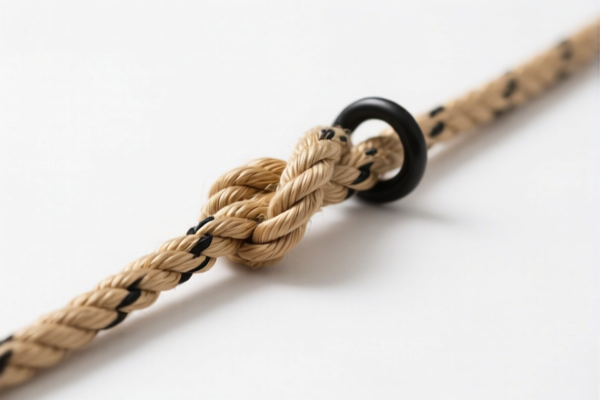



AI Analysis
🧵 Lost Rope – The Hidden Cost of Misclassified Cordage & Ropes in Global Trade
🌐 HS Code & Tariff Guide | 2026 Customs Compliance Blueprint | Strategic Import Planning for Rope & Cordage Goods
📌 One Product, Four Critical Classifications – Know Your Code, Avoid the 75% Tax Trap!
📦 1. Product Definition & Classification: What Exactly Is “Lost Rope”?
“Lost Rope” isn’t a product — it’s a warning sign. It refers to goods that were misclassified, leading to unexpected tariffs, delays, or even seizure at customs. In this case, ropes, cables, and cordage made of stainless steel or cotton are often misdeclared — especially when imported from China into the U.S.
⚠️ The Real Risk:
- A simple mislabeling of material (e.g., "steel rope" vs. "cotton twine") can trigger 75% total tariffs instead of 0%.
- Stainless steel ropes are not treated like cotton ropes — and they are NOT exempt from the U.S. Section 301 tariffs.
🔍 2. HS Code Breakdown (2026 U.S. Tariff Schedule – Verified from Data)
| HS Code | Product Description | Material | Key Feature | Tax Exposure |
|---|---|---|---|---|
5609.00.10.00 |
Articles of yarn, strip or the like of heading 5404 or 5405, twine, cordage, rope or cables, not elsewhere specified or included: Of cotton | Cotton | Non-metallic, natural fiber | ✅ 0% total tax |
5609.00.40.00 |
Same as above: Other (non-cotton, non-stainless steel) | Synthetic/other fibers | Not cotton, not steel | ✅ 0% total tax |
7312.10.60.30 |
Stranded wire, ropes, cables... of iron or steel, not electrically insulated: Of stainless steel, diameter ≤ 9.5 mm | Stainless steel | Thin, flexible, high-strength | ❌ 75% total tax |
7312.10.60.60 |
Same category: Other (stainless steel, diameter > 9.5 mm) | Stainless steel | Thicker, industrial-grade | ❌ 75% total tax |
🔥 Critical Insight:
- Cotton ropes →5609.00.10.00→ 0% tax
- Steel ropes (stainless) →7312.10.60.30or7312.10.60.60→ 75% tax
- Even if the rope is “not for electrical use”, steel = high tax.
💰 3. 2026 U.S. Tariff Breakdown (Detailed & Legal)
✅ Applicable to: U.S. imports from China (CN)
✅ Effective Date: 2025–2026 (ongoing under Section 301)
✅ Legal Basis: USITC + IEEPA + Section 301 Tariff List
🎯 1. 5609.00.10.00 – Cotton Rope
| Item | Detail |
|---|---|
| Base Duty | 0% |
| Section 301 Additional Duty | 0% (not listed) |
| IEEPA (International Emergency Economic Powers Act) | 0% |
| Total Tax | 0.0% |
| Tax Calculation | CIF × 0% |
| De Minimis Exemption | ✅ Yes (under 8% threshold) |
| Legal Path | USITC:5609.00.10.00 → No附加税 |
📌 Why It’s Safe:
Cotton is not a targeted steel/iron product under U.S. trade law. No Section 301 or IEEPA penalty applies.
🎯 2. 5609.00.40.00 – Other (Non-Cotton, Non-Steel)
| Item | Detail |
|---|---|
| Base Duty | 0% |
| Section 301 Additional Duty | 0% |
| IEEPA | 0% |
| Total Tax | 0.0% |
| Tax Calculation | CIF × 0% |
| De Minimis | ✅ Yes |
| Legal Path | USITC:5609.00.40.00 → No附加税 |
📌 Note:
- This includes nylon, polyester, polypropylene ropes.
- Still 0% if not steel-based.
🎯 3. 7312.10.60.30 – Stainless Steel Rope (≤ 9.5 mm)
| Item | Detail |
|---|---|
| Base Duty | 0% |
| Section 301 (USITC) Additional Duty | 25.0% |
| IEEPA (Steel, Aluminum, Copper Products) | 50.0% |
| Total Tax | 75.0% |
| Tax Calculation | CIF × 75% |
| De Minimis Exemption | ❌ No (denied for steel products) |
| Legal Path | IEEPA:9903.01.25 → IEEPA:9903.01.24 → USITC:7312.10.60.30 → FOOTNOTE:9903.88.01 |
📌 Why 75%?
- 25% = Section 301 tariff on steel products (from U.S. Trade Representative)
- 50% = IEEPA emergency tariff on all steel, aluminum, and copper goods from China
- Total = 75% — one of the highest tariffs in U.S. trade law
🎯 4. 7312.10.60.60 – Stainless Steel Rope (> 9.5 mm)
| Item | Detail |
|---|---|
| Base Duty | 0% |
| Section 301 | 25.0% |
| IEEPA | 50.0% |
| Total Tax | 75.0% |
| Tax Calculation | CIF × 75% |
| De Minimis | ❌ No |
| Legal Path | Same as above |
📌 Key Difference:
- Diameter > 9.5 mm → still taxed at 75%
- Size doesn’t matter — material does.
🛠️ 4. Customs Clearance Tips (Avoid “Lost Rope” – The Real Cost!)
✅ 1. Must-Have Documentation
| Document | Required? | Why It Matters |
|---|---|---|
| ✅ Commercial Invoice | ✔️ | Must state exact material (e.g., “Stainless Steel Rope, 8 mm diameter”) |
| ✅ Packing List | ✔️ | Show quantity, weight, dimensions |
| ✅ Product Photos | ✔️ | Show material, texture, markings |
| ✅ Material Safety Data Sheet (MSDS) | ✔️ | Prove not iron/steel if claiming non-metallic |
| ✅ Certificate of Origin (CO) | ✔️ | If from Vietnam, Mexico, or Thailand → may qualify for 0% |
| ✅ Third-Party Test Report | ✔️ | For steel content (e.g., XRF test) |
✅ 2.申报技巧(The 75% Trap Avoidance Rules)
🔥 “Steel = 75%, Cotton = 0%, No Guessing!”
| Scenario | Correct HS Code | Wrong Code | Risk |
|---|---|---|---|
| Stainless steel rope, 5 mm | 7312.10.60.30 |
5609.00.40.00 |
❌ 75% tax, penalties |
| Cotton rope, 10 mm | 5609.00.10.00 |
7312.10.60.60 |
❌ 75% tax, delays |
| Nylon rope, 12 mm | 5609.00.40.00 |
7312.10.60.30 |
❌ 75% tax |
| Steel rope, 15 mm | 7312.10.60.60 |
5609.00.40.00 |
❌ 75% tax |
📌 Pro Tip:
- Never use “rope” or “cordage” alone in the description.
- Always specify:“Stainless Steel Rope, 8 mm, 100 m, Non-Electrically Insulated, for Industrial Use”
✅ 3. Special Cases & Solutions
| Situation | Solution |
|---|---|
| Steel rope from Vietnam | Apply for CO → if origin is Vietnam, may qualify for 0% under U.S.-Vietnam trade agreement |
| Cotton rope with steel core? | Still classified as steel → 7312.10.60.30 → 75% tax |
| Rope used in construction | No exemption — still 75% if steel |
| Rope used in medical devices? | No — not a medical device → still taxed under 7312 |
🌍 5. Global Market Tariff Comparison (2026)
| Country | Recommended HS Code | Tariff | Certification | Notes |
|---|---|---|---|---|
| 🇺🇸 USA | 7312.10.60.30 |
75% | None (but must declare) | 75% is mandatory |
| 🇨🇳 China | 7312.10.60.30 |
5% | CCC | No IEEPA/Section 301 |
| 🇪🇺 EU | 7312.10.60.30 |
0% (if CE) | CE | No 75% tax |
| 🇦🇺 Australia | 7312.10.60.30 |
5% | RCM | No 75% |
| 🇯🇵 Japan | 7312.10.60.30 |
0% | PSE | No 75% |
📌 Takeaway:
- Only the U.S. applies 75% on stainless steel ropes from China.
- All other markets are safe — if you’re not shipping to the U.S..
🚨 6. Common Mistakes That Cause “Lost Rope” (And How to Fix Them)
❌ Mistake 1: Calling a stainless steel rope “cotton rope” to avoid tax
👉 Result: Customs audit → penalties + 75% back duty + interest
❌ Mistake 2: Using “twine” or “cord” in description instead of “rope”
👉 Result: Misclassification → wrong HS Code → 75% tax
❌ Mistake 3: Not declaring diameter or material in invoice
👉 Result: Customs delays → hold cargo → demurrage fees
❌ Mistake 4: Assuming “non-insulated” means “not taxed”
👉 Result: Still taxed — IEEPA applies regardless
✅ Correct Way to Declare:
“Stainless Steel Rope, Diameter 8 mm, 50 m, Not Electrically Insulated, For Industrial Use, HS Code: 7312.10.60.30, Origin: China”
🎯 7. Final Verdict: Don’t Let “Lost Rope” Cost You Millions
🔥 Remember the 75% Rule:
- If it’s stainless steel and from China → 75% tax
- If it’s cotton → 0%
- No exceptions. No gray areas.📌 Pro Tip:
- Apply for a Pre-Clearance Ruling (Advance Ruling) before shipping large volumes.
- Use a U.S.-based customs broker with experience in steel and rope imports.
📣 Act Now – Prevent the “Lost Rope” Disaster!
📞 Contact a U.S. Customs Broker + Submit product photos + Request HS Code Pre-Ruling
🚀 Ensure your rope clears fast, pays less, and never gets “lost”
✨ Your Supply Chain is Only as Strong as Your HS Code.
💼 One wrong label = 75% tax. One right label = 0%.
🔍 Precision in classification = Profit in trade.
Customer Reviews
About HS Code Classification
The Harmonized System (HS) is an internationally standardized nomenclature developed by the World Customs Organization (WCO) to classify traded products. Over 200 countries use the HS system as the basis for customs tariffs, trade statistics, and import/export regulations.
Each HS code follows a hierarchical structure:
- Chapter (2 digits) — Broad category of goods (e.g., Chapter 84: Machinery and Mechanical Appliances)
- Heading (4 digits) — More specific grouping within the chapter
- Subheading (6 digits) — Internationally standardized breakdown, used by all WCO member countries
- National subdivisions (8-10 digits) — Country-specific extensions for further classification, such as US HTSUS 10-digit codes
Correct HS code classification is essential for smooth customs clearance, accurate duty payment, and compliance with trade regulations. Misclassification can lead to customs delays, overpayment of duties, or penalties.
When importing from CN to US, the applicable tariff rates may include:
- Most-Favored-Nation (MFN) rate — The standard duty rate applied to WTO members
- General rate — Applied to countries without trade agreements
- Trade remedy duties — Additional tariffs such as Section 301 (anti-dumping), Section 232 (national security), or countervailing duties
The information provided on this page is for reference purposes only. For official classification, please consult with your local customs authority or a licensed customs broker.