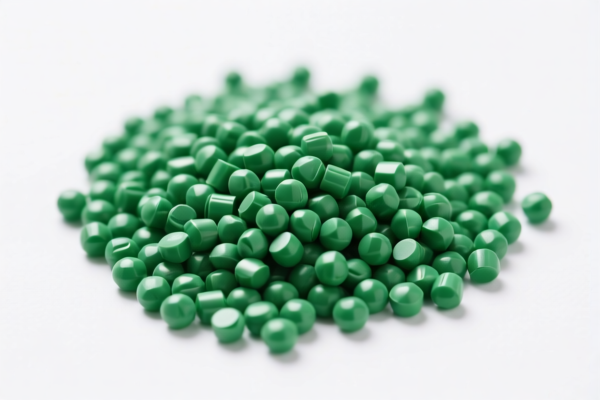
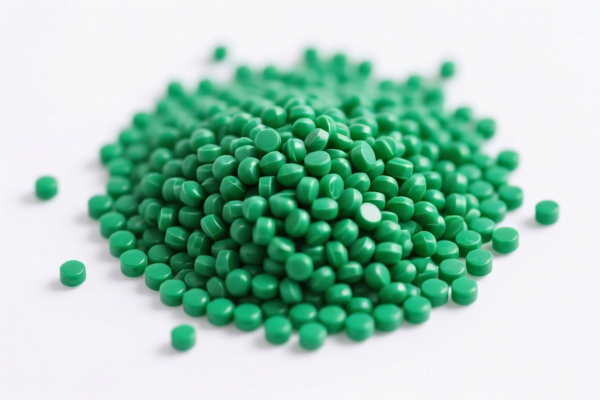
low density polyethylene for cables
CN → USProduct Images


AI Analysis
🧪 Low Density Polyethylene for Cables (LDPE)
🌐 HS Code Reference & Customs Clearance Guide | 2026 Latest Tariff Analysis | Professional Entry Strategy
📌 1. Product Definition & Classification: Do You Really Understand "LDPE for Cables"?
Low-Density Polyethylene (LDPE) is a thermoplastic manufactured mostly from the monomer ethylene. In the context of cables, it serves as a critical insulation and sheathing material due to its excellent electrical insulation properties, flexibility, and moisture resistance.
In international trade, LDPE is generally classified under Chapter 39 (Plastics and Articles Thereof). However, the specific HS code depends on whether the material is in its raw form (resin/beads) or processed form (compounds/pre-molded parts) and its specific application for electrical purposes.
⚠️ Key Distinction Point:
- If the product is raw resin/beads/powder intended for manufacturing insulation → Classify under 3901.10 or 3901.20.
- If the product is a compound (e.g., with additives for UV resistance or flame retardancy specifically for cables) → Classify under 3901.90 or 3902.10 depending on polymer type.
- Note: Finished cable assemblies are excluded here; this guide covers only the polyethylene material.
📦 2. HS Code Classification Details (2026 Latest Tariff Authority Comparison)
| HS Code | Product Description | Application Scenario | Form of Material |
|---|---|---|---|
3901.10.00 |
Polyethylene, Linear, Density < 0.94 | Linear LDPE (LLDPE) for thin cable films | ✅ Raw Resin/Beads |
3901.20.00 |
Polyethylene, Non-Linear, Density < 0.94 | Standard LDPE for cable insulation & sheathing | ✅ Raw Resin/Beads |
3901.90.00 |
Polyethylene in primary forms (Other) | Specialized LDPE compounds, recycled LDPE pellets | ✅ Raw Resin/Pellets |
3902.10.00 |
Polypropylene in primary forms | Incorrect for LDPE, often confused due to similar usage | ❌ N/A |
3907.60.00 |
Polyacetals (POM) | Incorrect, POM is a different plastic used in connectors, not insulation | ❌ N/A |
3926.90.97 |
Other articles of plastics | Incorrect, applies to finished plastic parts, not raw material for cables | ❌ N/A |
🔍 Important Reminder:
- Most standard LDPE for cable insulation falls under3901.20.00(Non-linear, density < 0.94).
- If the LDPE is compounded with additives (e.g., carbon black for UV protection, flame retardants), it may still fall under 3901/3902 if it retains its base polymer identity, or 3901.90 if it’s a specialized mixture.
- Do not classify as finished goods (e.g., wire & cable) under Chapter 85.
💰 3. 2026 Latest Tariff Rate Details (Including Surtaxes, Policy Surcharges)
✅ Applicable Country: United States (US)
✅ Origin: China (CN)
✅ Effective Date: From November 10, 2025 (including subsequent imports)
🎯 1. 3901.20.00 —— Low-Density Polyethylene (Raw Resin)
| Item | Content |
|---|---|
| Base Rate | 5.3% (ad valorem) |
| USITC Additional Duty | 0% (No Section 301 surcharge for most base polymers under current list, but check specific HTS nuances) |
| IEEPA Additional Duty | 0% (Generally exempt unless specifically targeted) |
| Total Duty Rate | 5.3% |
| Tax Calculation | CIF Value × 5.3% |
| De Minimis Eligibility | ❌ Not Applicable (Industrial raw materials > $800 usually subject to full duty) |
| Legal Basis Path | HTS:3901.20.00 |
📌 Explanation:
- Base duty for polyethylene in primary forms is relatively low compared to finished goods.
- Crucial Check: Some specific polyethylene compounds used in telecommunications may be subject to additional scrutiny or Section 301 tariffs if classified differently. Always verify the specific chemical composition.
- Note: If the LDPE is classified as "Polyethylene, linear" (3901.10.00), the base duty is also 5.3%.
🎯 2. 3901.90.00 —— Other Polyethylene in Primary Forms
| Item | Content |
|---|---|
| Base Rate | 5.3% |
| USITC Additional Duty | 0% |
| IEEPA Additional Duty | 0% |
| Total Duty Rate | 5.3% |
| Tax Calculation | CIF Value × 5.3% |
| De Minimis Eligibility | ❌ Not Applicable |
| Legal Basis Path | HTS:3901.90.00 |
📌 Note:
- Same base rate, but ensure the product description accurately reflects "Other Polyethylene" if it doesn't fit the density criteria of 3901.10/20.
🛠️ 4. Customs Clearance Practical Advice (Field Pitfall Avoidance Guide)
✅ 1. Preparation of Documentation (Must-Haves)
| Document | Required | Description |
|---|---|---|
| ✅ Material Safety Data Sheet (MSDS) | ✔️ | Essential for chemical products, shows composition |
| ✅ Technical Data Sheet (TDS) | ✔️ | Specifies density, melt index, intended use (e.g., "for cable insulation") |
| ✅ Commercial Invoice | ✔️ | Must clearly state "Low Density Polyethylene, Primary Form" |
| ✅ Certificate of Origin (CO) | ✔️ | If claiming preferential rates (e.g., under USMCA for Canadian/Mexican origin) |
| ✅ Bill of Lading | ✔️ | Standard shipping document |
| ✅ Plastic Waste Regulations Compliance | ✔️ | If using recycled LDPE, additional EPA/EU compliance docs may be needed |
✅ 2. Declaration Tips (Key Mnemonic)
🔥 "Raw Resin, Not Wire, Density Key, Chapter 39!"
| Scenario | Correct Declaration | Incorrect Practice |
|---|---|---|
| LDPE Beads/Pellets for Cable Insulation | 3901.20.00 |
Misclassify as "Plastic Parts" → Higher duty |
| LDPE Sheeting/Sheathing (Pre-formed) | 3921.10.00 |
Misclassify as raw material |
| Finished Cable (with Copper Core) | 8544.42.00 |
Misclassify LDPE resin as finished cable |
| Recycled LDPE Pellets | 3901.90.00 |
Claiming virgin material status → Fraud risk |
✅ 3. Special Cases Handling
| Situation | Handling Advice |
|---|---|
| Compounded LDPE (with Additives) | If additives change the essential character, it may still be 3901/3902. Provide formulation details. |
| Recycled LDPE | Subject to stricter EPA regulations. Ensure it meets US recycling standards. |
| FDA-Approved LDPE | If used for food-contact cable coatings (rare but possible), provide FDA compliance docs. |
| Flame-Retardant LDPE | Check for additional safety certifications (UL, VDE) for customs inspection. |
🌍 5. Global Main Markets Customs Comparison (2026 Latest)
| Country/Region | Recommended HS Code | Tariff | Certification Requirements | Notes |
|---|---|---|---|---|
| 🇺🇸 United States | 3901.20.00 |
5.3% | None specific | Base duty applies |
| 🇨🇳 China | 3901.20.00 |
6.5% | CCC (if finished goods) | Raw material exemption |
| 🇪🇺 European Union | 3901.20.00 |
6.5% | REACH Compliance | Strict chemical regulations |
| 🇬🇧 United Kingdom | 3901.20.00 |
6.5% | UK REACH | Post-Brexit regulations apply |
| 🇯🇵 Japan | 3901.20.00 |
5.0% | JIS Standards | Low duty, high quality standards |
📌 Conclusion:
- LDPE is a low-duty raw material globally, but compliance with chemical regulations (REACH, EPA) is critical.
- US Base Duty: 5.3%, which is significantly lower than finished plastic products.
- China Origin: No additional Section 301 tariffs on base polyethylene, but verify specific sub-headings.
📌 6. Common Errors & Pitfall Guide (Blood Lessons)
❌ Error 1: Declaring LDPE as "Plastic Parts" (3926)
👉 Consequence: Higher duty (e.g., 3-5% vs 5.3%, but potential misclassification penalties) and inspection delays.
❌ Error 2: Failing to distinguish between Raw Resin and Finished Cable
👉 Consequence: Classifying raw LDPE as finished cable (8544) → Duty may be different, and regulatory requirements (FCC, UL) are irrelevant for raw material, leading to confusion.
❌ Error 3: Ignoring Recycled Content Regulations
👉 Consequence: If using recycled LDPE, failure to provide EPA compliance docs → Shipment held or destroyed.
❌ Error 4: Incorrect Density Declaration
👉 Consequence: LDPE density < 0.94 goes to 3901.20; if density is ≥ 0.94, it may go to 3901.40 (HDPE). Misclassification → Duty rate change + penalty.
✅ Correct Practice:
"Low Density Polyethylene (LDPE), Resin, Non-Linear, Density 0.92 g/cm³, Melt Index 2.0 g/10min, For Cable Insulation Application, UN3082 (if applicable), HS 3901.20.00"
🎯 7. Conclusion: Professional Declaration, Cost-Saving & Efficiency!
🎯 Remember the Mnemonic:
🔹 "Raw Resin, Chapter 39, Density Key, 5.3% Base!"
🔹 "Don't confuse with finished cable, Chapter 85 is for wire!"
🔹 "Recycled LDPE? Check EPA, otherwise stuck!"
📌 Tip:
If your LDPE is originating from Canada or Mexico, you can apply for USMCA Preferential Tariff, reducing duty to 0%.
Recommend pre-classification ruling if the product is a specialized compound, to avoid customs disputes.
📣 Immediate Action:
📞 Contact professional customs broker + Provide TDS/MSDS + Apply for HS Code Pre-ruling
🚀 Let your LDPE pass smoothly, clear customs fast, and save costs!
✨ Professional Customs Clearance Starts with Accurate Classification!
💼 Every Cent of Cost is Worth Calculating Precisely!
Customer Reviews
About HS Code Classification
The Harmonized System (HS) is an internationally standardized nomenclature developed by the World Customs Organization (WCO) to classify traded products. Over 200 countries use the HS system as the basis for customs tariffs, trade statistics, and import/export regulations.
Each HS code follows a hierarchical structure:
- Chapter (2 digits) — Broad category of goods (e.g., Chapter 84: Machinery and Mechanical Appliances)
- Heading (4 digits) — More specific grouping within the chapter
- Subheading (6 digits) — Internationally standardized breakdown, used by all WCO member countries
- National subdivisions (8-10 digits) — Country-specific extensions for further classification, such as US HTSUS 10-digit codes
Correct HS code classification is essential for smooth customs clearance, accurate duty payment, and compliance with trade regulations. Misclassification can lead to customs delays, overpayment of duties, or penalties.
When importing from CN to US, the applicable tariff rates may include:
- Most-Favored-Nation (MFN) rate — The standard duty rate applied to WTO members
- General rate — Applied to countries without trade agreements
- Trade remedy duties — Additional tariffs such as Section 301 (anti-dumping), Section 232 (national security), or countervailing duties
The information provided on this page is for reference purposes only. For official classification, please consult with your local customs authority or a licensed customs broker.