low viscosity refractory mud
CN → US| HS Code | Tariff Rate | Origin | Destination | Doc |
|---|---|---|---|---|
| 6902905010 | 35.0% | CN | US | Official Doc |
| 3801300000 | 39.9% | CN | US | Official Doc |
| 6902901010 | 35.0% | CN | US | Official Doc |
| 6902901010 | 35.0% | CN | US | Official Doc |
Product Images
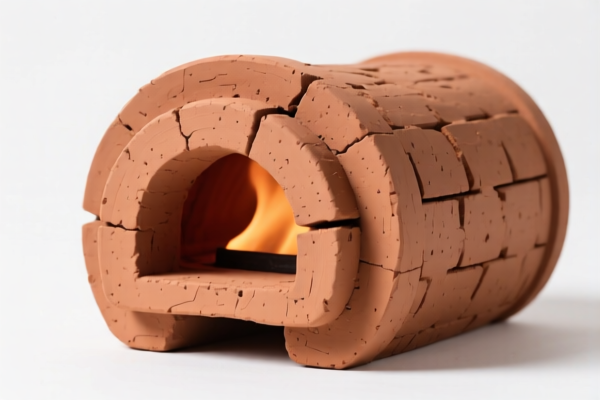
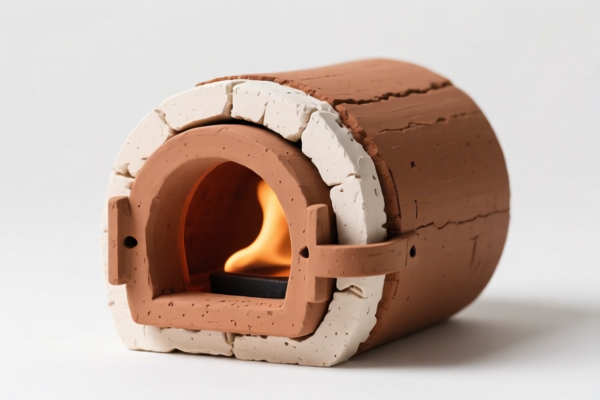
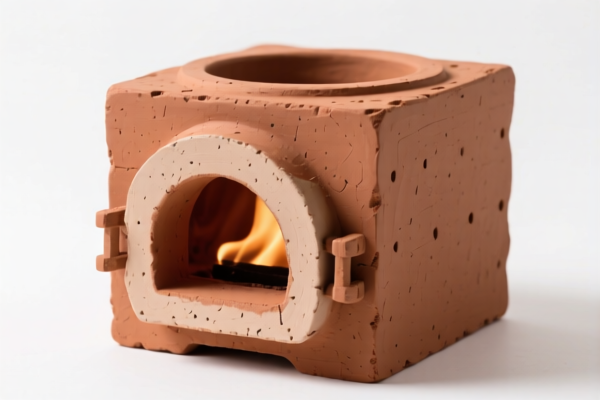

AI Analysis
🧱 Low Viscosity Refractory Mud (Low Viscosity Refractory Slurry)
🌐 HS Code Classification & Customs Clearance Guide | 2026 Latest Tariff Analysis | Professional通关 Strategy for Heat-Resistant Materials
📌 I. Product Definition & Classification: What is "Low Viscosity Refractory Mud"?
Low Viscosity Refractory Mud, also known as refractory slurry or cement, is a specialized construction material used in high-temperature industrial applications (e.g., kilns, furnaces, boilers). Its key characteristics are: * High Refractoriness: Resistant to extreme heat. * Low Viscosity: Flows easily, allowing it to fill gaps between bricks or coat linings effectively without air bubbles. * Composition: Typically made from clay, high-alumina cement, or specific oxides mixed with water or binders.
In international trade, its classification is not straightforward. It depends entirely on whether it is viewed as a finished ceramic product or an unfinished chemical paste. Misclassification here leads to significant tariff discrepancies.
⚠️ Key Distinction Point:
- If it is a raw paste/slush for lining (糊剂范畴) → Likely 3801.30.00.00
- If it is processed clay/ceramic material in brick/block form or equivalent properties → Likely 6902.90.50.10 or 6902.90.10.10
📦 II. HS Code Classification Details (Based on Provided Data)
| HS Code | Product Description & Rationale | Total Tax Rate | Tax Breakdown |
|---|---|---|---|
6902.90.50.10 |
Low viscosity refractory mud matched for refractory products; clay material characteristics. (Regarded as a refined clay-based refractory product) |
35.0% | Base: 0.0% Section 301: 25.0% Section 122: 10.0% |
3801.30.00.00 |
Low viscosity refractory mud falls under the category of furnace lining pastes. (Regarded as a chemical paste/adhesive for lining) |
39.9% | Base: 4.9% Section 301: 25.0% Section 122: 10.0% |
6902.90.10.10 |
Low viscosity refractory mud (low shrinkage) meets the morphology and clay material attributes of refractory ceramic building products/bricks/blocks. (Regarded as a finished ceramic brick/block analog) |
35.0% | Base: 0.0% Section 301: 25.0% Section 122: 10.0% |
🔍 Critical Analysis:
- The biggest difference lies between 35.0% and 39.9%. -3801.30.00.00carries a 4.9% base tariff because it is classified under "Colloids including those chemically modified... not elsewhere specified," treating the mud as a chemical paste. -6902.xxxxxxcarries a 0% base tariff because Chapter 69 covers "Ceramic Products," treating the mud as a clay-based material. - Both scenarios are hit by the same punitive tariffs: 25% (Section 301) and 10% (Section 122).
💰 III. 2026 Latest Tariff Rate Explanation (Detailed Breakdown)
✅ Applicable Country: United States (US)
✅ Origin: China (CN)
✅ Effective Date: Ongoing (Subject to current trade policies)
🎯 Scenario 1: Classification as Ceramic Product (6902.90.50.10 / 6902.90.10.10)
| Item | Content |
|---|---|
| Base Tariff | 0% (ad valorem) Reason: Ceramic refractory products often have preferential base rates. |
| USITC Additional Duty (Sec 301) | +25% Reason: China-origin goods under US Trade Act Section 301. |
| IEEPA Additional Duty (Sec 122) | +10% Reason: National security-related import duties on certain materials. |
| Total Effective Rate | 35.0% |
| Tax Calculation | CIF Value × 35% |
| De Minimis Exemption | ❌ Not Applicable High-value industrial goods do not qualify for $800 de minimis relief in this context. |
| Legal Basis Path | HTSUS: 6902.90 → USITC: Sec 301 Footnote 9903.88.01 → IEEPA: Sec 122 |
📌 Why this classification?
- If the mud is marketed as "Low Shrinkage" (低收缩) or matches "Refractory Brick/Block" attributes, customs may view it as a ceramic composite rather than a simple chemical glue. - Advantage: Lower base tariff (0% vs 4.9%).
🎯 Scenario 2: Classification as Chemical Paste (3801.30.00.00)
| Item | Content |
|---|---|
| Base Tariff | 4.9% (ad valorem) Reason: Classified as "Colloids... chemically modified," specifically furnace lining pastes. |
| USITC Additional Duty (Sec 301) | +25% |
| IEEPA Additional Duty (Sec 122) | +10% |
| Total Effective Rate | 39.9% |
| Tax Calculation | CIF Value × 39.9% |
| De Minimis Exemption | ❌ Not Applicable |
| Legal Basis Path | HTSUS: 3801.30 → USITC: Sec 301 Footnote 9903.88.01 → IEEPA: Sec 122 |
📌 Why this classification?
- If the product is sold strictly as a "paste" (糊剂) for coating or lining, without implying it is a solid brick, customs may default to Chapter 38 (Chemicals). - Disadvantage: Higher base tariff adds ~$5,000 in tax per $100,000 CIF value compared to Scenario 1.
🛠️ IV. Customs Clearance Practical Advice (Avoid Pitfalls)
✅ 1. Documentation Checklist (Critical for Clearance)
| Document | Required? | Explanation |
|---|---|---|
| ✅ Technical Data Sheet (TDS) | ✔️ Yes | Must clearly state: "Low Viscosity," "Refractory," "Clay-based" or "High Alumina." |
| ✅ Product Photos | ✔️ Yes | Show consistency (liquid/paste) AND application context (lining a furnace). |
| ✅ Composition Analysis | ✔️ Yes | Confirm % of clay vs. chemical binders. High clay content supports 6902 classification. |
| ✅ Commercial Invoice | ✔️ Yes | Use precise description: "Low Viscosity Refractory Clay Slurry for Furnace Lining" |
| ✅ Certificate of Origin (CO) | ✔️ Yes | To prove China origin and apply correct Section 301/122 duties. |
| ✅ Pre-Ruling Application | ✔️ Highly Recommended | Apply for an Advance Ruling from CBP to fix the HS Code before shipping. |
✅ 2. Declaration Strategy (Key Mantra)
🔥 “Clay Content High, Go Chapter 69; Chemical Paste, Go Chapter 38! Choose Wisely, Save 4.9%!”
| Situation | Recommended HS Code | Reasoning |
|---|---|---|
| Product is clay-based and acts as a ceramic material | 6902.90.50.10 or 6902.90.10.10 |
Lower base tax (0%). Argue it is a "refractory ceramic product." |
| Product is chemically modified paste with minimal clay structure | 3801.30.00.00 |
Higher base tax (4.9%). Argue it is a "colloid/paste for lining." |
| Mixed/Unclear Composition | ❌ Risky | CBP may audit and assign the higher tax rate after the fact. |
⚠️ Warning:
- Do NOT simply say "Refractory Material" on the invoice. Be specific. - If you claim6902, emphasize "Clay Material Attributes" (粘土材质特征) and "Low Shrinkage" (低收缩) if applicable.
✅ 3. Special Case Handling
| Scenario | Handling Advice |
|---|---|
| OEM Custom Mud | Provide formulation sheet to prove clay content >50% to support 6902. |
| High-Alumina Mud | If >50% alumina, it may still fall under 6902 if classified as ceramic, but verify specific subheadings. |
| Sample vs. Bulk | Samples under $800 might qualify for de minimis, but bulk commercial shipments cannot. |
| Dispute with CBP | If CBP assigns 3801, provide expert testimony that the product is a "refractory brick equivalent" in function. |
🌍 V. Global Market Comparison (2026)
| Country/Region | Recommended HS Code | Tariff (China Origin) | Remarks |
|---|---|---|---|
| 🇺🇸 USA | 6902.90.50.10 |
35.0% (Base 0% + 25% + 10%) | Most common classification for clay-based mud. |
| 🇺🇸 USA | 3801.30.00.00 |
39.9% (Base 4.9% + 25% + 10%) | If classified as chemical paste. |
| 🇨🇳 China | 6902.90.50.10 |
~6-10% | Domestic exports often face lower base rates. |
| 🇪🇺 EU | 6902.90.50 |
0-6.5% | No Section 301/122 equivalent. |
| 🇮🇳 India | 6902.90 |
7.5-10% | Check specific BCD rates. |
📌 Conclusion:
- USA is the most expensive market due to Section 301 and 122 duties. - Strategy: Aim for6902.90.50.10or6902.90.10.10to save the 4.9% base tariff.
📌 VI. Common Mistakes & Pitfalls (Lessons Learned)
❌ Mistake 1: Declaring as "Construction Chemicals" → 3824
👉 Result: CBP reclassifies to 3801.30.00.00 or 6902.xxxx based on composition → Delay + Back Taxes.
❌ Mistake 2: Using vague terms like "Mud" or "Slurry" without "Refractory"
👉 Result: CBP may classify as common clay (6904) → Audit for Undervaluation or Misclassification.
❌ Mistake 3: Ignoring Section 122 (10% Tax)
👉 Result: Underpaying by 10% → Penalties and Interest.
❌ Mistake 4: Assuming De Minimis applies
👉 Result: Bulk shipments of industrial materials are never eligible for $800 de minimis exemption.
✅ Correct Approach:
"Low Viscosity Refractory Clay Mud, High Temperature Resistant, For Industrial Kiln Lining, Clay-Based"
HS Code:6902.90.50.10(if clay-based)
Total Duty: 35.0%
🎯 VII. Conclusion: Professional Classification Saves Money!
🎯 Remember:
🔹 "Clay is Ceramic (6902, 35%), Paste is Chemical (3801, 39.9%)!"
🔹 "Don't leave 4.9% on the table by misclassifying!"
🔹 "Section 301 + 122 = 35-40%, regardless of Chapter!"
📌 Pro Tip:
If your product has high alumina content or special binders, consult a customs broker to see if a Special Manufacturing Process argument can justify 6902 classification.
Apply for a CBP Advance Ruling before shipping large volumes to lock in the 35.0% rate.
📣 Immediate Action:
📞 Contact a licensed customs broker.
📦 Provide a Technical Data Sheet highlighting Clay Content and Refractory Properties.
🚀 Secure the 35.0% rate, not 39.9%!
✨ Precision in Classification, Profit in Customs!
💼 Every Percent Counts in Industrial Trade!
Customer Reviews
About HS Code Classification
The Harmonized System (HS) is an internationally standardized nomenclature developed by the World Customs Organization (WCO) to classify traded products. Over 200 countries use the HS system as the basis for customs tariffs, trade statistics, and import/export regulations.
Each HS code follows a hierarchical structure:
- Chapter (2 digits) — Broad category of goods (e.g., Chapter 84: Machinery and Mechanical Appliances)
- Heading (4 digits) — More specific grouping within the chapter
- Subheading (6 digits) — Internationally standardized breakdown, used by all WCO member countries
- National subdivisions (8-10 digits) — Country-specific extensions for further classification, such as US HTSUS 10-digit codes
Correct HS code classification is essential for smooth customs clearance, accurate duty payment, and compliance with trade regulations. Misclassification can lead to customs delays, overpayment of duties, or penalties.
When importing from CN to US, the applicable tariff rates may include:
- Most-Favored-Nation (MFN) rate — The standard duty rate applied to WTO members
- General rate — Applied to countries without trade agreements
- Trade remedy duties — Additional tariffs such as Section 301 (anti-dumping), Section 232 (national security), or countervailing duties
The information provided on this page is for reference purposes only. For official classification, please consult with your local customs authority or a licensed customs broker.