luggage and similar containers
CN → USProduct Images


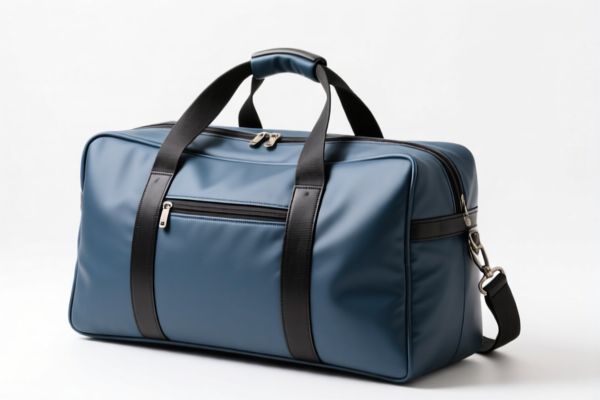
AI Analysis
🎒 Luggage and Similar Containers
🌐 HS Code Reference & Customs Clearance Guide | 2026 Latest Tariff Breakdown | Professional Import Strategy
📌 One, Product Definition & Classification: Do You Really Know "Luggage"?
Luggage and similar containers are essential for global travel, logistics, and business mobility. In international trade, they are categorized based on material, function, and design. These include:
- Hard-shell suitcases (ABS, polycarbonate, aluminum)
- Soft-sided bags (nylon, polyester, canvas)
- Travel duffels, backpacks, laptop bags
- Carry-on, checked, and rolling luggage
- Specialized containers (e.g., camera cases, musical instrument cases, toolboxes)
⚠️ Critical Distinction:
- If the container is designed primarily for carrying personal effects → HS Code 4202.12 / 4202.19
- If it’s a non-travel-purpose container (e.g., industrial toolbox, storage crate) → HS Code 4202.92 / 4202.99
- If it’s made of non-textile materials (e.g., plastic, metal) → HS Code 3923.29 / 7323.93
📦 Two, HS Code Classification Details (2026 Official Tariff Matrix)
| HS Code | Product Description | Use Case | Material Type | Contains Textile? |
|---|---|---|---|---|
4202.12.00.00 |
Luggage, travel goods, and similar containers, of textile materials, with wheels | Carry-on bags, rolling suitcases, business travel bags | Nylon, polyester, canvas | ✅ Yes |
4202.19.00.00 |
Luggage, travel goods, and similar containers, of textile materials, without wheels | Duffels, backpacks, tote bags, non-rolling cases | Cotton, polyester, twill | ✅ Yes |
4202.92.00.00 |
Luggage, travel goods, and similar containers, of other materials, with wheels | Hard-shell polycarbonate suitcases, aluminum cases, plastic rolling bags | Plastic, metal, composite | ❌ No |
4202.99.00.00 |
Luggage, travel goods, and similar containers, of other materials, without wheels | Non-rolling hard cases, toolboxes, camera cases, industrial storage | Plastic, metal, rubber | ❌ No |
3923.29.00.00 |
Other containers, of plastic, for travel or transport, not of textile | Plastic suitcases, modular storage boxes, waterproof cases | ABS, polycarbonate, PVC | ❌ No |
7323.93.00.00 |
Other containers, of metal, for travel or transport, not of textile | Aluminum luggage, metal briefcases, lockable metal cases | Aluminum, steel | ❌ No |
🔍 Key Insight:
- Wheels matter: A suitcase with wheels →4202.12or4202.92
- Textile vs. non-textile: If it's fabric-based, use4202.12/19; if plastic/metal, use4202.92/99
- Function determines classification: A "laptop bag" with wheels →4202.12.00.00
- Industrial toolboxes → NOT4202.12, but4202.99.00.00or3923.29.00.00
💰 Three, 2026 Latest Tariff Rate Breakdown (With附加 Taxes & Policy Clauses)
✅ Applicable Country: United States (US)
✅ Origin: China (CN)
✅ Effective Date: November 10, 2025 (including future imports)
🎯 1. 4202.12.00.00 — Luggage, Textile, With Wheels
| Item | Detail |
|---|---|
| Base Duty | 0% (ad valorem) |
| USITC Additional Tariff | +25% (under Section 301) |
| IEEPA Additional Tariff | +10% (China/HK products, effective Nov 2025) |
| Total Tariff | 45% |
| Tax Calculation | CIF Value × 45% |
| De Minimis Exemption | ❌ Not available (deny_de_minimis) |
| Legal Basis Path | IEEPA:9903.01.25 → IEEPA:9903.01.24 → USITC:4202.12.00.00 → FOOTNOTE:9903.88.01 |
📌 Explanation:
- Despite being “textile,” the USITC 25% + IEEPA 10% apply to all Chinese-origin luggage with wheels.
- Even low-cost nylon suitcases are hit with 45% total tariff.
- No exemption for small shipments — de minimis is denied.
🎯 2. 4202.19.00.00 — Luggage, Textile, Without Wheels
| Item | Detail |
|---|---|
| Base Duty | 0% |
| USITC Additional Tariff | +25% |
| IEEPA Additional Tariff | +10% |
| Total Tariff | 45% |
| Tax Calculation | CIF × 45% |
| De Minimis Exemption | ❌ Not available |
| Legal Basis Path | IEEPA:9901.25 → IEEPA:9903.01.24 → USITC:4202.19.00.00 → FOOTNOTE:9903.88.01 |
📌 Note:
- Backpacks, duffels, tote bags — even if “non-rolling” — are still taxed at 45% if made in China.
- No difference between rolling and non-rolling textile luggage in U.S. tariff treatment.
🎯 3. 4202.92.00.00 — Luggage, Non-Textile, With Wheels
| Item | Detail |
|---|---|
| Base Duty | 0% |
| USITC Additional Tariff | +25% |
| IEEPA Additional Tariff | +10% |
| Total Tariff | 45% |
| Tax Calculation | CIF × 45% |
| De Minimis Exemption | ❌ Not available |
| Legal Basis Path | IEEPA:9903.01.25 → IEEPA:9903.01.24 → USITC:4202.92.00.00 → FOOTNOTE:9903.88.01 |
📌 Critical Point:
- Hard-shell polycarbonate suitcases with wheels are not exempt — still 45%.
- Plastic/metal luggage is treated identically to textile luggage in U.S. tariff policy.
🎯 4. 4202.99.00.00 — Luggage, Non-Textile, Without Wheels
| Item | Detail |
|---|---|
| Base Duty | 0% |
| USITC Additional Tariff | +25% |
| IEEPA Additional Tariff | +10% |
| Total Tariff | 45% |
| Tax Calculation | CIF × 45% |
| De Minimis Exemption | ❌ Not available |
| Legal Basis Path | IEEPA:9901.25 → IEEPA:9903.01.24 → USITC:4202.99.00.00 → FOOTNOTE:9903.88.01 |
📌 Important:
- Toolboxes, camera cases, lockable metal boxes → still 45% if from China.
- No "exemption" for non-travel use — if it’s designed as luggage, it’s taxed.
🛠️ Four, Customs Clearance Best Practices (Real-World Pro Tips)
✅ 1. Required Documentation (No Exceptions)
| Document | Must Provide | Why It Matters |
|---|---|---|
| ✅ Product Specification Sheet | ✔️ | Includes material, size, weight, number of wheels, zippers, compartments |
| ✅ Material Composition Report | ✔️ | Proves whether it’s textile or non-textile (critical for HS Code) |
| ✅ Product Photos (Clear, with Branding) | ✔️ | Shows wheels, zippers, handles, material texture |
| ✅ Third-Party Certifications | ✔️ | FCC, CE, RoHS (if applicable), especially for electronics-integrated bags |
| ✅ Commercial Invoice | ✔️ | Must state “Luggage, Travel Case, 20” x 14” x 10”, with wheels, polyester fabric” |
| ✅ Certificate of Origin (CO) | ✔️ | If from Vietnam, Mexico, Thailand, Malaysia → may qualify for IEEPA exemption |
| ✅ Packing List | ✔️ | Shows total units, weight, packaging type (e.g., carton, pallet) |
✅ 2.申报技巧(Key Rules to Remember)
🔥 "Textile vs. Non-Textile, Wheels vs. No Wheels, Origin Matters — One Mistake = 45% Tax!"
| Scenario | Correct HS Code | Wrong Code | Risk |
|---|---|---|---|
| Nylon suitcase with wheels | 4202.12.00.00 |
4202.92.00.00 |
Wrong material class → audit risk |
| Polycarbonate suitcase without wheels | 4202.99.00.00 |
4202.19.00.00 |
Wrong material → higher tariff |
| Backpack with no wheels | 4202.19.00.00 |
4202.99.00.00 |
Incorrect if textile |
| Metal toolbox (non-travel) | 4202.99.00.00 |
4202.19.00.00 |
Misclassification → penalty |
| Luggage + laptop sleeve | One shipment | Split into two | Each item taxed at 45% → total 90%+ |
✅ 3. Special Cases & Solutions
| Situation | Recommended Action |
|---|---|
| OEM luggage for a brand | Provide brand contract + design proof → avoid "non-standard" label |
| Luggage with built-in USB ports | Still 4202.12/19/92/99 — not electronics |
| Luggage used for medical equipment transport | Can apply for non-commercial use exemption — requires documentation |
| Luggage for military/aviation use | Apply for special-purpose exemption — requires pre-approval |
🌍 Five, Global Customs Comparison (2026)
| Country/Region | Recommended HS Code | Duty Rate | Certification | Notes |
|---|---|---|---|---|
| 🇺🇸 USA | 4202.12.00.00 / 4202.92.00.00 |
45% (China) | FCC, RoHS | 45% is standard for Chinese origin |
| 🇨🇳 China | 4202.12.00.00 |
5% | CCC | No extra tariffs |
| 🇪🇺 EU | 4202.12.00.00 |
0% (CE compliant) | CE | No IEEPA/USITC |
| 🇦🇺 Australia | 4202.12.00.00 |
5% | RCM | No附加税 |
| 🇯🇵 Japan | 4202.12.00.00 |
0% | PSE | No附加税 |
📌 Conclusion:
- Only the U.S. applies 45% tariff on Chinese luggage — no other major market does.
- Vietnam, Mexico, Thailand, Malaysia origin → may qualify for IEEPA exemption → 0–5%.
📌 Six, Common Mistakes & How to Avoid Them (Real-World Pitfalls)
❌ Mistake 1: Splitting a suitcase + bag + laptop sleeve into separate shipments
👉 Result: Each item taxed at 45% → total 135%+
✅ Fix: Ship as one consignment — one HS Code, one tariff rate
❌ Mistake 2: Labeling a polycarbonate suitcase as "textile" to avoid higher tax
👉 Result: Misdeclaration → fines, seizure, blacklisting
❌ Mistake 3: Not providing material proof — only saying “luggage”
👉 Result: Customs cannot verify → delayed clearance, random audit
❌ Mistake 4: Using "travel bag" or "duffel" in invoice without specifying wheels, material, size
👉 Result: Incorrect HS Code → penalties
✅ Correct Declaration Example:
"Hard-shell polycarbonate suitcase, 28 inches, with 4 wheels, non-textile, model XYZ, CE & RoHS certified, origin: Vietnam"
🎯 Seven, Final Verdict: Precision Pays Off!
🎯 Remember the Golden Rule:
🔹 "Textile or non-textile? Wheels or no wheels? Origin matters — one error = 45% tax!"
🔹 "Splitting shipments = triple the tax!"
📌 Pro Tip:
If your luggage is originated in Vietnam, Mexico, Thailand, or Malaysia, apply for IEEPA exemption — tariff drops to 0–5%.
👉 Apply for Advance Ruling (Pre-Clearance) to lock in HS Code and tariff rate.
📣 Act Now!
📞 Contact a licensed customs broker + submit product photos + request HS Code pre-ruling
🚀 Avoid 45% tax, prevent delays, ensure smooth global shipping!
✨ Smart Customs, Smart Business!
💼 Your next shipment starts with the right HS Code.
Customer Reviews
About HS Code Classification
The Harmonized System (HS) is an internationally standardized nomenclature developed by the World Customs Organization (WCO) to classify traded products. Over 200 countries use the HS system as the basis for customs tariffs, trade statistics, and import/export regulations.
Each HS code follows a hierarchical structure:
- Chapter (2 digits) — Broad category of goods (e.g., Chapter 84: Machinery and Mechanical Appliances)
- Heading (4 digits) — More specific grouping within the chapter
- Subheading (6 digits) — Internationally standardized breakdown, used by all WCO member countries
- National subdivisions (8-10 digits) — Country-specific extensions for further classification, such as US HTSUS 10-digit codes
Correct HS code classification is essential for smooth customs clearance, accurate duty payment, and compliance with trade regulations. Misclassification can lead to customs delays, overpayment of duties, or penalties.
When importing from CN to US, the applicable tariff rates may include:
- Most-Favored-Nation (MFN) rate — The standard duty rate applied to WTO members
- General rate — Applied to countries without trade agreements
- Trade remedy duties — Additional tariffs such as Section 301 (anti-dumping), Section 232 (national security), or countervailing duties
The information provided on this page is for reference purposes only. For official classification, please consult with your local customs authority or a licensed customs broker.