luggage straps
CN → US| HS Code | Tariff Rate | Origin | Destination | Doc |
|---|---|---|---|---|
| 6307905010 | 17.5% | CN | US | Official Doc |
| 6307905020 | 17.5% | CN | US | Official Doc |
| 3926909989 | 22.8% | CN | US | Official Doc |
| 3926909905 | 22.8% | CN | US | Official Doc |
| 6217108500 | 24.6% | CN | US | Official Doc |
Product Images
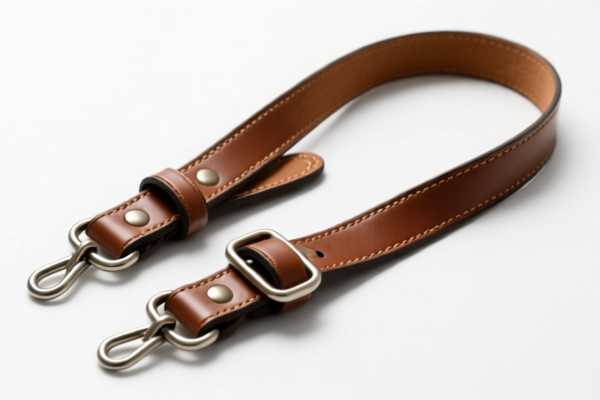
AI Analysis
🧳 Luggage Straps (Travel Luggage Tie-Down Straps)
🌐 HS Code Reference & Customs Clearance Guide | 2026 Latest Tariff Analysis | Professional Clearance Strategy
📌 I. Product Definition & Classification: Do You Really Understand “Luggage Straps”?
Luggage straps are essential travel accessories used to secure luggage, prevent bags from bursting open, and protect contents during transit. In international trade, their classification depends heavily on material composition and functional intent. They generally fall into two categories:
Textile/Strap-Based Straps (Fabric/Nylon/Polyester): Woven fabric straps used primarily for binding or securing. These fall under Chapter 63 (Other made-up textile articles). Plastic/Elastic Straps (PP/PET/Plasticized): Rigid or semi-rigid plastic bands used for tight bundling. These fall under Chapter 39 (Plastics and articles thereof).
⚠️ Key Distinction Point:
- If the strap is made of woven fabric (nylon/polyester) and functions as a general-purpose binding strap → Classified under 6307.90.50.10 / 6307.90.50.20.
- If the strap is made of plastic (polypropylene/polyester film) and functions as a plastic band → Classified under 3926.90.99.89 / 3926.90.99.05.
- If the strap is marketed specifically as a garment accessory or clothing component (rare for luggage) → Classified under 6217.10.85.00.
📦 II. HS Code Classification Details (2026 Latest Tariff Authority Comparison)
Based on the provided data, here are the specific HS Codes, summaries, and tax structures for Luggage Straps:
| HS Code | Product Description & Logic | Material Inference | Total Tax Rate |
|---|---|---|---|
| 6307.90.50.10 | Luggage Strap (Made-up Textile) Considered a made-up textile article. Fits the "other made-up articles" catch-all logic. |
Nylon or Polyester Fiber | 17.5% |
| 6307.90.50.20 | Tie-Down Strap (General Binding) Product form is a strap, categorized as a catch-all item. Infers non-cotton material (e.g., Polyester or Nylon). |
Non-Cotton (Polyester/Nylon) | 17.5% |
| 3926.90.99.89 | Plastic Strap (Polypropylene/Polyester) Infers plastic material (PP or Polyester). Fits the classification for other plastic articles. |
Plastic (PP or Polyester) | 22.8% |
| 3926.90.99.05 | Elastic Plastic Band Based on use, the form is inferred as a band. Fits characteristics of elastic bands, tending towards other plastic categories. |
Plastic (Elastic Band Type) | 22.8% |
| 6217.10.85.00 | Garment Accessory (Packaging Strap) Luggage strap treated as a clothing accessory/functionally similar. Material inferred as fabric or synthetic fiber. |
Fabric/Synthetic Fiber | 24.6% |
🔍 Important Note:
- Textile Straps (6307) have a lower total tax (17.5%) compared to Plastic Straps (3926) (22.8%) in this specific dataset.
- Garment Accessory classification (6217) has the highest tax (24.6%) and should only be used if the product is explicitly part of a garment or accessory kit, not standard luggage hardware.
- The "122 Clause" tariff applies to all categories in this dataset.
💰 III. 2026 Latest Tariff Rate Breakdown (Detailed Tax Clauses)
✅ Applicable Country: United States (US)
✅ Origin: China (CN)
✅ Effective Time: Current applicable rates as per 2026 dataset
🎯 1. 6307.90.50.10 / 6307.90.50.20 — Textile/Nylon/Polyester Luggage Straps
| Item | Details |
|---|---|
| Base Tariff | 0.0% (Ad Valorem) |
| Additional Tariff (Section 301) | +7.5% |
| 122-Clause Tariff | +10.0% |
| Total Tax Rate | 17.5% |
| Tax Calculation | CIF Value × 17.5% |
| De Minimis Exemption | ❌ Not Applicable (High tax rate exceeds de minimis thresholds for duty-free entry) |
| Legal Basis Path | Base: 0% → 301: 7.5% → 122: 10% → Total: 17.5% |
📌 Explanation:
- Base Tariff (0%): Textile made-up articles often have low or zero base MFN rates.
- Section 301 (7.5%): Reflects the additional duty on Chinese goods under the 301 Investigation.
- 122-Clause (10%): A specific additional tariff applicable to these textile binding products.
- Total: 17.5%. This is the most cost-effective option if the straps are made of woven fabric (Nylon/Polyester).
🎯 2. 3926.90.99.89 / 3926.90.99.05 — Plastic/PP/Polyester Film Straps
| Item | Details |
|---|---|
| Base Tariff | 5.3% (Ad Valorem) |
| Additional Tariff (Section 301) | +7.5% |
| 122-Clause Tariff | +10.0% |
| Total Tax Rate | 22.8% |
| Tax Calculation | CIF Value × 22.8% |
| De Minimis Exemption | ❌ Not Applicable |
| Legal Basis Path | Base: 5.3% → 301: 7.5% → 122: 10% → Total: 22.8% |
📌 Explanation:
- Base Tariff (5.3%): Plastic articles have a higher base duty than textile counterparts.
- Section 301 (7.5%): Same additional duty as textile goods.
- 122-Clause (10%): Same additional duty applies to plastic binding straps.
- Total: 22.8%. Higher than textile straps due to the higher base rate. Choose this only if the product is distinctly plastic (e.g., rigid PP bands).
🎯 3. 6217.10.85.00 — Garment Accessories / Synthetic Fiber Straps
| Item | Details |
|---|---|
| Base Tariff | 14.6% (Ad Valorem) |
| Additional Tariff (Section 301) | +0.0% |
| 122-Clause Tariff | +10.0% |
| Total Tax Rate | 24.6% |
| Tax Calculation | CIF Value × 24.6% |
| De Minimis Exemption | ❌ Not Applicable |
| Legal Basis Path | Base: 14.6% → 301: 0.0% → 122: 10% → Total: 24.6% |
📌 Explanation:
- Base Tariff (14.6%): Significantly higher base duty for garment accessories.
- Section 301 (0.0%): No additional 301 duty for this specific subheading in this dataset.
- 122-Clause (10%): Still applies.
- Total: 24.6%. Least favorable for standard luggage straps unless explicitly classified as a clothing accessory.
🛠️ IV. Customs Clearance Practical Advice (Avoiding Pitfalls)
✅ 1. Preparation Checklist (Mandatory)
| Document | Required | Purpose |
|---|---|---|
| ✅ Product Specification Sheet | ✔️ | Must state material (e.g., "100% Polyester Webbing" vs. "Polypropylene Plastic"). |
| ✅ Material Certificate | ✔️ | Critical to distinguish between Chapter 63 (Textile) and Chapter 39 (Plastic). |
| ✅ Product Photos | ✔️ | Clear images showing texture, buckle type, and width. |
| ✅ Commercial Invoice | ✔️ | Description must match HS Code intent (e.g., "Nylon Luggage Strap" vs. "Plastic Tie Band"). |
| ✅ Packing List | ✔️ | Ensure no mixed shipments of textile and plastic straps without separate classification. |
✅ 2. Declaration Strategy (Key Tips)
🔥 “Material Dictates Code, Textile Wins on Tax!”
| Scenario | Recommended HS Code | Reasoning |
|---|---|---|
| Woven Nylon/Polyester Strap | 6307.90.50.10 or .20 |
Lower total tax (17.5%). Base tariff is 0%. |
| Plastic PP Strap / PET Film Strap | 3926.90.99.89 or .05 |
Higher total tax (22.8%). Base tariff is 5.3%. |
| Garment Accessory Kit | 6217.10.85.00 |
Highest tax (24.6%). Avoid unless legally required. |
| Mixed Material (Webbing + Plastic Buckle) | Textile (6307) | Generally, the principal material (webbing) determines classification. |
✅ 3. Special Handling
| Situation | Advice |
|---|---|
| OEM Custom Straps | Provide design specs showing material composition. If >50% by weight is textile, claim 6307. |
| Elastic Straps | If elastic but made of plastic, use 3926.90.99.05. If elastic textile, use 6307.90.50.10. |
| Bundling vs. Luggage | If used for industrial bundling, 6307.90.50.20 is safer. For consumer luggage, 6307.90.50.10 is preferred. |
| Avoid Misclassification | Do not declare plastic straps as textile to avoid penalties. CBP may inspect and reclassify, leading to back taxes and fines. |
🌍 V. Global Market Comparison (2026 Overview)
| Country/Region | Recommended HS Code | Est. Tax Rate | Certification | Notes |
|---|---|---|---|---|
| 🇺🇸 USA | 6307.90.50.10 |
17.5% | None | Best tax rate for textile straps. |
| 🇨🇳 China | 6307.90.50.10 |
~5-7% | CCC (if applicable) | Lower base rates, no 301/122. |
| 🇪🇺 EU | 6307.90.90 |
4-6% | CE (if applicable) | Generally lower duties. |
| 🇬🇧 UK | 6307.90.90 |
4-6% | UKCA | Post-Brexit rules apply. |
| 🇯🇵 Japan | 6307.90.90 |
7-10% | PSE | Moderate duties. |
📌 Conclusion:
- USA is the most complex market due to 301 (7.5%) and 122 (10%) tariffs.
- Textile classification (6307) is more tax-efficient than Plastic (3926) in the US context provided.
- Always verify the principal material to ensure correct HS Code selection.
📌 VI. Common Errors & Pitfalls (Lessons Learned)
❌ Error 1: Declaring plastic straps as textile to save taxes.
👉 Consequence: Customs inspection reveals plastic material → Back taxes + Penalty.
✅ Fix: Accurate material declaration based on supplier certificates.
❌ Error 2: Using "Garment Accessory" (6217) for standard luggage straps.
👉 Consequence: Unnecessary high tax (24.6%) instead of 17.5%.
✅ Fix: Classify as "Other Made-up Articles" (6307) for luggage use.
❌ Error 3: Ignoring the "122-Clause" tariff.
👉 Consequence: Under-declaration of duties → Seizure or fine.
✅ Fix: Include 122-Clause (10%) in all cost calculations for US imports.
✅ Correct Declaration Example:
“Luggage Strap, Woven Polyester, 2 inches wide, with plastic buckle, for securing suitcases.”
→ HS Code:6307.90.50.10
🎯 VII. Conclusion: Precise Classification, Maximum Savings!
🎯 Key Takeaway:
🔹 Textile (Nylon/Polyester) = 17.5% Tax
🔹 Plastic (PP/PET) = 22.8% Tax
🔹 Garment Accessory = 24.6% Tax
🔹 Always choose Textile classification if the strap is woven fabric!
📌 Pro Tip:
If your luggage straps are made of woven nylon or polyester, insist on the 6307.90.50.10 classification. The 5.3% base tariff savings alone can significantly impact profitability. For plastic straps, the higher base rate is unavoidable.
📣 Immediate Action:
📞 Consult with your customs broker to confirm material composition.
📝 Request a Material Test Report from your supplier.
🚀 Optimize your supply chain by choosing textile-based straps for the US market to minimize duty costs.
✨ Professional Clearance Starts with Accurate Classification!
💼 Every Percent Counts in International Trade!
Customer Reviews
About HS Code Classification
The Harmonized System (HS) is an internationally standardized nomenclature developed by the World Customs Organization (WCO) to classify traded products. Over 200 countries use the HS system as the basis for customs tariffs, trade statistics, and import/export regulations.
Each HS code follows a hierarchical structure:
- Chapter (2 digits) — Broad category of goods (e.g., Chapter 84: Machinery and Mechanical Appliances)
- Heading (4 digits) — More specific grouping within the chapter
- Subheading (6 digits) — Internationally standardized breakdown, used by all WCO member countries
- National subdivisions (8-10 digits) — Country-specific extensions for further classification, such as US HTSUS 10-digit codes
Correct HS code classification is essential for smooth customs clearance, accurate duty payment, and compliance with trade regulations. Misclassification can lead to customs delays, overpayment of duties, or penalties.
When importing from CN to US, the applicable tariff rates may include:
- Most-Favored-Nation (MFN) rate — The standard duty rate applied to WTO members
- General rate — Applied to countries without trade agreements
- Trade remedy duties — Additional tariffs such as Section 301 (anti-dumping), Section 232 (national security), or countervailing duties
The information provided on this page is for reference purposes only. For official classification, please consult with your local customs authority or a licensed customs broker.