lunch bags
CN → US| HS Code | Tariff Rate | Origin | Destination | Doc |
|---|---|---|---|---|
| 4823690040 | 35.0% | CN | US | Official Doc |
| 4823610020 | 35.0% | CN | US | Official Doc |
| 4819100020 | 35.0% | CN | US | Official Doc |
| 4819200020 | 35.0% | CN | US | Official Doc |
Product Images
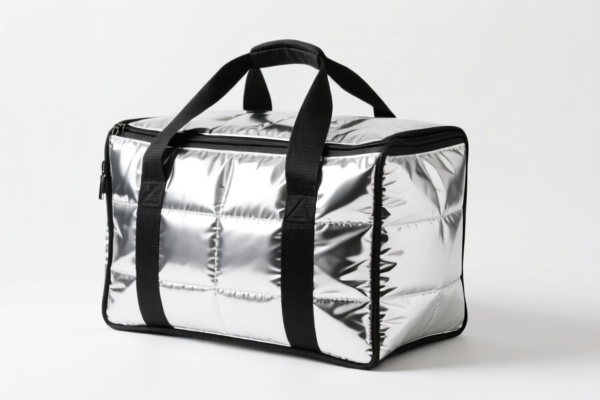
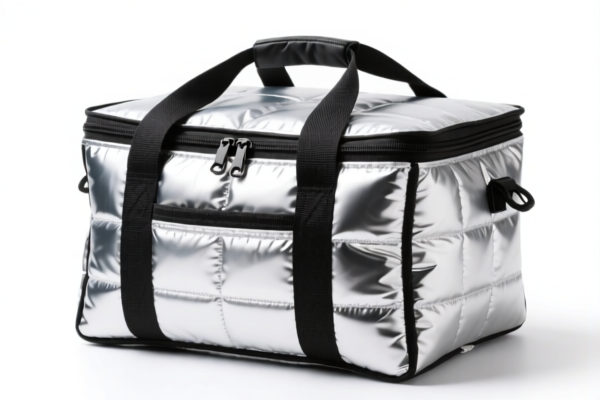
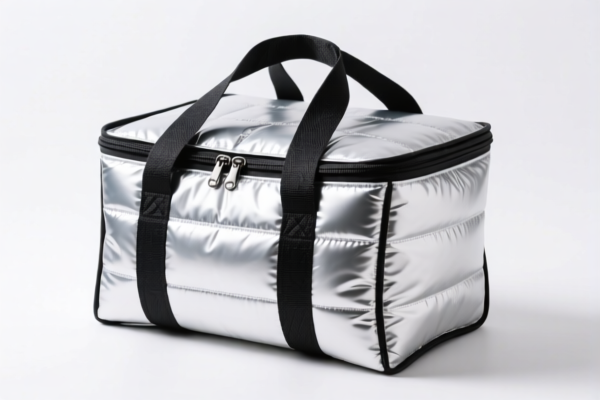

AI Analysis
🥗 Lunch Bags (Paper-Based Food Containers)
🌐 HS Code Reference & Customs Clearance Guide | 2024/2025 Latest Tariff Analysis | Professional Clearance Strategy
📌 I. Product Definition & Classification: What Exactly Are "Lunch Bags"?
In international trade, "Lunch Bags" made of paper materials are not a single unified category. Their classification depends heavily on the material structure (corrugated vs. non-correlated), physical shape (trays, boxes, containers), and intended use (food hygiene).
Misclassification can lead to severe penalties due to the high additional tariffs applicable to Chinese-origin goods entering the US.
⚠️ Key Distinction Point:
- Are they flat trays/disks (like paper plates)? → Likely 4823.69
- Are they foldable boxes/cartons? → Likely 4819.20
- Are they rigid containers (like pizza boxes or takeout boxes)? → Likely 4819.10 or 4823.61
- Crucial Note: All entries below are subject to a 35% Total Tariff Rate for Chinese origin (CN) to US destination.
📦 II. HS Code Classification Matrix (2024/2025 Latest Tariff Authority)
| HS Code | Product Description | Application Scenario | Material/Shape Details |
|---|---|---|---|
4823.69.00.40 |
Paper lunch boxes; Material: Paper/Cardboard; Shape: Trays, plates, disks | Flat-bottomed paper trays, disposable paper plates, flat lunch trays | ✅ Flat/Tray-like |
4823.61.00.20 |
Paper lunch boxes; Material: Paper; Shape: Containers; Use: Food containers | Rigid paper containers, non-foldable takeout boxes, paper cups/bowls | ✅ Rigid/Container |
4819.10.00.20 |
Paper lunch boxes; Material: Corrugated paper/cardboard; Use: Food hygiene container | Pizza boxes, corrugated takeout boxes, heavy-duty corrugated lunch boxes | ✅ Corrugated |
4819.20.00.20 |
Paper lunch bags; Material: Non-corrugated paper/cardboard; Shape: Folding boxes/cartons | Standard foldable paper lunch bags, gift boxes, non-corrugated folding cartons | ✅ Foldable/Box |
🔍 Critical Reminder:
- If the product is foldable and made of non-corrugated paper, it falls under 4819.20.
- If it is corrugated (like a pizza box), it falls under 4819.10.
- If it is a tray or disk (flat), it falls under 4823.69.
- If it is a rigid container (not flat, not foldable box, not corrugated), it may fall under 4823.61.
💰 III. 2024/2025 Latest Tariff Rate Breakdown (Including Surcharges & Policy Add-ons)
✅ Applicable Country: United States (US)
✅ Origin: China (CN)
✅ Total Tariff Rate: 35.0%
✅ Effective Time: 2025/2026 (Current applicable rules)
🎯 1. 4823.69.00.40 – Paper Lunch Boxes (Trays/Plates)
| Item | Details |
|---|---|
| Base Tariff | 0.0% (ad valorem) |
| Section 301 Surcharge | +25.0% |
| Section 122 Tariff | +10.0% |
| Total Tariff Rate | 35.0% |
| Tax Calculation | CIF Value × 35% |
| De Minimis Exemption? | ❌ No (Denied for goods from China) |
| Legal Basis Path | Section 301: 9903.88.01 → Section 122: 9903.01.24 → USITC: 4823.69.00.40 |
📌 Explanation:
- The 25% comes from the US Trade Act Section 301 (Targeted tariffs on Chinese goods).
- The 10% is an additional surcharge (often referred to as Section 122 or specific policy add-on) applied to these paper products.
- Total 35% is a significant cost factor. Must be factored into FOB/CIF pricing.
🎯 2. 4823.61.00.20 – Paper Lunch Boxes (Containers)
| Item | Details |
|---|---|
| Base Tariff | 0.0% |
| Section 301 Surcharge | +25.0% |
| Section 122 Tariff | +10.0% |
| Total Tariff Rate | 35.0% |
| Tax Calculation | CIF × 35% |
| De Minimis Exemption? | ❌ No |
| Legal Basis Path | Section 301: 9903.88.01 → Section 122: 9903.01.24 → USITC: 4823.61.00.20 |
📌 Note:
- Same tariff structure as above.
- Applies to rigid paper containers that are not trays or corrugated boxes.
🎯 3. 4819.10.00.20 – Paper Lunch Boxes (Corrugated)
| Item | Details |
|---|---|
| Base Tariff | 0.0% |
| Section 301 Surcharge | +25.0% |
| Section 122 Tariff | +10.0% |
| Total Tariff Rate | 35.0% |
| Tax Calculation | CIF × 35% |
| De Minimis Exemption? | ❌ No |
| Legal Basis Path | Section 301: 9903.88.01 → Section 122: 9903.01.24 → USITC: 4819.10.00.20 |
📌 Note:
- Commonly used for pizza boxes, burger boxes, and heavy-duty takeout containers.
- Corrugated material is key here.
🎯 4. 4819.20.00.20 – Paper Lunch Bags (Folding Boxes/Cartons)
| Item | Details |
|---|---|
| Base Tariff | 0.0% |
| Section 301 Surcharge | +25.0% |
| Section 122 Tariff | +10.0% |
| Total Tariff Rate | 35.0% |
| Tax Calculation | CIF × 35% |
| De Minimis Exemption? | ❌ No |
| Legal Basis Path | Section 301: 9903.88.01 → Section 122: 9903.01.24 → USITC: 4819.20.00.20 |
📌 Note:
- This is the most common code for foldable paper lunch bags (non-corrugated).
- Ensure the bag is not corrugated (which would go to 4819.10) and not a tray (which would go to 4823.69).
🛠️ IV. Customs Clearance Practical Advice (Real-World Pitfall Guide)
✅ 1. Preparation Checklist (Non-negotiable)
| Document | Required? | Explanation |
|---|---|---|
| ✅ Product Specification Sheet | ✔️ | Must detail: Material (Corrugated/Non-corrugated), Shape (Foldable/Tray/Rigid), Use (Food). |
| ✅ Product Photos | ✔️ | Clear images showing structure (e.g., folds, layers, thickness). |
| ✅ Commercial Invoice | ✔️ | Must accurately describe the item as "Paper Lunch Box" or "Paper Lunch Bag," not just "Paper Packaging." |
| ✅ Packing List | ✔️ | List net/gross weight, number of pieces. |
| ✅ Food Contact Certificate | ✔️ | Some US customs/inspections may require proof of food-grade safety (FDA compliance). |
✅ 2. Declaration Tips (Key Mnemonic)
🔥 “Shape Determines Code, Corrugated vs. Folded, 35% Tax is Mandatory!”
| Scenario | Correct HS Code | Wrong Declaration | Consequence |
|---|---|---|---|
| Foldable, Non-Corrugated | 4819.20.00.20 |
Declaring as "Tray" | Misclassification → Penalty + Delay |
| Corrugated (e.g., Pizza Box) | 4819.10.00.20 |
Declaring as "Foldable Bag" | Misclassification → Penalty + Delay |
| Flat Tray/Plate | 4823.69.00.40 |
Declaring as "Box" | Misclassification → Penalty + Delay |
| Rigid Container | 4823.61.00.20 |
Declaring as "Tray" | Misclassification → Penalty + Delay |
📌 Key Advice:
- Do not use vague terms like "Paper Bag" or "Packaging."
- Do not assume all paper products are the same. The material type (corrugated vs. non-corrugated) and form (folded vs. flat) are critical.
✅ 3. Special Cases
| Situation | Handling Advice |
|---|---|
| Composite Materials | If the lunch bag has a plastic lining or metal handle, it may change classification (e.g., to Chapter 39 or 76). Verify with a professional. |
| Used/Recycled Paper | Still falls under these codes, but must declare as "Recycled" if applicable. Tariff remains 35%. |
| Printed Designs | Printing does not change the HS Code. It remains in Chapter 48. |
🌍 V. Global Market Comparison (2024/2025)
| Country/Region | Recommended HS Code | Tariff (China Origin) | Certification | Notes |
|---|---|---|---|---|
| 🇺🇸 USA | 4819.20.00.20 (Typical) |
35% (0% Base + 25% Sec 301 + 10% Sec 122) | FDA Food Contact | Highest Tariff. Must declare accurately. |
| 🇨🇳 China | 4819.20.00.20 |
~5-10% | None | Lower tariff, but not relevant for export. |
| 🇪🇺 EU | 4819.20.00.20 |
~6-8% | LFGB (Germany) | No Section 301/122 surcharges. |
| 🇬🇧 UK | 4819.20.00.20 |
~6-8% | FSA Compliance | Post-Brexit tariffs apply. |
| 🇦🇺 Australia | 4819.20.00.20 |
~5% | None | Low tariff, no surcharges. |
📌 Conclusion:
- USA is the most expensive market for paper lunch bags due to 35% total tariff.
- EU/UK/AU have significantly lower tariffs. Consider supply chain diversification if targeting US market heavily.
📌 VI. Common Mistakes & Pitfalls (Lessons Learned)
❌ Mistake 1: Declaring all paper lunch containers as 4819.20.00.20
👉 Result: If it’s corrugated, Customs may reject and reclassify to 4819.10, causing delays.
👉 Fix: Always check material thickness and layer structure.
❌ Mistake 2: Ignoring the "Section 122" 10% surcharge
👉 Result: Budgeting only for 25% tariff leads to cash flow issues.
👉 Fix: Always calculate 35% total for China-to-US shipments.
❌ Mistake 3: Using "Paper Bag" without specifying "Lunch" or "Food"
👉 Result: Customs may suspect misdeclaration of goods value or type.
👉 Fix: Use precise descriptions: "Paper Lunch Bag, Non-Corrugated, Foldable, Food Grade."
✅ Correct Declaration Example:
"Paper Lunch Bag, Foldable, Non-Corrugated, Food-Grade, 12x12x10 Inches, Model XYZ, Designed for Food Storage"
🎯 VII. Conclusion: Precise Classification Saves Money!
🎯 Remember:
🔹 "Corrugated? 4819.10. Foldable? 4819.20. Tray? 4823.69. Rigid? 4823.61."
🔹 "35% Total Tax for China-to-US. Don’t Guess, Verify!"
📌 Pro Tip:
If your lunch bags are made from bamboo fiber or other non-paper materials, they may fall under Chapter 47 or Chapter 39. Do not assume all "lunch bags" are Chapter 48.
📣 Immediate Action:
📞 Contact a licensed customs broker + Provide product samples + Apply for Advance Ruling if unsure.
🚀 Ensure your Invoice Description matches the HS Code precisely.
✨ Professional Clearance Starts with Accurate Classification!
💼 Every Percentage Point Matters in Global Trade!
Customer Reviews
About HS Code Classification
The Harmonized System (HS) is an internationally standardized nomenclature developed by the World Customs Organization (WCO) to classify traded products. Over 200 countries use the HS system as the basis for customs tariffs, trade statistics, and import/export regulations.
Each HS code follows a hierarchical structure:
- Chapter (2 digits) — Broad category of goods (e.g., Chapter 84: Machinery and Mechanical Appliances)
- Heading (4 digits) — More specific grouping within the chapter
- Subheading (6 digits) — Internationally standardized breakdown, used by all WCO member countries
- National subdivisions (8-10 digits) — Country-specific extensions for further classification, such as US HTSUS 10-digit codes
Correct HS code classification is essential for smooth customs clearance, accurate duty payment, and compliance with trade regulations. Misclassification can lead to customs delays, overpayment of duties, or penalties.
When importing from CN to US, the applicable tariff rates may include:
- Most-Favored-Nation (MFN) rate — The standard duty rate applied to WTO members
- General rate — Applied to countries without trade agreements
- Trade remedy duties — Additional tariffs such as Section 301 (anti-dumping), Section 232 (national security), or countervailing duties
The information provided on this page is for reference purposes only. For official classification, please consult with your local customs authority or a licensed customs broker.