machine parts
CN → US| HS Code | Tariff Rate | Origin | Destination | Doc |
|---|---|---|---|---|
| 8479909596 | 85.0% | CN | US | Official Doc |
| 8448595000 | 17.0% | CN | US | Official Doc |
| 8479899599 | 87.5% | CN | US | Official Doc |
| 8415904000 | 18.9% | CN | US | Official Doc |
| 8415908085 | 68.9% | CN | US | Official Doc |
Product Images
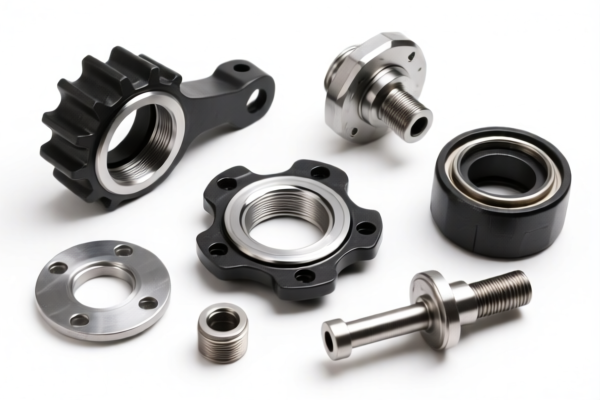
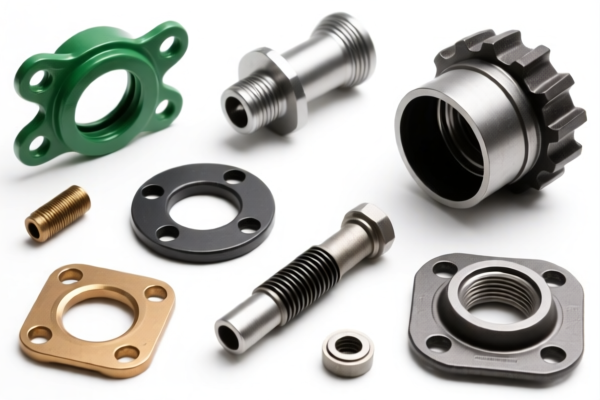
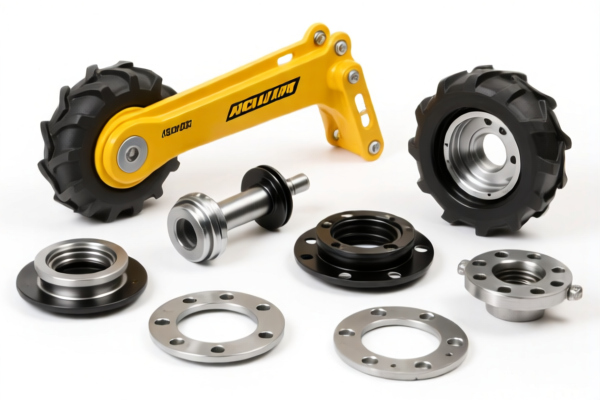
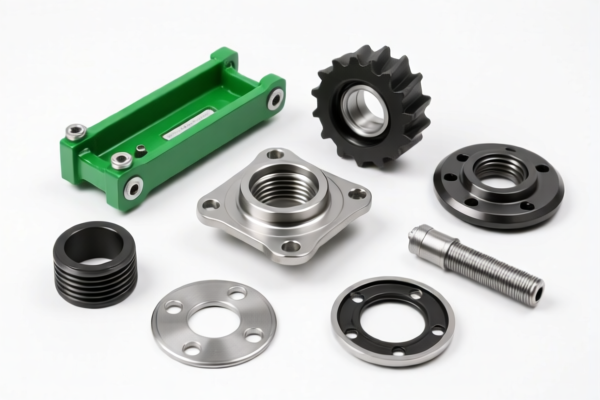
AI Analysis
🏭 Machine Parts (General Industrial Components)
🌐 HS Code Reference & Customs Clearance Guide | 2026 Latest Tariff Analysis | Professional Clearance Strategy
📌 I. Product Definition & Classification: What Exactly Are "Machine Parts"?
"Machine Parts" is a broad term in international trade, referring to components used in the maintenance, operation, or assembly of machinery. In customs classification, function determines destiny. These parts are generally categorized into two main types:
1. Specific Machine Parts: Components designed exclusively for a specific machine type (e.g., Air Conditioner parts, Textile Machinery parts).
2. General/Residual Machine Parts: Parts with independent functions or parts for other unspecified machinery, often falling under "Residual" or "Other" categories (e.g., HS 8479).
⚠️ Key Distinction Point:
- If the part is exclusive to a specific machine (like an AC compressor valve or a loom shuttle), it must follow that machine’s heading (e.g., 8415 for ACs, 8448 for Textile Machines).
- If the part is general, has an independent function, or doesn’t fit specific headings, it falls under residual headings like 8479 (Other machines).
- Crucial: Misclassification leads to severe tariff penalties due to the high "Section 301" and "IEEPA"附加税 rates applied to Chinese-origin machinery parts.
📦 II. HS Code Classification Details (2026 Latest Tariff Authority Mapping)
Based on the provided data, here is the detailed breakdown of HS Codes, summaries, and tax structures for "Machine Parts":
| HS Code | Product Description & Summary | Applicable Category | Tax Rate Summary |
|---|---|---|---|
| 8479.90.95.96 | Textile Machinery Parts: Belongs to parts of machines with independent functions; residual category for "Other". | Residual / General Machine Parts | 85.0% |
| 8448.59.50.00 | Textile Machinery Parts: Parts/accessories for machines of heading 8447; other functional attributes. | Specific (Textile) | 17.0% |
| 8479.89.95.99 | Parts/Components: Residual classification for other machines with independent functions. | Residual / General Machine Parts | 87.5% |
| 8415.90.40.00 | Air Conditioner Parts: Fully matches the usage and category of AC machine parts. | Specific (AC) | 18.9% |
| 8415.90.80.85 | Air Conditioner Parts: "Parts thereof" for air conditioning machines; residual "Other" category. | Specific (AC) | 68.9% |
🔍 Key Reminder:
- Textile vs. General: Textile parts (8448) have a significantly lower base tariff structure compared to general residual parts (8479), BUT specific anti-dumping or additional tariffs may apply.
- AC Parts Specificity: AC parts (8415) are strictly governed. 8415.90.40.00 is the preferred general classification, but if specific materials (Steel/Aluminum/Copper) are involved, the rate jumps to 8415.90.80.85.
- Steel/Aluminum/Copper Surcharge: Any part containing these materials is subject to an additional 50% surcharge under Section 232 or similar clauses, drastically increasing the total tax for codes 8479 and 8415.90.80.85.
💰 III. 2026 Latest Tariff Rate Breakdown (Including Additional Taxes & Policies)
✅ Applicable Country: United States (US)
✅ Country of Origin: China (CN)
✅ Effective Time: 2025–2026 (Current Status)
🎯 1. 8479.90.95.96 & 8479.89.95.99 —— General/Residual Machine Parts
These codes represent parts that do not fit specific machine headings or have independent functions. They are hit by multiple layers of additional tariffs.
| Item | Content |
|---|---|
| Base Tariff | 0.0% (for 8479.90) or 2.5% (for 8479.89) |
| Section 301 Surcharge | +25.0% |
| IEEPA Surcharge (List 4A/Other) | +10% |
| Section 232 Steel/Aluminum/Copper Surcharge | +50% (If made of steel, aluminum, or copper) |
| Total Effective Tax Rate | 85.0% (for 8479.90) 87.5% (for 8479.89) |
| Tax Calculation | CIF Value × Total Rate |
| De Minimis Exemption? | ❌ NO (deny_de_minimis) |
| Legal Basis | USITC:8479.90.95.96 → FOOTNOTE:301 → FOOTNOTE:232 |
📌 Explanation:
- The 85.0% - 87.5% rate is extremely high. It is a combination of Base + Section 301 (25%) + IEEPA (10%) + Steel/Aluminum Surcharge (50%).
- Even if the base tariff is 0%, the surcharges make these parts nearly prohibitively expensive for direct export to the US.
- Critical: If the part is NOT made of steel/aluminum/copper, check if the 50% surcharge can be excluded, but generally, residual machine parts often contain metal.
🎯 2. 8448.59.50.00 —— Textile Machinery Parts (Specific)
This code is for parts of machines of heading 8447 (Warping Looms, etc.).
| Item | Content |
|---|---|
| Base Tariff | 0.0% |
| Section 301 Surcharge | +7.0% |
| IEEPA Surcharge | +10% |
| Steel/Aluminum Surcharge | Not explicitly listed in summary as 50%, but check material content. Note: Summary says "10%" IEEPA, implying total 17%. |
| Total Effective Tax Rate | 17.0% |
| Tax Calculation | CIF Value × 17.0% |
| De Minimis Exemption? | ❌ NO |
| Legal Basis | USITC:8448.59.50.00 → FOOTNOTE:301 |
📌 Explanation:
- This is the most cost-effective classification among the provided data.
- The Section 301 rate for specific textile machinery parts is lower (7%) compared to general machinery (25%).
- Total tax is only 17%, making this viable for supply chains where textile machinery parts are involved.
🎯 3. 8415.90.40.00 —— Air Conditioner Parts (Standard)
Standard parts for air conditioning machines.
| Item | Content |
|---|---|
| Base Tariff | 1.4% |
| Section 301 Surcharge | +7.5% |
| IEEPA Surcharge | +10% |
| Steel/Aluminum Surcharge | Not applied (unless specific copper/steel component triggers it, but summary shows 18.9% total). |
| Total Effective Tax Rate | 18.9% |
| Tax Calculation | CIF Value × 18.9% |
| De Minimis Exemption? | ❌ NO |
| Legal Basis | USITC:8415.90.40.00 → FOOTNOTE:301 |
📌 Explanation:
- AC parts have a moderate tax burden.
- Caution: If the part is specifically "Other" (see below), the rate doubles.
🎯 4. 8415.90.80.85 —— Air Conditioner Parts (Other/Residual)
Parts for AC machines that do not fit the standard "40" subheading, often "Other" or specific high-value components.
| Item | Content |
|---|---|
| Base Tariff | 1.4% |
| Section 301 Surcharge | +7.5% |
| IEEPA Surcharge | +10% |
| Steel/Aluminum/Copper Surcharge | +50% (Explicitly stated for this code) |
| Total Effective Tax Rate | 68.9% |
| Tax Calculation | CIF Value × 68.9% |
| De Minimis Exemption? | ❌ NO |
| Legal Basis | USITC:8415.90.80.85 → FOOTNOTE:232 |
📌 Explanation:
- This code attracts the full 50% Steel/Aluminum/Copper surcharge.
- AC components (condensers, evaporators, casings) are often metal-heavy, triggering this surcharge.
- The total tax of 68.9% is a significant barrier.
🛠️ IV. Customs Clearance Practical Advice (Battle-Tested Pitfall Avoidance)
✅ 1. Preparation Checklist (Non-Negotiable)
| Document | Must Provide | Explanation |
|---|---|---|
| ✅ Product Specification Sheet | ✔️ | Must clearly state function, material composition (Steel? Aluminum? Copper?), and applicable machine type. |
| ✅ Technical Drawing / Circuit Diagram | ✔️ | Essential to prove if it's a "Part of 8447" (Textile) vs. "Independent Machine" (8479). |
| ✅ Material Declaration | ✔️ | Critical to avoid the 50% Steel/Aluminum Surcharge. If not metal, provide mill certs. |
| ✅ Commercial Invoice | ✔️ | Must use precise HS Code descriptions. Avoid vague terms like "Machine Part". Use "Part for Model X Textile Loom". |
| ✅ Packing List | ✔️ | Show relationship between parts and main machine if shipped together. |
| ✅ Certifications | ✔️ | FCC, UL, RoHS (if electronic components are involved). |
✅ 2. Declaration Strategy (Key Mantra)
🔥 "Function First, Material Second, Name Specific, Tax Optimized!"
| Scenario | Correct Declaration | Wrong Practice | Consequence |
|---|---|---|---|
| Textile Loom Part | 8448.59.50.00 |
Declare as 8479.90.95.96 (General) |
Tax jumps from 17% to 85%! |
| AC Compressor | 8415.90.40.00 or 8415.90.80.85 |
Declare as 8479 (General) |
Risk of audit, potential penalty. |
| Metal AC Part | 8415.90.80.85 |
Hide material origin | Trigger 50% Surcharge + Penalties. |
| Non-Metal Part | 8415.90.40.00 |
Assume it's metal | Avoid unnecessary 50% surcharge if possible. |
| Independent Motor | 8479.89.95.99 |
Declare as AC Part | Misclassification → Seizure. |
✅ 3. Special Considerations
| Situation | Handling Advice |
|---|---|
| Mixed Materials | If a part is 10% steel and 90% plastic, the 50% surcharge may still apply. Consult a customs broker for "Substantial Transformation" arguments. |
| OEM Parts | Provide the OEM agreement and part number matching the original machine. Helps justify 8448 or 8415 over 8479. |
| Used Parts | Used machinery parts often face stricter scrutiny. Ensure they are not considered "Waste" or "Scrap". |
| Kit Assembly | If importing a "Maintenance Kit", declare as a set or individual parts based on the primary function. |
🌍 V. Global Market Comparison (2026 Latest)
| Country/Region | Recommended HS Code | Est. Tariff (China Origin) | Key Certifications | Note |
|---|---|---|---|---|
| 🇺🇸 USA | 8448.59.50.00 (Textile) |
17.0% | None specific | Lowest tax for textile parts. AC parts hit 68-85%. |
| 🇺🇸 USA | 8479.90.95.96 (General) |
85.0% | None | HIGHEST risk. Avoid if possible. |
| 🇪🇺 EU | Varies by Part | 0-4.5% | CE, RoHS | No Section 301/IEEPA. Standard MFA rates apply. |
| 🇨🇳 China | Varies by Part | 0-5% | CCC (if applicable) | Low import tariff for machinery parts. |
| 🇻🇳 Vietnam | Varies | 0-2.5% | Local Certs | If shipped from Vietnam, US tariffs may be 0% (subject to USMCA/Trade rules). |
📌 Conclusion:
- USA is the highest cost market for machine parts due to layered surcharges.
- Textile Parts (8448) are the most tariff-efficient category in the US (17%).
- General Parts (8479) and Metal AC Parts (8415.90.80.85) are the most expensive (68-87.5%).
- Strategy: Re-classify generic parts into specific machine headings if functionally appropriate to reduce tax from 85% to ~17-19%.
📌 VI. Common Errors & Pitfalls (Blood-Stained Lessons)
❌ Error 1: Declaring a Textile Loom Part as 8479.90.95.96 (General Machine Part).
👉 Result: Tax increases from 17% to 85%. Overpaying 68% unnecessarily!
❌ Error 2: Ignoring the Steel/Aluminum/Copper Surcharge for AC Parts.
👉 Result: Unexpected 50% surcharge added to the 18.9% base, leading to 68.9% total. Budget blowouts!
❌ Error 3: Vague Invoice Description ("Machine Parts").
👉 Result: Customs holds shipment for "Insufficient Information". Leads to storage fees and delays.
❌ Error 4: Assuming "Parts" always follow the main machine's low tariff.
👉 Result: If the part has an independent function (e.g., a standalone motor), it may fall under 8479, not the specific machine heading.
✅ Correct Approach:
"Textile Machinery Shuttle, Model X, Made of Steel, for Loom Type Y, HS 8448.59.50.00"
"AC Condenser Coil, Copper & Aluminum, For Split Unit Model Z, HS 8415.90.80.85"
🎯 VII. Conclusion: Precision Classification Saves Millions!
🎯 Remember the Mantra:
🔹 "Textile Parts = 17% (Lucky!)"
🔹 "AC Parts = 19% or 69% (Check Metal!)"
🔹 "General Parts = 85%+ (Avoid!)"
🔹 "Material Matters: Steel/Copper = +50% Tax!"
📌 Pro Tip:
If you are exporting Textile Machinery Parts, ensure you have technical drawings proving they are only used for heading 8447 machines to lock in the 17% rate.
For General Parts, consider if they can be integrated into a specific machine system to avoid the 85% residual tax.
📣 Immediate Action:
📞 Contact a Customs Broker + Provide Technical Drawings + Material Certificates
🚀 Optimize Your HS Code Classification Today to Slash Tariffs by 50%+!
✨ Professional Clearance Starts with Accurate Classification!
💼 Every Percent of Tax Saved is Pure Profit!
Customer Reviews
About HS Code Classification
The Harmonized System (HS) is an internationally standardized nomenclature developed by the World Customs Organization (WCO) to classify traded products. Over 200 countries use the HS system as the basis for customs tariffs, trade statistics, and import/export regulations.
Each HS code follows a hierarchical structure:
- Chapter (2 digits) — Broad category of goods (e.g., Chapter 84: Machinery and Mechanical Appliances)
- Heading (4 digits) — More specific grouping within the chapter
- Subheading (6 digits) — Internationally standardized breakdown, used by all WCO member countries
- National subdivisions (8-10 digits) — Country-specific extensions for further classification, such as US HTSUS 10-digit codes
Correct HS code classification is essential for smooth customs clearance, accurate duty payment, and compliance with trade regulations. Misclassification can lead to customs delays, overpayment of duties, or penalties.
When importing from CN to US, the applicable tariff rates may include:
- Most-Favored-Nation (MFN) rate — The standard duty rate applied to WTO members
- General rate — Applied to countries without trade agreements
- Trade remedy duties — Additional tariffs such as Section 301 (anti-dumping), Section 232 (national security), or countervailing duties
The information provided on this page is for reference purposes only. For official classification, please consult with your local customs authority or a licensed customs broker.