machine tool cutting tools and blades
CN → US| HS Code | Tariff Rate | Origin | Destination | Doc |
|---|---|---|---|---|
| 820710 | 0.0% | CN | US | Official Doc |
| 820890 | 0.0% | CN | US | Official Doc |
Product Images
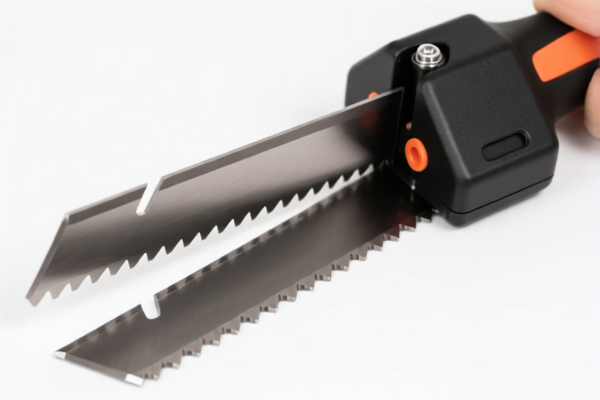
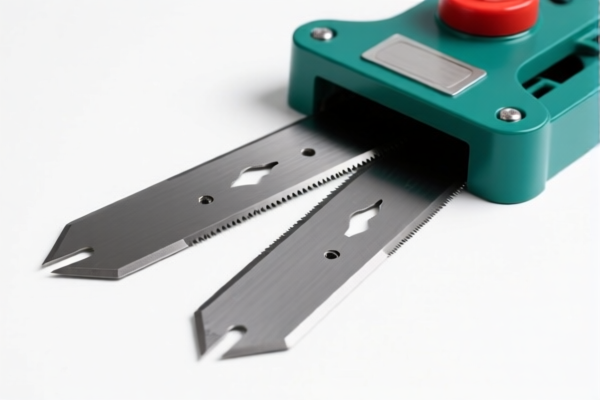

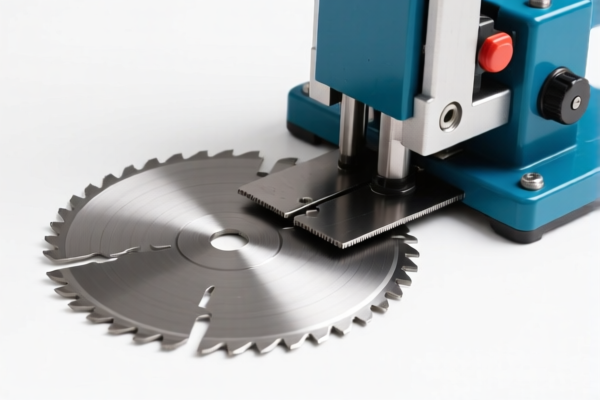
AI Analysis
🔪 Machine Tool Cutting Tools and Blades (Carbide & High-Speed Steel)
🌐 HS Code Reference & Customs Clearance Guide | 2026 Latest Tariff Analysis | Professional Clearance Strategy
📌 I. Product Definition & Classification: What Are "Machine Tool Cutting Tools"?
Machine tool cutting tools and blades are specialized industrial components designed for machining operations such as milling, drilling, turning, and grooving. In international trade, they are primarily classified based on their material composition and specific industrial application.
1. Tungsten Carbide Tools:
High-hardness, wear-resistant tools made from tungsten carbide (often bonded with cobalt or nickel), intended for high-speed and heavy-duty machining.
2. Other Steel/Alloy Tools:
Tools made from high-speed steel (HSS) or other hard materials not elsewhere specified, designed for general industrial machining applications.
⚠️ Key Distinction:
- If the tool is explicitly made of tungsten carbide or similar hard materials for machine tool use →归入 8207.10
- If the tool is made of high-speed steel or other unspecified materials → 归入 8208.90
📦 II. HS Code Classification Details (2026 Latest Tariff Authority Comparison)
| HS Code | Product Description | Applicable Scenarios | Material Type |
|---|---|---|---|
8207.10 |
Cutting tools and blades for machine tools, made of tungsten carbide or other hard materials | Milling cutters, drill bits, turning inserts, grooving tools for industrial machining | Tungsten Carbide / Hard Alloys |
8208.90 |
Other cutting tools and blades for machine tools, not elsewhere specified (including HSS) | High-speed steel drills, milling cutters, lathe tools for general machining | High-Speed Steel (HSS) / Other Materials |
🔍 Key Reminder:
-8207.10is strictly for tungsten carbide or equivalent hard materials.
-8208.90is a "catch-all" for other steel-based cutting tools (e.g., HSS) not specified in other subheadings.
- Both are classified under Chapter 82: Tools, Implements, Cutlery, Spoons and Forks, of Base Metal; Parts Thereof.
💰 III. 2026 Latest Tariff Rate Details (Including Surcharges & Policy Additions)
✅ Applicable Country: United States (US)
✅ Origin: China (CN)
✅ Effective Date: Post-2025.11.10 (including subsequent imports)
🎯 1. 8207.10 —— Tungsten Carbide Cutting Tools & Blades
| Item | Content |
|---|---|
| Base Tax Rate | Error / Failed to Retrieve |
| Total Tax | Error |
| Tax Detail | Failed to retrieve tax information |
| Calculation Method | CIF Value × Total Tax Rate |
| De Minimis Eligibility | ❌ Not Applicable (Industrial tools generally excluded) |
| Legal Basis Path | USITC:8207.10 |
📌 Explanation:
- Tax information for this specific subheading was not available in the current dataset.
- Note: Tungsten carbide tools are often subject to standard MFN rates plus potential Section 301 tariffs if originating from China.
- Recommendation: Verify with a licensed customs broker for current Section 301 applicability.
🎯 2. 8208.90 —— Other Cutting Tools & Blades (HSS/Other Materials)
| Item | Content |
|---|---|
| Base Tax Rate | Error / Failed to Retrieve |
| Total Tax | Error |
| Tax Detail | Failed to retrieve tax information |
| Calculation Method | CIF Value × Total Tax Rate |
| De Minimis Eligibility | ❌ Not Applicable |
| Legal Basis Path | USITC:8208.90 |
📌 Explanation:
- Tax information for this subheading was not available in the current dataset.
- Note: High-speed steel tools may have different tariff treatments compared to carbide tools.
- Recommendation: Due to the "Error" status, pre-clearance ruling is strongly advised.
🛠️ IV. Customs Clearance Practical Advice (Real-World Pitfall Guide)
✅ 1. Required Documentation Checklist (All Mandatory)
| Document | Must Provide | Description |
|---|---|---|
| ✅ Product Specification Sheet | ✔️ | Include material composition (e.g., "Tungsten Carbide Grade A2"), dimensions, coating type |
| ✅ Material Certificate | ✔️ | Proof of material (e.g., Mill Test Certificate for HSS, Hardness Test for Carbide) |
| ✅ Product Photos | ✔️ | Clear images showing the tool, shank, cutting edges, and any markings |
| ✅ Commercial Invoice | ✔️ | Must clearly state "Cutting Tool for Machine Tool" and HS Code |
| ✅ Packing List | ✔️ | Detail quantities and packaging type (protective cases required for carbide) |
| ✅ Origin Certificate | ✔️ | If claiming preferential treatment under FTAs |
✅ 2. Declaration Tips (Key Mnemonic)
🔥 “Carbide goes to 8207.10, HSS goes to 8208.90. Don’t mix them, or you’ll pay the price!”
| Scenario | Correct Declaration | Wrong Practice |
|---|---|---|
| Tungsten Carbide Drill Bit | 8207.10 |
Declared as 8208.90 → Risk of reclassification & penalty |
| High-Speed Steel End Mill | 8208.90 |
Declared as 8207.10 → Incorrect classification |
| Diamond-Tipped Tools | 6804.22 or 8207.10 (depending on bond) |
Misclassified as 8208.90 |
| Manual Hand Tools (e.g., chisels) | 8205 or 8206 |
Declared as 8207.10 → Major error |
✅ 3. Special Case Handling
| Scenario | Handling Advice |
|---|---|
| Coated Carbide Tools | Still 8207.10 if the base material is carbide. Specify coating (e.g., TiN, TiAlN) in description. |
| Complete Machining Centers | If sold as part of a machine, parts may be declared separately. Ensure tools are not bundled incorrectly. |
| Sample Shipments | Still subject to duties. Use FAK (Free of Charge) declaration with proper license if applicable. |
| Repackaged Tools | Ensure original packaging and labeling are visible to prove origin and material. |
🌍 V. Global Market Comparison (2026 Latest)
| Country/Region | Recommended HS Code | Tariff Rate | Certification Requirements | Notes |
|---|---|---|---|---|
| 🇺🇸 USA | 8207.10 / 8208.90 |
Error (Check Section 301) | None specific | High scrutiny on origin |
| 🇨🇳 China | 8207.10 / 8208.90 |
~5-10% | None | Standard import duties |
| 🇪🇺 EU | 8207.10 / 8208.90 |
~4.5% | CE (if applicable) | No additional surcharges |
| 🇦🇺 Australia | 8207.10 / 8208.90 |
~5% | RCM (if electronic components) | Generally low tariffs |
| 🇯🇵 Japan | 8207.10 / 8208.90 |
~0-5% | PSE (if applicable) | Favorable for industrial goods |
📌 Conclusion:
- USA: Due to trade tensions, verify Section 301 applicability. Even if tax info is "Error," be prepared for potential 25% surcharge.
- Other Markets: Generally lower and more predictable tariffs.
- Critical: Always confirm material composition to avoid misclassification.
📌 VI. Common Mistakes & Pitfall Guide (Lessons Learned)
❌ Mistake 1: Declaring Tungsten Carbide Tools as 8208.90
👉 Consequence: Potential underpayment of duties if 8207.10 has higher rates, or overpayment if 8208.90 is lower. Customs may audit and penalize.
❌ Mistake 2: Not Specifying Material Type
👉 Consequence: Customs may reclassify the goods, leading to delays, additional duties, and storage fees.
❌ Mistake 3: Ignoring Section 301 Surcharges for US Imports
👉 Consequence: Unexpected 25% tariff addition if the tool is of Chinese origin and not exempt.
✅ Correct Approach:
“Tungsten Carbide Insert, Grade KC535, For CNC Lathe, Country of Origin: Germany”
“High-Speed Steel End Mill, 4 Flute, 10mm Diameter, HSS Material, China Origin”
🎯 VII. Conclusion: Precise Classification, Smoother Clearance!
🎯 Remember the Mnemonic:
🔹 “Carbide is 8207.10, HSS is 8208.90. Know your material, avoid the error flow!”
🔹 “Check Section 301 for US imports, or face the tariff surprise!”
📌 Pro Tip:
- If you are unsure about the material composition, request a Material Test Report from your supplier.
- For high-volume imports to the US, consider applying for a Binding Ruling from CBP to confirm the HS Code and tariff rate.
- Keep all certificates of origin and material proofs ready for customs inspection.
📣 Immediate Action:
📞 Consult with a licensed customs broker to verify current Section 301 applicability.
🚀 Ensure your commercial invoice and packing list are detailed and accurate.
💡 Professional clearance starts with precise classification!
✨ Expert Clearance, Starting with the Right HS Code!
💼 Every cent saved is a profit earned!
Customer Reviews
About HS Code Classification
The Harmonized System (HS) is an internationally standardized nomenclature developed by the World Customs Organization (WCO) to classify traded products. Over 200 countries use the HS system as the basis for customs tariffs, trade statistics, and import/export regulations.
Each HS code follows a hierarchical structure:
- Chapter (2 digits) — Broad category of goods (e.g., Chapter 84: Machinery and Mechanical Appliances)
- Heading (4 digits) — More specific grouping within the chapter
- Subheading (6 digits) — Internationally standardized breakdown, used by all WCO member countries
- National subdivisions (8-10 digits) — Country-specific extensions for further classification, such as US HTSUS 10-digit codes
Correct HS code classification is essential for smooth customs clearance, accurate duty payment, and compliance with trade regulations. Misclassification can lead to customs delays, overpayment of duties, or penalties.
When importing from CN to US, the applicable tariff rates may include:
- Most-Favored-Nation (MFN) rate — The standard duty rate applied to WTO members
- General rate — Applied to countries without trade agreements
- Trade remedy duties — Additional tariffs such as Section 301 (anti-dumping), Section 232 (national security), or countervailing duties
The information provided on this page is for reference purposes only. For official classification, please consult with your local customs authority or a licensed customs broker.