macroporous activated carbon
CN → US| HS Code | Tariff Rate | Origin | Destination | Doc |
|---|---|---|---|---|
| 3914006000 | 38.9% | CN | US | Official Doc |
| 3802100050 | 39.8% | CN | US | Official Doc |
| 3802100020 | 39.8% | CN | US | Official Doc |
| 4402200000 | 35.0% | CN | US | Official Doc |
Product Images
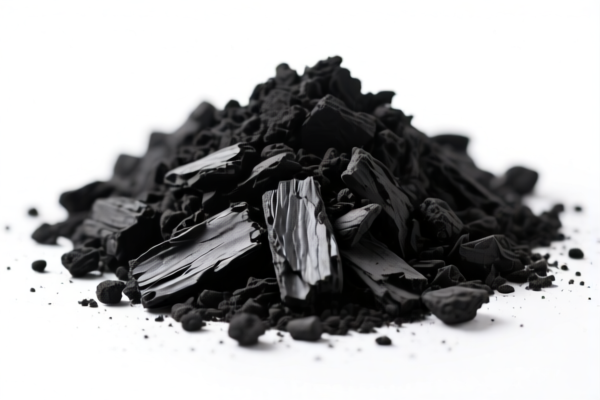
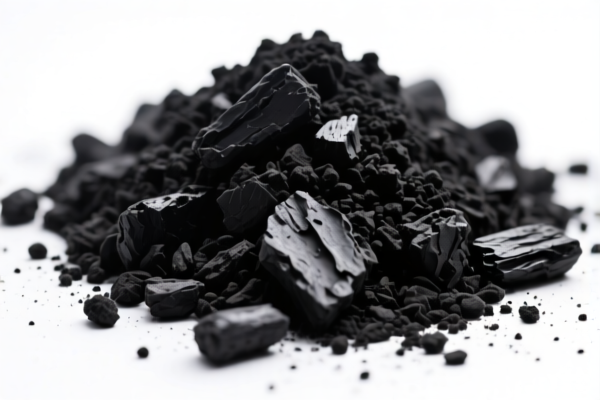

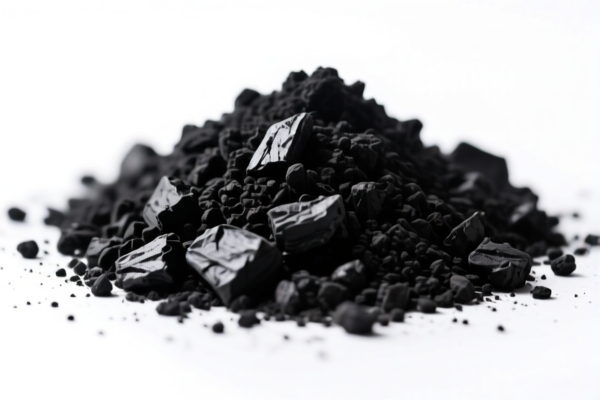
AI Analysis
🌑 Macroporous Activated Carbon (MAC)
🌐 HS Code Reference & Customs Clearance Guide | 2026 Latest Tariff Analysis | Professional Level Strategy
📌 I. Product Definition & Classification: What is "Macroporous Activated Carbon"?
Macroporous Activated Carbon (MAC) is a specialized form of activated carbon characterized by a high proportion of large pores (macropores, diameter >50 nm). Unlike traditional granular or powdered activated carbon, its structural design facilitates the rapid transport of large molecules (such as dyes, pigments, or heavy metals) to the adsorption sites.
In international trade, it is primarily classified based on its raw material origin and physical state: 1. Material Origin: Most commonly derived from coconut shells or wood/biomass. 2. Physical Form: Typically supplied in granular, powdered, or bead forms, often considered in their "basic/raw" state unless further processed into specific industrial cartridges.
⚠️ Key Distinction for Classification:
- If the product is explicitly identified as "Activated Carbon" (regardless of pore structure), it generally falls under Chapter 38 (Miscellaneous Chemical Products).
- If the classification hinges on it being a form of "Charcoal" (carbonized biomass) without specific activation treatment details that shift it to chemical processing, it might be misclassified under Chapter 44 (Wood/Charcoal), but "Activated Carbon" is the standard trade name for chemically/thermally treated carbon.
- "Granular/Powder" vs. "Specific Application": If not specified for a particular machine, it defaults to "Other" subcategories.
📦 II. HS Code Classification Details (2026 Latest Tariff Authority Comparison)
| HS Code | Product Description | Origin/Material | Pore Structure/Feature | Tax Applicability |
|---|---|---|---|---|
3802.10.00.50 |
Activated Carbon - Other | Generic/Chemical | Macro-porous structure described as physical feature | ✅ Primary Recommendation |
3802.10.00.20 |
Activated Carbon - Coconut Derived | Coconut Shell | Macro-porous (consistent with coconut origin) | ✅ Alternative (if origin confirmed) |
3914.00.60.00 |
Other - Polymer/Carbon-like Resin | Inferred Carbon-Polymer | Granular/Powder form | ❌ Risk: Misclassification |
4402.20.00.00 |
Wood Charcoal (incl. shell/kernel) | Wood/Biomass | Carbonized state (Basic form) | ❌ Risk: Lower Value Add |
🔍 Critical Analysis:
-3802.10.00.50is the most accurate for "Macroporous Activated Carbon" when the specific raw material (e.g., coconut vs. wood) is not explicitly stated as coconut. The summary notes that "Macroporous" is a physical structure characteristic fitting "Other" category.
-3802.10.00.20is valid only if the carbon is confirmed to be coconut-derived. The summary states that "macroporous" does not conflict with "coconut derived."
-3914.00.60.00is a risky inference based on "carbon-like polymer." Unless the product is a synthetic resin impregnated with carbon, this is likely incorrect for standard activated carbon.
-4402.20.00.00classifies it as "Wood Charcoal." This is generally incorrect for activated carbon, which has undergone further chemical/thermal processing (activation) placing it in Chapter 38. However, if the importer insists on a lower tax rate, this is the "inference" path, but it carries higher audit risk.
💰 III. 2026 Latest Tariff Rate Breakdown (Including Surtaxes & Policy Add-ons)
✅ Applicable Country: United States (US)
✅ Country of Origin: China (CN)
✅ Effective Date: November 10, 2025 onwards (including subsequent imports)
🎯 1. 3802.10.00.50 —— Activated Carbon (Other)
| Item | Content |
|---|---|
| Base Duty | 4.8% (Ad Valorem) |
| USITC Section 301 Surtax | +25.0% (Based on USITC Footnote for Chapter 38) |
| IEEPA Section 122 Surtax | +10.0% (针对中国/香港产品,自2025年11月10日起) |
| Total Effective Rate | 39.8% |
| Tax Calculation | CIF Value × 39.8% |
| De Minimis Exemption | ❌ Not Available (deny_de_minimis) |
| Legal Basis Path | IEEPA:9903.01.25 → USITC:3802.10.00.50 → FOOTNOTE:3802.10 |
📌 Explanation:
- The 39.8% rate is high due to the叠加 (stacking) of base duties and trade restrictions.
- "Activated Carbon" is considered a strategic chemical material, often subject to strict scrutiny.
- Section 122 Tariff (10%) is a new addition mentioned in the data, applying specifically to Chinese-origin goods under certain emergency powers.
🎯 2. 3802.10.00.20 —— Activated Carbon (Coconut Derived)
| Item | Content |
|---|---|
| Base Duty | 4.8% (Ad Valorem) |
| USITC Section 301 Surtax | +25.0% |
| IEEPA Section 122 Surtax | +10.0% |
| Total Effective Rate | 39.8% |
| Tax Calculation | CIF Value × 39.8% |
| De Minimis Exemption | ❌ Not Available |
| Legal Basis Path | IEEPA:9903.01.25 → USITC:3802.10.00.20 → FOOTNOTE:3802.10 |
📌 Note:
- The rate is identical to the "Other" category.
- Choosing this code requires proof of origin (e.g., supplier declaration, certificate of origin stating "Coconut Shell Based").
- Advantage: None in terms of tax savings. Use this only if customs explicitly requests origin differentiation or if the product is clearly marked as "Coconut Shell Activated Carbon."
🎯 3. 3914.00.60.00 —— Other (Inferred Carbon-Polymer)
| Item | Content |
|---|---|
| Base Duty | 3.9% (Ad Valorem) |
| USITC Section 301 Surtax | +25.0% |
| IEEPA Section 122 Surtax | +10.0% |
| Total Effective Rate | 38.9% |
| Tax Calculation | CIF Value × 38.9% |
| De Minimis Exemption | ❌ Not Available |
| Legal Basis Path | IEEPA:9903.01.25 → USITC:3914.00.60.00 |
📌 Warning:
- This code results in a 0.9% lower total tax compared to Chapter 38 codes.
- However, this is high-risk. Unless the product is a synthetic polymer resin containing carbon (not pure activated carbon), this is a misclassification.
- Customs may challenge this if lab tests show >90% carbon content and standard activation treatment.
- Recommendation: Avoid unless you have a technical justification that it is a "carbon-infused polymer."
🎯 4. 4402.20.00.00 —— Wood Charcoal
| Item | Content |
|---|---|
| Base Duty | 0.0% (Ad Valorem) |
| USITC Section 301 Surtax | +25.0% |
| IEEPA Section 122 Surtax | +10.0% |
| Total Effective Rate | 35.0% |
| Tax Calculation | CIF Value × 35.0% |
| De Minimis Exemption | ❌ Not Available |
| Legal Basis Path | IEEPA:9903.01.25 → USITC:4402.20.00.00 |
📌 Warning:
- This is the lowest tax rate (35.0%).
- Major Risk: This classifies the product as unactivated charred wood. If the product is labeled and functions as "Activated Carbon" (adsorbent), customs will likely reject this code, leading to penalties, back taxes, and delays.
- Only use if the product is raw charcoal intended for further processing (e.g., home-made BBQ charcoal), not for industrial adsorption.
🛠️ IV. Customs Clearance Practical Advice (实战避坑指南)
✅ 1. Documentation Checklist (Must-Have)
| Document | Required | Description |
|---|---|---|
| ✅ Product Specification Sheet | ✔️ | Must detail pore size distribution (macroporous vs. microporous), surface area, and ash content. |
| ✅ Certificate of Origin (CO) | ✔️ | If using 3802.10.00.20, must specify "Coconut Shell." For 3802.10.00.50, general "China" is sufficient. |
| ✅ Commercial Invoice | ✔️ | Clear description: "Macroporous Activated Carbon, Granular, for Water Purification/Industrial Adsorption." Avoid vague terms like "Carbon Powder." |
| ✅ Technical Data Sheet (TDS) | ✔️ | Proves activation process (chemical/thermal). Critical to distinguish from 4402 (Charcoal). |
| ✅ Safety Data Sheet (SDS) | ✔️ | Required for chemical handling compliance. |
✅ 2. Declaration Strategy (Key Mnemonics)
🔥 "Activate or Charcoal, Choose Clearly, Otherwise Penalty!"
| Scenario | Correct HS Code | Incorrect Code | Consequence |
|---|---|---|---|
| Standard MAC for Adsorption | 3802.10.00.50 |
4402.20.00.00 |
Risk of reclassification + penalty. |
| Coconut Shell MAC | 3802.10.00.20 |
3914.00.60.00 |
Misclassification; requires proof. |
| Raw Charcoal (No Activation) | 4402.20.00.00 |
3802.10.00.50 |
Under-reporting tax if activated. |
| Carbon-Resin Composite | 3914.00.60.00 |
3802.10.00.50 |
Requires chemical analysis proof. |
📌 Critical Tip:
- Do not declare "Activated Carbon" under4402unless you have a Chemical Engineer's certificate stating it is not activated.
- Do not declare under3914unless it is a polymer product with carbon filler.
✅ 3. Special Circumptions Handling
| Situation | Handling Advice |
|---|---|
| OEM/White Label | Provide supplier invoice showing raw material (coconut/wood). Avoid "generic" descriptions. |
| Mixed Pores | If both macro and micro pores exist, 3802.10.00.50 is safer as "Other." |
| Sample Shipments | Even samples are subject to duty. Do not use "Gift" or "Sample" to evade 39.8% tax. |
| Returns/Defects | Keep original invoice and proof of defect. May apply for duty drawback if re-exported. |
🌍 V. Global Market Clearance Comparison (2026 Latest)
| Country/Region | Recommended HS Code | Tariff (CN Origin) | Certification | Remarks |
|---|---|---|---|---|
| 🇺🇸 USA | 3802.10.00.50 |
39.8% | EPA/OSHA | High tax due to 301 + 122 tariffs. |
| 🇨🇳 China | 3802.10.00.00 |
~10-13% | None | Lower entry barrier. |
| 🇪🇺 EU | 3802.10.00 |
6.5% | REACH | No Section 301 equivalent. |
| 🇬🇧 UK | 3802.10.00 |
6.5% | UK REACH | Post-Brexit rules apply. |
| 🇯🇵 Japan | 3802.10.00 |
4.0% | JIS | No major surtaxes on this category. |
📌 Conclusion:
- USA is the highest-cost market for Macroporous Activated Carbon due to layered tariffs.
- EU/UK/Japan offer significantly lower duty burdens (~4-7%).
- Supply Chain Strategy: Consider sourcing from non-China origins (e.g., Vietnam, Indonesia) to avoid 25% Section 301 + 10% IEEPA surtaxes, reducing total tax to ~6.5% in the US.
📌 VI. Common Mistakes & Pitfalls (Blood & Tears Lessons)
❌ Mistake 1: Declaring "Activated Carbon" as "Charcoal" (4402) to save 4.8% base duty.
👉 Consequence: Customs lab test shows high iodine number (adsorption capacity) → Reclassification to 3802 + Penalty + 25% Surcharge Retroactive!
❌ Mistake 2: Using "3914" for pure carbon.
👉 Consequence: Customs requires MSDS showing polymer content. If none, Goods Detained.
❌ Mistake 3: Ignoring "Macroporous" feature in description.
👉 Consequence: No issue with tax, but may cause clearance delays if customs questions the "Activated" status without technical data.
✅ Correct Declaration Example:
"Macroporous Granular Activated Carbon, Coconut Shell Origin, Iodine Number 1000mg/g, for Industrial Water Treatment, HS Code 3802.10.00.50"
🎯 VII. Conclusion: Professional Declaration, Cost Control!
🎯 Remember the Mnemonic:
🔹 "Activate = 3802, Charcoal = 4402, Polymer = 3914."
🔹 "US Tariff is 39.8%, Do Not Hide."
🔹 "Documentation is Key, Avoid the 25% Surcharge Risk!"
📌 Pro Tip:
If your Macroporous Activated Carbon is sourced from Indonesia, Vietnam, or India, you may qualify for 0% Section 301 surtax, reducing the total US duty to ~6.5-14.8% (depending on base rate).
Recommendation: Conduct a Supply Chain Audit to see if non-China sourcing is viable to save 25-35% in duties.
📣 Immediate Action:
📞 Consult a Licensed Customs Broker + Provide Technical Data Sheet + Apply for Advance Ruling if volume is high.
🚀 Ensure Smooth Customs Clearance, Maximize Profit Margins!
✨ Professional Customs Clearance Starts with Accurate Classification!
💼 Every Dollar Saved on Duty Counts!
Customer Reviews
About HS Code Classification
The Harmonized System (HS) is an internationally standardized nomenclature developed by the World Customs Organization (WCO) to classify traded products. Over 200 countries use the HS system as the basis for customs tariffs, trade statistics, and import/export regulations.
Each HS code follows a hierarchical structure:
- Chapter (2 digits) — Broad category of goods (e.g., Chapter 84: Machinery and Mechanical Appliances)
- Heading (4 digits) — More specific grouping within the chapter
- Subheading (6 digits) — Internationally standardized breakdown, used by all WCO member countries
- National subdivisions (8-10 digits) — Country-specific extensions for further classification, such as US HTSUS 10-digit codes
Correct HS code classification is essential for smooth customs clearance, accurate duty payment, and compliance with trade regulations. Misclassification can lead to customs delays, overpayment of duties, or penalties.
When importing from CN to US, the applicable tariff rates may include:
- Most-Favored-Nation (MFN) rate — The standard duty rate applied to WTO members
- General rate — Applied to countries without trade agreements
- Trade remedy duties — Additional tariffs such as Section 301 (anti-dumping), Section 232 (national security), or countervailing duties
The information provided on this page is for reference purposes only. For official classification, please consult with your local customs authority or a licensed customs broker.