makeup
CN → US| HS Code | Tariff Rate | Origin | Destination | Doc |
|---|---|---|---|---|
| 3304100000 | 35.0% | CN | US | Official Doc |
| 3305100000 | 35.0% | CN | US | Official Doc |
| 3303002000 | 35.0% | CN | US | Official Doc |
| 3303001000 | 35.0% | CN | US | Official Doc |
| 3305900000 | 35.0% | CN | US | Official Doc |
| 3304910050 | 35.0% | CN | US | Official Doc |
Product Images
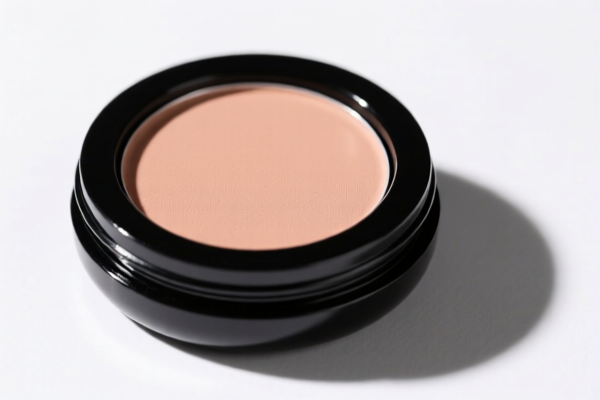
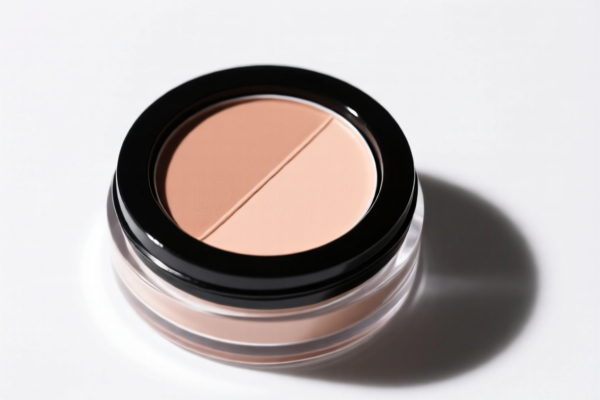
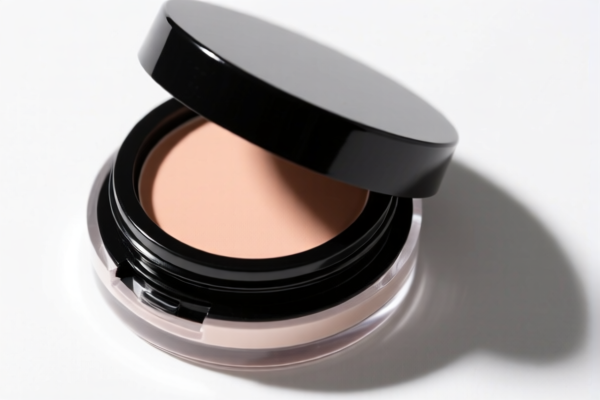
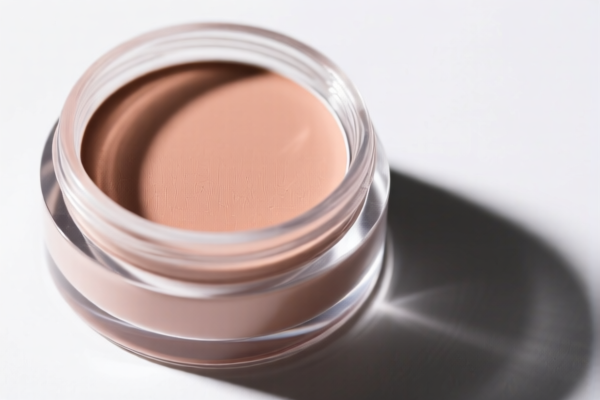
AI Analysis
💄 Makeup (Cosmetic Preparations)
🌐 HS Code Reference & Customs Clearance Guide | 2026 Tariff Analysis | Professional Strategy for US Imports from China
📌 I. Product Definition & Classification: What is "Makeup" in Customs Terms?
In international trade, "makeup" is not a single unified commodity but a category of cosmetic preparations intended for application to the human body for cleansing, perfuming, protecting, or altering appearance. For US Customs and Border Protection (CBP) purposes, these products are strictly classified under Chapter 33 (Essential Oils and Resinoids; Perfumery, Cosmetic or Toilet Preparations).
The critical distinction lies in the specific function of the product: * Facial/General Makeup & Skin Care: Foundations, powders, lipsticks, moisturizers → Heading 3304. * Perfumes & Toners: Fragrances, water-based toners → Heading 3303. * Hair Care: Shampoos, conditioners, hair dyes → Heading 3305.
⚠️ Key Classification Rule:
- If the product is applied to the face, skin, or nails (e.g., foundation, lipstick, eye shadow), it generally falls under 3304.
- If the product is a fragrance or aftershave lotion, it falls under 3303.
- If the product is applied to the hair, it falls under 3305.
- Do not confuse with "toothpaste" (3306) or "deodorants" (3307), which have different headings.
📦 II. HS Code Classification Details (2026 Authorized List)
Based on the provided data, here are the specific HS Codes for US imports from China, including all applicable duties.
| HS Code | Product Description | Application Scenario |
|---|---|---|
3304.10.00.00 |
Beauty or makeup preparations (e.g., foundations, powders, eye makeup) | Facial makeup, skin care cosmetics |
3304.91.00.50 |
Other beauty/makeup preparations and skin care preparations | Liquid foundations, concealers, specialized skin creams |
3305.10.00.00 |
Hair wash preparations (shampoos, etc.) | Hair care products, shampoos |
3305.90.00.00 |
Other hair or face preparations (not wash preparations) | Conditioners, hair dyes, styling gels, face masks |
3303.00.10.00 |
Perfumes and toilet waters | Fragrances, colognes, aftershaves |
3303.00.20.00 |
Toilet waters and other scented preparations | Toners, scented sprays |
🔍 Critical Note:
- All codes listed above are subject to the same total tariff rate due to current trade policies.
- The distinction between sub-headings (e.g., 3304.10 vs 3304.91) is important for statistical purposes but does not change the tax burden in this context.
💰 III. 2026 Latest Tariff Rate Breakdown (Including Surtaxes & Policy Add-ons)
✅ Applicable Country: United States (US)
✅ Origin: China (CN)
✅ Effective Date: Current rates apply (See policy details below)
🎯 Unified Tariff Structure for All Listed Cosmetic HS Codes
| Item | Content |
|---|---|
| Base Tariff (MFN) | 0.0% |
| Section 301 Surtax (USITC) | +25.0% |
| Section 122 Tariff (IEEPA) | +10.0% |
| Total Effective Rate | 35.0% |
| Calculation Basis | CIF Value (Cost + Insurance + Freight) × 35% |
| De Minimis Exemption | ❌ NOT APPLICABLE (High-value shipments or specific cosmetic classifications may be scrutinized, but generally, 301 duties apply to most Chinese cosmetics) |
| Legal Basis Path | USITC:3304/3303/3305 → FOOTNOTE:301 → IEEPA:9903.01.25 → Total: 35% |
📌 Explanation of Tax Components:
- Base Tariff (0%): Cosmetics typically have low base MFN rates under standard GATT schedules.
- Section 301 Surtax (+25%): Imposed by the US Trade Representative (USTR) on Chinese goods. This is the bulk of the cost.
- Section 122 Tariff (+10%): Under the International Emergency Economic Powers Act (IEEPA), additional duties are applied to certain strategic or sensitive categories.
- Total (35%): This is a significant cost factor. Importers must calculate landed cost carefully.
🛠️ IV. Customs Clearance Practical Advice (Pitfall Avoidance Guide)
✅ 1. Essential Documentation Checklist
| Document | Required? | Notes |
|---|---|---|
| ✅ Product Label & Ingredient List | ✔️ Mandatory | Must list all ingredients per FDA regulations. Missing ingredients can lead to refusal. |
| ✅ Commercial Invoice | ✔️ | Must clearly state "Cosmetic Preparations" and HS Code. |
| ✅ FDA Prior Notice | ✔️ Critical | All food/drug/cosmetic imports require FDA Prior Notice before arrival. |
| ✅ Cert of Free Sale / GMP | ✔️ Recommended | To prove manufacturing standards, reducing FDA inspection risk. |
| ✅ MSDS (Material Safety Data Sheet) | ✔️ | Especially for products containing alcohol or aerosols. |
| ✅ Packing List | ✔️ | Detail net/gross weight. |
⚠️ FDA Compliance Warning:
- The FDA regulates cosmetics under the Federal Food, Drug, and Cosmetic Act (FD&C Act).
- While pre-market approval is not required for most cosmetics, facility registration and product listing are mandatory.
- Prohibited ingredients: Ensure no banned substances (e.g., hydroquinone in some contexts, mercury, etc.).
✅ 2. Declaration Strategy (Key Tips)
🔥 “Be Specific, Don’t Generalize!”
| Scenario | Correct Declaration | Incorrect Declaration | Consequence |
|---|---|---|---|
| Face Powder | 3304.10.00.00 - "Face Powder for Makeup" |
"Beauty Products" | Vague description → CBP query/delay |
| Shampoo | 3305.10.00.00 - "Hair Wash Preparation" |
"Toiletries" | Misclassification risk |
| Perfume | 3303.00.10.00 - "Perfume" |
"Fragrance Oil" | May be classified under chemicals (higher duty) |
| Aerosol Spray | Must declare "Aerosol" | Omitting "Aerosol" | DOT/PHMSA hazardous material rules apply → Shipment Hold |
✅ 3. Special Cases & Handling
| Case | Handling Advice |
|---|---|
| Aerosol Cosmetics | Declare as "Dangerous Goods" (UN 1950). Requires proper hazard labeling and IATA compliance. |
| Sample Kits | Even samples are subject to 35% duty unless declared as "Gifts" under specific low-value thresholds (but 301 duties often still apply). |
| OEM Private Label | Provide manufacturer’s invoice. Ensure the exporter is identified correctly for 301 duty assessment. |
| Ingredients Dispute | If CBP questions the HS Code, provide a Formula Sheet and Function Statement to prove intended use (Face vs. Hair vs. Perfume). |
🌍 V. Global Market Comparison (2026 Snapshot)
| Market | HS Code Example | Base Duty | Surtax/Policy | Total Cost | Notes |
|---|---|---|---|---|---|
| 🇺🇸 USA | 3304.10.00.00 |
0% | 25% (301) + 10% (122) | 35% | High barrier. Must comply with FDA. |
| 🇨🇳 China | 3304.10.00.00 |
6.5% | 0% | 6.5% | Lower entry cost, but requires NMPA registration for marketed goods. |
| 🇪🇺 EU | 3304.10 |
6.5% | 0% | 6.5% | Requires CPNP notification and compliant labeling (EU Regulation 1223/2009). |
| 🇯🇵 Japan | 3304.10 |
0% | 0% | 0% | Very favorable, but requires pharmaceutical affairs office notification for certain claims. |
| 🇰🇷 Korea | 3304.10 |
0% | 0% | 0% | Free trade agreement benefits may apply depending on origin. |
📌 Conclusion:
- The US market is the most expensive for Chinese cosmetics due to the 35% total tariff.
- EU and Japan offer lower duty rates but have stricter regulatory compliance (CPNP, NMPA).
- Cost-Benefit Analysis: A $100 product costs $135 in the US (after duty), but only $106.5 in the EU. Consider supply chain diversification if margins are thin.
📌 VI. Common Mistakes & Pitfalls (Lessons Learned)
❌ Mistake 1: Using generic terms like "Beauty Products" in the invoice.
👉 Result: CBP assigns a "Catch-all" code or delays for classification review → Port Hold.
✅ Fix: Use precise terms: "Face Foundation," "Shampoo," "Perfume."
❌ Mistake 2: Ignoring the 301 Surtax.
👉 Result: Underpayment of duties → Penalties + Back Taxes.
✅ Fix: Factor 35% into your landed cost calculation immediately.
❌ Mistake 3: Failing to file FDA Prior Notice.
👉 Result: Refusal of Entry. The shipment is denied entry into the US.
✅ Fix: Submit FDA Prior Notice at least 2 hours before arrival (by vessel) or 4 hours (by air).
❌ Mistake 4: Misclassifying Aerosols as non-hazardous.
👉 Result: Safety violation, fines, or seizure.
✅ Fix: Properly declare hazardous materials and ensure packaging meets DOT/IATA standards.
🎯 VII. Conclusion: Strategic Importing for Cosmetics
🎯 Key Takeaways:
🔹 Tariff Hit: Expect 35% total duty for Chinese cosmetics entering the US.
🔹 Regulatory Hurdle: FDA compliance is non-negotiable.
🔹 Precision Matters: Accurate HS Codes and descriptions prevent delays.
🔹 Cost Management: Factor in the 35% tax when pricing for the US market.
📌 Pro Tip:
Consider duty drawback programs if you are re-exporting some goods, or explore Free Trade Agreements if manufacturing in other countries (e.g., Vietnam, Thailand) to avoid the 301 surtax.
📣 Immediate Action:
📞 Consult a licensed customs broker for FDA Prior Notice and HS Code Pre-Ruling.
🚀 Ensure your labels are FDA-compliant before shipping.
💡 Profitability Check: Re-calculate margins with the 35% duty included!
✨ Smart Compliance, Seamless Clearance!
💼 Your Brand’s Success Begins with Accurate Classification!
Customer Reviews
About HS Code Classification
The Harmonized System (HS) is an internationally standardized nomenclature developed by the World Customs Organization (WCO) to classify traded products. Over 200 countries use the HS system as the basis for customs tariffs, trade statistics, and import/export regulations.
Each HS code follows a hierarchical structure:
- Chapter (2 digits) — Broad category of goods (e.g., Chapter 84: Machinery and Mechanical Appliances)
- Heading (4 digits) — More specific grouping within the chapter
- Subheading (6 digits) — Internationally standardized breakdown, used by all WCO member countries
- National subdivisions (8-10 digits) — Country-specific extensions for further classification, such as US HTSUS 10-digit codes
Correct HS code classification is essential for smooth customs clearance, accurate duty payment, and compliance with trade regulations. Misclassification can lead to customs delays, overpayment of duties, or penalties.
When importing from CN to US, the applicable tariff rates may include:
- Most-Favored-Nation (MFN) rate — The standard duty rate applied to WTO members
- General rate — Applied to countries without trade agreements
- Trade remedy duties — Additional tariffs such as Section 301 (anti-dumping), Section 232 (national security), or countervailing duties
The information provided on this page is for reference purposes only. For official classification, please consult with your local customs authority or a licensed customs broker.