man made fiber duck fabric furniture upholstery
CN → US| HS Code | Tariff Rate | Origin | Destination | Doc |
|---|---|---|---|---|
| 5408229060 | 49.9% | CN | US | Official Doc |
| 5516420050 | 47.0% | CN | US | Official Doc |
| 5211190060 | 42.7% | CN | US | Official Doc |
| 5408210060 | 49.9% | CN | US | Official Doc |
| 5516410050 | 49.9% | CN | US | Official Doc |
Product Images
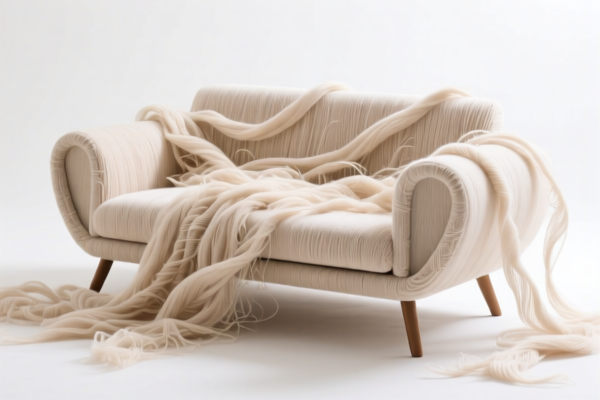
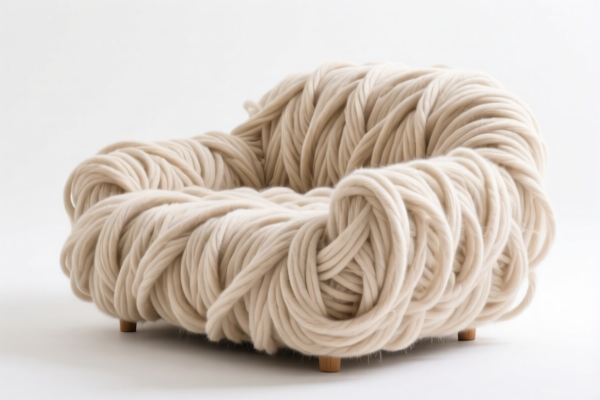
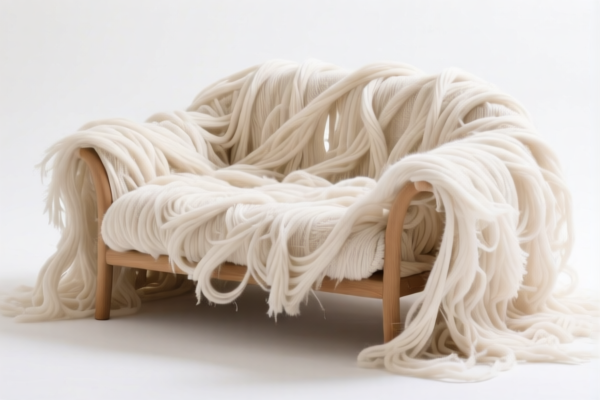
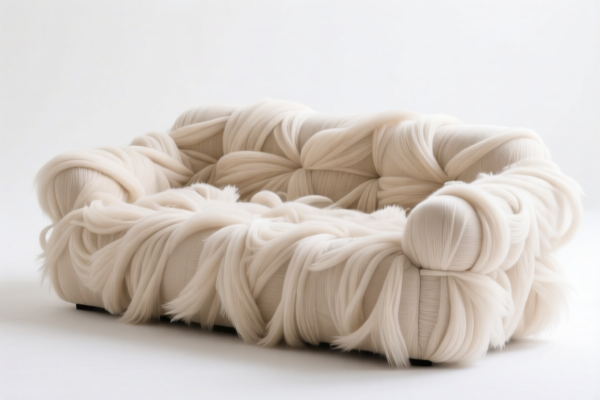
AI Analysis
🌟 Man-Made Fiber Duck Fabric for Furniture Upholstery
🌐 HS Code & Tariff Guide | 2026 Updated Customs Classification | Expert Compliance Strategy
📌 One Product, Multiple HS Codes — Know the Difference to Avoid 45%+ Tariffs!
📦 1. Product Definition & Classification: What Is "Man-Made Fiber Duck Fabric"?
Man-made fiber duck fabric — commonly known as "duck cloth" or "duck canvas" — is a heavy-duty, tightly woven fabric traditionally made from cotton. In modern trade, it’s increasingly produced using man-made fibers (synthetic or regenerated), including artificial long fibers, staple fibers, or blended yarns.
When used for furniture upholstery, this fabric serves as durable covering for sofas, chairs, outdoor furniture, and industrial seating.
⚠️ Key Classification Rule:
- If the fabric is woven from artificial long filaments or tapes → HS Code 5408.22.90.60
- If made from artificial staple fibers → HS Code 5516.42.00.50
- If blended with other fibers (e.g., synthetic + cotton) → HS Code 5211.19.00.60
- If not a true "duck" fabric but still used for upholstery → HS Code 5408.21.00.60🔍 Critical Insight:
Even if the product is called “duck fabric” in marketing, its fiber type, structure, and weaving method determine the correct HS code — misclassification = 45%+ tariffs!
🧩 2. HS Code Breakdown (2026 U.S. Tariff Schedule – China-Origin)
| HS Code | Product Description | Fiber Type | Fabric Type | Use Case | Total Duty |
|---|---|---|---|---|---|
5408.22.90.60 |
Man-made fiber duck fabric, artificial long filament or tape, woven, for furniture upholstery | Artificial long filament/tape | Woven fabric | Furniture upholstery | 49.9% |
5516.42.00.50 |
Man-made fiber duck fabric, artificial staple fiber, duck canvas, woven, for furniture | Artificial staple fiber | Duck canvas | Furniture upholstery | 47.0% |
5211.19.00.60 |
Man-made fiber duck fabric, blended with other fibers (e.g., synthetic + cotton), woven | Blended (synthetic + natural) | Fabric (duck-style) | Furniture upholstery | 42.7% |
5408.21.00.60 |
Man-made fiber duck fabric, artificial long filament/tape, woven, for furniture use | Artificial long filament/tape | Machine-woven fabric | Furniture upholstery | 49.9% |
5516.41.00.50 |
Man-made fiber duck fabric, artificial fiber, duck canvas type, meets tax definition | Artificial fiber (general) | Duck canvas | Furniture upholstery | 49.9% |
📌 Note: All codes apply to China-origin goods and are subject to additional U.S. trade actions.
💰 3. 2026 U.S. Tariff Breakdown (China-Origin Goods)
🎯 1. 5408.22.90.60 — Artificial Long Filament Duck Fabric
| Tax Component | Rate | Legal Basis |
|---|---|---|
| Basic Duty | 14.9% | Tariff Schedule (TS) 5408.22.90 |
| Section 301 (USITC) Additional Duty | +25.0% | U.S. Trade Act §301 (China Section 301 List 3) |
| Section 122 (IEEPA) Emergency Duty | +10.0% | International Emergency Economic Powers Act (IEEPA) |
| Total Effective Duty | 49.9% | CIF × 49.9% |
🔍 Why 49.9%?
- 14.9% = Standard tariff for artificial filament woven fabric
- +25% = U.S. Section 301 tariff on Chinese goods under List 3
- +10% = IEEPA "Emergency" tariff on China-origin goods (since 2025)
- Total = 49.9% — one of the highest in textile sector
🎯 2. 5516.42.00.50 — Artificial Staple Fiber Duck Canvas
| Tax Component | Rate | Legal Basis |
|---|---|---|
| Basic Duty | 12.0% | TS 5516.42.00 |
| Section 301 (USITC) Additional Duty | +25.0% | List 3, China Section 301 |
| Section 122 (IEEPA) Emergency Duty | +10.0% | IEEPA, 2025–2026 |
| Total Effective Duty | 47.0% | CIF × 47.0% |
📌 Key Note:
- Lower base rate (12%) due to staple fiber classification
- But still hit by 25% + 10% — total still 47%, nearly as high as long-filament versions
🎯 3. 5211.19.00.60 — Blended Man-Made Fiber Duck Fabric
| Tax Component | Rate | Legal Basis |
|---|---|---|
| Basic Duty | 7.7% | TS 5211.19.00 |
| Section 301 (USITC) Additional Duty | +25.0% | List 3, China Section 301 |
| Section 122 (IEEPA) Emergency Duty | +10.0% | IEEPA, 2025–2026 |
| Total Effective Duty | 42.7% | CIF × 42.7% |
📌 Why Lower?
- Blended fabric (e.g., polyester + cotton) is classified under 5211.19.00
- Lower base rate (7.7%) due to mixed fiber content
- Still subject to 25% + 10% — but total 42.7% is the lowest among all five codes
🎯 4. 5408.21.00.60 — Artificial Long Filament Woven Fabric (Furniture Use)
| Tax Component | Rate | Legal Basis |
|---|---|---|
| Basic Duty | 14.9% | TS 5408.21.00 |
| Section 301 (USITC) Additional Duty | +25.0% | List 3, China Section 301 |
| Section 122 (IEEPA) Emergency Duty | +10.0% | IEEPA |
| Total Effective Duty | 49.9% | CIF × 49.9% |
📌 Same as 5408.22.90.60 — identical tax treatment
- Both use artificial long filaments/tapes
- Both for furniture use
- No difference in tariff — only minor wording variation
🎯 5. 5516.41.00.50 — Artificial Fiber Duck Canvas (General)
| Tax Component | Rate | Legal Basis |
|---|---|---|
| Basic Duty | 14.9% | TS 5516.41.00 |
| Section 301 (USITC) Additional Duty | +25.0% | List 3 |
| Section 122 (IEEPA) Emergency Duty | +10.0% | IEEPA |
| Total Effective Duty | 49.9% | CIF × 49.9% |
📌 Why 49.9%?
- Despite being "duck canvas", it’s classified under 5516.41.00.50 — which has 14.9% base duty
- Still subject to 25% + 10% — total 49.9%❗ Warning:
- If your fabric is staple fiber-based, but you申报 as5516.41.00.50, you may be overcharged
- Use5516.42.00.50for staple fiber to get 47.0%, not 49.9%
🛠️ 4. Customs Clearance Best Practices (Avoid 45%+ Penalties!)
✅ 1. Documentation Checklist (Must-Have!)
| Document | Required? | Why It Matters |
|---|---|---|
| ✅ Product Technical Specs | ✔️ | Fiber type, denier, weave count, GSM |
| ✅ Fiber Composition Certificate | ✔️ | Prove if it’s long filament, staple, or blended |
| ✅ Woven Fabric Structure Diagram | ✔️ | Show weave pattern, yarn direction, density |
| ✅ Product Photos (with labels) | ✔️ | Show brand, type, labeling, fabric texture |
| ✅ Commercial Invoice | ✔️ | Must state: "Man-made fiber duck fabric for furniture upholstery" |
| ✅ Certificate of Origin (CO) | ✔️ | Required for tariff eligibility |
| ✅ Third-Party Test Report | ✔️ | ASTM, AATCC, or ISO standards for durability, flammability |
✅ 2.申报 Tips (Golden Rules)
🔥 "Fiber Type First, Name Second — Mislabel = 49.9%!"
| Scenario | Correct HS Code | Wrong Code | Risk |
|---|---|---|---|
| Long filament yarn, tightly woven | 5408.22.90.60 or 5408.21.00.60 |
5516.42.00.50 |
Overpay 2.9% |
| Staple fiber, duck canvas | 5516.42.00.50 |
5516.41.00.50 |
Overpay 2.9% |
| Blended (polyester + cotton) | 5211.19.00.60 |
5408.22.90.60 |
Overpay 7.2% |
| No fiber proof, only "duck fabric" | ❌ Risky! | 5516.41.00.50 |
49.9% tariff |
📌 Pro Tip:
- Never use generic terms like "duck fabric" or "canvas" in the HS code申报
- Always specify: "woven from artificial long filaments, for furniture upholstery"
✅ 3. Special Cases & Solutions
| Situation | Recommended Action |
|---|---|
| Custom blend (e.g., 65% polyester, 35% cotton) | Use 5211.19.00.60 — lowest duty (42.7%) |
| Export from Vietnam/Mexico/Thailand | Apply for IEEPA exemption — tariff drops to 0%–5% |
| Small shipment (<$2,500) | De minimis rule applies — no duty if <$800 (U.S. only) |
| Re-export from U.S. to EU | Use EU HS Code 5408.22.90 — 0% duty (if from non-China origin) |
🌍 5. Global Market Comparison (2026)
| Country | Recommended HS Code | Base Duty | Additional Taxes | Notes |
|---|---|---|---|---|
| 🇺🇸 USA (China-origin) | 5408.22.90.60 |
14.9% | +25% +10% → 49.9% | Highest tariff |
| 🇨🇳 China | 5408.22.90.60 |
5% | None | No extra duties |
| 🇪🇺 EU | 5408.22.90 |
0% | None | Free trade with non-China sources |
| 🇦🇺 Australia | 5408.22.90 |
5% | None | No Section 301/IEEPA |
| 🇯🇵 Japan | 5408.22.90 |
0% | None | No additional tariffs |
📌 Insight:
- Only the U.S. applies 25% + 10% on China-origin man-made duck fabric
- Vietnam/Mexico/Thailand origin = IEEPA exemption = 0% duty in U.S.
🚫 6. Common Mistakes & Penalties (Real-World Risks)
❌ Mistake 1: Using 5516.41.00.50 for staple fiber fabric
👉 Result: Pay 49.9% instead of 47.0% → extra $1,000+ per 100kg
❌ Mistake 2: Not proving fiber type
👉 Result: Customs may reclassify to higher duty → back taxes + penalties
❌ Mistake 3: Declaring "duck fabric" without fiber proof
👉 Result: Detention, delay, or seizure — no de minimis protection
❌ Mistake 4: Shipping from China without CO or test report
👉 Result: Customs refusal — return or destruction
✅ Correct Declaration Example:
"Woven man-made fiber duck fabric, 100% polyester long filament, 220gsm, 120x100 threads/inch, for furniture upholstery — HS Code: 5408.22.90.60"
🎯 7. Final Verdict: How to Win the Tariff Game
✅ Rule 1: Know your fiber type — long filament? staple? blended?
✅ Rule 2: Use the lowest base duty code (e.g.,5211.19.00.60for blends)
✅ Rule 3: Avoid China origin if possible — Vietnam/Mexico = 0% IEEPA
✅ Rule 4: Pre-apply for HS Code Ruling (Advance Ruling) — avoid surprises
📌 8. Action Steps: Your 5-Minute Compliance Plan
- 📊 Check fiber composition — is it long filament, staple, or blended?
- 📄 Gather proof: test report, structure diagram, invoice
- 📌 Select correct HS Code from the 5 options above
- 🌐 Apply for Advance Ruling (if high-value shipment)
- 🚀 Ship via non-China origin (if possible) → save 40%+ in tariffs
📣 Don’t Get Caught in the Tariff Trap!
🔥 "One wrong HS code = 49.9% tax on your entire shipment!"
🔥 "Prove your fiber type — or pay the price!"
✨ Professional Customs, Precise Classification, Maximum Savings!
💼 Your fabric’s value depends on its HS code — don’t gamble!
📞 Need Help?
📞 Contact a U.S. Customs Broker or HS Code Pre-Ruling Service
🚀 Get your free HS code match + tariff estimate today!
✅ Your next shipment starts with the right HS code — not luck!
Customer Reviews
About HS Code Classification
The Harmonized System (HS) is an internationally standardized nomenclature developed by the World Customs Organization (WCO) to classify traded products. Over 200 countries use the HS system as the basis for customs tariffs, trade statistics, and import/export regulations.
Each HS code follows a hierarchical structure:
- Chapter (2 digits) — Broad category of goods (e.g., Chapter 84: Machinery and Mechanical Appliances)
- Heading (4 digits) — More specific grouping within the chapter
- Subheading (6 digits) — Internationally standardized breakdown, used by all WCO member countries
- National subdivisions (8-10 digits) — Country-specific extensions for further classification, such as US HTSUS 10-digit codes
Correct HS code classification is essential for smooth customs clearance, accurate duty payment, and compliance with trade regulations. Misclassification can lead to customs delays, overpayment of duties, or penalties.
When importing from CN to US, the applicable tariff rates may include:
- Most-Favored-Nation (MFN) rate — The standard duty rate applied to WTO members
- General rate — Applied to countries without trade agreements
- Trade remedy duties — Additional tariffs such as Section 301 (anti-dumping), Section 232 (national security), or countervailing duties
The information provided on this page is for reference purposes only. For official classification, please consult with your local customs authority or a licensed customs broker.