manual massager
CN → US| HS Code | Tariff Rate | Origin | Destination | Doc |
|---|---|---|---|---|
| 9019102020 | 10.0% | CN | US | Official Doc |
| 9019102050 | 10.0% | CN | US | Official Doc |
| 8509801000 | 10.0% | CN | US | Official Doc |
| 8509805095 | 14.2% | CN | US | Official Doc |
| 9019102050 | 10.0% | CN | US | Official Doc |
Product Images
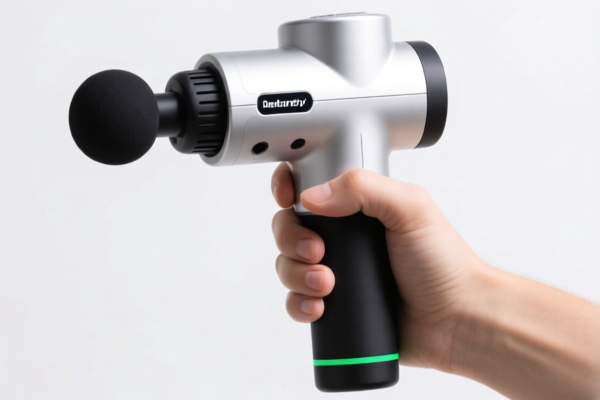
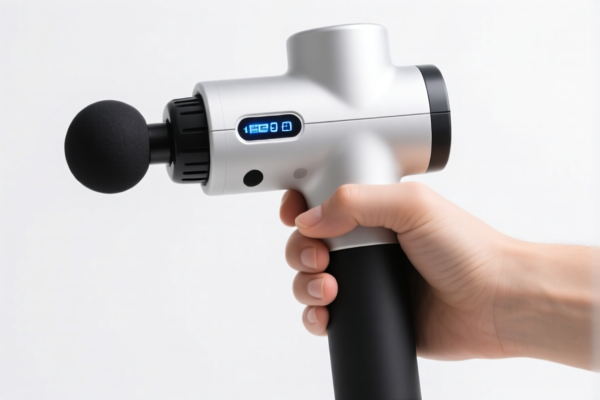
AI Analysis
💆♂️ Manual Massager (Handheld Massage Devices)
🌐 HS Code Reference & Customs Clearance Guide | 2026 Latest Tariff Analysis | Professional Clearance Strategy
📌 I. Product Definition & Classification: Do You Really Know "Manual Massagers"?
A manual massager is a non-electric, handheld device used for muscle relaxation, pain relief, and physical therapy. In international trade, these devices are primarily categorized based on their mechanical nature and application. Unlike electric massagers (which fall under Chapter 85 or 90.19 depending on complexity), manual massagers are generally viewed as simple mechanical apparatuses or general use articles.
⚠️ Critical Distinction:
- If the device is purely mechanical (no motor, battery, or electronic components) → It falls under 9019.10 (Mechano-therapy appliances) or potentially 8509 if misclassified as an electrical appliance due to confusion.
- Note on DATA: The provided DATA suggests a "fallback inference" for massagers without specified power sources. This is crucial for manual devices that might be scrutinized if they appear to have hidden electrical components. However, true manual massagers should strictly adhere to 9019.10 classifications for mechanical therapy.
📦 II. HS Code Classification Details (Based on Provided DATA)
The following HS Codes are derived directly from the provided. Note that the DATA reflects a scenario where the power source is unspecified or manual/mechanical, leading to specific tax implications.
| HS Code | Product Description | Applicable Scenario | Tax Rate (Total) | Key Tax Components |
|---|---|---|---|---|
9019.10.20.20 |
Massage Instrument | Mechanical massage device, unspecified power source, fallback inference | 10.0% | Base: 0%, Section 301 (122): 10% |
9019.10.20.50 |
Massage Apparatus | Other category, no specific conflict with power/material, inferred as compliant | 10.0% | Base: 0%, Section 301 (122): 10% |
8509.80.10.00 |
Household Electric Mechanical Appliance | Note: DATA implies this for "Massage Appliances" if considered electric/mechanical home appliance | 10.0% | Base: 0%, Section 301 (122): 10% |
8509.80.50.95 |
Household Appliance (Other) | Inferred as electric finished good, not excluded item | 14.2% | Base: 4.2%, Section 301 (122): 10% |
9019.10.20.50 |
Massage Appliance (Duplicate) | Fully matches category purpose, fallback principle applied | 10.0% | Base: 0%, Section 301 (122): 10% |
🔍 Important Note on DATA Discrepancy:
- The DATA includes8509(Electric Household Appliances). For a TRUE Manual Massager (no electricity),9019.10is the legally correct heading for "Mechano-therapy appliances."
- If customs suspects the manual massager has hidden electronic components (e.g., heating elements, vibration motors), it may be reclassified under8509, leading to higher duties (14.2%) or additional compliance requirements (UL/FCC).
- Recommendation: Clearly declare "NO ELECTRIC COMPONENTS" to stay under9019.10(10% duty) rather than8509(14.2% duty + potential electronics certification).
💰 III. 2026 Latest Tariff Rate Breakdown (Including Surcharges)
✅ Applicable Country: United States (US)
✅ Origin: China (CN)
✅ Effective Time: Current USITC/IEEPA regulations
🎯 1. 9019.10.20.20 & 9019.10.20.50 —— Mechanical Massage Appliances
| Item | Content |
|---|---|
| Base Duty Rate | 0% (ad valorem) |
| Section 301 Surcharge (122 Clause) | +10% |
| Total Duty Rate | 10.0% |
| Calculation Method | CIF Value × 10% |
| De Minimis Eligibility | ❌ No (Subject to high-value scrutiny if >$800, but typically de minimis applies to low-value packages; however, duty is still 10% on commercial shipments) |
| Legal Basis | USITC:9019.10.20.xx → Section 301: 122 |
📌 Explanation:
- The Base Rate is 0%, which is favorable for mechanical devices.
- The 10% surcharge is applied under Section 301 (List 4B/122) for Chinese-origin goods.
- No additional VAT or other surcharges are listed in the DATA for this classification.
🎯 2. 8509.80.10.00 —— Household Electric Mechanical Appliances
| Item | Content |
|---|---|
| Base Duty Rate | 0% |
| Section 301 Surcharge | +10% |
| Total Duty Rate | 10.0% |
| Calculation Method | CIF Value × 10% |
| Legal Basis | USITC:8509.80.10.00 → Section 301: 122 |
📌 Explanation:
- Although classified under electric appliances, the DATA indicates a 0% base duty.
- The 10% surcharge still applies.
- Risk: Misclassification here may trigger additional safety certifications (UL, ETL) that are not required for manual devices.
🎯 3. 8509.80.50.95 —— Other Household Appliances
| Item | Content |
|---|---|
| Base Duty Rate | 4.2% |
| Section 301 Surcharge | +10% |
| Total Duty Rate | 14.2% |
| Calculation Method | CIF Value × 14.2% |
| Legal Basis | USITC:8509.80.50.95 → Section 301: 122 |
📌 Explanation:
- This is the highest duty rate in the provided DATA.
- Applies to "other" household appliances not specifically covered elsewhere.
- Avoid this classification for manual massagers to save 4.2% in base duties.
🛠️ IV. Customs Clearance Practical Advice (Practical Pitfall Avoidance Guide)
✅ 1. Preparation Checklist (Mandatory)
| Document | Required | Explanation |
|---|---|---|
| ✅ Product Specification Sheet | ✔️ | Clearly state: "Manual Operation, No Electricity, No Batteries, No Motor" |
| ✅ Product Photos | ✔️ | Show the device from multiple angles, highlighting the absence of plugs, cords, or buttons |
| ✅ Commercial Invoice | ✔️ | Description: "Manual Massage Stick/Roller, No Electric Components" |
| ✅ Packing List | ✔️ | List individual items clearly |
| ✅ Certifications (If Any) | ❌ Optional | If the device has heating elements or vibration motors, you need UL/ETL and FCC. For pure manual, none needed. |
✅ 2. Declaration Tips (Key Mnemonics)
🔥 "Manual = No Power, 9019 = 10% Duty, Electric = Risky & Expensive!"
| Scenario | Correct Declaration | Wrong Declaration |
|---|---|---|
| Pure Manual Massager | 9019.10.20.20 or 9019.10.20.50 |
8509.80.50.95 → 14.2% Duty |
| Heating Massager | 8509.80.10.00 or 8509.80.50.95 |
Declare as "Manual" → Customs Seizure/Fine |
| Vibration Tool | 8509.80.10.00 |
Declare as "Manual" → Reclassification & Penalty |
| Combination (Manual + Heat) | 8509.80.50.95 |
Ignore heating function → High Risk |
✅ 3. Special Circumstances Handling
| Situation | Handling Advice |
|---|---|
| OEM Custom Manual Massager | Provide design drawings to prove no electrical components. |
| Heating Manual Massager | Must declare as electric appliance (8509). Provide UL/ETL certificates. Duty: 10% or 14.2%. |
| Vibration Massager | Must declare as electric appliance. Provide FCC ID. Duty: 10% or 14.2%. |
| Misclassification | If customs reclassifies your "manual" device as electric, you will owe additional duty + interest. Be accurate! |
🌍 V. Global Market Comparison (2026 Latest)
| Country/Region | Recommended HS Code | Duty Rate | Certification Requirements | Notes |
|---|---|---|---|---|
| 🇺🇸 USA | 9019.10.20.20 |
10% | None (if truly manual) | High scrutiny on "manual" vs "electric" |
| 🇨🇳 China | 9019.10.20 |
0% | None | Favorable for manual devices |
| 🇪🇺 EU | 9019.10.20 |
0% | CE (if medical claim) | No Section 301 equivalent |
| 🇬🇧 UK | 9019.10.20 |
0% | UKCA (if medical claim) | Post-Brexit rules apply |
| 🇦🇺 Australia | 9019.10.20 |
5% | None | General free trade agreement benefits |
📌 Conclusion:
- USA is the most challenging market due to Section 301 tariffs.
- Ensure the product is truly manual to avoid the 14.2% duty and electronics certification hassle.
- Heating or vibrating features will force reclassification to8509, increasing cost and compliance burden.
📌 VI. Common Errors & Pitfall Guide (Lessons Learned)
❌ Error 1: Declaring a heating massager as "Manual"
👉 Consequence: Customs inspection reveals heating element → Reclassified to 8509 → Back taxes + Interest + Fine!
❌ Error 2: Declaring a vibration tool as "Manual"
👉 Consequence: No FCC ID provided → Shipment Held at Border → Delays & Storage Fees.
❌ Error 3: Using vague descriptions like "Massage Tool"
👉 Consequence: Customs officer may assume electric → Higher duty (14.2%) → Cost Increase.
❌ Error 4: Confusing 9019 (Mechanical) with 8509 (Electric)
👉 Consequence: Wrong HS Code → Audit Risk.
✅ Correct Approach:
"Manual Massage Roller, Plastic/Rubber, No Electrical Components, Model XYZ, Purely Mechanical"
🎯 VII. Conclusion: Precise Classification Saves Money!
🎯 Remember the Mnemonic:
🔹 "Manual = 9019 = 10% Duty"
🔹 "Electric/Heat/Vibration = 8509 = 10% or 14.2% + Certifications"
🔹 "Lie about Power Source = Disaster!"
📌 Tips:
- If your massager has any electronic component (even a small heater), declare it as Electric (8509).
- Get UL/ETL and FCC certifications if declared electric.
- Pre-classification Ruling: Consider applying for an Advance Ruling from US CBP if you are unsure whether your device is manual or electric.
📣 Take Action Now:
📞 Consult a licensed customs broker.
📄 Provide clear product photos and specifications.
🚀 Ensure smooth clearance, minimize duties, and maximize profits!
✨ Professional Clearance Starts with Accurate Classification!
💼 Every cent counts in international trade!
Customer Reviews
About HS Code Classification
The Harmonized System (HS) is an internationally standardized nomenclature developed by the World Customs Organization (WCO) to classify traded products. Over 200 countries use the HS system as the basis for customs tariffs, trade statistics, and import/export regulations.
Each HS code follows a hierarchical structure:
- Chapter (2 digits) — Broad category of goods (e.g., Chapter 84: Machinery and Mechanical Appliances)
- Heading (4 digits) — More specific grouping within the chapter
- Subheading (6 digits) — Internationally standardized breakdown, used by all WCO member countries
- National subdivisions (8-10 digits) — Country-specific extensions for further classification, such as US HTSUS 10-digit codes
Correct HS code classification is essential for smooth customs clearance, accurate duty payment, and compliance with trade regulations. Misclassification can lead to customs delays, overpayment of duties, or penalties.
When importing from CN to US, the applicable tariff rates may include:
- Most-Favored-Nation (MFN) rate — The standard duty rate applied to WTO members
- General rate — Applied to countries without trade agreements
- Trade remedy duties — Additional tariffs such as Section 301 (anti-dumping), Section 232 (national security), or countervailing duties
The information provided on this page is for reference purposes only. For official classification, please consult with your local customs authority or a licensed customs broker.