manual winch
CN → US| HS Code | Tariff Rate | Origin | Destination | Doc |
|---|---|---|---|---|
| 8425390100 | 35.0% | CN | US | Official Doc |
| 8708998160 | 37.5% | CN | US | Official Doc |
| 8607995000 | 38.1% | CN | US | Official Doc |
| 8425310100 | 35.0% | CN | US | Official Doc |
| 8708998180 | 12.5% | CN | US | Official Doc |
Product Images
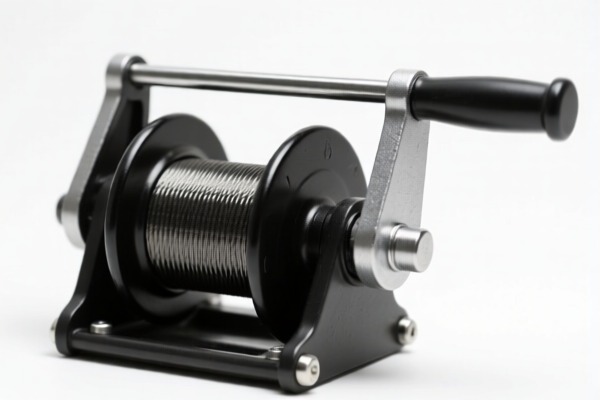
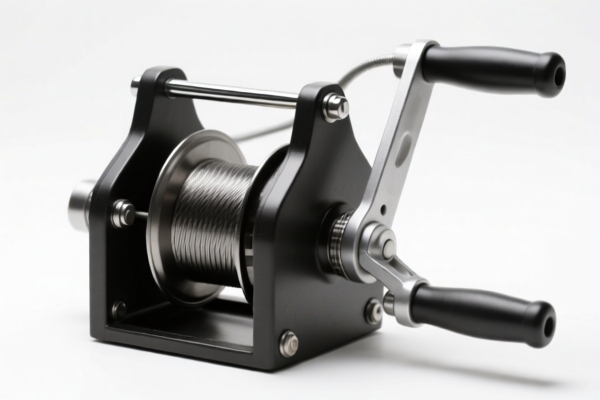
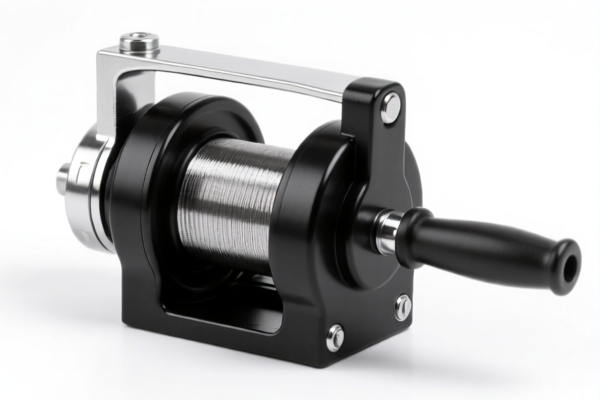
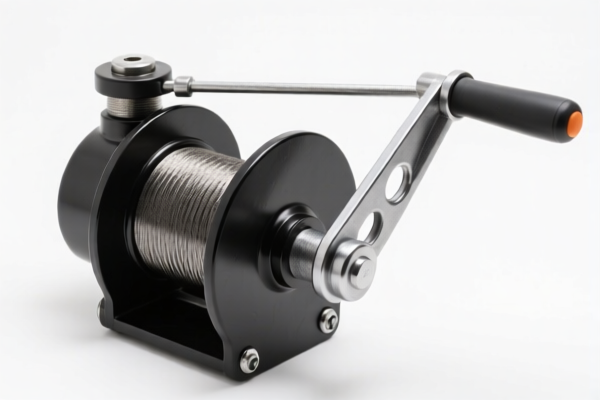
AI Analysis
🎣 Manual Winch (Cable Winches for Non-Motorized Applications)
🌐 HS Code Reference & Customs Clearance Guide | 2026 Latest Tariff Analysis | Professional Clearance Strategy
📌 I. Product Definition & Classification: Do You Understand "Manual Winch"?
A Manual Winch is a mechanical device used for pulling in (winding up) or letting out (winding down) of rope, cable, or webbing. In international trade, it is distinct from "motorized winches" because it lacks an electric, hydraulic, or pneumatic power source. Its classification hinges on power source, application scenario, and physical form.
⚠️ Critical Distinction:
- If the winch is electrically driven (as seen in the provided data), it belongs to 8425.31/8425.39 or 8708/8607.
- However, since the user input is "Manual Winch", we must analyze why it might be misclassified or confused with the motorized versions in<DATA>, and why it does not fit those codes.
- Note: The<DATA>provided contains only motorized/apparatus-specific codes (Electric Winches, Vehicle Parts, Railway Parts). A true Manual Winch typically falls under 8425.32.00 (Other winches: Capstans) or 8425.49 (Other winches, not electrically driven).
- Why are these codes listed? The following analysis explains the logic errors if one were to incorrectly classify a Manual Winch under these specific codes, or if the product is actually a hybrid/motorized unit mislabeled as "Manual."
📦 II. HS Code Classification Detail (2026 Latest Tariff Authority Comparison)
Based on the <DATA> provided, here is the analysis of why Manual Winches generally DO NOT fit these codes, and what happens if they are misclassified.
| HS Code | Product Description (from DATA) | Why It Does NOT Fit "Manual Winch" | Correct Classification for Manual Winch |
|---|---|---|---|
8425.39.01.00 |
Electric winches; Capstan-type winches | ❌ Power Source Mismatch: This code is for Electric winches. A manual winch has no motor. | 8425.32.00 (Capstans) or 8425.49 (Other non-electric winches) |
8708.99.81.60 |
Vehicle parts/accessories (Cable traction devices) | ❌ Component vs. Product: This is for parts of vehicles. A standalone manual winch is a finished product, not a part. If it's a vehicle part, it must be specifically designed for that vehicle. | 8425.49 (if standalone) or 8708.99 (if strictly a car part, but still usually 8425 if it's a winch mechanism) |
8607.99.50.00 |
Railway vehicle parts (Other) | ❌ Application Mismatch: This is for Railway components. Manual winches are rarely classified here unless they are specific internal mechanisms for train doors or couplers. | Generally N/A for general manual winches |
8425.31.01.00 |
Electric winches (Specific sub-category) | ❌ Power Source Mismatch: Explicitly states "Electric Motor Driven". Manual winches are hand-cranked. | 8425.32.00 or 8425.49 |
8708.99.81.80 |
Other vehicle parts/accessories | ❌ Specificity: This is a "Other" category for vehicle parts. While a manual winch could be a truck accessory, it is better classified as a machine (8425) unless it is a specialized integral part. | 8425.49 is more accurate for general use; 8708 only if clearly a vehicle-specific part |
🔍 Key Insight:
- The<DATA>provided exclusively lists motorized or vehicle-part classifications.
- A "Manual Winch" (hand-cranked, foot-operated, or non-electric) should NOT be classified under8425.31/39(Electric) unless it is a hybrid.
- Correct HS Code for Manual Winch: Typically 8425.32.00.00 (Capstans) or 8425.49.80.00 (Other winches, not electrically driven).
- Tax Implication: If you declare a Manual Winch under the Electric codes in<DATA>, you risk customs penalties for misdeclaration.
💰 III. 2026 Latest Tariff Rate Detail (Analysis of Misclassification Risk)
✅ Scenario: You are importing a Manual Winch but using the HS Codes from
<DATA>(which are for Electric winches or Vehicle Parts).
✅ Risk: High risk of customs audit, additional duties, and penalties.
🎯 1. If Misclassified as 8425.39.01.00 (Electric Winch)
| Item | Content |
|---|---|
| Base Rate | 0% |
| USITC Surcharge | +25% |
| IEEPA Surcharge | +10% |
| Total Rate | 35% |
| Problem | Wrong HS Code! Manual winches are not electric. Customs may reject this classification. |
| Correct Rate for Manual Winch | Usually 0% base + 0% USITC (depending on specific HTSUS subheading for non-electric winches). |
📌 Explanation:
- The 35% tax in<DATA>is for Electric Winches.
- Manual Winches often enjoy 0% or lower duty rates because they are not subject to the same "high-tech" or "motor vehicle component" scrutiny.
- Misclassification Penalty: If you pay 35% thinking it's electric, but it's manual, you overpaid. If you under-declare a electric winch as manual, you underpaid.
🎯 2. If Misclassified as 8708.99.81.80 (Vehicle Part - Other)
| Item | Content |
|---|---|
| Base Rate | 2.5% |
| USITC Surcharge | 0% (Note: DATA shows 0% USITC here) |
| IEEPA Surcharge | +10% |
| Total Rate | 12.5% |
| Problem | Only applicable if the winch is a specific part of a vehicle. A standalone manual winch for general use is not a "vehicle part." |
| Correct Rate | 0% (for general manual winch under 8425.49) |
📌 Note:
- The 12.5% rate is lower than the electric winch rate (35%).
- However, it is only valid if the item is proven to be a vehicle accessory. A general-purpose manual winch (e.g., for boat trailer, construction) should be 8425.49.
🎯 3. If Misclassified as 8425.31.01.00 (Electric Winch)
| Item | Content |
|---|---|
| Base Rate | 0% |
| USITC Surcharge | +25% |
| IEEPA Surcharge | +10% |
| Total Rate | 35% |
| Problem | Same as above. Electric classification for a Manual product is a factual error. |
🛠️ IV. Customs Clearance Practical Advice (Avoid Pitfalls)
✅ 1. Preparation Checklist (For Manual Winches)
| Document | Must Provide | Notes |
|---|---|---|
| ✅ Product Description | ✔️ | Clearly state "Manual, Hand-Cranked Winch". Do NOT say "Electric" or "Motorized". |
| ✅ Technical Specs | ✔️ | Include capacity (e.g., 5000 lbs), rope type, handle type. |
| ✅ Photos | ✔️ | Show the crank handle, no motor, no power cord. |
| ✅ Usage Statement | ✔️ | "For general lifting, trailer backing, not a vehicle part." |
| ✅ HS Code Declaration | ✔️ | Use 8425.32.00 or 8425.49.80 (Check latest HTSUS). |
✅ 2. Declaration Tips (Key Rules)
🔥 "Manual Means No Motor, General Use is 8425, Vehicle Part is 8708!"
| Scenario | Correct HS Code | Reason |
|---|---|---|
| Standalone Manual Winch (e.g., for boat, trailer, construction) | 8425.32.00.00 (Capstan) or 8425.49.80.00 (Other) |
It is a machine, not a vehicle part. |
| Vehicle-Specific Manual Winch (e.g., integrated into a car door) | 8708.99.81.80 |
It is a part of the vehicle. |
| Electric Winch (Motorized) | 8425.31.01.00 or 8425.39.01.00 |
It has an electric motor. |
| Railway Winch Part | 8607.99.50.00 |
Specific to railway systems. |
✅ 3. Special Handling
| Situation | Advice |
|---|---|
| OEM/Custom Manual Winch | Provide design specs to prove it's not electric. |
| Hybrid Winch (Manual + Electric) | Declare as Electric (8425.31/39) because it has a motor capability. |
| Vehicle Accessory Kit (Manual Winch + Straps) | Declare the winch separately as 8425.49. Straps as 7326.90. |
🌍 V. Global Market Clearance Comparison (2026 Latest)
| Country/Region | Recommended HS Code | Tariff Rate | Certification | Notes |
|---|---|---|---|---|
| 🇺🇸 USA | 8425.49.80.00 |
0% (Base) + 0% Surcharge | No special cert | Lowest duty for manual winches |
| 🇪🇺 EU | 8425.49.80 |
0% | CE (if under pressure) | No surcharge |
| 🇨🇳 China | 8425.49.80 |
10% | CCC (if for vehicle) | Import duty applies |
| 🇬🇧 UK | 8425.49.80 |
0% | UKCA | Post-Brexit alignment |
📌 Conclusion:
- Manual Winches generally have 0% or low tariffs in most markets.
- Electric Winches face 25-35% tariffs in the US due to surcharges.
- Misclassification Risk: Declaring a manual winch as electric leads to overpayment. Declaring an electric winch as manual leads to underpayment penalties.
📌 VI. Common Errors & Pitfalls (Lessons Learned)
❌ Error 1: Declaring a Manual Winch as 8425.31.01.00 (Electric)
👉 Result: You pay 35% instead of 0%. Overpayment!
❌ Error 2: Declaring a General Manual Winch as 8708.99.81.80 (Vehicle Part)
👉 Result: Customs may reject it if it's not clearly a vehicle part. Delay!
❌ Error 3: Using "Winch" without specifying "Manual" or "Electric"
👉 Result: Customs may assume it's Electric (default) and apply 35% tax. Risk!
✅ Correct Practice:
"Manual Hand-Cranked Winch, 5000 lbs Capacity, For Trailer Use, Model XYZ, Non-Electric"
🎯 VII. Conclusion: Precise Classification Saves Money!
🎯 Remember the Golden Rule:
🔹 "Manual = No Motor = 0% Tariff (Usually)"
🔹 "Electric = Motor = 35% Tariff (US)"
🔹 "Vehicle Part = 8708, General Machine = 8425"
📌 Tip:
If your winch is truly manual, do NOT use the HS Codes from <DATA> that specify "Electric" or "Motorized." Use 8425.32.00 or 8425.49.80.
If it is electric, then use the codes from <DATA> and prepare for 35% tax.
📣 Immediate Action:
📞 Verify if your winch has a motor.
🚀 If No Motor → Use 8425.49 → Pay 0%
🚀 If Has Motor → Use 8425.31/39 → Pay 35%
✨ Professional Customs Clearance Starts with Accurate Classification!
💼 Don't Let a Wrong HS Code Cost You 35% of Your Value!
Customer Reviews
About HS Code Classification
The Harmonized System (HS) is an internationally standardized nomenclature developed by the World Customs Organization (WCO) to classify traded products. Over 200 countries use the HS system as the basis for customs tariffs, trade statistics, and import/export regulations.
Each HS code follows a hierarchical structure:
- Chapter (2 digits) — Broad category of goods (e.g., Chapter 84: Machinery and Mechanical Appliances)
- Heading (4 digits) — More specific grouping within the chapter
- Subheading (6 digits) — Internationally standardized breakdown, used by all WCO member countries
- National subdivisions (8-10 digits) — Country-specific extensions for further classification, such as US HTSUS 10-digit codes
Correct HS code classification is essential for smooth customs clearance, accurate duty payment, and compliance with trade regulations. Misclassification can lead to customs delays, overpayment of duties, or penalties.
When importing from CN to US, the applicable tariff rates may include:
- Most-Favored-Nation (MFN) rate — The standard duty rate applied to WTO members
- General rate — Applied to countries without trade agreements
- Trade remedy duties — Additional tariffs such as Section 301 (anti-dumping), Section 232 (national security), or countervailing duties
The information provided on this page is for reference purposes only. For official classification, please consult with your local customs authority or a licensed customs broker.