marine engine parts
CN → US| HS Code | Tariff Rate | Origin | Destination | Doc |
|---|---|---|---|---|
| 8481909085 | 85.0% | CN | US | Official Doc |
| 8409999290 | 37.5% | CN | US | Official Doc |
| 8409919290 | 37.5% | CN | US | Official Doc |
Product Images
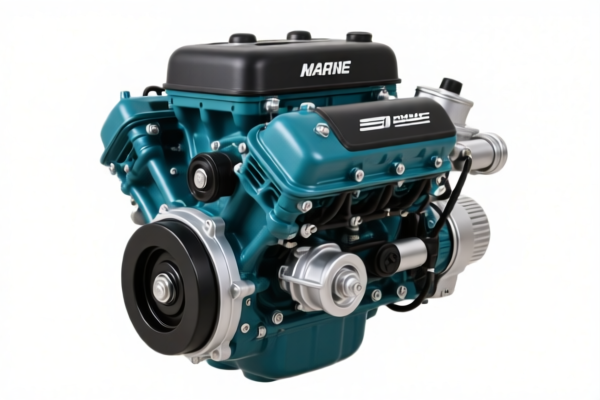
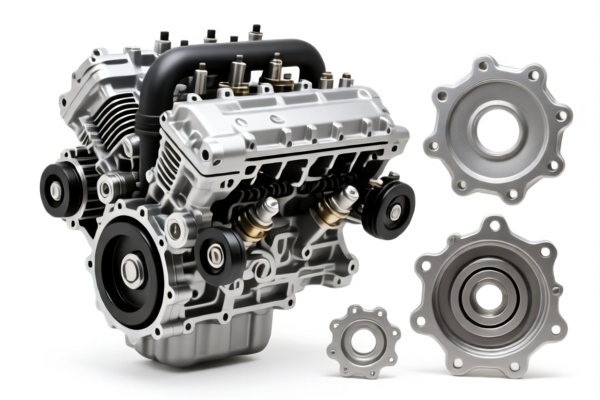


AI Analysis
🚢 Marine Engine Parts: Global Trade & Customs Clearance Guide (2026 Edition)
HS Code Analysis | Duty Breakdown | Strategic Clearance Protocols
🌐 Executive Summary: Navigating the "Engine Parts" Maze
Marine engine parts are a critical but highly scrutinized category in international trade. Unlike standard machinery, these parts face a split tax landscape depending on their specific function (transmission, gear, propulsion) and material composition.
⚠️ Critical Warning: A 122% total tax rate is possible for certain categories if misclassified! The difference between a "general part" (37.5%) and a "specialty steel/aluminum part" (85.0% or higher) hinges entirely on the specific functional description and material declaration.
📦 I. HS Code Classification Deep Dive
Based on the authoritative 2026 tariff data, here is the breakdown of the five specific HS Codes associated with marine engine parts.
| HS Code | Product Description & Logic | Application Scenario | Total Duty Rate |
|---|---|---|---|
| 8483.10.30.10 | Engine Transmission Components Reasoning: Classified as a reasonable extension of transmission shafts for vehicles/machinery. |
Propeller shafts, crankshafts, drive shafts for marine propulsion. | 37.5% |
| 8483.90.50.80 | Gearbox & Transmission Structure Reasoning: Fits the attribute of gears, gearboxes, and other speed-changing device parts. |
Gearboxes, clutches, transmission bearings, speed reducers. | 37.5% |
| 8409.91.92.90 | Propulsion Engine Parts (Specific) Reasoning: Default inclination for parts matching specific engine types (Diesel/Heavy Duty). |
Pistons, cylinder heads, valve trains specifically for marine diesel. | 37.5% |
| 8409.99.92.90 | Propulsion Engine Parts (General) Reasoning: "Other parts" under the engine chapter definition. |
Exhaust valves, fuel injectors, gaskets not covered in 8409.91. | 37.5% |
| 8481.90.90.85 | Miscellaneous Engine Parts (Valves/Fittings) Reasoning: Categorized as "Other" parts with no specific material conflict. |
Relief valves, control valves, fuel filters, general fittings. | 85.0% 🚨 |
💰 II. Tax Rate Architecture & Policy Details
Applicable Jurisdiction: USA (US) | Origin: China (CN)
The tariff structure is a "Layer Cake" of duties. Here is the granular breakdown for each category:
🏗️ The "37.5%" Layer (Most Common Classifications)
Applies to: 8483.10.30.10, 8483.90.50.80, 8409.91.92.90, 8409.99.92.90
| Component | Rate | Legal Basis / Source |
|---|---|---|
| Base Tariff (MFN) | 2.5% | Standard Most-Favored-Nation rate. |
| Section 301 (Section 25%) | 25.0% | Section 301 Trade Action: Added USITC penalty on Chinese goods. |
| Section 122 (Additional) | 10.0% | 122 Clause Tariff: Specific penalty on certain industrial components. |
| TOTAL | 37.5% | 2.5 + 25.0 + 10.0 |
📌 Calculation Example: CIF Value: $10,000 → Duty = $10,000 × 37.5% = $3,750.
🚨 The "85.0%" Layer (High-Risk Classification)
Applies to: 8481.90.90.85 (Miscellaneous Valves/Fittings)
| Component | Rate | Legal Basis / Source |
|---|---|---|
| Base Tariff | 0.0% | Some miscellaneous parts have 0% base duty. |
| Section 301 (Section 25%) | 25.0% | Applied to the base value. |
| Section 122 | 10.0% | Applied to the base value. |
| 🔥 Material-Specific Penalty | 50.0% | CRITICAL: Steel, Aluminum, and Copper products receive an additional 50% surcharge under Section 301/122. |
| TOTAL | 85.0% | 0 + 25 + 10 + 50 |
⚠️ The Trap: If your "Miscellaneous Parts" (8481.90.90.85) are made of Steel, Aluminum, or Copper, you face an 85% total tariff. This effectively blocks low-margin imports unless you have a specific exemption.
🛠️ III. Strategic Clearance Recommendations (The "Do's & Don'ts")
✅ 1. Material Declaration is King
- Risk: Declaring "Stainless Steel Valve" under
8481.90.90.85triggers the 50% steel surcharge. - Strategy: If the part is a composite or has a non-structural coating, verify if it can be reclassified under a non-steel subheading (e.g., plastic components within a valve) to avoid the 50% penalty. Always declare exact material composition.
✅ 2. Functional Precision in Description
- Don't: Write "Marine Engine Parts" generally.
- Do: Be specific.
- "Crankshaft for Marine Diesel Engine" → 8483.10.30.10 (37.5%)
- "Hydraulic Control Valve" → 8481.90.90.85 (85.0% if steel!)
- "Propeller Shaft Coupling" → 8483.10.30.10 (37.5%)
- Why? A slight shift in functional definition moves the item from the 85% bucket to the 37.5% bucket.
✅ 3. Packaging & Separation
- Scenario: Shipping "Engine Parts" as a mixed lot.
- Risk: Customs may audit the entire shipment to the highest rate if any single item is flagged as "Steel/Copper."
- Solution: Separate shipments by material type and HS Code. Do not mix "Steel Valves" (85%) with "Forged Steel Gears" (37.5%) in one Bill of Lading.
✅ 4. The "122 Clause" Nuance
- The 10% additional duty (Clause 122) applies to both the 37.5% and 85.0% categories. This is a mandatory layer for Chinese-origin goods in this sector. Ensure your commercial invoices explicitly state "Origin: China" to avoid detention for origin verification delays.
📋 IV. Pre-Clearance Checklist (Action Plan)
| Step | Action Item | Reason |
|---|---|---|
| 1 | Verify Material Composition | Is it Steel/Aluminum/Copper? If yes, expect 85% on misc. parts. |
| 2 | Define Functionality | Is it a transmission shaft (8483) or a generic valve (8481)? |
| 3 | Calculate CIF Value | Remember: Duty is on the cost, insurance, and freight value, not just the product price. |
| 4 | Prepare Technical Docs | Provide engineering drawings showing why it fits the specific function (e.g., "This part transmits torque"). |
| 5 | Check for Exemptions | Are there any Section 301 exclusions active for your specific product code? |
🚀 V. Conclusion & Pro Tip
The Golden Rule:
"Steel Valves are the Silent Killer of Profit Margins."
If your shipment involves 8481.90.90.85 and the parts are made of Steel or Copper, the 85% tariff is likely unavoidable. To save costs:
1. Re-engineer: Can the part be made of a non-steel alloy?
2. Re-classify: Does it fit a better description under 8409 (Engine parts) or 8483 (Transmission)?
3. Split: Ship steel parts separately from non-steel parts to isolate the high-tax exposure.
Final Advice: Always consult a Licensed Customs Broker to review the "Material vs. Function" matrix before the cargo leaves the factory. A 47.5% difference (37.5% vs 85%) can make or break your profit margin.
✨ Need Help Classifying? Send us your Bill of Materials (BOM) + Product Photos for a free HS Code Pre-Ruling Assessment!
Customer Reviews
About HS Code Classification
The Harmonized System (HS) is an internationally standardized nomenclature developed by the World Customs Organization (WCO) to classify traded products. Over 200 countries use the HS system as the basis for customs tariffs, trade statistics, and import/export regulations.
Each HS code follows a hierarchical structure:
- Chapter (2 digits) — Broad category of goods (e.g., Chapter 84: Machinery and Mechanical Appliances)
- Heading (4 digits) — More specific grouping within the chapter
- Subheading (6 digits) — Internationally standardized breakdown, used by all WCO member countries
- National subdivisions (8-10 digits) — Country-specific extensions for further classification, such as US HTSUS 10-digit codes
Correct HS code classification is essential for smooth customs clearance, accurate duty payment, and compliance with trade regulations. Misclassification can lead to customs delays, overpayment of duties, or penalties.
When importing from CN to US, the applicable tariff rates may include:
- Most-Favored-Nation (MFN) rate — The standard duty rate applied to WTO members
- General rate — Applied to countries without trade agreements
- Trade remedy duties — Additional tariffs such as Section 301 (anti-dumping), Section 232 (national security), or countervailing duties
The information provided on this page is for reference purposes only. For official classification, please consult with your local customs authority or a licensed customs broker.