marking machine roller
CN → US| HS Code | Tariff Rate | Origin | Destination | Doc |
|---|---|---|---|---|
| 8483308040 | 39.5% | CN | US | Official Doc |
| 8483509040 | 37.8% | CN | US | Official Doc |
| 8466933000 | 40.8% | CN | US | Official Doc |
| 8466931530 | 35.0% | CN | US | Official Doc |
Product Images
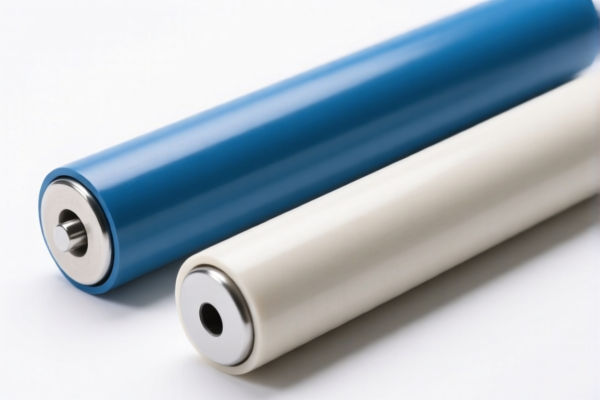
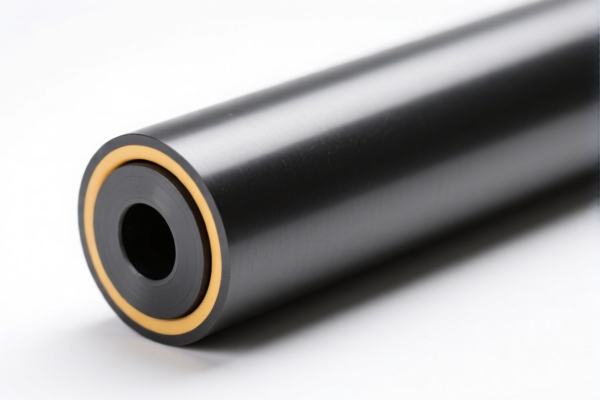
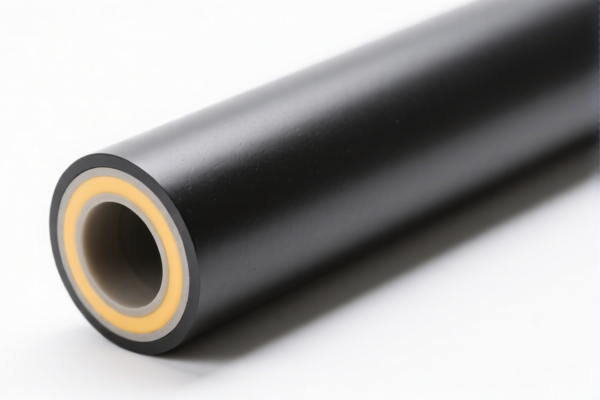
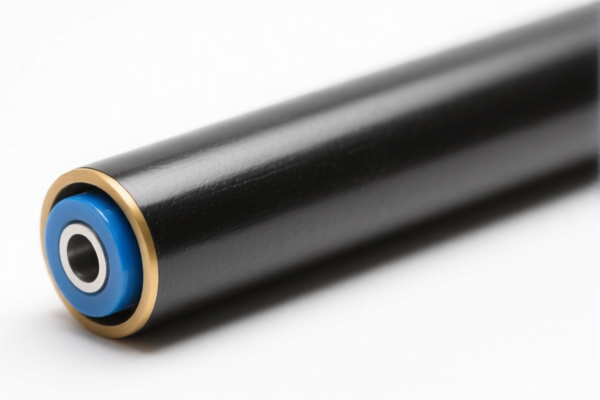
AI Analysis
🏭 Marking Machine Roller
🌐 HS Code Reference & Customs Clearance Guide | 2026 Latest Tariff Analysis | Professional Level Clearance Strategy
📌 I. Product Definition & Classification: What is a "Marking Machine Roller"?
A "Marking Machine Roller" is a critical mechanical component used in industrial marking, engraving, or coding equipment (typically falling under HS Headings 8456–8465, such as laser, plasma, or waterjet machines). However, in customs classification, rollers themselves are rarely classified under the marking machine heading. Instead, they are classified based on their specific mechanical function.
In international trade, these components usually fall into two primary categories depending on their design: 1. Bearing Housings/Roller Bearings: If the roller is designed to rotate and support load within a bearing housing. 2. Pulleys (Grooved): If the roller is designed to transmit motion or tension via belts or chains.
⚠️ Critical Distinction Point:
- If the item is a shaft-supported roller assembly primarily functioning as a bearing unit → 8483.30
- If the item is a grooved wheel used for belt transmission → 8483.50
- Do not classify as a "part of a marking machine" (8466) unless it is a specialized tool holder or diehead, which a standard roller is not.
📦 II. HS Code Classification Details (2026 Latest Tariff Authority)
The provided data highlights two specific classifications for mechanical transmission components. Here is the breakdown for "Marking Machine Rollers" based on their function:
| HS Code | Product Description | Applicable Scenario | Functional Characteristic |
|---|---|---|---|
8483.30.80.40 |
Bearing Housings; Plain Shaft Bearings: Other Bearing Housings: Other | Rollers that rotate on plain bearings; supports for shafts in marking machines. | ✅ Rotational Support |
8483.50.90.40 |
Flywheels and Pulleys...: Other: Other Grooved Pulleys | Rollers with a grooved surface for belts/chains; idler wheels in conveyor systems of marking machines. | ✅ Tension/Transmission |
🔍 Key Note:
- The term "Roller" is ambiguous. You must determine if it is a plain bearing shaft support or a grooved pulley.
- If it is a simple cylindrical roller without grooves for belts, it often falls under 8483.30.80.40 (Bearing housing/plain bearing).
- If it has V-grooves for V-belts, it falls under 8483.50.90.40 (Grooved Pulley).
💰 III. 2026 Latest Tariff Rate Breakdown (Including Additional Duties & Policy Add-ons)
✅ Applicable Country: USA (US)
✅ Country of Origin: China (CN)
✅ Effective Date: 2025/2026 (Current Trade Regime)
🎯 1. 8483.30.80.40 —— Bearing Housings / Plain Shaft Bearings (Rollers)
| Item | Content |
|---|---|
| Base Tariff | 4.5% (Ad Valorem) |
| Section 301 Additional Tariff | +25.0% |
| Total Tariff Rate | 29.5% |
| Tax Calculation | CIF Value × 29.5% |
| De Minimis Exemption | ❌ Not Eligible (Denied) |
| Legal Basis Path | USITC:8483.30.80.40 → FOOTNOTE:301_China |
📌 Explanation:
- This is the standard classification for industrial rollers that function as plain bearings or bearing housings.
- The 29.5% total rate is a significant cost factor. It includes the standard MFN rate of 4.5% plus the punitive 25% trade war tariff.
🎯 2. 8483.50.90.40 —— Other Grooved Pulleys (Grooved Rollers)
| Item | Content |
|---|---|
| Base Tariff | 2.8% (Ad Valorem) |
| Section 301 Additional Tariff | +25.0% |
| Total Tariff Rate | 27.8% |
| Tax Calculation | CIF Value × 27.8% |
| De Minimis Exemption | ❌ Not Eligible (Denied) |
| Legal Basis Path | USITC:8483.50.90.40 → FOOTNOTE:301_China |
📌 Explanation:
- If your "roller" has a V-groove or is used for belt tensioning, this is the correct code.
- It offers a slightly lower total duty (27.8%) compared to the bearing housing classification (29.5%).
- Savings Tip: Confirm if the roller is grooved. If yes, use8483.50.90.40to save 1.7% on the CIF value.
🛠️ IV. Customs Clearance Practical Advice (Real-World Pitfall Guide)
✅ 1. Documentation Checklist (Non-negotiable)
| Document | Must Provide | Description |
|---|---|---|
| ✅ Technical Drawing | ✔️ | Must show if the roller is plain cylindrical or grooved. |
| ✅ Product Photo | ✔️ | Clear view of the surface (smooth vs. grooved) and mounting holes. |
| ✅ Bill of Materials (BOM) | ✔️ | Identify if it is sold as a "Bearing Assembly" or "Pulley". |
| ✅ Commercial Invoice | ✔️ | Description: "Industrial Roller Bearing, Steel, Plain Shaft" or "Grooved Pulley for Conveyance". |
| ✅ HS Code Pre-ruling | ⭐ Recommended | Essential for avoiding disputes between 8483.30 and 8483.50. |
✅ 2. Declaration Tips (Key Mantra)
🔥 “Groove = Pulley, Plain = Bearing, Precision Matters!”
| Scenario | Correct Declaration | Wrong Practice |
|---|---|---|
| Smooth Cylinder Roller | 8483.30.80.40 (Bearing/Plain Shaft) |
Misdeclaring as 8466.93.30.00 (Machine Part) → Higher Risk/Reject |
| V-Groove Roller | 8483.50.90.40 (Grooved Pulley) |
Declaring as 8483.30.80.40 → Potential Penalty for Misclassification |
| Integrated Bearing Unit | 8483.30.80.40 |
Splitting parts into separate invoices → Fragmentation Penalty |
⚠️ Why not 8466 (Machine Parts)?
- HS Heading 8466 is for "Parts and accessories suitable for use solely or principally with the machines of headings 8456 to 8465".
- However, general mechanical components like shafts, bearings, pulleys, and clutches are explicitly excluded from 8466 if they are covered by headings 8483 (Transmission parts).
- Rule of Thumb: If it fits 8483, it does not go to 8466.
✅ 3. Special Handling
| Situation | Handling Advice |
|---|---|
| OEM Custom Rollers | Provide factory drawings showing dimensions and groove profile. |
| Mixed Shipments | If sending both grooved and plain rollers, declare separately to optimize tax (27.8% vs 29.5%). |
| Raw Material vs. Finished | Ensure the description states "Finished Roller" or "Bearing Housing," not just "Steel Part." |
🌍 V. Global Market Comparison (2026 Latest)
| Country/Region | Recommended HS Code | Tariff (China Origin) | Certification | Notes |
|---|---|---|---|---|
| 🇺🇸 USA | 8483.30.80.40 / 8483.50.90.40 |
29.5% / 27.8% | None Specific | High Section 301 duty applies. |
| 🇪🇺 EU | 8483.30 / 8483.50 |
2.0% - 3.0% | CE (if part of machine) | No extra trade war tariffs. |
| 🇨🇳 China | 8483.30 / 8483.50 |
0% - 5% | CCC (if machinery) | Import duty is low; VAT applies. |
| 🇬🇧 UK | 8483.30 / 8483.50 |
2.0% - 3.0% | UKCA | Post-Brexit tariffs similar to EU. |
📌 Conclusion:
- The US market is the most challenging due to the ~30% combined tariff.
- Cost Optimization: Verify if the roller can be classified as8483.50.90.40(Grooved Pulley) if applicable, saving 1.7% vs.8483.30.80.40.
📌 VI. Common Mistakes & Pitfalls (Lessons Learned)
❌ Mistake 1: Classifying "Roller" under 8466.93.30.00 (Machine Parts)
👉 Consequence: The USCBP may reject this because 8483 (Transmission parts) takes precedence. You lose the specific 25% add-on clarity and risk misdeclaration penalties.
Note: 8466.93.30.00 has a 30.8% rate, which is higher than 27.8% and only slightly higher than 29.5%, but legally incorrect for standard bearings/pulleys.
❌ Mistake 2: Confusing "Plain Shaft Bearing" with "Ball Bearing"
👉 Consequence: Plain bearings (oil/solid lubricated) go to 8483.30.00. Ball/roller antifriction bearings go to 8482. If it is a standard anti-friction bearing assembly, the code might differ. However, the provided data specifically points to 8483.30 for "Plain shaft bearings" and "Other Bearing housings". Ensure it is NOT a standard ball bearing unit.
❌ Mistake 3: Vague Description "Part for Marking Machine"
👉 Consequence: Customs cannot determine if it is a bearing (8483.30) or a pulley (8483.50). This leads to delays and audits.
✅ Correct Declaration Example:
"Steel Plain Shaft Bearing Roller, Cylindrical, No Grooves, for Industrial Marking Machine Conveyance System, HS 8483.30.80.40"
OR
"V-Groove Idler Pulley Roller, Steel, for Belt Drive System, HS 8483.50.90.40"
🎯 VII. Conclusion: Precision in Classification Saves Money
🎯 Remember the Mantra:
🔹 "Grooved = Pulley (27.8%), Plain = Bearing (29.5%), Neither = Machine Part (30.8%)"
🔹 "Don't guess the function. Measure the groove. Save the duty."
📌 Pro Tip:
If your rollers are stainless steel or have special coatings, ensure the material description matches the customs definition. For standard steel rollers, stick to 8483.
For complex Laser Marking Machine Components that are not transmission parts (e.g., laser lenses, galvo mirrors), those would go elsewhere, but Rollers are almost always mechanical transmission/bearing parts.
📣 Immediate Action:
📞 Review your BOM: Are they grooved or plain?
📄 Update Invoice: Use specific HS codes8483.30.80.40or8483.50.90.40.
🚀 Clear Customs Smoothly: Avoid the 30.8% trap of 8466 by correctly identifying them as transmission parts under 8483.
✨ Professional Customs Clearance Starts with Precise Classification!
💼 Every Percentage Point Counts in International Trade!
Customer Reviews
About HS Code Classification
The Harmonized System (HS) is an internationally standardized nomenclature developed by the World Customs Organization (WCO) to classify traded products. Over 200 countries use the HS system as the basis for customs tariffs, trade statistics, and import/export regulations.
Each HS code follows a hierarchical structure:
- Chapter (2 digits) — Broad category of goods (e.g., Chapter 84: Machinery and Mechanical Appliances)
- Heading (4 digits) — More specific grouping within the chapter
- Subheading (6 digits) — Internationally standardized breakdown, used by all WCO member countries
- National subdivisions (8-10 digits) — Country-specific extensions for further classification, such as US HTSUS 10-digit codes
Correct HS code classification is essential for smooth customs clearance, accurate duty payment, and compliance with trade regulations. Misclassification can lead to customs delays, overpayment of duties, or penalties.
When importing from CN to US, the applicable tariff rates may include:
- Most-Favored-Nation (MFN) rate — The standard duty rate applied to WTO members
- General rate — Applied to countries without trade agreements
- Trade remedy duties — Additional tariffs such as Section 301 (anti-dumping), Section 232 (national security), or countervailing duties
The information provided on this page is for reference purposes only. For official classification, please consult with your local customs authority or a licensed customs broker.