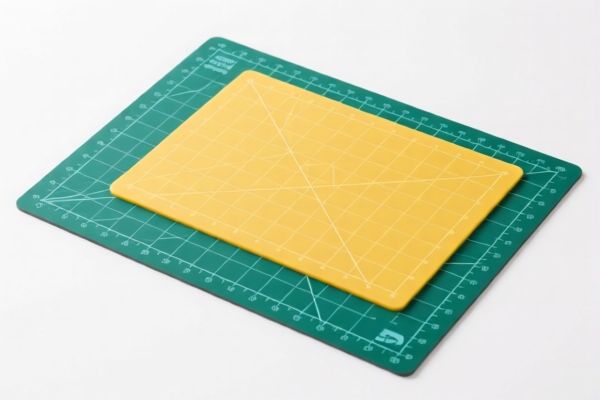
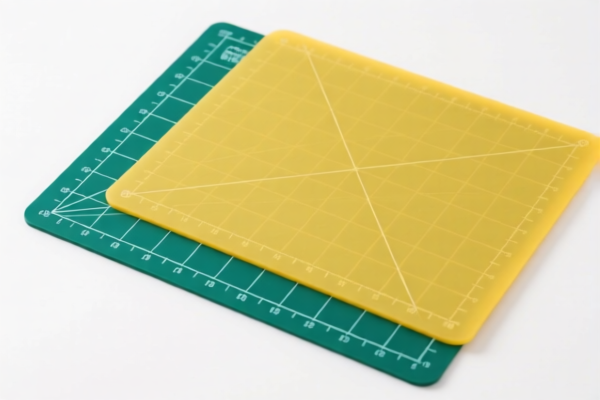
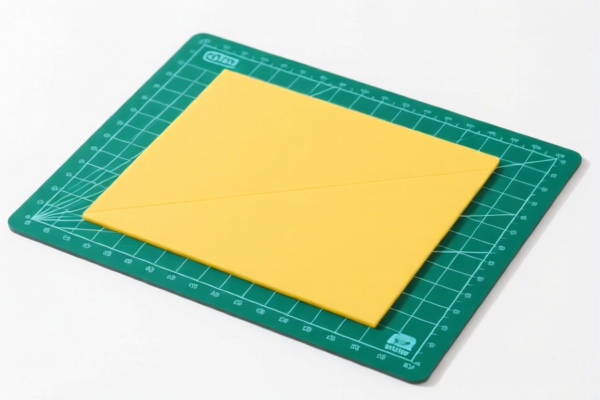
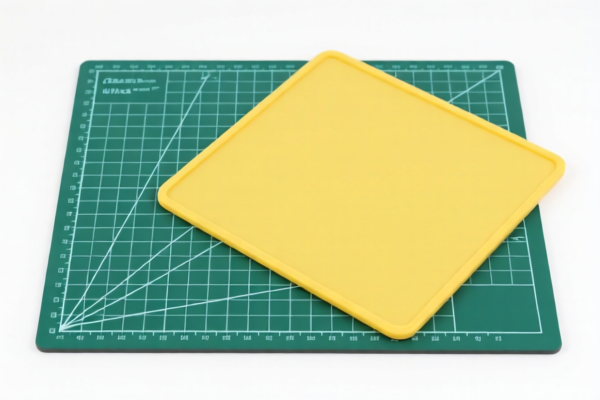
mat for cricut
CN → US| HS Code | Tariff Rate | Origin | Destination | Doc |
|---|---|---|---|---|
| 5903102010 | 35.0% | CN | US | Official Doc |
| 4016996050 | 37.5% | CN | US | Official Doc |
| 4016990500 | 20.9% | CN | US | Official Doc |
| 5903102090 | 35.0% | CN | US | Official Doc |
| 3921190090 | 41.5% | CN | US | Official Doc |
Product Images
AI Analysis
✂️ Cricut Cutting Mats (Craft Matting for Automatic Plotting/Cutting Machines)
🌐 HS Code Reference & Customs Clearance Guide | 2026 Latest Tariff Analysis | Professional Clearance Strategy
📌 I. Product Definition & Classification: Do You Really Know "Cricut Mats"?
Cricut cutting mats are specialized adhesive sheets used in electronic cutting machines (such as Cricut, Silhouette) to hold materials like vinyl, paper, and fabric in place during precise cutting. In international trade, their classification depends heavily on material composition and functional description.
The market primarily splits these mats into two material categories: 1. Plastic-based Mats (PVC/Polystyrene): Most common "Grip" mats, often clear or blue, made from plastic sheets with an adhesive coating. 2. Rubber-based Mats: Less common for standard Cricut, but some heavy-duty or alternative brand mats may use sulfured rubber or similar elastic materials.
⚠️ Key Distinction Point:
- If the mat is made of Plastic (PVC/PE) with an adhesive coating → It falls under Chapter 39 (Plastics).
- If the mat is made of Rubber → It falls under Chapter 40 (Rubber).
- Misclassification leads to significant duty differences and potential customs holds.
📦 II. HS Code Classification Details (2026 Latest Tariff Authority Comparison)
| HS Code | Product Description | Applicable Scenario | Material Type | Adhesive/Coated? |
|---|---|---|---|---|
5903.10.20.90 |
Textile or non-woven fabric impregnated/coated with plastics (PVC) | PVC-based cutting mats, often with a fabric backing or specific plastic coating | PVC Plastic | ✅ Yes (Coated/Impregnated) |
5903.10.20.10 |
Similar to above, specific sub-category for coated plastics | Multi-purpose consumable mats, PVC-based with coating | PVC Plastic | ✅ Yes (Coated) |
4016.99.60.50 |
Other articles of vulcanized rubber or similar elastic materials | Rubber-based cutting mats, non-specific use | Vulcanized Rubber | ❌ No (Solid Rubber) |
4016.99.05.00 |
Other household articles of vulcanized rubber | Rubber mats classified as household items | Rubber | ❌ No |
3921.19.00.90 |
Other plates, sheets, film, foil, and strip of plastics (PVC) | Simple plastic plates/sheets without specific textile coating | Plastic Sheets | ✅ Yes (Plastic Sheet) |
🔍 Important Reminder:
- PVC Mats are the majority of Cricut mats. They are often classified under HS 5903 (Impregnated/Coated Plastics) because the adhesive layer is crucial to their function.
- Rubber Mats are rarer. If the mat is purely rubber, use HS 4016.
- Plastic Sheets (HS 3921) may apply if the mat is a simple plastic plate without complex coating, but this is less common for adhesive mats.
💰 III. 2026 Latest Tariff Rate Breakdown (Including Additional Taxes & Policy Surcharges)
✅ Applicable Country: United States (US)
✅ Country of Origin: China (CN)
✅ Effective Date: November 10, 2025 onwards (for imports)
🎯 1. 5903.10.20.90 —— PVC Cutting Mats (Coated/Impregnated)
| Item | Content |
|---|---|
| Base Duty Rate | 0% (ad valorem) |
| USITC Additional Duty | +25% (From USITC Footnote 9903.88.01) |
| IEEPA Additional Duty | +10% (Targeting China/HK products, effective Nov 10, 2025) |
| Total Duty Rate | 35.0% |
| Tax Calculation | CIF Value × 35% |
| De Minimis Exemption? | ❌ No (deny_de_minimis) |
| Legal Basis Path | IEEPA:9903.01.25 → IEEPA:9903.01.24 → USITC:5903.10.20.90 → FOOTNOTE:9903.88.01 |
📌 Explanation:
- The 25% USITC duty is from the Section 301 tariffs.
- The 10% IEEPA duty is the new对华加征 tariff.
- Total 35%, which is a high tariff. This is the most common classification for standard Cricut Grip Mats.
🎯 2. 5903.10.20.10 —— PVC Cutting Mats (Specific Sub-category)
| Item | Content |
|---|---|
| Base Duty Rate | 0% |
| USITC Additional Duty | +25% |
| IEEPA Additional Duty | +10% |
| Total Duty Rate | 35.0% |
| Tax Calculation | CIF × 35% |
| De Minimis Exemption? | ❌ No |
| Legal Basis Path | IEEPA:9901.25 → IEEPA:9903.01.24 → USITC:5903.10.20.10 → FOOTNOTE:9903.88.01 |
📌 Note:
- Same as above, same tax rate.
- Even if the mat is "Multi-purpose," if it's PVC-based, it likely falls here.
🎯 3. 4016.99.60.50 —— Rubber Cutting Mats
| Item | Content |
|---|---|
| Base Duty Rate | 2.5% |
| USITC Additional Duty | +25% |
| IEEPA Additional Duty | +10% |
| Total Duty Rate | 37.5% |
| Tax Calculation | CIF × 37.5% |
| De Minimis Exemption? | ❌ No |
| Legal Basis Path | IEEPA:9903.01.25 → USITC:4016.99.60.50 |
📌 Note:
- Rubber mats have a higher base rate (2.5%) than PVC mats (0%).
- Total duty is 37.5%, slightly higher than PVC.
🎯 4. 4016.99.05.00 —— Household Rubber Articles
| Item | Content |
|---|---|
| Base Duty Rate | 3.4% |
| USITC Additional Duty | +7.5% (Note: Some rubber items may have lower Section 301 rates depending on specific footnote) |
| IEEPA Additional Duty | +10% |
| Total Duty Rate | 20.9% |
| Tax Calculation | CIF × 20.9% |
| De Minimis Exemption? | ❌ No |
| Legal Basis Path | IEEPA:9903.01.24 → USITC:4016.99.05.00 |
📌 Note:
- This code has a lower total duty (20.9%) compared to other rubber/plastic options.
- However, it requires the item to be classified as a "Household Article" of rubber, which may not fit all cutting mats. Use with caution and verify with customs broker.
🎯 5. 3921.19.00.90 —— Plastic Plates/Sheets (PVC)
| Item | Content |
|---|---|
| Base Duty Rate | 6.5% |
| USITC Additional Duty | +25% |
| IEEPA Additional Duty | +10% |
| Total Duty Rate | 41.5% |
| Tax Calculation | CIF × 41.5% |
| De Minimis Exemption? | ❌ No |
| Legal Basis Path | IEEPA:9903.01.25 → USITC:3921.19.00.90 |
📌 Note:
- This is the highest duty rate (41.5%).
- Only use if the mat is a simple plastic sheet without adhesive coating classification. Most adhesive mats are better classified under HS 5903 (35%).
🛠️ IV. Customs Clearance Practical Advice (Real-World Pitfall Guide)
✅ 1. Required Documentation Checklist (None Can Be Skipped)
| Document | Must Provide | Explanation |
|---|---|---|
| ✅ Product Specification Sheet | ✔️ | Include material (PVC/Rubber), size, adhesive type |
| ✅ Product Photos (With Label) | ✔️ | Show the mat, adhesive side, and any branding |
| ✅ Material Safety Data Sheet (MSDS) | ✔️ | Especially if chemical adhesives are used |
| ✅ Commercial Invoice | ✔️ | Clearly state "Cutting Mat for Cricut/Silhouette" |
| ✅ Packing List | ✔️ | Specify quantity, weight, and dimensions |
✅ 2. Declaration Tips (Key Mantras)
🔥 "Material First, Adhesion Clear, Code Precise, Duty Lowers!"
| Scenario | Correct Declaration | Wrong Practice |
|---|---|---|
| PVC Mats with Adhesive | 5903.10.20.90 or 5903.10.20.10 |
Misdeclare as "Plastic Sheet" (HS 3921) → 41.5% |
| Rubber Mats | 4016.99.60.50 or 4016.99.05.00 |
Misdeclare as "Plastic" → Wrong Code & Penalty |
| Simple Plastic Plate (No Adhesive) | 3921.19.00.90 |
Overpaying duty if adhesive is present |
| Mixed Materials (e.g., Plastic + Fabric) | 5903.10.20.90 |
Split declaration → Higher administrative burden |
✅ 3. Special Cases Handling
| Situation | Handling Advice |
|---|---|
| OEM Custom Mats | Provide customer order + design specs to avoid "non-standard" classification |
| Mats with "Non-Stick" Coating | Still likely 5903.10.20.90 if plastic-based. Document coating type. |
| Eco-Friendly/Biodegradable Mats | If made from PLA (Polylactic Acid), may fall under different plastic codes. Verify with broker. |
| Mats Sold in Rolls | Ensure declaration matches "Cutting Mat" (finished product) vs. "Plastic Sheet" (raw material). |
🌍 V. Global Market Customs Comparison (2026 Latest)
| Country/Region | Recommended HS Code | Duty Rate | Certification Requirements | Notes |
|---|---|---|---|---|
| 🇺🇸 USA | 5903.10.20.90 |
35% (China) | FCC (if electronic), Non-Electronic Declaration | High duty due to 301 & IEEPA |
| 🇨🇳 China | 5903.10.20.90 |
5-10% | CCC (if applicable), RoHS | No additional tariffs for domestic trade |
| 🇪🇺 EU | 3921.19.00 or 5903.10 |
0-6.5% | CE, REACH, RoHS | Lower tariffs, but strict chemical regulations |
| 🇦🇺 Australia | 5903.10.20 |
5% | ADR (if chemicals) | Moderate duty |
| 🇯🇵 Japan | 3921.19.00 |
0-3% | PSE (if electrical parts) | Low duty, high inspection strictness |
📌 Conclusion:
- USA is the most expensive market for Cricut mats due to high附加税.
- EU and Japan have lower duties but stricter environmental/chemical certifications (REACH, RoHS).
- Strategy: For US imports, consider sourcing from non-China origins if possible to avoid IEEPA 10%, or optimize HS code classification to4016.99.05.00(20.9%) if product fits.
📌 VI. Common Errors & Pitfall Guide (Lessons Learned)
❌ Error 1: Declaring PVC mats as "Plastic Sheets" (HS 3921) without noting adhesive
👉 Consequence: Duty jumps from 35% to 41.5%, plus potential penalty for inaccurate description.
❌ Error 2: Using "Cutting Mat" as a generic term without specifying material
👉 Consequence: Customs may classify as highest duty code (41.5%) or hold shipment for inspection.
❌ Error 3: Ignoring IEEPA 10% tariff for China-origin goods
👉 Consequence: Unexpected cost increase, profit margin erosion.
❌ Error 4: Misclassifying Rubber Mats as Plastic
👉 Consequence: Duty difference (37.5% vs 35%) and potential legal issues.
✅ Correct Practice:
"PVC Cutting Mat, 12x12 inch, Adhesive Coating, for Electronic Cutting Machines, HS 5903.10.20.90, Origin: China"
🎯 VII. Conclusion: Professional Declaration, Save Time, Cut Costs!
🎯 Remember the Mantra:
🔹 "PVC goes to 5903, Rubber to 4016, Plastic Sheet is last, De Minimis is dead!"
🔹 "HS Code determines duty, 35% is common, 41.5% is avoidable, Declare accurately!"
📌 Pro Tip:
If your mats are originated from Vietnam, Mexico, Thailand, or Malaysia, you may apply for IEEPA exemption, reducing the total duty to 0%~25%.
Recommendation: Apply for an Advance Ruling before shipment to confirm the correct HS Code and avoid delays.
📣 Immediate Action:
📞 Contact a professional customs broker + Provide product photos + Apply for HS Code Advance Ruling
🚀 Let your Cricut mats pass customs smoothly, export efficiently, and double your profits!
✨ Professional Customs Clearance Starts with Accurate Classification!
💼 Every cent of your cost deserves precise calculation!
Customer Reviews
About HS Code Classification
The Harmonized System (HS) is an internationally standardized nomenclature developed by the World Customs Organization (WCO) to classify traded products. Over 200 countries use the HS system as the basis for customs tariffs, trade statistics, and import/export regulations.
Each HS code follows a hierarchical structure:
- Chapter (2 digits) — Broad category of goods (e.g., Chapter 84: Machinery and Mechanical Appliances)
- Heading (4 digits) — More specific grouping within the chapter
- Subheading (6 digits) — Internationally standardized breakdown, used by all WCO member countries
- National subdivisions (8-10 digits) — Country-specific extensions for further classification, such as US HTSUS 10-digit codes
Correct HS code classification is essential for smooth customs clearance, accurate duty payment, and compliance with trade regulations. Misclassification can lead to customs delays, overpayment of duties, or penalties.
When importing from CN to US, the applicable tariff rates may include:
- Most-Favored-Nation (MFN) rate — The standard duty rate applied to WTO members
- General rate — Applied to countries without trade agreements
- Trade remedy duties — Additional tariffs such as Section 301 (anti-dumping), Section 232 (national security), or countervailing duties
The information provided on this page is for reference purposes only. For official classification, please consult with your local customs authority or a licensed customs broker.